

Believer in freedom and democracy. Opposes authoritarianism. Deep dives on UK energy policy & Net Zero realities | Eigen Values Substack
Hampshire - UK
Joined July 2009
- Tweets46.8K
- Following1.7K
- Followers12.2K
- Likes213K




Pinned Tweet
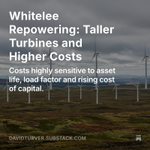
ScottishPower wants to “repower” Whitelee, Britain’s largest onshore wind farm. 215 turbines out. 124 much taller ones in. Capacity up to 1 GW. Cost: £1.5 billion.
But the economics look worse than the glossy announcements suggest. A thread 🧵(1/9)

David Turver retweeted
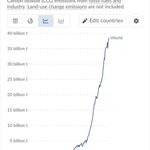
How does reducing the UK's 0.8% of global emissions to zero improve the weather when global emissions are soaring? Stop wasting our time, energy and money and return home, on foot.


Ahead of #COP31, I spoke to @BBCJustinR for the @BBCPanorama climate special.
The climate crisis is here. We are seeing its impact on communities here in Britain and across the world.
And at a time when some are trying to divide us, this is the moment to come together, not pull apart.
Because we know the solutions. We can break our dependence on fossil fuels, bring down bills and cut emissions.
But no country can do this alone. This is the time for multilateralism and collective action.
David Turver retweeted
Now they've gone even larger. £1,570/MWh to keep the lights on because there's no solar and sod all wind. Intermittent renewables are at the root of sky high energy prices.


David Turver retweeted

The grid is looking precarious this winter. Grid balancing costs keep spiking off the charts. I've seen all manner of creative excuses this morning but this is a crisis tewnty years in the making. It was around 2008, or thereabouts, when I joined a large energy firm to do a highly uninteresting job, only made interesting by way of my co-worker being one of the lead programmers on the energy trading desk who explained to me in great detail how the grid works.
I was already dimly aware of the overall energy strategy. The idea was that we were going to blow up our coal power stations and build windmills instead, on the presumption that "the wind is always blowing somewhere" and that the easter bunny would intervene in the event there was no wind.
But we knew about dunkelflaute even back then. They knew very will the wind is not always blowing somewhere. But this was a manageable problem because there wasn't all that much wind capacity to offset. You could disguise the problem with importing energy through interconnectors. It was a relatively small problem that could be disguised.
But then we did start blowing up our coal power stations, letting our nuclear power age out, and didn't bother to replace our baseload capacity. We instead built windmills. Rather a lot of them. We built them in far away places, requiring long transmission lines for intermittent power that the grid struggles to assimilate.
Making up the shortfall always depended on gas because most large energy plants can't be ramped up and down at a moment's notice. The problems started when shortfalls were measured in gigawatts. The more windmills you added, the greater the instability.
This was known in 2008 and the problem was never acknowledged. Even back then, realists were saying this only had one destination; rolling blackouts. It's been looking hairy since 2022, and the situation has only worsened, exacerbated by a deliberate decision to run down and close our gas storage facilities, making us more reliant on the day-to-day gas market - which is notoriously volatile, especially when wars break out in our vicinity.
Some renewable energy enthusiasts did acknowledge this might be a problem, but they said it would be a small problem, and that by now, there would be millions of electric cars plugged into the grid that grid operators could use to even out shortages of wind. On paper that was a good idea, if only to even out the odd hour of wind loss. The strategy, though did not address the prospect of days and weeks of cold conditions with no wind, or the fact that nobody wants an EV.
As more wind generation was added to the grid, this problem became bigger and bigger, with no real thought as to what was going to keep the lights on in a crisis. We also banned extraction of our own fossil fuel reserves meaning that we are now wholly dependent on gas imports from wherever we can get it.
Now at this point, if you're not politically attuned, you're probably thinking this is a seriously dumb policy that's so dumb that our politicians couldn't possibly have been this retarded, so there must be some other explanation. If only that were true.
The problem is that a number of subsidies and market incentives were put in place so that the energy sector would concentrate on building windmills. There was (and is) big money involved, so there is a very influential wind energy lobby that misdirects the national conversation and influences our MPs. They are easily bamboozled and incredibly gullible.
Consequently, realists lost the argument. The warnings we've seen in recent years from the indefatigable @KathrynPorter26 (et al) are just the latest generation of energy wonks to notice that making your power grid weather dependent is a shit idea.
Anyone raising the alarm is immediately accused of being a "climate denier" despite warnings from them that there are certain facets of the climate that we ought to pay more attention to. Namely that Europe is prone to protracted periods without wind and sunshine. While our Liberian energy minister can be forgiven for not knowing this, her many predecessors cannot.
So we're now in a position where we have gigawatts of windmills installed, doing absolutely bugger all, at times when people are known to need heating and lighting. So now we're scrambling for gas from whatever we can find it, regardless of the cost - and making "resilience" plans for the near future when the grid stops working completely (which they will blame on Russian hackers).
This is made all the more precarious because the European power stations we import from have more demand than usual, not least because of the dry conditions this summer, meaning hydro is less available, and we're feeding cruise missiles into a regional conflict that is currently demolishing European grid infrastructure.
This would be a good time to fire up our redundant coal burning stations, but the last Tory government demolished them. This is a situation that energy analysts are describing as "bad".
Of course, that is a matter of perspective. Should there be a cold spell where the grid trips out for weeks, or we're reduced to energy rationing, many of you will simply die, thereby reducing demands on the grid and other public services. This is a necessary sacrifice toward our green energy future which, after all, is the priority here. We no longer cling to the archaic idea that the grid should serve the needs of the economy. It is we who must change!

How does reducing the UK's 0.8% of global emissions to zero improve the weather when global emissions are soaring? Stop wasting our time, energy and money and return home, on foot.
Ahead of #COP31, I spoke to @BBCJustinR for the @BBCPanorama climate special.
The climate crisis is here. We are seeing its impact on communities here in Britain and across the world.
And at a time when some are trying to divide us, this is the moment to come together, not pull apart.
Because we know the solutions. We can break our dependence on fossil fuels, bring down bills and cut emissions.
But no country can do this alone. This is the time for multilateralism and collective action.
David Turver retweeted
No country can tackle the climate crisis. Because 1) there is no crisis and 2) no matter how hard we try, we cannot make significant changes to the weather. Stop wasting our time and money and come home.
As #COP31 begins, my message is clear: no country can tackle the climate crisis alone.
Britain will work with countries around the world to tackle the climate crisis, while leading a transition at home that brings down bills, creates jobs and protects our communities.
David Turver retweeted
Next to no wind and solar. We're under an Electricity Margin Notice, meaning NESO thinks we're short of generation capacity, yet we're exporting to the Continent. Make it make sense.

How's that transition coming along?

As #COP31 begins, my message is clear: no country can tackle the climate crisis alone.
Britain will work with countries around the world to tackle the climate crisis, while leading a transition at home that brings down bills, creates jobs and protects our communities.
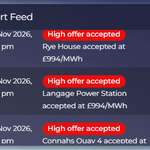
NESO giving it large with our money in the Balancing Mechanism again - £994/MWh. And we're nowhere near the evening peak.


No country can tackle the climate crisis. Because 1) there is no crisis and 2) no matter how hard we try, we cannot make significant changes to the weather. Stop wasting our time and money and come home.
As #COP31 begins, my message is clear: no country can tackle the climate crisis alone.
Britain will work with countries around the world to tackle the climate crisis, while leading a transition at home that brings down bills, creates jobs and protects our communities.
Next to no wind and solar. We're under an Electricity Margin Notice, meaning NESO thinks we're short of generation capacity, yet we're exporting to the Continent. Make it make sense.
David Turver retweeted

Energy firm that built no wind farms paid some £60 million on dividends using Welsh pension funds investment
Serious allegations must be investigated that directors took millions for building nothing
thetimes.com/article/e068b29…
David Turver retweeted

For the many UK politicians @UKLabour and journalists @BBC who don't know anything about UK trade, here are the highlights:
1. The UK is now predominantly a service exporter. 57% of UK exports are services, which are not affected by EU 'red tape'.
2. UK goods exports have dropped from almost 70% of our total exports in 1997 to just 43% in 2025. This trend began long before Brexit and is tied to Net Zero mandates, high UK energy prices, and EV mandates.
3. Machinery and transport goods, such as cars and aircraft parts, are 42% of all UK goods exports. This is by far the UK's largest export sector, although it is also falling. It was 50% of UK exports in 2000. But if the UK joins the EU's CBAM, companies in this sector will see their imported material costs rise, making their exports even less competitive.
4. Chemicals are the UK's second-largest export sector. They account for 19% of UK goods exports, but this share is shrinking due to UK and EU energy costs and Net Zero regulations. These will increase if the UK joins the EU ETS.
5. Miscellaneous Manufactures account for 11% of UK goods exports. This is still the UK's third-largest export sector, even though it includes many goods the UK no longer makes because of our high Carbon taxes, which will increase if the UK signs up to the EU's even higher ETS on November 20th.
6. Fuels account for 9% of UK exports. This is still the UK's 4th largest goods export sector, even though the current and previous governments are/were trying to destroy it with bans on new exploration and ultra-high taxes.
7. Material Manufactures account for 8% of UK goods exports. This sector includes iron, steel, aluminium, ceramics, and glass manufacturing - industries that have gone, or are going, out of business in the UK because of high UK energy costs, which will rise if the UK joins the EU ETS.
8. These five sectors make up almost 90% of UK exports. The other 5 industry sectors are insignificant. But the government and our journalists think the UK is New Zealand and that the only goods we export are food and live animals to the EU. We don't! UK food and live animal exports to the EU were just 1.3% of the UK's total exports.
9. The government is about to sacrifice all of the export industries listed above to slightly reduce the IMPORT costs of a handful of Supermarkets, at least two of which are privately owned German companies.
These savings will not be passed on to UK shoppers because the government has also increased wages again, and supermarket energy costs will increase if we join the EU's ETS.
10. UK exports of food and live animals will not increase because we are paying farmers to not produce them, this has nothing to do with EU red tape. Instead we are paying farmers to plant trees and wildflowers or plaster their farmland with solar panels. (54% of UK electricity is coming from gas today, 12% from solar and 3% from wind.)
11. Write to your MP and tell him to #StoptheReset.
If you don't stop this, don't complain when all of our goods export industries have closed because of EU higher carbon taxes, EU higher carbon import tariffs, and the cost of complying with the EU's new packaging and process regulations.
Saudi Arabia of Wind update:

@neso_energy has issued an Electricity Margin Notice for tomorrow for 06:00 hrs to 11:00 - this is unusual...EMNs normally cover the evening peak not the morning
The shortfall is 1388 MW and the current contingency requirement is 808 MW. 0 MW of generation is excluded from the available system margin due to system constraints
Here is the demand forecast for tomorrow from Amira Technologies showing how much lower the morning peak is than the evening. Wind will continue to be low throughout the day but higher than today when it reached a low of 250 MW
(for context I once asked Grok how much electricity could be generated if everyone in the UK went and blew very hard into wind turbines and the answer was c200 MW!)
Interconnectors are nominated to export until 11:30am so we can expect NESO to buy back the volumes it needs - the trading limit is 1500 MW per SP so expect NESO to be at or above that level to clear the shortfall (no doubt it will want a cushion)
The question is, what happens if the modest wind recovery forecast for tomorrow evening is delayed, or if demand is higher than forecast - given the size of NESO's forecast errors, when margins are this thin there could be trouble


David Turver retweeted

The fake capacity load factors assumed by the British government are a huge scandal. Where's parliament's investigation into this?

Not seen any Agile customers boasting about their cheap energy recently

National average pricing for Octopus Energy Agile Tariff: Mon 09-11-2026
Min: 31.2p (04:00)
Max: 94.3p (17:00)
Avg: 53.1p
Avg Excl Peak: 47.4p
Peak 4pm-7pm: 91.3p
Get graphs & pricing for all 14 UK regions at energy-stats.uk/octopus-agil…

David Turver retweeted
Big Brother wants to make your energy more expensive.

🚨 Exclusive
Labour gives energy companies powers to snoop on tax records
‘Big Brother’ tactics alleged as bill paves way for levy on wealthier households to subsidise others
telegraph.co.uk/politics/202…

David Turver retweeted
Well knock me down with a feather. China's industrial dominance has been powered by coal. Our industrial decline has been driven by wind.


Almost all the growth in global coal use since the late 1980s has come from China.
Outside China, the world’s use of coal has barely changed since the late 1980s. It was just over 20,000 terawatt-hours back then, and almost four decades later, it is still the same.
But the change has been very different in China. The country has increased the use of coal enormously, and today, China is burning more coal than the rest of the world combined.
The future of global coal use, and the emissions that come with it, depends heavily on what happens in China.
(written by @MaxCRoser)

