




Pinned Tweet
Introducing Cosign.
cosign.co


Excited to introduce @Cosign: the curated professional network for the startup community: cosign.co
Our goal is to create the following:
- A comprehensive startup directory of investors, companies, and operators, including what they worked on and who they worked on it with.
- Cosign graph: Who shaped your career? Who were you actually in the trenches with? Who would work with you again? Who thinks you’re someone to watch?
- Durable reputation: Great endorsements happen every day on X and disappear into the feed. Cosign attaches those signals permanently to people and companies.
- Discovery: Who are the best fintech angels? Which AI companies should I watch? Who are the best designers?
- Intent network: Privately signal “I’d invest in them,” “I’d hire them,” “I’d work with them,” or eventually even “I’d acquire this company.” Match people when interest exists on both sides.
Imagine if Wikipedia, LinkedIn, and OG AngelList had a baby. Though Cosign is a community, not a business.
In order to join, you need to be cosigned. Or you can apply directly.
David Booth and I started this idea 7 years ago but didn’t have the firepower to make it work. Now we do.
No one has really touched LinkedIn in 20 years. Excited to take a swing.
cosign.co
Mark Cuban's rule for the AI-era workforce: "People who know how to use AI replace the jobs of people who don't know how to use AI."
"[Healthcare] looks the same as any other industry. You have to still hire entry-level people."
"No matter what the model is, the minute it's released, it's behind. There's latency associated with every model."
"You need people who are aware of everything that's going on, that create context and deal with the models, be the human in the loop, understand the consequences."
"You need those people to grow with the organization over time so that as all these things change, they've seen the history of the implementation, and they can bring value to the organization."
@mcuban @julesyoo @eriktorenberg

Mark Cuban scaled Cost Plus Drugs from about 100 generics to roughly 4,000 at a flat 15% markup, forcing incumbents to change prices in ways decades of policy never did.
He thinks AI could transform healthcare, but it won't fix opaque prices and broken incentives on its own.
Mark sits down with a16z's Julie Yoo and Erik Torenberg to discuss what he's learned building Cost Plus Drugs, why trust is its core product, and how greater transparency could put pressure on healthcare costs.
They also explore why drugs designed for your DNA could cost close to nothing, the football field-sized drug plant his team shrank into tractor trailer-sized pods, his plan to make generics in Dallas for less than he pays manufacturers in India, and why every company will either be great at AI or go out of business.
0:50 Cost Plus beat decades of policy
3:15 111 generics to 4,000 drugs
5:00 A drug plant shrunk to 5K sq ft
5:55 $20M drug factories in a trailer
8:10 Hospital deals with zero denials
9:50 Why health plans are rigged
14:05 1,335 pages no human can check
18:35 "Where are they f**king me over?"
22:45 Making drugs cheaper than India
26:50 Why you still need entry-level hires
31:45 Nonprofit hospitals must offer aid
35:55 DNA-matched drugs for near $0
39:30 Why AI will mean more doctors
48:00 Mark's plan: "bye bye insurers"
52:25 Why AI labs' ads are useless
56:35 Get good at AI or go out of business
YouTube: youtu.be/5UWDUD6qaM4
@mcuban @julesyoo @eriktorenberg
Security testing is moving from a yearly checkup to always on
18% of CISOs run most of their offensive testing continuously today, 52% expect to within a year
They also want AI to close the loop, 70% would use it to retest and confirm their fixes actually worked
From a16z's @OwenColby and @steph_zhang, breaking down a survey of 100 CISOs at companies with 1,000+ employees: a16z.news/p/the-new-security…


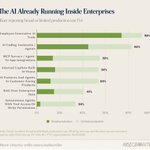
AI is already running across the enterprise, and securing it is now one of CISOs' biggest concerns
Already in production at their companies:
- Employee generative AI tools (92%)
- AI coding assistants or agents (83%)
- MCPs or agent-to-app integrations (55%)
- Autonomous agents with tool access or write permissions (34%)
Their biggest concerns:
- AI attacks outpacing their team (55%)
- Employees leaking data into AI tools (47%)
- AI agents exceeding permissions or getting compromised (46%)
From a16z's @OwenColby and @steph_zhang, breaking down a survey of 100 CISOs at companies with 1,000+ employees: a16z.news/p/the-new-security…


Mark Cuban's advice for young people boils down to "there's gonna be two types of companies: those who are great at AI and those who have gone out of business."
"And then there's two types of people in how they use AI: those who use AI to learn anything, and those who use AI so they don't have to learn anything."
"And if you're one of those people who uses AI so that you can learn anything, and you realize what type of companies and problems aren't being solved by AI, don't be shy to just talk to your AI."
"And I say this not just to kids, but to 50 60, 70-year-old entrepreneurs. The biggest challenge right now with entrepreneurs using AI is the comfort level of talking to your AI... there's still a lot of hesitancy."
"Just like back in the day, those first spreadsheets, people still had their 10-key adding machine, and they would check it to make sure the spreadsheets were right."
"So when you ask me, is there one thing I truly believe, it's everything. Everything will change. This is the greatest transitional technology we have ever seen, and I've been around for all of them, right? This blows them all away."
@mcuban @julesyoo @eriktorenberg
Mark Cuban scaled Cost Plus Drugs from about 100 generics to roughly 4,000 at a flat 15% markup, forcing incumbents to change prices in ways decades of policy never did.
He thinks AI could transform healthcare, but it won't fix opaque prices and broken incentives on its own.
Mark sits down with a16z's Julie Yoo and Erik Torenberg to discuss what he's learned building Cost Plus Drugs, why trust is its core product, and how greater transparency could put pressure on healthcare costs.
They also explore why drugs designed for your DNA could cost close to nothing, the football field-sized drug plant his team shrank into tractor trailer-sized pods, his plan to make generics in Dallas for less than he pays manufacturers in India, and why every company will either be great at AI or go out of business.
0:50 Cost Plus beat decades of policy
3:15 111 generics to 4,000 drugs
5:00 A drug plant shrunk to 5K sq ft
5:55 $20M drug factories in a trailer
8:10 Hospital deals with zero denials
9:50 Why health plans are rigged
14:05 1,335 pages no human can check
18:35 "Where are they f**king me over?"
22:45 Making drugs cheaper than India
26:50 Why you still need entry-level hires
31:45 Nonprofit hospitals must offer aid
35:55 DNA-matched drugs for near $0
39:30 Why AI will mean more doctors
48:00 Mark's plan: "bye bye insurers"
52:25 Why AI labs' ads are useless
56:35 Get good at AI or go out of business
YouTube: youtu.be/5UWDUD6qaM4
@mcuban @julesyoo @eriktorenberg
AI's cyber skills have taken a huge leap in about two years
In a test that simulates a 32-step cyberattack on a company network, tracking how far each model gets as it uses more tokens:
- GPT-4o, a 2024 model, stalled at step 2 and never improved with more tokens
- Today's top models kept improving all the way to 100M tokens, getting about three-quarters of the way through on average
- The best attempts finished all 32 steps and took over the entire network
From a16z's @OwenColby and @steph_zhang on The New Security Agenda: a16z.news/p/the-new-security…

In a single year, AI has rewritten the security priority list for CISOs.
Attackers are moving faster. Bain estimates AI compresses a typical cyberattack from about four weeks to about 18 hours, and models keep getting better at finding and exploiting weaknesses.
There's also more to protect, with employees shipping apps they couldn't have built a year ago and agents getting access to source code, documents, and production systems.
In a survey of 100 CISOs at companies with 1,000+ employees, all seven of the most-selected 2027 priorities involve AI.
The biggest jumps since 2026:
- Internal AI agent security (+28 pts)
- AI SOC (+26 pts)
- AI offensive security (+24 pts)
- AI code security (+23 pts)
- AI vulnerability remediation (+22 pts)
Last year's staples:
- Exposure & vulnerability management (-21 pts)
- SIEM / security data (-18 pts)
- Privileged access management (-18 pts)
From a16z's @OwenColby and @steph_zhang on The New Security Agenda: a16z.news/p/the-new-security…

a16z's Martin Casado says many debates about VC turn into "a muddled, incoherent mess" because investors pull arguments from four investing mindsets that often conflict:
1. Financial: the business's finances are the asset, so investors judge deals on metrics like churn, margin, and growth, plus the size of the market.
2. Productive: the tech is the asset, and it creates new markets, so investors focus on tech, team, and market fit, and treat today's TAM as secondary.
3. Frontier: the founders are the asset, so investors back the best team in a wildly new space well before anything is working.
4. Speculative: investors have little visibility into the company, so they bet on the market's perception of the deal, with a heavy focus on price and timing.
Each one is coherent on its own, but using them as a grab bag breaks down, because "it's hard to directly refute a finance argument with a product argument since they make entirely different assumptions on what the bet is for value creation."
Martin's answer is to pick one core philosophy as a team and stick to it across deals, or evolve it by stage: frontier before there's a product, productive before traction, and financial once the business is repeatable.
He's "strictly a productive investor" and thinks new tech tends to create its own market, like "Uber and taxis, GitHub and the repository, Cursor and the IDE."
In his words, "If you truly believe a technology is revolutionary, TAM concerns should be third order at best."
Full piece from Martin: a16z.com/the-evolving-landsc…


Mark Cuban says the lack of AI adoption in organizations means the "trillionaire in the basement" entrepreneur is coming:
"You have to be able to understand as a CEO and in the C-suite how all those things impact your company. Once you get a good grasp on that... you can just find new ways for things to happen that benefit your customers or create new opportunities."
"And that's the brilliance of AI, right? AI is not smart. It's book smart maybe, but it's not street smart. It's not entrepreneur smart. You've got to have somebody there who guides it and helps it."
"But until you have a C-suite that understands how it works, it's gonna be very difficult for that organization."
"I literally sat with the head of a consumer food company... I'm like, 'Okay, well, let's do this. Let's take your number one product, your cookie, right? And I'm gonna ask ChatGPT to create a competitor...' And in about three minutes he was like, 'Oh, s**t.'"
"There's no better time to be an entrepreneur than right now. There will be the trillionaire in the basement."
@mcuban @eriktorenberg @julesyoo
Mark Cuban scaled Cost Plus Drugs from about 100 generics to roughly 4,000 at a flat 15% markup, forcing incumbents to change prices in ways decades of policy never did.
He thinks AI could transform healthcare, but it won't fix opaque prices and broken incentives on its own.
Mark sits down with a16z's Julie Yoo and Erik Torenberg to discuss what he's learned building Cost Plus Drugs, why trust is its core product, and how greater transparency could put pressure on healthcare costs.
They also explore why drugs designed for your DNA could cost close to nothing, the football field-sized drug plant his team shrank into tractor trailer-sized pods, his plan to make generics in Dallas for less than he pays manufacturers in India, and why every company will either be great at AI or go out of business.
0:50 Cost Plus beat decades of policy
3:15 111 generics to 4,000 drugs
5:00 A drug plant shrunk to 5K sq ft
5:55 $20M drug factories in a trailer
8:10 Hospital deals with zero denials
9:50 Why health plans are rigged
14:05 1,335 pages no human can check
18:35 "Where are they f**king me over?"
22:45 Making drugs cheaper than India
26:50 Why you still need entry-level hires
31:45 Nonprofit hospitals must offer aid
35:55 DNA-matched drugs for near $0
39:30 Why AI will mean more doctors
48:00 Mark's plan: "bye bye insurers"
52:25 Why AI labs' ads are useless
56:35 Get good at AI or go out of business
YouTube: youtu.be/5UWDUD6qaM4
@mcuban @julesyoo @eriktorenberg
a16z retweeted

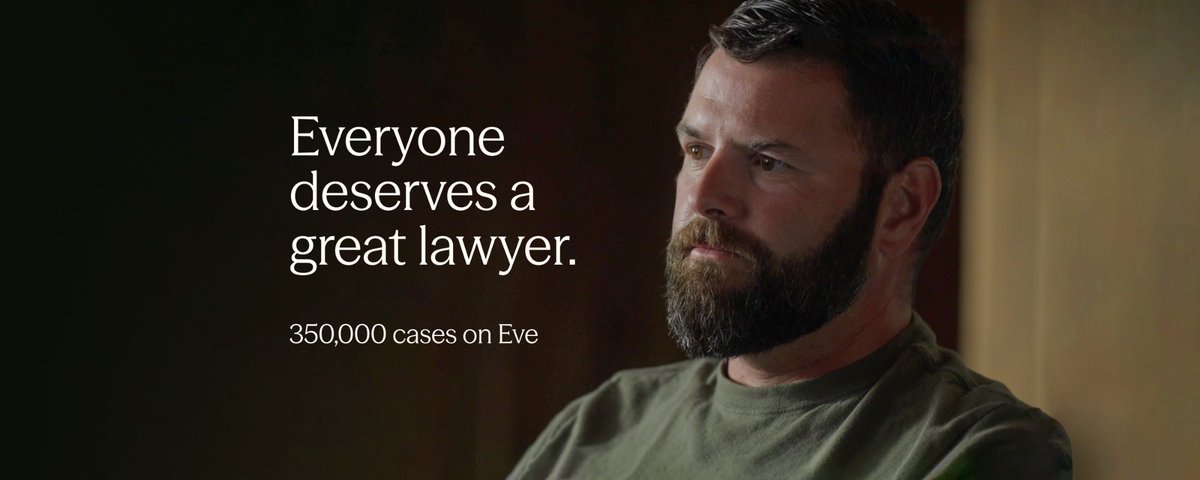
Huge milestone: Eve has helped 350,000 people take on a system built to wear them down.
Take Mike Dickerson. A four-car pileup, two hip surgeries, then an insurer betting he’d take a lowball offer.
He didn’t. His lawyers @GeigerGroup fought for years and, with Eve’s help, got him 15x the first offer.
Firms on Eve have recovered $3.5B+ for their clients, and we’re just getting started.
Next milestone: 1 million people helped.

Mark Cuban scaled Cost Plus Drugs from about 100 generics to roughly 4,000 at a flat 15% markup, forcing incumbents to change prices in ways decades of policy never did.
He thinks AI could transform healthcare, but it won't fix opaque prices and broken incentives on its own.
Mark sits down with a16z's Julie Yoo and Erik Torenberg to discuss what he's learned building Cost Plus Drugs, why trust is its core product, and how greater transparency could put pressure on healthcare costs.
They also explore why drugs designed for your DNA could cost close to nothing, the football field-sized drug plant his team shrank into tractor trailer-sized pods, his plan to make generics in Dallas for less than he pays manufacturers in India, and why every company will either be great at AI or go out of business.
0:50 Cost Plus beat decades of policy
3:15 111 generics to 4,000 drugs
5:00 A drug plant shrunk to 5K sq ft
5:55 $20M drug factories in a trailer
8:10 Hospital deals with zero denials
9:50 Why health plans are rigged
14:05 1,335 pages no human can check
18:35 "Where are they f**king me over?"
22:45 Making drugs cheaper than India
26:50 Why you still need entry-level hires
31:45 Nonprofit hospitals must offer aid
35:55 DNA-matched drugs for near $0
39:30 Why AI will mean more doctors
48:00 Mark's plan: "bye bye insurers"
52:25 Why AI labs' ads are useless
56:35 Get good at AI or go out of business
YouTube: youtu.be/5UWDUD6qaM4
@mcuban @julesyoo @eriktorenberg
Formation Bio just announced a $600M fund aimed at drug development - arguably the most meaningful bottleneck in bringing new medicines to patients.
Few large pharma companies have been built in the past century. Even fewer have been founder-led.
AI is making drug discovery dramatically more productive, but promising drugs still compete for limited capital, experienced teams, and clinical development resources.
The Drug Development Accelerator Fund pairs dedicated capital with Formation Bio’s drug developers and AI platform to advance a larger portfolio of drugs toward patients.
Congrats @BenjamineYLiu, @lintaho, and the @formationbio team!

Today we’re announcing the $600M Formation Bio Drug Development Accelerator Fund.
@lintaho and I started @FormationBio because we believed the biggest bottleneck in bringing new medicines to patients wasn’t drug discovery, but drug development.
As AI dramatically accelerates discovery, that bottleneck is only becoming more acute. Without the capital and capacity to advance promising drugs through clinical trials, much of that progress won’t translate into medicines for patients.
Our new Fund brings together dedicated capital, drug development expertise, and AI-powered development capabilities to acquire promising drugs and advance them through the clinic.
Databricks CEO Ali Ghodsi says if frontier models stopped advancing, it wouldn't matter for most orgs because enterprise AI is bottlenecked on context, not intelligence:
"There's no agentic work that's automated the whole enterprise. That has just not happened. Why is that? The real reason is the models are smart enough, but they just don't have the context that exists inside of any organization."
"They have not been in every meeting. They don't know what's in everybody's heads. They don't know all the processes. There's always a couple of employees who know everything in every organization. You go tap on their shoulder, and everybody's like, 'Oh my God, what would happen if he or she quits?'"
"If you just fused that and gave that context into the AI models, just the frontier today, I think there's so much productivity gains you could get for any organization on the planet."
"For that, we actually don't need smarter models... If the frontier doesn't advance, it doesn't actually matter for the vast majority of organizations on the planet. They're just so far behind in the adoption curve of actually automating things and getting value out of this stuff."
@alighodsi
Read the latest Profiles of the Future by @bhorowitz and @mikemcg0 on Databricks & the Future of the Firm: a16z.news/p/databricks-and-t…


Gagan Biyani of Horowitz Andreessen Academy (HAA) on why the best way to future-proof a career is being AI-native in whatever field you love:
"The question of, 'What field should I study so that I can be sure that I'm resilient to the future?' is not the right question."
"The question is, 'What field am I interested in?' I have enough faith that if you're AI-native in any field, it does not matter."
"A lot of people are concerned about coding or math. There's gonna be a whole new type of coding and math that happens with the AI-native mathematicians."
"The new students who love math, they're gonna do just fine. In fact, they're gonna go and do things none of us ever thought possible."
"That's actually something that we were trying to screen for at HAA. We really don't want someone who's like, 'I wanna make sure I'm resilient to the future.' It's a very defensive way of approaching the world, and we want you to be on offense."
@gaganbiyani
What should school look like if AI can help students learn dramatically faster?
Alpha School principal Joe Liemandt joins a16z's Erik Torenberg and Gagan Biyani of Horowitz Andreessen Academy (HAA) to discuss Alpha's model, where an AI learning engine compresses core academics into two hours a day and students spend the rest on teamwork, entrepreneurship, and other real-world skills.
They explore why high standards make kids happier, how HAA is using motivation and real-world building to redesign college, what parents need to believe before choosing a new kind of school, why Joe expects AI to drive an explosion in entrepreneurship, and why Gagan thinks students should pick what they care about over whichever field seems safest from AI.
0:40 How Alpha reinvented the school day
4:47 Making Alpha believable at scale
6:13 Why kids want to do hard things
8:30 Fifth graders vs. the Wharton MBA test
10:48 Keeping kids in the 80 to 85% zone
13:08 Gagan on redesigning college
15:00 Why Stanford and MIT kids are terrified
19:30 Why college lectures are dying
22:45 Why Ivy League parents want a new path
25:00 The 1910 tractor moment for education
27:02 Why families should take the risk
34:35 Joe's dad on his Stanford dropout
42:10 What to study when AI is everywhere
48:33 Founders School's $1M guarantee
51:53 A 14-year-old cold calls Jensen
YouTube: youtu.be/T4u2FoIm3pw
@jliemandt @gaganbiyani @eriktorenberg
Every company can rent the same frontier models, so the edge comes from what a company's agents learn about its own business. Databricks' answer is a system of record built for agents.
Before an agent can be trusted with real work, that record has to tell it:
1. What's true: the company's own data
2. What it means: how the business defines things (grounding agents in it raised accuracy from about 50% to 84.5% in Databricks' testing)
3. What it's allowed to do: an identity, a budget, and guardrails
4. Whether it worked: grading against the company's own definition of good
Feed every correction back into the record, and the company keeps what it learns even when the model changes.
"If you replace the AI model at your company and the new one inherits your definitions, permissions, evaluated cases, customer history, and hard-won exceptions, that is a foundation for a sustainable competitive advantage."
From the latest Profiles of the Future by @bhorowitz and @mikemcg0 on Databricks & the Future of the Firm: a16z.news/p/databricks-and-t…

Databricks CEO Ali Ghodsi says we already have all the intelligence we need, and the opportunity now is applying it productively:
"I think we already have AGI. I actually think we have achieved AGI. We just need to make it useful."
"Apply it to everyday things that we wanna do, and make it valuable at simple things. That's all we need, and that's what's gonna prove out to be very, very valuable for everything, businesses, companies, organizations."
"We don't need more intelligence, honestly."
@alighodsi (UC Berkeley, 2025)
Read the latest Profiles of the Future by @bhorowitz and @mikemcg0 on Databricks & the Future of the Firm: a16z.news/p/databricks-and-t…
US construction productivity fell from 1970 to 2020 while the rest of the economy got more productive, and a 1-year-old startup called Unlimited Industries is trying to reverse that.
Unlimited is managing $10 billion in data center and power plant projects, compressing design and engineering work that typically takes 18 months and 100,000 human hours into a single day.
The team has set out to do for construction what SpaceX did for launch and Anduril did for defense: question every assumption and build from first principles.
"We were better at building in the '60s, everything from power plants to houses and everything in the middle, than we are today. An era before we had computers, we were better at building stuff than we are now."
Co-founder and CEO Alex Modon expects to 2-3x the team in the next 6 months.
Unlimited is hiring founding roles across engineering, sales, supply chain, construction management, and recruiting, all in SF: a16zjobs.substack.com/p/insi…
@alexmodon @unltdindustries
Joe Liemandt of Alpha School on why AI is today's 1910 tractor moment, and why parents once again have to rethink their kids' future:
"In 1910, 90% of America had an 8th grade education. There were basically no high schools. And over 30% of America is a farmer. So everybody's on the farm, 8th grade was enough."
"Then in 1910, the Case tractor rolled up on the American farm. You can go look at the ads, it literally looks like an Anthropic ad. 'Does the work of 50 programmers. Does the work of 50 farm hands.'"
"Literally everybody in America realized 30% of the jobs are going away. That path is gone, and we have to get our kids ready for this new future. And it was that same recognition I think that parents have today."
"What America did back then... they voted to fund an education that they never experienced. They knew they had to do something different than their background, see the world differently, to get their kids ready and get them the good jobs."
"That school system became the industrial system we've had the last 100 years. It served us really well for 100 years, but now it's time for the next change."
@jliemandt
What should school look like if AI can help students learn dramatically faster?
Alpha School principal Joe Liemandt joins a16z's Erik Torenberg and Gagan Biyani of Horowitz Andreessen Academy (HAA) to discuss Alpha's model, where an AI learning engine compresses core academics into two hours a day and students spend the rest on teamwork, entrepreneurship, and other real-world skills.
They explore why high standards make kids happier, how HAA is using motivation and real-world building to redesign college, what parents need to believe before choosing a new kind of school, why Joe expects AI to drive an explosion in entrepreneurship, and why Gagan thinks students should pick what they care about over whichever field seems safest from AI.
0:40 How Alpha reinvented the school day
4:47 Making Alpha believable at scale
6:13 Why kids want to do hard things
8:30 Fifth graders vs. the Wharton MBA test
10:48 Keeping kids in the 80 to 85% zone
13:08 Gagan on redesigning college
15:00 Why Stanford and MIT kids are terrified
19:30 Why college lectures are dying
22:45 Why Ivy League parents want a new path
25:00 The 1910 tractor moment for education
27:02 Why families should take the risk
34:35 Joe's dad on his Stanford dropout
42:10 What to study when AI is everywhere
48:33 Founders School's $1M guarantee
51:53 A 14-year-old cold calls Jensen
YouTube: youtu.be/T4u2FoIm3pw
@jliemandt @gaganbiyani @eriktorenberg
The length of software tasks AI agents can complete has doubled roughly every 7 months since 2019, and recent models are moving even faster, from 30 seconds of human work in 2022 to a full workday today.
Yet inside most companies, AI still isn't trusted to reliably update records in Salesforce. "AI does not have an intelligence problem," says Databricks CEO Ali Ghodsi. "It has a context problem."
Ali's answer is what he calls a "system of record for agents."
From the latest Profiles of the Future by @bhorowitz and @mikemcg0 on Databricks & the Future of the Firm: a16z.news/p/databricks-and-t…

About a decade ago, Databricks got an acquisition offer at roughly six times its valuation at the time. CEO Ali Ghodsi tells the story of the conversation with Ben Horowitz that made him turn it down:
Ben: "You just don't get this good of a market opportunity with this good of an entrepreneur. That's the rarest of rare things."
"We see great entrepreneurs, but their market opportunity is limited, and then we see companies that have a great market opportunity, but the entrepreneur is not big enough to fulfill that... But this was a case where we had both."
Ali: "The acquisition offer was on the table... I had made the mistake of telling my co-founders, and they were like, 'Take your hands off the keyboard. Nobody work anymore. We're done here. Let's count my money.'"
"And I was like, 'Maybe they're right. Maybe we should just sell.' And I remember having that conversation with Ben."
"He said, 'If you sell for this number, it's really great for me. I'll pay the investors back many times over... But if you're like me, you're gonna look back the rest of your life thinking, I missed that one shot. I should have taken it all the way. And now I'll never know how far I could have taken it. So do you wanna live with that, or do you wanna just have the money?'"
"And I was like, 'Okay, thanks.' Hung up the phone. 'We're never doing this. This is not happening.'"
@alighodsi @bhorowitz
Read the latest Profiles of the Future by @bhorowitz and @mikemcg0 on Databricks & the Future of the Firm: a16z.news/p/databricks-and-t…
What should school look like if AI can help students learn dramatically faster?
Alpha School principal Joe Liemandt joins a16z's Erik Torenberg and Gagan Biyani of Horowitz Andreessen Academy (HAA) to discuss Alpha's model, where an AI learning engine compresses core academics into two hours a day and students spend the rest on teamwork, entrepreneurship, and other real-world skills.
They explore why high standards make kids happier, how HAA is using motivation and real-world building to redesign college, what parents need to believe before choosing a new kind of school, why Joe expects AI to drive an explosion in entrepreneurship, and why Gagan thinks students should pick what they care about over whichever field seems safest from AI.
0:40 How Alpha reinvented the school day
4:47 Making Alpha believable at scale
6:13 Why kids want to do hard things
8:30 Fifth graders vs. the Wharton MBA test
10:48 Keeping kids in the 80 to 85% zone
13:08 Gagan on redesigning college
15:00 Why Stanford and MIT kids are terrified
19:30 Why college lectures are dying
22:45 Why Ivy League parents want a new path
25:00 The 1910 tractor moment for education
27:02 Why families should take the risk
34:35 Joe's dad on his Stanford dropout
42:10 What to study when AI is everywhere
48:33 Founders School's $1M guarantee
51:53 A 14-year-old cold calls Jensen
YouTube: youtu.be/T4u2FoIm3pw
@jliemandt @gaganbiyani @eriktorenberg