

Research Scientist @GoogleDeepMind. Previously @UCBerkeley. Things I've built: AlphaGenome 2, scvi-tools
London, England
Joined April 2012
- Tweets543
- Following787
- Followers1.8K
- Likes1K





Pinned Tweet
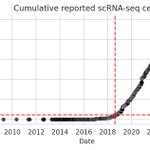
Single-cell atlases continue to map the diversity of cell states, but how can we use them to interpret non-coding genetic variants?
Excited to share AlphaGenome 2, our model for predicting cell-type-specific regulatory activity and variant effects from DNA sequence.
deepmind.google/blog/alphage…

AlphaGenome 2 is now on bioRxiv!
I was really impressed by how much we were able to compress the paper writing timeline with Gemini and @antigravity. Gemini was able to write first drafts of the methods and results given our code, figures, and an outline, which we iteratively refined.
biorxiv.org/content/10.64898…

Adam Gayoso retweeted

MLCB 2026 is finally here! The premier ML x Bio hybrid meeting will be on Mon (11/16) and Tue (11/17) from ~9a-6:30p ET.
Registration is full but will be streamed via zoom and youtube live w/ links posted on MLCB website shortly before it starts
mlcb.org
JOIN US!

Adam Gayoso retweeted

Very excited to see cell state conditioned sequence-to-omics models going mainstream. And as always @adamgayoso @Avsecz & the DeepMind genomics team have crushed it. 1/

Single-cell atlases continue to map the diversity of cell states, but how can we use them to interpret non-coding genetic variants?
Excited to share AlphaGenome 2, our model for predicting cell-type-specific regulatory activity and variant effects from DNA sequence.
deepmind.google/blog/alphage…
We would like to learn about how people are using AlphaGenome 2!
We'll spotlight selected projects so the community can learn from them, and some may be eligible for additional API quota or credits. Please submit by November 30th.
docs.google.com/forms/d/e/1F…

Adam Gayoso retweeted

Finding the exact genetic cause of a rare disease is like looking for a needle in a haystack. 🪡
On our podcast, @fryrsquared explores with @Avsecz and @adamgayoso how AlphaGenome 2 helps scientists test millions of DNA changes to find vital clues for human health.
Timecodes:
00:00 Introduction to AlphaGenome
04:01 Genotype, Phenotype & DNA
08:30 Transformers to AlphaGenome
12:11 Mapping the Genome
17:45 Rare disease cases
21:10 AlphaGenome 2
30:06 Future vision
38:45 Hannah's thoughts
Adam Gayoso retweeted

Super proud to announce AlphaGenome 2 - our new DNA sequence model! 🧬 It predicts the impact of DNA variants in different specific cell types - unlocking crucial information for understanding complex diseases. Available for academic research via our API: alphagenomedocs.com/

Adam Gayoso retweeted

AlphaGenome 2 is helping uncover the cellular drivers of disease, giving scientists a powerful tool to predict how DNA variants impact specific cell types.
Every cell in our body shares the same DNA blueprint, but different cell types (like heart muscle cells vs. immune cells) read that blueprint differently. This new @GoogleDeepMind model predicts how these specialized cells interpret DNA, turning genetic code into biological insights.
Building on AlphaGenome 1 this makes it significantly easier for researchers to link genetic findings to the root causes of disease in the specific cells where they actually unfold.
Adam Gayoso retweeted

Excited to announce AlphaGenome 2 — our new genomic model for interpreting gene regulation and variants with improved cell-type specificity.
Read mode in the blog post: deepmind.google/blog/alphage…

Adam Gayoso retweeted

I’m very pleased to introduce AlphaGenome 2, @GoogleDeepMind’s next-generation genomics model that deciphers how DNA changes affect cells.
Cells are the basic units of life and key to our understanding of biology. It is an ongoing challenge to predict how DNA changes affect the functioning of different cells, such as for a heart muscle cell or an immune cell fighting an infection, and to uncover cellular drivers of disease.
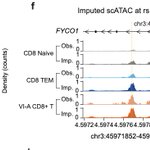
To make progress on this challenge, we needed to design the architecture of AlphaGenome 2 so its predictions were conditional on cell types and states. This new design enables AlphaGenome 2 to predict variant effects across hundreds of human cell types and adapt to unseen cell and disease states without retraining.
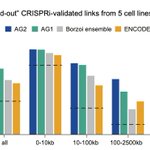
When evaluated on the TenK10K immune cell dataset, AlphaGenome 2 demonstrated a major leap in accuracy over its predecessor. It reliably identified nearly twice as many causal variants (30% vs. 16%) and directional gene effects (43% vs. 23%) compared to the original AlphaGenome. This step-change improvement in precision helps researchers pinpoint previously overlooked disease-relevant variants with high confidence.
Using analysis on retrospective case studies, we were able to show AG2’s real world utility in disease understanding. A landmark study had previously shown that a variant in a distant regulatory switch drives irritable bowel disease by overactivating the ETS2 gene in gut macrophages. When used to make predictions across various immune cell types in the gut, AlphaGenome 2 singled out the exact causal variant and showed that it selectively boosts the ETS2 gene in gut macrophages, leaving other cell types and genes largely unaffected.
I would like to thank my colleagues Adam Gayoso @adamgayoso, Žiga Avsec @Avsecz, and our entire genomics team for their incredible contributions and dedication to bringing this model to life.
We are making AlphaGenome 2 available for non-commercial academic research via the AlphaGenome API, and soon we will release AlphaGenome 2 Skills in Google Antigravity. I’m incredibly excited to see how scientists around the world use this model to make progress on biological understanding and treating disease.
Read more on our blog here:
deepmind.google/blog/alphage…
Adam Gayoso retweeted

AlphaGenome 2 is live! A step change in performance and new capabilities over AG1! @adamgayoso's thread covers the key results.
Manuscript: storage.googleapis.com/deepm…
Blog: deepmind.google/blog/alphage…
API: github.com/google-deepmind/a…
A few notes under the hood & what's next:
Single-cell atlases continue to map the diversity of cell states, but how can we use them to interpret non-coding genetic variants?
Excited to share AlphaGenome 2, our model for predicting cell-type-specific regulatory activity and variant effects from DNA sequence.
deepmind.google/blog/alphage…
We also scored ~7M common variants across 510 primary conditions. AG2 can highlight the causal cell types across complex traits, prioritize fine-mapped variants beyond known eQTLs, and predict effect directions.
At the chr21q22 IBD locus, AG2 recovers all three pieces from sequence, recapitulating prior experimental evidence:
1. rs2836882 over 6 linked SNPs
2. ETS2 (290 kb away) over 7 closer genes
3. Effects mainly in macrophages & monocytes

1
4
888
We see AG2 as a bridge between human genetics and cell biology, and with the cell encoder, a blueprint for turning observational single-cell atlases into variant effect maps. We are also excited to see what discoveries can be made with our precomputed resources
Try AlphaGenome 2:
- Code & Python API: alphagenomedocs.com/index.ht…
- E2G & GWAS atlases: deepmind.google.com/science/…
Read the preprint: storage.googleapis.com/deepm…
This was a massive collaborative effort across our team @GoogleDeepMind and I’m really grateful to have been able to work with this team on this project. I also want to thank all the teams and organizations involved with generating the single-cell atlases that really powered this project.