

Founder and CTO @chia_project Back in the day created BitTorrent For business and media enquiries mail [email protected]
San Francisco
Joined November 2008
- Tweets15.9K
- Following829
- Followers118K
- Likes4.5K







Bram Cohen🌱 retweeted

A blockchain built to support marketplaces for tokenized real-world assets needs regulated stablecoins and a reliable way to move dollars on and off the chain.
That's why @chia_project partnered with Brale to bring regulated stablecoin issuance and money movement to its network.
Chia is now live on Brale.

Happy Halloween everyone. Here's a playlist open.spotify.com/playlist/2X…

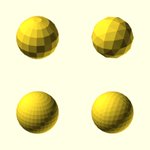
People say it's in poor taste to point out that vaults would help after there's a hack where vaults would have helped, so here's some AI generated content instead

I was wondering whether polygon dissections could require curved cuts to be optimal and this came to me in a literal fever dream. It seems a convex example is novel

A simulator of the Enigmatic Shapeshifter puzzle for everyone who's never gotten to play with it. Yes the real physical thing really does move this way claude.ai/artifact/Y4e8RtpJE…

Your periodic reminder that WalletConnect is an unacceptable piece of shit which can't even be bothered to accept one liner clear bug fixes github.com/WalletConnect/wal…
Chialisp syntax highlighting is now up to date and supports all the latest and greatest marketplace.visualstudio.com…

Hobby time coding: A solver for the Maltese Gear Cube github.com/bramcohen/maltese…

Bram Cohen🌱 retweeted

the warp.green bridge is back! that means wUSDC/b can be bridged again. the asset IDs remain the same. hf

Do you need to store a massive permutation? Here's your solution github.com/Chia-Network/bene…

Bram Cohen🌱 retweeted

Part 2 of State channels on Chia: what happens on every move, and who watches the rules.
The referee is a coin. 🧑⚖️
#Chia #ChiaGaming
Bram Cohen🌱 retweeted
State channels on Chia: play off-chain, settle on-chain. #chiagaming #chia
Well that was a couple decades of unnecessary drama anthropic.com/research/ecdsa…

To all the people making the 'Ha ha mathematicians are obsolete' hot takes: You're wrong, and mathematicians are still smarter than you
There's a big project going on to improve the multiplication algorithm break but are there similar improvements being added to 3SUM?
Why didn't OpenAI make the AI clean up the math papers before publishing them? Because it can't. The AI messes around doing random stuff at an unbelievable rate until it comes across a result. Its level of understanding and quality of guidance is still minimal.
Thoughts on the rules of dominoes bramcohen.com/p/the-rules-of…

Bram Cohen🌱 retweeted

I wasn’t going to comment since this is a really bad take IMO, but since it’s taken off I feel the need to. To my understanding, there is no evidence whatsoever pointing to a break of decades old hardness assumptions like elliptic curve cryptography. 1/n

Today I call upon the blockchain industry to calmly begin planning for "bunker mode". My personal recommendation is to set in motion a controlled mass migration of assets to fresh addresses, i.e. addresses whose pubkeys remain hidden behind a hash.
Holders, starting with large and sophisticated ones, should consider moving the bulk of their funds to addresses that have never signed a transaction. And when they do sign one, they should also move remaining funds to a new address (possibly generated from the same seed phrase).
Don't rush. While I believe there is cause for action a rushed migration would do more harm than good. Don't panic either. Moving assets to protected addresses is a simple, preventative step which does not require new cryptography or new wallets.
IMO it is now reasonable to brace for the possibility that ECDSA breaks before qday, in the worst case in months not years. By "break" I mean fast private key recovery (e.g. in one week) on available hardware (e.g. a large GPU cluster).
Recent days have been humbling for human mathematical intuition. Long-held, unquestioned hypotheses have fallen. This includes the n log(n) bound for integer multiplication and the 3SUM conjecture. In hindsight, May's unexpected disproof of the Erdős unit distance conjecture was our warning shot.
Yesterday's OpenAI drop made it clear that mathematical superintelligence is upon us. They say there are weeks where decades happen. We are about to live through weeks where centuries of mathematical progress happen. Could our magic 64-byte ECDSA signatures be too good to be true? Was it just security through obscurity all this time?
Elliptic curves feel especially vulnerable to superintelligence. Curves carry rich structure, with room for fancy tricks like Schoof, Frobenius, pairings. (By contrast, hashes are designed to minimise algebraic structure.)
Separately, as Ewin Tang can attest, an efficient quantum algorithm sometimes foreshadows an efficient classical one. We should be open to the possibility of a classical counterpart to Shor that breaks elliptic curves and RSA at once.
Also noteworthy is the striking under-representation of cryptographic breakthroughs among the 722 mathematical results OpenAI published. I've witnessed first-hand the US government censoring academic quantum cryptanalysis results. Backroom interventionism is my base case.
I urge large, sophisticated actors to lead by example. Project11's "risq list" (bitcoin-risq-list.projecteleven[.]com) is a great tracker of exposed BTC pubkeys. Binance, Bitbank, Robinhood, Bitfinex, and Tether have an opportunity to harden their cold storage. Next month I'll address institutions in London in a live Q&A (forum.ethereuminstitutional[.]org/london-2026).
Again, please do not rush. Wallets holding under 50 BTC enjoy partial cover from "Satoshi's shield", i.e. his 20K exposed addresses that hold 50 BTC each. Load-bearing signers like oracles and L2 security councils should consider rotating ECDSA pubkeys with every signed message and/or multi-signing with a hash-based schemes like SPHINCS.
Exiting bunker mode safely will require post-AI cryptography. My inclination is to go all-in on hash-based cryptography and avoid structured mathematical assumptions entirely, whether from curves, lattices, or isogenies. A single battle-tested hash (e.g. from the SHA or BLAKE families) yields plausible post-AI security.
The Ethereum roadmap on strawmap[.]org fully embraces hash-based cryptography with end-to-end formal verification as a response to the quantum threat. Those timelines must now be revisited and accelerated in light of mathematical superintelligence. I'll be pushing for maximum defensive acceleration.