
Chief Scientific Officer, Microsoft
Seattle WA USA
Joined March 2011
- Tweets3K
- Following1.6K
- Followers31.7K
- Likes3.5K


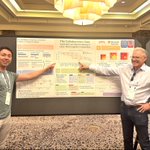


Engaging discussion. Recorded earlier in the summer before the recent mathematics results.

Scientists solved about 180,000 protein structures in 60 years. AlphaFold has predicted 200 million+. @Microsoft's chief scientist @erichorvitz says science is changing so fast it's rethinking what integrity and credit even mean.
Eric Horvitz retweeted

It feels like only the AI labs and governments know where this is going. @Microsoft's chief scientist @erichorvitz says it's uncomfortable to live through a transformative era, and there's a lot of uncertainty ahead. Even for them.
Eric Horvitz retweeted
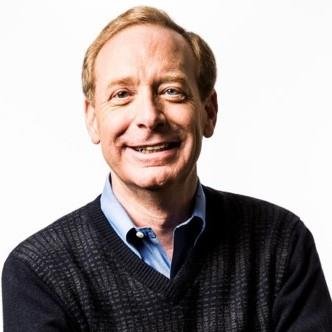
If we believe AI is one of the most powerful technologies we’ve ever created, we should also recognize that no technology is above the law.
Innovation needs to keep moving forward. But safety needs to keep pace. We need sensible, balanced rules that enable us to do both.
Eric Horvitz retweeted

“We don’t say, how can we use an existing tool well? We look at the problem and say, how can we make a new tool that will allow us to answer questions much, much more effectively?” It’s how @KarlDeisseroth and his colleagues developed optogenetics.
Enjoyed the conversation with these vibrant hosts. @AoT_WE
Eric Horvitz retweeted

Researchers have developed an AI-based approach to help physicians with real-life clinical workups, starting with the patient’s chief complaint, systematically asking questions and deciding what laboratory and imaging tests to order, and then continuing the evaluation on the basis of the answers received.
Learn more this week in Science: scim.ag/3U8xn94

ALT This image depicts a patient and a physician working together with artificial intelligence (AI) to reach a diagnosis.
On today’s cover of Science: Our work on AI systems that reason through diagnosis, step by step. Grateful to an incredible team of collaborators. Sharing code toward achieving more accurate & more timely diagnoses worldwide. @HarshaNori @mayankdaswani @scottlundberg @marcotcr Marc Wilson Xiao Liu @viknesh_s Jonathan Carlson, @mattlungrenMD @baygross Peter Hames @mustafasuleyman @Dominic1King @Microsoft @satyanadella @kevin_scott @EricTopol @NASEM_Health @MayoClinic @theNAMedicine
science.org/eprint/Y7CZQFPZM…

Eric Horvitz retweeted

Just published @ScienceMagazine
Higher medical accuracy at lower cost
A 3-agent AI for sequential diagnosis nearly doubled accuracy compared with physicians for >300 @NEJM CPC cases and >300 ER cases AND substantially lowered cost, also exceeded performance of many AI models, physicians plus AI @HarshaNori
@erichorvitz @Dominic1King @mustafasuleyman

Enjoyed the discussion.
ChatGPT has about 1.2 billion weekly users, and most use it for advice, search and writing. @Microsoft's chief scientist @erichorvitz says the models are far more powerful than that. The chat box is what's holding them back.
Public preview of BioEmu2: Scalable emulation of biomolecular dynamics from @MSFTResearch

Public preview of BioEmu2! @MSFTResearch AI for Science’s new foundation model for biomolecular structure, dynamics and function. Open weights, MIT license.
github.com/microsoft/bioemu2
Movie: BioEmu2-simulated binding of intrinsically disordered peptide PUMA to MCL-1 receptor. 🧵⬇️
In 2014, we constructed an early neural network model to predict weather @MSFTResearch, presented at KDD dl.acm.org/doi/epdf/10.1145/…. The work was led by intern @adityagrover and @akapoor_av8r. We were excited by the power and promise of the approach.
That early work is the distant ancestor of intensive follow-on efforts at @microsoft and other organizations demonstrating the capabilities of machine learning to predict the weather. Our newest work on weather prediction is described here: microsoft.com/en-us/research…, published in @Nature. We show how we can learn from errors to better predict weather in the challenging subseasonal range, 2 to 6 weeks out, using a method called probabilistic bias correction. @LesterMackey @satyanadella


In @Nature this week, our new research shows how machine learning can improve weather forecasts two to six weeks out, a timeframe that's historically been very difficult to predict.
It's exciting to see the potential of this work to help us better prepare for extreme weather, manage natural resources, and make more informed decisions in agriculture.
There's a broader lesson here... the future may not just be about ever-more-capable models, but about building intelligent verification systems around them: systems that learn where models are systematically wrong, reason about cause and effect, and continuously calibrate predictions against reality.
Read more: microsoft.com/en-us/research…

Future work, c. 2014: “Future work includes projecting weather predictions to more distant times into the future. more distant times into the future. We are also interested in exploring the use of computations of the value of information to guide sensing...” Great work following up on forecasting. Use of expected value of information to guide sensing is still wide open.
This work on forecasting winds showed how to allocate a budget sensing by computing value of information: erichorvitz.com/planesenors.…
Eric Horvitz retweeted

From 1 cubicle to a leader in AI & health data 🚀 We celebrated 10 years of @WashUMedi2db! Highlights included a fireside chat with @erichorvitz (CSO, @Microsoft) & @prpayne5 on AI reasoning, trust & point-of-care delivery.
Read the full event recap: i2db.wustl.edu/celebrating-a…



Insightful concluding remarks on AI alignment at #COLM2026 by Noam Brown @polynoamial @OpenAI @AnthropicAI @MSFTResearch
