

Executive Director of @IEA, the global authority on energy. Big @Galatasaray fan.
Paris, France
Joined August 2015
- Tweets4.4K
- Following898
- Followers87.1K
- Likes1.2K





Pinned Tweet
The Hormuz crisis has delivered a huge shock to the energy system, dwarfing the scale of past crises
The longer it lasts, the deeper the effects. Diversification, domestically available resources & electrification = the big winners
Read @IEA's WEO 2026: iea.li/4iM6XDA

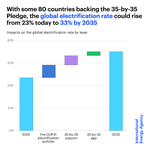
COP31 put electrification firmly on the map, with some 80 countries backing the 35-by-35 Electrification Pledge that was built on @IEA analysis.
Implementation of the electrification Pledge and commitments can raise the global electrification rate from 23% to over 33% by 2035, new IEA analysis shows – and it could go even higher if more countries join the Pledge.
Reaching the 35% electrification rate globally has the potential to reduce emissions by at least 8 gigatonnes, even if transitions in the power mix move slowly. If they move faster, the emissions reductions could be significantly larger.

The momentum behind electrification is already strong, with more & more countries introducing new policies this year, and it is set to accelerate further thanks to the 35-by-35 Pledge.
The world has entered the Age of Electricity, and the Hormuz crisis is reinforcing the strategic case for electrification, as @IEA's World Energy Outlook 2026 highlights: iea.li/3XdiN12
And our recent Special Report on Electrification assesses the implications of faster electrification for energy security & climate goals, as well as the broader benefits & trade-offs: iea.li/48krfOz

Electrification is in focus at #COP31 & our Special Report sets out the implications of the growing momentum behind raising the rate to 35%
Even if transitions in the power mix move slowly, reaching 35% electrification globally by 2035 cuts emissions by at least 8 gigatonnes

Read more in @IEA’s Special Report on Electrification – produced at the request of the COP31 Presidencies of Türkiye and Australia: iea.li/48krfOz

Fatih Birol retweeted

India is emerging as an increasingly important force in global renewable energy markets
Its rapid expansion of renewable power is helping boost energy security by reducing reliance on fuel imports while opening new opportunities in manufacturing
More 👇 iea.li/4sFP0K3

We’re LIVE from the launch of @IEA’s World Energy Outlook 2026! 🔴
Join #WEO26 lead authors, @Laura_Cozzi_ & Tim Gould, and me as we discuss how the unprecedented shock from the Hormuz crisis could reshape the energy landscape for years to come 👇 iea.li/48nSAPV
In many countries, the crisis is aligning energy security & energy transition goals more closely than ever, helped by the falling cost of renewables, batteries & other key technologies
But energy security concerns alone aren't enough to close the gap with a 1.5C-aligned pathway

To delve into the wealth of energy analysis in #WEO26, take a look at the entire report, freely available on our website ➡️ iea.li/3XdiN12
And join the lead authors, @Laura_Cozzi_ & Tim Gould, and me for our LIVE launch at 11am Paris time ➡️ iea.li/4j1F76e


The world has entered the Age of Electricity – but 700 mln people still lack electricity access, depriving them of things most of us take for granted, such as the use of fridges to store food & medicine and lighting at the flick of a switch
Recent energy shocks have slowed progress on expanding electricity access, but COP31 and its emphasis on electrification can drive new momentum

For countries that have not yet reached universal access to modern energy, expanding access is the most important action they can take to raise the share of electricity in their energy mix
For those countries, electrification means energy access
This will require more policy action in those countries and scaled up support from international partners
For more, read @IEA's latest analysis on electricity access trends: iea.li/4iORnqI
And our Special Report on Electrification: iea.li/48krfOz

