

America’s most influential journal of religion & public life.
New York City
Joined March 2009
- Tweets47.2K
- Following9
- Followers80.4K
- Likes3.1K




Aaron Sorkin’s latest film takes on Facebook’s failures, but its muddled message raises a larger question: Is the fight over social media really about protecting people or about politics?
Read the piece by Helen Andrews at firstthings.com/aaron-sorkin…


In “Does Evangelicalism Exist?,” Carl R. Trueman examines what the term “evangelical” means and whether it remains a useful way to describe Christian identity.
Using the controversy surrounding "Christianity Today" as a starting point, he explores the tensions that arise when a broad label encompasses Christians with differing theological commitments and no shared institutional structure.The essay considers the relationship between evangelical identity, established churches, and the historic creeds, and reflects on the value of more clearly defined expressions of Christian belonging.
To read the piece, visit firstthings.com/does-evangel…

First Things retweeted
"Sorkin should be happy. He tried to make a plucky underdog story when, in fact, his side won. The NGOs who spun up “misinformation” as a global threat got everything they ever wanted and more."
@herandrews reviews The Social Reckoning.
firstthings.com/aaron-sorkin…

First Things senior editor Julia Yost guest-hosts an episode of ‘Interesting Times.’ Be sure to listen!

I was honored to guest-host an episode of ‘Interesting Times.’ I sought common ground with a feminist pornographer.
A few points of difference emerged, too.
nytimes.com/2026/10/29/opini…

In “The Gospel, Not ‘Listening,’ Is the Message,” George Weigel reflects on the relationship between listening, dialogue, and the Church’s mission to proclaim the Gospel.
Drawing on Bishop Erik Varden’s reflections on marriage and family and the biblical story of the road to Emmaus, the piece considers the place of shared stories alongside the truths of Christian faith.
Read the piece by visiting firstthings.com/the-gospel-n…

In “The Myth of St. Francis,” Gabriel Said Reynolds examines how Pope Francis’s account of St. Francis’s meeting with the Muslim sultan Malik al-Kamil differs from the earliest historical sources.
Challenging the modern image of Francis as a symbol of interfaith peace, Reynolds argues that Francis traveled to Egypt to preach Christianity and risked his life for his faith. The piece considers the tension between historical truth and contemporary ideals.
To read the piece, visit firstthings.com/the-myth-of-…

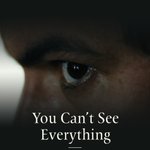
In "You Can See Everything", Nathan Fielder and Lance Oppenheim document Elizabeth Holmes in the final month before she begins her prison sentence, offering an intimate look at her life beyond the Theranos scandal.
In this review, Germán S. Díaz del Castillo reflects on the limits of what a camera can reveal about a person’s inner life, and the difference between observing someone and truly knowing them.
To read the piece, visit firstthings.com/you-cant-see…

First Things retweeted

My latest for First Things:
You desperately want "Fjord" to have a happy ending...but it doesn't.
firstthings.com/fjords-cold-…

In Job and Her, J. Mark Mutz reflects on suffering, faith, and the limits of our ability to understand another person’s experience. Through the story of a woman living with profound cognitive and physical decline, alongside reflections on the Book of Job and the writings of Søren Kierkegaard and Leo Tolstoy, he considers the challenges of offering comfort, the search for meaning amid suffering, and the mystery of a life whose purpose may remain beyond our understanding.
To read the piece, visit firstthings.com/job-and-her/

In Fjord’s Cold Reality, Charlotte Allen examines Cristian Mungiu’s film "Fjord", which follows a Romanian-Norwegian family caught in a legal battle with Norway’s child-welfare authorities.
The film explores tensions between religious conviction, parental authority, cultural conformity, and the limits of tolerance, while portraying the complexities and imperfections of the people at the center of the story.
To read the piece, visit firstthings.com/fjords-cold-…

First Things retweeted
A camera can show us everything except what love sees. No amount of footage can do the work of knowing a person.
My review of You Can See Everything for @firstthingsmag
firstthings.com/you-cant-see…

In the latest installment of Conversations, Scott Greer joins Mark Bauerlein to discuss his recent book, Whitepill.
To listen to the conversation, visit firstthings.com/the-politics…

In We Can Build Things, Erika Bachiochi reflects on the need for a renewed women’s movement rooted in human flourishing, family, virtue, and the wisdom of generations past.
Drawing on her own experiences building a school and raising a family, she explores the importance of formation, interdependence, and recovering the guidance needed to live well.
To read the piece, visit firstthings.com/we-can-build…

In The Zone of Commitment, a memoir of mountaineering and mortality, R. R. Reno recounts a perilous ascent of Mount Kitchener to explore the exhilaration of total concentration, the appeal of risk, and the human desire to affirm life in the face of death.
Reflecting on the dangers of climbing, the anxieties of loved ones, and the devastating loss of his son, he considers how moments of complete self-possession can illuminate both the limits of human control and the preciousness of being alive.
To read the piece, visit firstthings.com/the-zone-of-…

First Things retweeted

Was Elisabeth Elliot bisexual, and more importantly why do we care? Why are people trying to "drive conversation" about this? Me in @firstthingsmag.
firstthings.com/the-trouble-…

First Things retweeted

In @firstthingsmag today, I reflect on the Rochester convention, and why building a classical school and a large and happy family has inspired in me a persistent hope that ...
firstthings.com/we-can-build…

In The Trouble with Elliotgate, Bethel McGrew examines the controversy surrounding claims about Elisabeth Elliot’s sexuality and Christianity Today’s handling of the resulting article.
McGrew critiques the evidence behind the speculation, considers the broader tensions within evangelical debates over same-sex attraction and sexual identity, and questions whether publicizing such uncertain personal claims serves the Church or its readers.
To read the piece, visit firstthings.com/the-trouble-…

In "Prime Rib of Unicorn", John Wilson celebrates the rediscovery of Henri Coulette, a poet whose wit, formal brilliance, and gift for irony have long been overlooked.
Through close readings of Coulette’s poems and his unexpected friendship with novelist Ross Macdonald, Wilson explores the art of borrowing, the distance between poet and speaker, and the strange intersections of literary influence, personal hardship, and creative imagination.
To read the piece, visit firstthings.com/prime-rib-of…
