

@haia_os
🇿🇦Account based in
About this account
- Account based in
- South Africa
- Connected via
- Web
Account-level information from X, not a live location or the device used for a specific post.
The operating control plane for programmable money. Local systems stay authoritative. HAIA holds the complete operation.
Joined June 2025
- Tweets527
- Following21
- Followers12K
- Likes2K








Pinned Tweet
Take one supplier payment. Policy says approved. Execution says the transfer was sent. The provider says delivered. The ledger says posted. Four systems report success.
The invoice is still open.
None of those systems is wrong, and none of them is placed to notice. Each owns a fact about its own part. The fact that matters to the business, whether the operation reached its outcome, belongs to nobody's system.
HAIA is built to hold that fact. It takes the local truths from business, policy, execution and record and assembles them into one persistent state for the operation, with an owner, the evidence, and what is still open. The bank, the wallet, the ledger and the policy engine stay authoritative for what they own. HAIA works one level above them, on the operation as a whole.
The control object is the complete operation. The payment is one piece of it.

A payout can clear the network, land in the recipient's account, and still leave the obligation open, if the invoice it was meant to settle was never marked closed on the other side.
Payments infrastructure is very good at proving the money moved. It was never built to prove the obligation it was moving for is done.
That is a different question, and it usually belongs to a different system than the one that processed the payment. The rail knows the transaction. The business knows the obligation. HAIA sits between them, holding the operation that ties a specific payout to a specific obligation, so payout completion is a fact you can see, not an assumption you make because the transaction cleared.
Faster rails help the first question. They do not answer the second one.

Start with one operation. The kind your team still reconstructs by hand across systems.
For treasury it is the question of whether the intended position was actually reached. For a payout, whether the obligation actually closed. For platform money movement, whether the customer actually got the intended outcome.
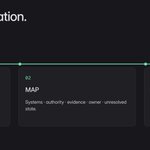
Then three steps. Bring the operation. Map the systems, the authority, the evidence, the owner and the unresolved state. Define what closed means and what HAIA has to prove.
It fits where the operation crosses systems, the consequences are real, and someone clearly owns the outcome.

Every resolved operation leaves something behind. The blocker, the evidence that closed it, the step that worked, the step that would have caused trouble.
HAIA is designed to use that. Operate, observe, resolve, learn, and then improve how the next operation is governed. A recurring blocker can turn into a clearer prerequisite or a better policy.
Every change in that loop requires approval, can be rolled back and leaves an audit record. It is governed improvement, and it is not autonomous control.
That matters more as agents start to initiate operations. The more that acts on its own, the more an enterprise needs one place where what happened is understood, and where every change to the rules is a decision someone made.

Control over a cross-system operation sounds like it means taking over. It should not.
The bank decides what the bank can do. The policy engine decides what is allowed. Approvals belong to the people who own them. HAIA replaces none of that.
What it does is carry authority across the operation. The policy result, the approval, the action taken and the evidence stay connected as the operation moves from one system to the next. Access is managed, approvals go to the right people, and changes land in an audit trail.
When someone asks later why something happened, the answer is one connected record of what was authorized, by whom, and what followed.

An unresolved operation with no owner is just a worry.
Coordination around cross-system operations often lives in portals, spreadsheets, messages and human follow-up. The work is real. The record of it is scattered.
HAIA keeps ownership, priority, deadline and escalation attached to the operation itself. A manager sees what is overdue, what is due this week, who has it and what has been escalated, in the same place where the operation's state lives.
Assigning the work and understanding the state stop being two different tools.

A payment was delivered, but the invoice is still open. Someone has to do something, and the wrong something is easy.
Sending the payment again feels like the fix. It already went, so a retry creates a duplicate that has to be reversed by hand.
HAIA shows four things before anyone acts. The blocker, in plain terms. The prerequisites that must be true, such as the provider reference being available and no duplicate payment on file. The safety constraint, in this case do not retry. And the alternative path if the fix does not work, such as escalating to finance for manual review.
The aim is a bounded next action, with the evidence attached, that does not create a second problem.

Singapore's regulator published a framework in July for governing AI agents in finance. SAFR is voluntary and was written with industry. It puts a checkpoint between an agent's proposed action and its execution, checks the action against the institution's mandate and records the decision. In September, Mastercard and Visa both updated their agentic commerce risk tools.
The direction is consistent. The moment before an agent acts is being instrumented, action by action.
An operation is not one action, though. A supplier payment passes through an approval, an execution, a provider and a ledger. Every checkpoint along the way can pass and the operation can still end the day open.
Governing the action answers whether the agent may. HAIA works on the next question, which is where the operation stands once it has acted. State, owner, evidence, and the next step that is safe to take.
Two dates worth putting next to each other. The UAE Central Bank's new operational risk regulation took effect on 14 September. The UK's single regime for operational incident and third-party reporting applies from 18 March 2027.
Different regulators, different scopes, different thresholds. Neither is a template for the other, and neither applies to everyone. But look at what each asks a firm to be able to produce. In the UAE, a notice within four hours that names the critical operations affected. In the UK, structured reports on serious incidents and a register of the material third parties the firm relies on.
Both put the burden on the firm to show, quickly and in a structured form, what is happening across the systems and providers it depends on. Most operating software shows each of those systems on its own.
That gap is what HAIA is built for. It is not a compliance tool and it makes no firm compliant. It is the layer where a complete operation, its owner, its evidence and what is still open are held in one view, above the systems that each hold a part.

Treasury confirms a transfer moved the balance to the intended account. The bank confirms funds settled. The FX desk confirms the rate was locked. Three confirmations, three systems, three different definitions of done.
None of them answer the question treasury actually has to answer. Did we reach the position we intended, in the currency and account we intended, by the time we needed it there.
That question sits above any single system's record. HAIA holds it as one state for the liquidity operation, drawing on the bank, the FX system and the treasury policy without replacing any of them, and shows whether the intended position was actually reached, not just whether each step reported success.
A confirmed transfer and a reached position are not the same fact. Treasury needs the second one.

Many status fields allow two outcomes. It worked, or it failed.
Consequential operations spend time in a third state. The payment went, the record has not arrived, the approval is on file and the counterparty has not confirmed. Nothing has failed. Nothing has closed either.
Collapsing that into success or failure is where teams lose the thread. HAIA lets an operation stay explicitly unresolved and shows why. Which evidence exists, which is still missing, whether one source contradicts another, how fresh the data is, and who owns getting it closed.
An unresolved operation with an owner and a list of what is missing can be managed. One that reads completed because the payment cleared is the one someone finds later.

On 9 September TRM Labs published a study of 198.9 million x402 settlements. About half of the $52.7 million settled disappears once you remove self-payments, bulk flows from one or two payers and sellers with fewer than ten buyers. Of what is left, TRM estimates 0.6% to 7.5% of the value looks like agents, and notes its test may undercount agents that pay a single service.
The more useful detail is in the method. A scheduled script and an agent leave the same record. Settlement shows that value moved. It says nothing about who decided, why, or whether the thing the business wanted actually happened.
Every layer here can be working as designed. The payment settles, the facilitator verifies, the chain records it. The operation those payments were supposed to belong to sits above all of them, and none of them holds it.
Faster rails will make the volumes bigger. They will not make a settlement record any better at saying what it was for.

Whichever screen a finance team opens first shapes what it sees. Usually that screen belongs to a single system. A bank portal, a payment dashboard, an ERP list. Each one starts from its own objects.
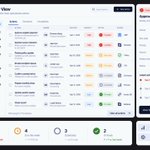
HAIA's first screen starts from operations. What needs attention. What is approaching a deadline. What has no owner yet. Prioritized, with the state of each operation visible before anyone opens a portal.
That is what Open HAIA first means. The operator begins from the complete operation and goes into the bank or the ERP only where that system's authority is needed to act.
Nothing about the underlying systems changes. What changes is the order in which people look at them.

A provider can report success on every metric it owns. Uptime, settlement time, confirmation received. All correct, and all local to that provider.
None of it tells the enterprise whether its own operation, the one the provider was serving, actually closed. A provider succeeding is evidence. It is not the outcome.
That gap is where third-party dependency actually lives. Not in the provider failing, which is rare and visible, but in the provider succeeding while the operation built on top of it stays open, which is common and invisible until someone goes looking.
HAIA keeps the operation's state independent of any single provider's report, so a green status from a vendor and an open operation on your side can both be true and both be visible at the same time.

Since 14 September, a licensed financial institution in the UAE has four hours to notify the Central Bank when an event has, or is likely to have, a significant impact on a critical operation. A brief report is due within 24 hours.
Two details in that rule. The trigger includes "likely", so it does not wait for confirmation. And the notice has to name which critical operation is affected.
Every system involved can report its own state. The provider knows what it delivered, the ledger knows what it posted, the approval tool knows who signed off. A payment can clear all three while the obligation behind it stays open. Deciding whether that operation is likely to be affected is a judgement about the whole thing, and no single system holds the whole thing.
Outsourcing execution to a provider does not outsource the responsibility for it.
Software is organized by system. Accountability is organized around the operation. Four hours is a short time to build that view by hand.
gulfnews.com/business/bankin…
The moment agents start calling other agents, trust becomes recursive, and most identity designs quietly break.
If agent A delegates a task to agent B, knowing that B returned the right output is not enough. Is B actually the agent it claims to be. Was B authorized to take that action. Can B prove how the result was produced. Each of those has to hold at every hop, not just the first one.
Today agents mostly operate in isolation or lean on a central intermediary to vouch for the other side. That works at small scale and falls apart the moment thousands of autonomous agents need to discover, delegate to, and pay each other without a human in the middle.
A delegation chain is only as trustworthy as the weakest authorization in it. The industry has spent this year making agents able to transact with each other. The harder problem, making them able to prove authority to each other, is the one still open.

The security story around agent identity is backwards, and it is worth saying plainly.
The pitch everyone repeats is that agents can now identify themselves, hold a wallet, make payments, and prove what they did. Read that last part again. Prove what they did. That is an audit trail. It fires after the money moves.
Knowing which agent paid tells you nothing about whether the agent was allowed to pay. A standard that binds an identity to a wallet has welded two attack surfaces together: the injection that triggers the payment, and the credential that funds it. A signed receipt of a transaction that should never have happened is still a transaction that should never have happened.
Identity answers who. Authorization answers whether. The agent conversation has spent most of its energy on the first question because it is tractable, and left the second one, the one that actually stops a bad payment, mostly unbuilt.

The framing that lands is his split between authority and liability. Authority decides what the agent may do. Liability decides what happens after it acts and something breaks. The twelve-cases-of-supplies example is the whole problem in miniature, because a mis-ordered reorder from an agent you did authorize looks nothing like fraud, and the recovery tools were all built for fraud. Scope the authority before the agent acts or spend years arguing the liability after.
mohammedshehu.com/agentic-co…

A single AI agent can book a $700 flight, then make dozens of tiny payments for the data, compute and browser access it needed to find that flight. Same agent, same task, two completely different payment problems.
The flight wants broad acceptance, refunds, chargebacks, fraud controls, a clear dispute path. The five-cent API call wants instant settlement at a cost below the service itself. One of those is a card transaction. The other one card rails were never built to carry.
This is why the cards-versus-stablecoins framing misses. Cards are not losing agentic payments to stablecoins. Stablecoins are absorbing the transactions cards were never designed for, the fractions of a cent an agent spends thousands of times in a single session.
There is a quieter problem underneath. At sub-cent size, a failed payment is almost invisible. You do not lose the fee. You lose the fact that it happened at all, which means you cannot see the failure long enough to fix it.

Most fraud detection quietly assumes there is a person on the other end, and that assumption is starting to come apart.
A lot of what fraud teams rely on comes from human behaviour. People browse before they buy. They hesitate at checkout. They type at a certain cadence, abandon carts in recognizable ways, and generate a hundred small signals a model learned to read over years.
An agent produces none of that. It does not browse, hesitate, or abandon. It is not fraudulent for behaving like software, but every control built to read a human just went quiet.
Visa expects millions of consumers using purchasing agents by this season. That is soon enough to be a design question rather than a forecast. The teams treating agent traffic as a variant of human traffic are going to find their whole detection stack was built on signals that no longer arrive.
The buyer changed species. The controls have not caught up.
