

ICSSR was established in the year of 1969 by the Government of India to promote research in social sciences in India.
New Delhi, India
Joined May 2018
- Tweets1.5K
- Following12
- Followers16.4K
- Likes1.1K




Extension of the Last Date for Submission of Papers for Indian Social Science Review (ISSR)
icssr.org/announcements/exte…

Extension of Deadline for 2nd Call of ICSSR Senior Fellowship
icssr.org/announcements/exte…

RT @DhananjayaJnu: In conversation with Pallavi, a research scholar, at the prestigious @nalanda_univ.
I talk about languages, literature…
This quoted post is unavailable.
Fostering cross-border academic synergy, the National Science and Technology Council (NSTC), Taiwan and the Indian Council of Social Science Research (ICSSR) are organising the 4th Taiwan–India Joint Symposium on Multidisciplinary Education: Integrating STEAM and Social Sciences on November 18–19, 2026, at Taipei, Taiwan being hosted by the Institute for Research Excellence in Learning Sciences (IRELS), National Taiwan Normal University bringing together scholars, educators, and researchers from Taiwan and India for this meaningful academic exchange.
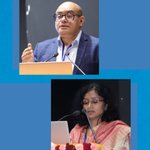
The Session begins with the Opening Remarks made by Prof. Chun-Ju-Huang, Director General, Department of Humanities and Social Sciences, NSTC and Prof. Dhananjay Singh, Member Secretary, ICSSR underlining the importance of this engagement which extends beyond the conventional understanding of multidisciplinary education as the inclusion of different subjects within a common curriculum. He emphasised on identifying cross-disciplinary linkages in India’s knowledge traditions for developing tools for multidisciplinary teaching, learning and research integrated with ethical use of technology and AI to that end.
It set the stage for Keynote addresses by Prof. Tsai-Yen Li President, National Chengchi University and Prof. Bhushan Keshav Patwardhan, Chancellor, Deccan College Post Graduate & Research Institute. Prof. Li presented his observations of how AI has impacted higher education and how the Taiwanese government and universities respond to these challenges.
Prof. Patwardhan highlighted that education should empower and liberate the individual and serve universal well-being.
Scholars across both nations will explore the convergence of STEAM education, educational big data, and artificial intelligence with social science methodologies, economics, and teacher capacity-building—charting responsive, evidence-based pathways for global education.
#ICSSR #NSTCTaiwan #MultidisciplinaryEducation #STEAMandSocialSciences #BilateralResearch #HigherEducation #NTNU #DigitalLearning #PolicyResearch


Valedictory Programme of CAG–ICSSR Colloquium Series
Address by Shri Pramod Kumar, IA&AS, Deputy CAG (Eastern Region)
Shri Pramod Kumar appreciated the active participation and discussions, encouraging researchers to utilise CAG audit reports and engage with State audit offices for research, comparative analysis and stronger collaboration between academia and the audit institution.
Address by Prof. Madhukarbhai S. Padvi, Chairman, ICSSR
Prof. Madhukarbhai S. Padvi emphasised strengthening CAG–ICSSR collaboration to promote evidence-based policymaking and interdisciplinary research. He highlighted the importance of integrating audit findings with academic research to improve governance, public service delivery and implementation of public policies.
Address by Shri Bibhudutta Basantia, IA&AS, Principal Accountant General (Audit-I), West Bengal
Shri Bibhudutta Basantia highlighted the role of performance audits in improving public service delivery, citing examples of corrective measures in revenue mobilisation by Urban Local Bodies and direct bank transfers under the seed multiplication programme. He underscored the value of CAG reports for research on public finance and governance.
Concluding Remarks by Prof. Dhananjay Singh, Member Secretary, ICSSR
Prof. Dhananjay Singh highlighted the collaboration’s focus on strengthening young researchers through the colloquium series and the national Research Article Competition, which received approximately 3,000 entries, including 144 from West Bengal. He also highlighted the proposed publication of the deliberations and winning research articles, alongside ICSSR’s support for Research Methodology Training Workshops.

The CAG–ICSSR Colloquium, West Bengal Chapter, was held on 5 November 2026, from 12:00 p.m. to 2:30 p.m., at Derozio Auditorium, Presidency University, Kolkata.
The colloquium deliberated on “State of the Finances of West Bengal” and “Public Health Infrastructure & Management of Health Services in West Bengal”, bringing together auditors, academicians, faculty members, researchers and students for evidence-based discussions on public financial management and healthcare delivery.
Shri Pramod Kumar, IA&AS, Deputy Comptroller and Auditor General (Eastern Region), emphasised the importance of assessing public expenditure through outcomes and benefits delivered to citizens. He highlighted the role of CAG audit reports as valuable research resources in strengthening transparency, accountability and public governance.
Prof. Dhananjay Singh, Member Secretary, Indian Council of Social Science Research (ICSSR), highlighted the journey of the CAG–ICSSR Colloquium Series, which covered 28 States and 3 Union Territories before West Bengal. He underscored the importance of judicious public expenditure and encouraged young researchers to engage with audit findings to contribute towards better governance.
Shri Biren Parmar, IA&AS, Additional Deputy Comptroller and Auditor General, Director General of Audit (Mines & Coal), Kolkata, highlighted the importance of effective and economical utilisation of public resources, quality audits, data analytics and institutional collaboration in strengthening transparency, accountability and public service delivery.
Prof. Gagari Chakrabarti, Presidency University, Kolkata, emphasised fiscal sustainability, efficient expenditure, equitable access to healthcare and evidence-based policymaking, highlighting the need for stronger revenue mobilisation and improved developmental outcomes.
Shri Wani Shriraj Madhukar, IA&AS, Deputy Accountant General (AMG-IV), West Bengal, presented the State’s fiscal position for 2024–25, noting that GSDP reached ₹18.15 lakh crore. He highlighted revenue receipts of ₹2,13,700 crore, a 25.35 per cent decline in capital expenditure and outstanding liabilities of ₹7,01,724 crore, equivalent to 38.66 per cent of GSDP. He emphasised stronger revenue mobilisation, realistic budgeting and prudent debt management.
Prof. Saibal Kar, Centre for Studies in Social Sciences, Kolkata, examined the macroeconomic implications of public expenditure, drawing on Wagner’s Law and the Armey Curve. He emphasised the need to broaden public audit to include environmental and pollution-control expenditure and assess the productivity and growth impact of government spending.
Ms. Tania Mishra, IA&AS, Deputy Accountant General (AMG-II), West Bengal, presented findings of the Performance Audit on Health Services, highlighting a 91 per cent shortage of specialist doctors at Community Health Centres (CHCs), gaps in emergency obstetric care, medicines and equipment, and shortcomings in the Swasthya Sathi scheme. She also drew attention to health expenditure of 1.23 per cent of GSDP against the 2.5 per cent benchmark.
Dr. Sabitri Dutta, Dum Dum Motijheel Rabindra Mahavidyalaya, Kolkata, examined the gap between reported health outcomes and the operational capacity of public healthcare facilities. She highlighted workforce shortages, underutilised infrastructure, inadequate health financing and the need for stronger monitoring and accountability.
The colloquium reinforced the importance of fiscal sustainability, effective utilisation of public resources and strengthened public healthcare systems. It highlighted how audit findings, when examined through academic research and informed deliberation, can contribute to evidence-based policymaking, institutional accountability and improved public service delivery in West Bengal.
#CAG #ICSSR #CAGICSSRColloquium #WestBengal #PublicFinance #PublicHealth #FiscalSustainability #EvidenceBasedPolicy #Governance


Indian Council of Social Science Research (ICSSR) retweeted

Congrats to Shashank Narayan, Talha Tanweer, and Aman Semwal (4th-year BSW) on their research proposal, “Learning beyond Institutions: Decolonising Education through Community-Based Pedagogies among Munda Youth”, being selected under the ICSSR Yuva Shodh Pratibha Scheme 2026–27.

The CAG-ICSSR Colloquium Series 2025-26 attains completion with the Valedictory programme today following the final Chapter of the Series, the West Bengal Chapter, being organized at Presidency University, Kolkata.
The program features distinguished institutional leaders and experts, including:
🔹Prof. Dhananjay Singh, Member Secretary, Indian Council of Social Science Research
🔹Prof. Madhukarbhai S. Padvi, Chairman, Indian Council of Social Science Research
🔹Shri Pramod Kumar, Deputy Comptroller and Auditor General, Eastern Region
🔹Shri Biren Parmar, IA&AS, Additional Deputy CAG, DGA (Mines & Coal), Kolkata
🔹Shri Bibhudutta Basantia, IA&AS, Principal Accountant General (Audit-I), West Bengal
Spanning 28 States and 3 UTs, this unique joint initiatives by CAG India and ICSSR has successfully democratized public finance data for social science research. By turning independent audit reports into active references for developmental economics, the initiative has built crucial capacity for young researchers to evaluate fiscal governance and support Viksit Bharat @ 2047.
#CAG #ICSSR #PublicPolicy #GoodGovernance #DataDemocracy #ViksitBharat2047 #AcademicResearch

The CAG-ICSSR Colloquium reaches West Bengal
Scheduled on:
📅 Date:5 November2026 (Thursday)
🕛 Time:12:00Noon–3:00PM
📍 Venue: Derozio Auditorium, Presidency University, Kolkata
The CAG–ICSSR Colloquium: West Bengal Chapter will bring together eminent policymakers, academicians, researchers, practitioners and students for a thought-provoking dialogue on💰 State of Finances of West Bengal and 🏥 Public Health Infrastructure & Management of Health Services in West Bengal.
The colloquium will engage distinguished academicians and experts featuring Prof. Gargi Chakrabarti, Presidency University, Kolkata; Prof. Dhananjay Singh, Member Secretary, ICSSR; Prof. Madhukarbhai S. Padvi, Chairman, ICSSR; Shri Pramod Kumar, Deputy Comptroller and Auditor General, Eastern Region; Shri Biren Parmar, IAAS, Additional Deputy CAG (DAG, Mines & Coal); Shri Bhibhudutta Basantia, IAAS, Principal Accountant General (Audit-I); Dr. Sabitri Dutta, Dum Dum Motijheel Rabindra Mahavidyalaya, Kolkata; Prof. Saibal Kar, Centre for Studies in Social Sciences, Kolkata; Shri Sadananda Naskar, IAAS, Deputy Accountant General (AMG-I & Administration); Shri Wani Shriraj Madhukar, IAAS, Deputy Accountant General (AMG-IV); and Ms. Tania Mishra, IAAS, Deputy Accountant General (AMG-III).
West Bengal, with its rich intellectual heritage, strategic location, industrial base and significant contribution to trade and agriculture, occupies an important place in India's growth trajectory. As a gateway to the North-East and eastern India, its development is vital to achieving balanced and inclusive national growth.
The colloquium holds particular significance in fostering informed dialogue between the audit and academic communities on public financial management and the delivery of essential public services. By bringing CAG audit findings into conversation with academic research and expertise, it seeks to strengthen accountability, promote evidence-based policymaking and identify actionable insights for improving governance, fiscal management and healthcare service delivery.
#CAGICSSRColloquium #WestBengal #PublicFinance #PublicHealth #HealthcareInfrastructure #GoodGovernance

Indian Council of Social Science Research (ICSSR) retweeted

The penultimate program in the CAG-ICSSR Colloquium Series 2025-26, the Sikkim Chapter, held at Gangtok, on 2nd November 2026, saw young and bright Sikkimese youth enthusiastically participate in interpretation and analysis of audit data pertaining to fiscal governance and challenges of program implementation.
It was heartening to see them expressing their opinion and insights on matters related to solid waste management in the urban local bodies of the state.
#ViksitBharat2027
#socialscience
#publicpolicy
@narendramodi @PMOIndia @IndiaCAG @JoshiPralhad @DrSukantaBJP @jayantrld @ShamikaRavi @sanjeevsanyal @EduMinOfIndia @ugc_india

The CAG–ICSSR Colloquium, Sikkim Chapter, was held on 2 November 2026 at Manan Kendra, Gangtok. The colloquium brought together auditors, academics, researchers and students to deliberate on the State of Finances of Sikkim and Solid Waste Management in Urban Local Bodies (ULBs) in Sikkim.
In the Inaugural Session, Prof. Dhananjay Singh, Member Secretary, ICSSR, highlighted the value of CAG audit reports as authentic sources of data for social science research, enabling students to identify gaps in public service delivery, formulate evidence-based research questions and contribute to improved governance. He encouraged young researchers to use audit findings to examine governance challenges and contribute to Viksit Bharat @ 2047.
🔹 Ms. Anita Singh Ramchandra, IA&AS, Accountant General (Audit), Sikkim, emphasised the importance of audit insights in strengthening public accountability, understanding fiscal priorities and addressing emerging urban waste-management challenges through informed policymaking. She stressed scientific waste disposal, source segregation, adequate processing infrastructure, legacy waste remediation and stronger municipal accountability.
🔹 Shri Vaibhav Shukla, IA&AS, Senior Deputy Accountant General (A&E), Sikkim, presented an overview of the State’s finances (2020–21 to 2024–25), highlighting revenue dependence on central transfers, high committed expenditure and rising outstanding liabilities. He stressed stronger own-source revenue mobilisation, realistic budgeting, improved fund utilisation and prudent debt management.
🔹 Prof. Manesh Choubey, Sikkim University, examined Sikkim’s fiscal trends (2010–11 to 2024–25), emphasising revenue diversification, debt
sustainability and increased capital expenditure. He advocated growth-oriented policies, tourism and infrastructure development, public-private partnerships and an independent fiscal council.
🔹 Dr. Ruma Kundu, Sikkim University, highlighted gaps in source segregation, waste-processing capacity, financial sustainability and implementation of municipal waste-management systems. She advocated decentralised waste management suited to Sikkim’s geographical conditions, phased infrastructure improvements, community participation and stronger monitoring to achieve the State’s Zero Waste target by 2030.
The colloquium reaffirmed the importance of bringing together audit institutions and academia to promote evidence-based research, strengthen public financial management and enhance institutional accountability for sustainable development in Sikkim.
#CAGICSSRColloquium #Sikkim #PublicFinance #UrbanGovernance #SolidWasteManagement #ViksitBharat2047
The CAG–ICSSR Colloquium, Mizoram Chapter, was successfully held on 30 October 2026, from 11:00 AM to 1:50 PM, at Mizoram University Auditorium, Aizawl.
The colloquium deliberated on “State of Finances of Mizoram” and “Empowering Urban Local Bodies”, bringing together auditors, academicians, faculty members, researchers and students for evidence-based discussions on public financial management and urban governance.
Shri V. Srinivasa Venkatanathan, Accountant General, Mizoram, highlighted the role of CAG audit reports in strengthening transparency and accountability in public financial management. He emphasised that public audit extends beyond institutional oversight to ensuring accountability towards citizens and fostering public trust.
Prof. Saswati Choudhury, Director, OKD Institute of Social Change and Development, Guwahati, highlighted Mizoram's distinct economic characteristics and the importance of understanding its economic profile to facilitate meaningful academic research and informed deliberations on fiscal and developmental priorities.
Prof. Zokaitluangi, Mizoram University, highlighted ICSSR's role in promoting research and disseminating knowledge. She encouraged students and research scholars to utilise CAG audit reports as valuable research resources and develop evidence-based studies aligned with Viksit Bharat.
Shri Mark Zomawia Zote, Senior Audit Officer, presented an overview of Mizoram's fiscal position for 2024–25, highlighting revenue dependence, rising committed expenditure, fiscal deficit and mounting liabilities. He emphasised strengthening own-source revenue mobilisation, realistic budgeting, prudent debt management and expenditure discipline.
Prof. Vanlalchhawna, Mizoram University, examined fiscal challenges arising from dependence on Union transfers, budgetary inefficiencies and weaknesses in financial reporting. He stressed realistic budget estimates, effective expenditure monitoring, transparent accounting and timely reconciliation of financial records.
Shri Lunkhosat Haokip, Senior Audit Officer, highlighted gaps in the devolution of functions, funds and functionaries under the 74th Constitutional Amendment framework. He drew attention to limited municipal financial autonomy, staffing vacancies and the need for clearer functional responsibilities and stronger institutional capacity.
Prof. A. Muthulakshmi, Mizoram University, examined challenges in urban solid waste management, including inadequate source segregation, deficiencies in waste transportation and processing, environmental monitoring and sanitation worker safety. She emphasised scientific waste management, institutional coordination, transparent financial records and greater community participation.
The colloquium reinforced the importance of strengthening fiscal sustainability, accountable urban institutions and environmentally sustainable public service delivery. It highlighted how audit findings, when examined through academic research and informed deliberation, can translate into actionable policy recommendations and governance reforms.
#CAG #ICSSR #CAGICSSRColloquium #Mizoram #PublicFinance #UrbanGovernance #EvidenceBasedPolicy #ViksitBharat2047


CAG–ICSSR COLLOQUIUM | SIKKIM CHAPTER
📅 Date: 02 November 2026 (Monday)
🕙 Time: 10:00 AM – 01:00 PM
📍 Venue: Manan Kendra, Upper Sichey, Sungava, Gangtok, Sikkim
The Comptroller and Auditor General of India (CAG) and the Indian Council of Social Science Research (ICSSR) are organising a Colloquium on “State of Finances of Sikkim” and “Solid Waste Management in the Urban Local Bodies in Sikkim.”
The colloquium will feature distinguished speakers, including Dr. Ruma Kundu, Sikkim University, Gangtok; Prof. Manesh Choubey, Professor, Sikkim University, Gangtok; Prof. Dhananjay Singh, Member Secretary, ICSSR; Ms. Anita Singh Ramchandra, IA&AS, Accountant General (Audit), Sikkim; and Shri Vaibhav Shukla, IA&AS, Senior Deputy Accountant General (A&E), Sikkim, Gangtok.
Sikkim holds a distinctive and strategic place in India's growth trajectory. Its unique geographical position, ecological wealth, tourism potential, hydropower resources and commitment to sustainable development make it an important contributor to India's vision of inclusive and balanced growth. Strengthening public financial management and urban governance is essential to harnessing this potential, ensuring efficient utilisation of public resources and building resilient, sustainable communities.
The colloquium will provide an important platform for informed deliberations on public finances, fiscal governance and sustainable urban development in the state.
#CAG #ICSSR #Sikkim #PublicFinance #UrbanGovernance #SolidWasteManagement #SustainableDevelopment

The Meghalaya Chapter of the CAG–ICSSR Colloquium was held on 28th Oct 2026, at North-Eastern Hill University (NEHU), Shillong, on “State Finances and Empowering Urban and Local Bodies (Performance Audit on Solid Waste Management)”, bringing together audit officials and academicians to deliberate on fiscal accountability and sustainable urban governance.
Addressing the colloquium, Shri Rajesh Ranjan, IA&AS, highlighted the importance of reliable government accounts, sound financial reporting and audit in assessing the financial position of the State. It introduced the relevance of examining public expenditure, revenue mobilisation and the management of public resources.
Prof. Sushanta Kumar Nayak, emphasised the value of bridging academic research and public audit for evidence-based policymaking. Shri Lhunkhothang Hangsing, IA&AS, underscored audit's role in strengthening transparency, accountability and regulatory compliance, and Prof. S. K. Barik, highlighted the role of universities in advancing interdisciplinary research on public policy and governance.
Presenting the State Finances Audit Report, Shri P. R. Ryngkhlem, Deputy Accountant General, highlighted declining revenue receipts, rising liabilities, budgetary control deficiencies and the need for stronger fiscal discipline. Dr. Darishisha War Thangkhiew, Assistant Professor, NEHU, brought an academic perspective to fiscal sustainability, revenue mobilisation and the quality of public expenditure.
On solid waste management, Shri B. Bhujel, Deputy Accountant General, highlighted gaps in waste segregation, processing infrastructure, scientific disposal and institutional capacity. Prof. Y. V. Krishnaiah, Tripura Central University, emphasised decentralised waste management, community participation, strengthened traditional institutions and technology-enabled monitoring.
The deliberations reinforced the importance of connecting sound public financial management with accountable local governance, environmental sustainability and improved public service delivery through constructive engagement between audit institutions and academia.
#CAGICSSR #Meghalaya #PublicFinance #wasteManagement #UrbanLocalBodies #GoodGovernance


The CAG–ICSSR Colloquium, held at Rajiv Gandhi Government College, Shimla, on 28 October 2026, brought together audit professionals, economists, academicians and research scholars to deliberate on State Finances and Utilisation of SDRF/NDRF in Himachal Pradesh.
Nestled in the Himalayas, Himachal Pradesh holds strategic significance in India's growth trajectory, with its ecological wealth, hydropower potential, tourism and agricultural economy contributing to national development. Ensuring fiscal resilience and effective disaster governance is vital to sustaining its growth and safeguarding vulnerable mountain communities.
🔹 Prof. Kshamadevi Khorabgade, Council Member, ICSSR, in the inaugural remarks emphasised upon bridging academic silos and encouraged researchers to engage with CAG audit reports and public finance records as credible sources for evidence-based research on governance and public expenditure.
🔹 Ms. Ambika Raina, Deputy Accountant General, highlighted irregularities in SDRF/NDRF utilisation, delays in relief disbursement, inadequate disaster preparedness and gaps in financial monitoring.
🔹 Shri Avnindra Kumar Rai, Senior Deputy Accountant General, flagged rising fiscal deficits, mounting debt, high committed expenditure, budgetary irregularities and declining fiscal space for development.
🔹 Prof. Narendra Kumar Bishnoi, Senior Professor of Economics, examined the State’s fiscal sustainability challenges, including weak revenue mobilisation, rising pension liabilities, debt pressures and declining Central grant support.
🔹 Dr. D. Appala Naidu, Associate Professor, JNU, emphasised transparent disaster fund management, robust audit trails, timely reconciliation of accounts and technology-enabled monitoring for effective relief delivery.
The deliberations underscored the importance of fiscal prudence, stronger revenue mobilisation, accountable public expenditure and resilient disaster governance in advancing Himachal Pradesh’s sustainable development. The colloquium witnessed participation from over 120 registered participants, including senior IA&AD officers and audit professionals, university faculty, economists, researchers and postgraduate students from diverse disciplines, alongside media representatives and civil society analysts.
#CAGICSSRColloquium #PublicFinance #DisasterManagement #HimachalPradesh #ViksitBharat2047


On Rashtriya Ekta Diwas 2026, Indian Council of Social Science Research pays tribute to Bharat’s first Home Minister and Deputy Prime Minister Sardar Vallabhbhai Patel. On this occasion, Member Secretary ICSSR, Prof. Dhananjay Singh, officials and staff took the Ekta Diwas pledge to preserve the unity, integrity and security of the nation.
In commemoration of Sardar Patel’s 150th birthday anniversary, ICSSR had organised Rashtriya Ekta Seminars in collaboration with 40 HEIs across the country to honour his vision of national unity, integrity and security. Multi-volume publications on seminar outcomes are coming soon.
#RashtriyaEktaDiwas #RashtriyaEkta #NationalUnitySeminars #SardarPatel #NationalUnity #ICSSR #EkBharatShreshthaBharat

ICSSR invites applications from Professional Associations/Organisations of Social Scientists, Companies and Trusts duly registered under the Companies Act for their Development for the Financial Year 2026–2027
icssr.org/announcements/sche…

ICSSR invites applications from Associations, Organisations, Research Institutes, Universities and Colleges for an annual adhoc grant for running / publishing research journals (2026-27)
icssr.org/announcements/call…
#research #journals #publication

The CAG-ICSSR Colloquium reaches Mizoram— The Jewel of the Northeast.
Scheduled on:
📅30thOctober2026
⏰11:00AM–01:50PM
📍 Mizoram University Auditorium, Tanhril, Aizawal.
The CAG–ICSSR Colloquium: Mizoram Chapter will bring together eminent policymakers, academicians, researchers, practitioners and students for a thought-provoking dialogue on💰 State of Finances and 🏥 Empowering Urban Local Bodies in Mizoram.
The colloquium will engage distinguished academicians and experts led by Prof. A. Mutthulakshmi, Mizoram University, Prof. Vanlalchhawna, Dean, Mizoram University, Prof. Saswati Choudhary, Director, OKDISCD, Prof. Dibaker Chandra Deka, Vice Chancellor, Mizoram University, Shri V. Srinivasa Venkatanathan, Principal Accountant General, Shri Mark Zomawia Zote, Senior Audit Officer, Shri Lunkhosat Haokip, Senior Audit officer.
Mizoram, with its strategic location in Northeast India and proximity to Southeast Asia, holds significant potential in advancing India’s Act East Policy and strengthening regional connectivity. Its rich cultural heritage, community-driven development, and abundant natural resources offer opportunities for sustainable and inclusive growth. As an emerging gateway to cross-border trade and regional cooperation, Mizoram can play a pivotal role in unlocking the economic potential of the Northeast. Strengthening public finances, healthcare, infrastructure, and urban governance will be vital to translating this potential into tangible development outcomes. Through evidence-based policymaking and accountable governance, Mizoram can contribute meaningfully to India’s vision of Viksit Bharat@2047.
The colloquium seeks to create a vibrant platform for meaningful engagement between academia and public institutions, encouraging evidence-based research and informed policy dialogue on critical governance challenges. By fostering interdisciplinary perspectives and collaborative discussions, the initiative aims to contribute towards transparent, accountable and citizen-centric governance.
#CAGICSSR #Mizoram #PublicFinance #UrbanLocalBodies #GoodGovernance

The CAG-ICSSR Colloquium reaches Meghalaya— The Abode of Clouds.
Scheduled on:
📅 28th October 2026
⏰ 11:00 AM – 01:50 PM
📍 Jubilee Auditorium, NEHU, Umshing, Shillong.
The CAG–ICSSR Colloquium: Meghalaya Chapter will bring together eminent policymakers, academicians, researchers, practitioners and students for a thought-provoking dialogue on 💰 State of Finances and 🏥 Empowering Urban and Local Bodies (PA on Solid Waste Management) in Meghalaya.
The colloquium will engage distinguished academicians and experts led by Prof. S.K. Barik, Vice Chancellor, NEHU, Prof. Sushata Kumar Nayak, Council Member, ICSSR, Shri Lhunkhothang Hangsing, Principal Accountant General, Shri Rajesh Ranjan, Accountant General, Prof. Darishisha War Thangkhiew, NEHU, Prof. Y.V Krishnaiah, Tripura Central University, Shri Binod Bhujel, Deputy Accountant General, Shri P.R Ryngkhlem, Dy, Accountant General.
Meghalaya holds strategic importance in India’s growth trajectory, serving as a gateway to Northeast India and strengthening regional connectivity, trade, and tourism. Its rich natural resources and ecological significance makes sustainable development and effective urban governance vital to the region’s progress. Sound State Finances and empowered Urban Local Bodies are essential for improving public services and ensuring efficient solid waste management.
The colloquium seeks to create a vibrant platform for meaningful engagement between academia and public institutions, encouraging evidence-based research and informed policy dialogue on critical governance challenges. By fostering interdisciplinary perspectives and collaborative discussions, the initiative aims to contribute towards transparent, accountable and citizen-centric governance.
#CAGICSSR #Meghalaya #PublicFinance #wasteManagement #UrbanLocalBodies #GoodGovernance
