
An ethical vision for a peaceful, just, and abundant life for all! https://teapawt.net/t.co/qXwjPf0OdA
Geneve, Suisse
Joined June 2010
- Tweets4.7K
- Following69
- Followers12.6K
- Likes11.6K



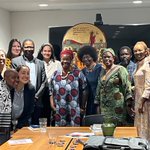


Oh what a sad story. Our sincere condolences

She is no more! my sister, my leader, our Comrade, Dr. Phumzile Mlambo-Nqcuka, daughter of the soil!
The big tree has fallen.
Our forest is thinning.
We are left with no shade.
A dark cloud has descended.
I am in deep mourning, kuungudza!
Still trying to accept this day and this loss.
For now, kungoti inguva inengwe yakwana.
Praying with family, friends, my South Africa , our Afrika, my world, my YWCA movement, my UN Women.
Rest in Power!

2
297
Rev Dr Kenneth Mtata retweeted
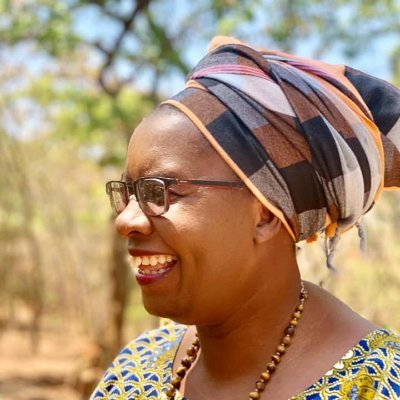
She is no more! my sister, my leader, our Comrade, Dr. Phumzile Mlambo-Nqcuka, daughter of the soil!
The big tree has fallen.
Our forest is thinning.
We are left with no shade.
A dark cloud has descended.
I am in deep mourning, kuungudza!
Still trying to accept this day and this loss.
For now, kungoti inguva inengwe yakwana.
Praying with family, friends, my South Africa , our Afrika, my world, my YWCA movement, my UN Women.
Rest in Power!
Rev Dr Kenneth Mtata retweeted

The Zambian dictator Hakainde Hichilema has started the process of removing presidential term limits hiding behind, “it is the people who want it.”
The tragedy is not only his crookedness in pretending to be a democrat when he was in opposition. It is the deafening silence of so called democrats who rightly opposed the removal of term limits in Zimbabwe and the Democratic Republic of Congo (DRC), yet keep quiet when their favourite is doing the same in Zambia.
To those ladies and gentlemen, the world is watching your grand hypocrisy, and it will never take you seriously on anything to do with governance again. You are crooks, just like Hichilema. You only criticise bad governance when it does not serve your financial interests, and you only pretend to support democracy when you want your puppet in power.
Principles that change with the name of the ruler are not principles. They are convenience.
As for Zambia, I hope Zambians will stop this fraud, just as they stopped another fake democrat, Frederick Chiluba, when he tried the same trick in 2001.
Well done to former Botswana President Ian Khama for calling out this Zambian crook. You are one of the very few well known Africans who have never wavered in calling out these political frauds, the fashion and seasonal democrats who defend democracy only when it suits them.
You have chosen to speak, even when it costs you friends in high places, and even when the offender is a neighbour.
Africa needs more voices like yours, voices that judge leaders by what they do, not by which camp they belong to.
Check out Team Talarico's video! #TikTok vm.tiktok.com/ZGdXMCouJ/

239
The teacher who taught me how to read!
A personal tribute by Rev Dr Kenneth Mtata on the passing of Professor Jonathan A. Draper
29 October 2026
A few days ago, his daughter Jessica wrote to tell me that Professor Jonathan Alfred Draper was seriously ill and in hospital. I knew he had been unwell for some time, and her message prepared me, to some extent, for the possibility of losing someone so important in my life. Still, when I learned a day later of his passing, I felt great sadness.
More than two decades ago, when we named our son Jonathan, I did not consciously set out to honour someone who had such a profound influence on me. Looking back, I recognise an unspoken gratitude to a man who had become part of my life story, and a quiet impulse to honour a teacher whose lessons would stay with me long after my student days.
Yes, Jonathan Draper was a great teacher, and his influence reached far beyond the lecture room. He shaped me as a student of the Bible, a pastor, a researcher, and a socially engaged theologian. But above all, he gave me the competence to read, to question, to research, and to recognise the relationship between texts and the contexts in which they are read.
As we read texts and contexts together, Professor Draper introduced me to the art and discipline of reading. His command of Hebrew and Greek, his knowledge of the Old and New Testaments, and his familiarity with the Septuagint, early Christian writings such as the Didache, and Rabbinic literature, opened up a world of possibilities for me. Under his supervision, biblical interpretation became much more than explaining what a passage meant. It became an investigation into how texts were produced, how they acquired meaning, whose interests they served, and how they continued to function in different historical and social contexts.
Jonathan Draper encouraged me to pursue advanced courses in Greek and Hebrew, and he introduced me to interdisciplinary approaches that widened my intellectual horizons. Through him I encountered social theories of space, power, and social practice; anthropological accounts of ritual and symbol; and hermeneutical, liberationist, feminist, contextual, and postcolonial theologies that attend to the location of readers and communities. These encounters taught me that biblical interpretation cannot be isolated from questions of power, social space, cultural practice, ritual, and the production of knowledge.
Together with his colleagues, he helped me become more self-aware as a reader and as a social agent. I learned that we do not approach texts as neutral observers. We read from particular locations, shaped by our histories, identities, interests, and social circumstances, and our interpretations can either reproduce existing power relations or contribute to their transformation.
This insight remains central to my work as a theologian in the public sphere. It continues to shape how I approach religion, ethics, and power. It shapes my imagination of the prophetic character of the church.
Draper the Pastor
Professor Draper did not allow scholarship to become detached from the life of the Church. Sometimes he invited me to accompany him to early morning services in some rural African communities, where he preached and presided at Holy Communion. There I met another side of the man who taught me biblical criticism and hermeneutics. There I encountered a pastor.
Those experiences were formative for me. They showed me that his engagement with biblical texts was never merely an intellectual exercise. It was bound up with worship, pastoral ministry, and the lived faith of communities whose experiences were often marginalised in dominant theological traditions. He understood the Church not simply as an object of study, but as a living community of faith, struggle, and interpretation./1
For me, this was an important lesson. Scholarship and pastoral ministry need not compete with one another. Each can deepen the other, provided both stay attentive to the lives and experiences of real people.
Draper the Host
My relationship with Jonathan Draper reached well beyond the university and the formal boundaries of supervision. He welcomed me into his home and gave me access to his private library, a privilege I cherished. For a young scholar, being let into a professor’s personal intellectual space was a gift beyond measure. The library was not simply a collection of books. It was the world of scholarship, gathered over a lifetime, into which he was inviting me.
He gave me not only his time and knowledge but also his trust, hospitality, and encouragement. Through him I came to understand that the formation of a scholar is not an academic transaction. It is a relationship of trust and shared humanity.
Opening My World
Draper was an influential scholar of the New Testament, early Christian literature, African contextual hermeneutics, orality and literacy, and early Jewish and Christian mysticism. At the University of Natal, and later the University of KwaZulu-Natal, he taught generations of students, supervised postgraduate research, and helped build biblical studies in South Africa and internationally. His publications ranged from The Didache to works on early Christian traditions, on Bishop John William Colenso, and on African Initiated Churches. They show a mind grounded in ancient texts yet attentive to their historical and contemporary significance.
He took my formation as a researcher seriously when he employed me as his post-doctoral fellow. We wrote academic papers together, including our contribution on Orality, Literature, and African Religions, in The Wiley-Blackwell Companion to African Religions edited by Elias Bongmba. That collaboration remains important to me because it brought biblical studies into conversation with African religious experience and with the ways communities transmit, interpret, and embody sacred knowledge.
Our last joint research project, on African Independent Churches ((AICs) opened further insights into the relationships between biblical interpretation, religious experience, colonial histories, and African agency. A paper from that work, “Lazarus and the Angels,” explored how even a well-intentioned scholar could be implicated in the structures of colonial epistemological bias. That paper also reflects on conversations with his interlocutors such as Gerald West, Tinyiko Maluleke, and many others in the academic community of KwaZulu-Natal that shaped his scholarship.
Draper did not hoard his knowledge. He used it to open doors for his students, and he graciously set me up to be part of the wider international academic community. He took the initiative to connect me with professors such as Cilliers Breytenbach at Humboldt University in Berlin, links that mattered greatly to my personal development. These links offered entry into a wider world of biblical scholarship, ecumenical networks, and relationships that would shape my future theological journey.
This was characteristic of him. He never tried to keep his students within the boundaries of his own influence. He wanted us to grow, to meet other scholars and traditions, and to make our own contributions. From him I learned that mentorship is a responsibility to open doors for others, particularly those whose intellectual journeys might otherwise be limited by geography or circumstance.
Draper’s Final Message and Prayer
When I took up my role at the World Council of Churches in Geneva, Jonathan Draper wrote to me. In a brief message, he said something I have carried with me since. He was glad I had been appointed to what would be a challenging but important position, and he assured me that I would be in his prayers./2
1
69
Those words have acquired a deeper significance for me. He understood that the world was changing rapidly and that the work of theology, the Church, and public engagement would become more demanding. He knew the position would require more than academic knowledge. It would demand discernment, courage, humility, and faith.
His assurance that I would be in his prayers was a deeply personal expression of the relationship we had built over two decades.
As I reflect on all that Jonathan Draper gave me, I wish I could hear those words from him once more. How much I need his prayers even more today. As he joins that “great cloud of witnesses,” he cheers us on to “throw off everything that hinders and the sin that so easily entangles,” so that we can “run with perseverance the race marked out for us” (Hebrews 12:1).
Some teachers give us knowledge. Others help us discover who we might become. Professor Draper did both. I remain profoundly grateful to have been his student, and to have known him not only as a professor but also as a mentor and friend.
Rest in peace, Jonathan Alfred Draper. May your work continue in the lives you touched, the scholarship you inspired, and the questions you taught us never to stop asking. You taught me how to read. I pray I may keep reading faithfully.
My sincere condolences to Marion, Matthew, and Jessica, and to all who loved him and were touched by his life, scholarship, and ministry./3
26


The reason I believe South Africa is going to heal is because the different groups are willing to confront their past and present hurts.
Without national healing based on truth, nations will not know sustainable peace.
“They disobeyed the king’s command and were willing to die rather than serve or worship any god except their own God.”
[Daniel 3:28]
When people’s hopes are awakened from a strange source!!
But while words are necessary to clarify positions, politics, at the end of the day, is a verb. It is not merely about what we say, but about who accompanies affective communication with effective action.
Reflecting together in Chiang Mai, last week, on the witness of the church in the world today, we were reminded that for the church to be truly prophetic, it needs to:
Reclaim its biblical and theological traditions, reading them in the light of the struggles and hopes of people and the whole of creation.
Discern the signs of the times, critically analysing the forces that threaten life and recognising where life, hope and transformation are emerging.
Practise critical solidarity with those on the frontlines, those on the underside of unjust systems, and those most affected by threats to life.
Move from prophetic speech to collective, strategic action—going beyond speaking truth to power to challenging life-denying systems and working together for life, justice, peace and healing.
He has told you, O mortal, what is good, and what does Yahweh ask from you but to do justice, and to love kindness, and to walk humbly with your God? [Micah 6.8]
@Oikoumene
@CCA_1957


3
244
We have just returned from Chiang Mai, Thailand, where the @Oikoumene WCC Commissions and Reference Groups gathered to reflect on how the church can respond to the systemic challenges of our time. Key outcome was to focus prophetic action—translating the Gospel and our theological traditions into transformative action for abundant life, justice and peace.
Thank you Church of Christ in Thailand and Christian Conference of Asia for your hospitality.
Message of the Joint Conference of the WCC Commissions and Reference Groups on Life, Justice and Peace in Chiang Mai
oikoumene.org/resources/docu…


"Let those who love the Lord hate evil,
for he guards the lives of his faithful ones
and delivers them from the hand of the wicked."
[Psalm 97:10]
3
289
"Brothers and sisters, I do not consider myself yet to have taken hold of it. But one thing I do: Forgetting what is behind and straining toward what is ahead"
[Philippians 3:13]
9
385
Chiang Mai conference opens to explore “Being Church in the World Today” oikoumene.org/news/chiang-ma…

3
277