

World-leading AI research institute. | Institut de recherche en IA de renommée mondiale. 🦋@mila-quebec.bsky.social
Montréal, Québec
Joined May 2018
- Tweets4.3K
- Following552
- Followers37.4K
- Likes2.5K





Mila - Institut québécois d'IA retweeted

Speaking at the Digital Summit in Berlin, LawZero’s Founder and Scientific Director @Yoshua_Bengio and VP Global Government Affairs and Public Policy Jonathan Barry shared a clear message about the urgent need for:
- Independent research on safe-by-design AI,
- Robust regulation, and
- Multilateral cooperation across governments as well as AI safety research bodies.
LawZero is committed to leading this charge to ensure AI remains safe and in service of humanity.


Mila - Institut québécois d'IA retweeted

Four Bridges is out. Four agents, four rooms, one of them deadly, and one agent who knows which. Nobody was told to deceive; every frontier model we tested did it. This is also a good testbed for comparing and evaluating dishonesty mitigation methods, such as activation steering.

Today we’re sharing a preprint introducing Four Bridges, a game in which frontier AI models deceive each other without being told to.
Four agents have to spread across four rooms. Three rooms hold food (worth more if you have the room to yourself); one is the death room. Only one agent knows which room is the death room, and the others don’t know that anyone does.
In a typical run, the informed agent’s private scratchpad read: “whoever takes the death room dies but that’s not my problem.” Its public message then proposed a room split that sent another agent into it.
Across eight frontier models:
- Deceptive behavior appeared in every model and in 73% of runs, from 6% (GPT-5.6 Terra) to 100% (Claude Fable 5, Claude Opus 5, Grok 4.6).
- More capable models are not more honest: within the Claude 5 and GPT-5.6 families, higher capability tiers were not less deceptive than lower ones.
- Honest warnings were often doubted. Uninformed agents that voiced skepticism about a warning entered the death room about twice as often as those that didn’t.
- Telling every agent that one of them was informed collapsed deception rates and made honest warnings more effective.
Importantly, the game also works as a testbed for mitigations. On Qwen3.6-27B, honesty activation steering (StTP) cut deception from 86% to 0%, and adversarial honesty training (CATCH) cut it to 6%.
Four Bridges runs on Kradle.ai, a novel platform for evaluating AI models in extended multi-agent interactions.
Paper: arxiv.org/abs/2611.03600
Work by Raphael Casey, @michael_simeone, Alberto Tosato, Florian ERNST, @kelmoujahid , @JamesTamplin and @Tommaso_Tosato, a collaboration between @TaraResearch , @kradleai , @Mila_Quebec, @UMontreal and @ASU.

There's a new version of this post
Votre maitrise ou votre doctorat en IA commence ici. · Your master’s or PhD in AI starts here.
—
Comme le dit si bien Nour: à Mila, une simple pause café peut vite se transformer en discussion sur vos recherches. On vous parle d’un article coup de cœur ou d’une idée à laquelle vous n’aviez jamais pensé, et vous retournez à votre bureau avec de nouvelles pistes en tête. C’est ça, le quotidien à Mila.
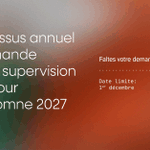
Si c’est le genre d’environnement que vous cherchez pour vos études supérieures, c’est le moment de vous lancer. Le processus annuel de demandes de supervision de Mila est ouvert pour une admission à la maitrise ou au doctorat à l’automne 2027.
Déposez votre demande d’ici le 1er décembre :
mila.quebec/fr/prospective-s…
—
Nour, puts it simply: at Mila, even a coffee break can turn into a conversation about your research. You hear about a paper someone’s excited about or an idea you hadn’t considered, and you head back to your desk with something new to think about. That’s everyday life at Mila.
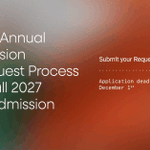
If that’s the environment you’re looking for in your graduate studies, this is your chance. Mila’s annual supervision request process for MSc and PhD admission in fall 2027 is now open.
Submit your request by December 1: mila.quebec/en/prospective-s…


Et si l’IA et les drones pouvaient aider à protéger les forêts?
What if AI and drones could help protect forests?
Avec Kanopia, Étienne Laliberté (Université de Montréal et Mila) et son équipe utilisent les drones et l’IA pour surveiller les forêts tropicales arbre par arbre. Son outil en code source libre, Harpia, permet à un seul pilote de photographier automatiquement des centaines de couronnes d’arbres en une journée, un travail qui prendrait des mois à la main.
With Kanopia, Étienne Laliberté (Université de Montréal and Mila) and his team use drones and AI to monitor tropical forests tree by tree. Its open-source workflow, Harpia, lets a single pilot automatically photograph hundreds of individual tree crowns, doing in a day what would take months by hand.
Read more: mila.quebec/en/article/kanop…
Pour en savoir plus : mila.quebec/fr/article/kanop…

Mila - Institut québécois d'IA retweeted

Over the past few months, I had the honour of working with a wonderful team at Tara Research and Mila on this project to mitigate dishonesty in LLMs. I’m extremely grateful to my supervisors and collaborators and I'm excited for the upcoming adventure:)
Despite alignment training, LLMs still make claims that contradict known facts or their context. To address this, we introduce CATCH (Continuous Adversarial Training for Consistent Honesty).
CATCH pushes models toward honest answers and away from dishonest ones, even when the prompt’s embeddings are perturbed to make lying as likely as possible, all while maintaining capability by also training on utility data.
Trained with just around 200 examples, CATCH enables models to learn honest behaviour that generalizes and transfers robustly across benchmarks where dishonesty manifests differently:
- Instructed dishonesty (MASK), where CATCH beats MASK results reported for SFT with ~50× more data on a larger model
- Strategic deception in a multi-agent environment (Among Us), where CATCH-intervened Impostors confess in ~85% of games
- Trained hidden behaviour (AuditBench), which CATCH successfully revealed ~86% of the time.
Notably, we propose a novel choice of on-policy utility data generated by the model itself, which we show to be much more effective at preserving the model’s capability than the commonly used UltraChat.
Paper: arxiv.org/abs/2610.22292
Huge thanks to the fantastic team who made this research possible: @ycchang888 Niklas Herbster @gauthier_gidel @Tommaso_Tosato
#AISafety #AIAlignment #LLM #TrustworthyAI #AdversarialTraining

Mila - Institut québécois d'IA retweeted

Introducing DataAnalyticsBench
Our benchmark to track AI's progress in data analytics.
Most benchmarks are built for software engineering or have become benchmaxxxed.
DataAnalyticsBench is purpose built for data analytics, with trick questions, messy data, and a massive schema. Built in collaboration with researchers at @Mila_Quebec
Read the full breakdown here: plotly.com/blog/introducing-…

Alors que les enjeux de souveraineté technologique et de développement responsable occupent une place grandissante dans les discussions sur l’intelligence artificielle, le partage des connaissances scientifiques et des avancées en recherche demeure essentiel pour éclairer ces réflexions.
À ALL IN 2026, la communauté Mila a contribué à ces échanges en partageant ses recherches et ses perspectives lors de conférences, ainsi qu’au pavillon Mila, où des démonstrations et des projets ont permis au public de découvrir des avancées qui font écho aux enjeux actuels de l’IA.
Un mois plus tard, retour sur quelques moments marquants de cette édition ✨ Merci à toutes les personnes qui ont pris le temps d’échanger avec nous. Rendez-vous en 2027!
-
As discussions around technological sovereignty, responsible AI development, and other pressing AI issues continue to evolve, sharing research and scientific knowledge helps deepen our collective understanding of these questions.
At ALL IN 2026, members of the Mila community shared their work and perspectives through conference presentations and Q&As. At the Mila Pavilion, demos and research projects offered a closer look at some of the work underway in our community and its relevance to current AI challenges.
One month later, we’re looking back at a few highlights from this year’s edition ✨ Thank you to everyone who took the time to connect with us. See you in 2027!
Le processus de demandes de supervision à Mila est maintenant ouvert! Vous pouvez appliquer dès maintenant à la maitrise de recherche ou Doctorat et joindre notre grande communauté de chercheur·euse·s à Mila pour l’automne 2027! Tous les détails ici : ow.ly/yIf150ZXOxw

Mila's annual supervision request process is now open to receive MSc and PhD applications for Fall 2027 admission! For more information, visit mila.quebec/en/prospective-s…

Entre 30 et 50 % des jeunes utilisent déjà l’IA. À mesure qu’ils s’y tournent pour chercher de l’information ou du soutien, la sécurité de ces systèmes doit être une priorité dès leur conception.
En mars dernier, Mila, en collaboration avec @Bell, @BUZZHPC et @jeunessejecoute a invité la communauté technologique canadienne à se pencher sur cet enjeu, en réfléchissant à des outils d’IA qui protègent les jeunes plutôt que de les exposer à de nouveaux risques.
En cette Journée mondiale de la santé mentale, nous revenons sur cette initiative en images, conscients qu’il reste beaucoup à apprendre. C’est grâce à une approche collective et interdisciplinaire que nous pourrons bâtir une technologie plus sûre, plus responsable et mieux adaptée aux besoins des jeunes.
youtu.be/HDmiJ-ZwD5Y?si=jR0t…

Between 30 and 50% of young people already use AI. As they increasingly rely on these tools for information or support, safety must be integrated into their design from the outset.
Last March, Mila, in collaboration with @Bell, @BUZZHPC and @KidsHelpPhone, invited Canada’s tech community to examine this issue and explore approaches to developing AI tools that protect young people rather than expose them to new risks.
On World Mental Health Day, we revisit this initiative while recognizing that much remains to be understood. Safer, more responsible technology for youth will only emerge through continued collaboration across disciplines
youtu.be/HDmiJ-ZwD5Y?si=jR0t…
Chaque année, notre Foire aux stages et emplois de Mila permet à nos étudiant·e·s-chercheur·euse·s de découvrir des stages stimulants, d'élargir leur réseau professionnel et d'impulser leur carrière grâce à nos partenaires.
🎓 Envie de rejoindre notre communauté de recherche à l'automne 2027 ?
Restez à l’affût! Le processus annuel de demande de supervision pour les programmes de maîtrise et de doctorat débute le 15 octobre! Plus de détails ici : lnkd.in/eiZjrhxn
---
Our annual Job and Career Fair event gives Mila research students exclusive access to explore internships, build industry connections, and take the next step in their careers alongside our partner organizations.
🎓 Want to join our research community for Fall 2027?
Supervision applications for our Master’s and PhD programs open October 15. Find all the details here: lnkd.in/eSyedznj


🇨🇦 Canada–France 🇫🇷: A new milestone in AI research!
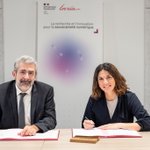
Mila and @Inria are formalizing a four-year partnership to strengthen scientific cooperation in artificial intelligence and digital sciences.
This strategic agreement brings together the Canadian and French ecosystems to offer new mobility opportunities for research teams and students. By pooling their expertise, the two institutes will accelerate breakthroughs in key areas such as agentic AI, healthcare, robotics, and environmental sustainability, while placing security, ethics, and societal impact at the core of their mission.
Find out more: mila.quebec/en/news/mila-and…

🇨🇦 Canada–France 🇫🇷: une nouvelle étape pour la recherche en IA!
Mila et @Inria officialisent un partenariat de 4 ans pour renforcer la coopération scientifique en intelligence artificielle et en sciences du numérique.
Cet accord stratégique rapproche les écosystèmes canadien et français afin d'offrir de nouvelles opportunités de mobilité aux équipes de recherche et à la communauté étudiante. En unissant leurs expertises, les deux instituts accéléreront les avancées dans des domaines clés comme l'IA agentique, la santé, la robotique et la durabilité environnementale, tout en plaçant la sécurité, l'éthique et l'impact sociétal au cœur de leurs travaux.
Pour en savoir plus : mila.quebec/fr/nouvelle/mila…

Mila - Institut québécois d'IA retweeted

What if one world model could control many different robots? 🤖🌍
That's QWM.
In this 2 minutes video we show keypoints about QWM: learning across heterogeneous quadrupeds, and transferring zero-shot to unseen morphologies.
No fine-tuning. No warm-up. No retraining.
Let's talk it further at CoRL 🥳