
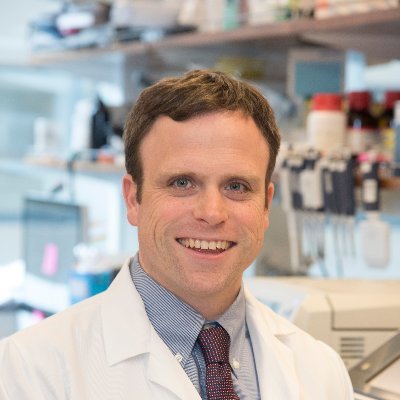
Professor of Genomics, Physiology, & Biophysics @WeillCornell Medicine. Co-Founder / COI @BiotiaNYC, @UrsaBio & @Onegevity (@thornehealth)
New York, NY
Joined February 2010
- Tweets9.1K
- Following982
- Followers11.8K
- Likes9.5K






Chris Mason retweeted

Excited to share our other recent paper in @NatureBiotech from Christina Leslie and our lab. We developed and in vivo validated DynaVelo, a deep learning tool that predicts rescue of genetic loss-of-function mutations. Brilliantly led by @karbalayghareh nature.com/articles/s41587-0…

Chris Mason retweeted

In vivo gene editing landscape.
We mapped ~60 programs across 35 companies spanning DNA, RNA and epigenetic editors delivered by LNP, AAV and other vehicles.
Some thoughts on this space:
• In the last few years, gene editing has become a commercial reality (i.e. Casgevy), but that launch has shown how hard it is to scale an ex vivo approach: cell collection logistics, myeloablative conditioning, lag time to revenue recognition and more
• Just as we're seeing in CAR-T (>$10B+ in acquisitions across Capstan, Orbital, Kelonia, Interius and EsoBiotec), there is hype around in vivo to remove a lot of those bottlenecks. Cells are edited inside the patient with a single off-the-shelf product, so there's far less manufacturing complexity
• The field is early, with just two late-stage programs: Intellia's nex-z and Ionvo-z, which share the same LNP and Cas9 mRNA. The latter in particular will set the regulatory, payor and physician precedent for the field with a March 2027 PDUFA
• The sell side is already modeling a launch ramp ~20% faster than ex vivo over the first 5 years, but a lot of this rests on physician comfort given the edit is permanent and chronic drugs already work
• Since LNPs mostly reach the liver, there's commercial overlap between late-stage RNA drugs and these editing programs (HAE, ATTR-CM, lipids). For physicians, that creates an either / or scenario between a permanent edit and a proven chronic therapy, and many may just wait and see.
• There are plenty of catalysts to watch through the end of 2026 and early 2027, including the Lonvo-z PDUFA, EDIT-401 human PoC and PM647 first data, among others
And this is just a preview - tomorrow we’re dropping the full gene therapy landscape, covering every program across editing, AAV and non-viral delivery, plus deals, China and upcoming catalysts. Leave a note below and we'll send it to you when it drops.

Chris Mason retweeted

What if a warfighter could take a drug before entering a radiation zone, and walk out with their DNA intact?
Today, they can't. Radiation remains one of the few battlefield threats with no real biological countermeasure.
@alantomusiak is building one.
In 2027 he joins our Biosecurity and Biodefense segment at @SynBioBeta as founder and CEO of Permanence Bio.
The defense community wants this badly. The demand signal spans @BARDA, @DARPA, the @ENERGY Department, the @DeptofWar, and @NASA.
Radiation exposure is on the table for:
- Troops operating after a nuclear detonation or in contaminated terrain
- Responders at a failed nuclear power plant
- Fighter pilots at altitude
- Astronauts on long-duration missions
The gap is stark. Gastrointestinal acute radiation syndrome, where radiation wipes out the gut lining, has no approved therapy. None.
Radiation is Permanence's fastest-moving program, and it already has strong animal data. Alan's team is mining old U.S. government data sets to build new radiation countermeasures for warfighters and civilians. The compounds are small molecules that shield DNA and protect the immune system and gut lining from acute exposure.
The same platform opens a second front: protecting kidneys, salivary glands, and bone marrow in cancer patients getting radioligand therapy. The long game is stopping cancer before it starts.
Alan's route in: @Stanford undergrad. Screening work at @ArsenalBio. Investing at @age1vc. A PhD at the @BuckInstitute in @EricVerdin's lab, where he built IntrinClock, an epigenetic clock published in Communications Biology in 2024. Today Permanence operates out of @MBiolabs in San Francisco. Every step pointed at the same target: genome damage.
Biodefense talk usually centers on pathogens and AI. Radiation belongs in that conversation, and Alan is bringing it.
Come find him in San Jose, May 3-6th, alongside a growing roster of government and defense speakers in our newly minted Biosecurity and Biodefense segment.

Chris Mason retweeted

2026 OSDR AWG Workshop, Dec 2 in DC, before @ASGSRSpace. Open space data for fundamental and applied biomedicine, crew health, life support ->🌘 lunar missions
Register: forms.gle/jks2y618fGbYauAQ7
Agenda: awg.osdr.space/t/register-no…
About AWGs: awg.osdr.space/about

Chris Mason retweeted

It seems the FDA has finally decided to cross the Rubicon and published a new and revolutionary regulatory framework which aims to expedite the regulatory approval process of new Gene Editing-based treatments - such as $BEAM Base Editing and $PRME Prime Editing.
These new proposed guidelines are the pinnacle of a regulatory process which began with a Cell and Gene Therapy Roundtable - held last year by FDA former commissioner @MartyMakary and the former director of the FDA’s Center for Biologics Evaluation and Research (CBER) @VPrasadMDMPH, in which researchers, industry leaders and scientists set together with FDA officials to bring new ideas to the table.
During this fascinating meeting Prof. @davidrliu from @Harvard & the @broadinstitute and most importantly the inventor of Base Editing and Prime Editing has made a closing statement which really caught my attention:
“It’s not only about treating 1,000 rare disease patients but about building a modular system that turns rare disease treatment into a national engine for therapeutic innovation and which will secure America’s leadership in Genetic medicine for the foreseeable future.”
It seems that finally Prof Liu’s call was answered!

🚨The FDA’s new draft guidance on individualized genome editing products makes base and prime editing much more practical. Good news for many patients that are still waiting.
▶️ Beam had planned full dose exploration with BEAM-304A for the common R408W mutation in PKU, then adding 304B and 304C to the same master-protocol trial starting at the optimal dose from 304A. Under the guidance, it is now possible that Beam could get approval covering 304B and 304C (and later mutations) with little or no clinical data on those variants, as long as the data from 304A are judged sufficient to support the Individualized Feature Space and the variants meet in vitro criteria.
▶️ Prime Medicine is already dosing patients in its Phase 1/2 trial for PM577a targeting H1069Q in Wilson disease, the most common mutation in US and EU (roughly 30-50%). The same framework could let clinical data on H1069Q support an IFS that covers additional ATP7B mutations, so Prime may not need separate trials for R778L and other variants in US.
I expect Beam and Prime can reach 60%+ patients in PKU and WD quickly with a few guide RNAs/pegRNAs once 304A and H1069Q are approved.
🔥 Both companies are well positioned because they hold the foundational IP in base editing and prime editing and already have modular LNP platforms that fit the IFS model.
$BEAM $PRME


Chris Mason retweeted

Lots of debate this week on whether journals should ban AI in peer review.
We actually tested this in our new preprint, and the results were pretty clear to me.
For context, I've reviewed for most of the big journals and evaluated 1,000 human reviews as an editor. I love to read and evaluate science.
TLDR: From now on I won't do any peer review without AI. For clinical trials, I'd even call human-only review dangerous 🧵

Chris Mason retweeted

FDA published draft guidance that could change how genetic medicines reach rare disease patients. Prime editing was designed for it: one platform, one delivery system Let’s get more medicines to patients in need.
fda.gov/media/195887/downloa…
Chris Mason retweeted
This work is a tremendous effort led by Sonia Debek (our lab's first postdoc!), @cemmeydan & @ChrisRChin. Huge congrats and thank you to all other co-authors for their incredible help.
Chris Mason retweeted
Beyond thrilled that the first paper from our lab is out today in @nature! We show that SWI/SNF loss results in gain-of-function for CTCF and cohesin, reshaping the 3D genome, and an unexpected switch between chromatin remodeling complexes.
nature.com/articles/s41586-0…
1/n

Chris Mason retweeted
Huge thanks to collaborators at @RockefellerUniv V. Risca, at @MSKCancerCenter K. Elenitoba-Johnson, and at @WeillCornell @mason_lab, @efapostolou29 and M. Stadtfeld. & to A. Melnick, my scientific mentor for continued guidance and tremendous support.
Chris Mason retweeted

The ATM/bank teller story is the most-cited historical analogy in the automation debate, and for good reason. When automatic teller machines were rolled out across the United States in the 1970s through 1990s, the prevailing assumption was that bank tellers would disappear. Machines that could dispense cash, accept deposits, and display balances seemed to make the human teller obsolete.
That’s not what happened. As economist James Bessen documented in his influential IMF analysis (2015), ATMs reduced the number of tellers needed per branch from 21 to about 13. But this cost reduction made it economically viable to open more branches. Bank branches in urban areas increased 43% during the period of ATM proliferation. Fewer tellers per branch, but more branches, meant that total teller employment grew. Classic Jevons Paradox.
What this chart shows and why the AI story is critically different: The left panel depicts the classic ATM/teller Jevons Paradox (as technology increases the efficiency with which a resource is used, the total consumption of that resource increases rather than decreases): automation made each branch cheaper to operate, banks expanded their branch networks, and total teller employment grew. This is the productivity effect in action. But notice what happened after 2010: mobile banking - a different, more complete form of automation — finally caused the teller decline that ATMs never produced. When the technology graduated from automating some of the teller’s tasks to automating nearly all of them, the Jevons effect broke down.
The right panel shows AI’s impact on programming. The critical difference is speed. The ATM transition played out over approximately 40 years. The AI coding transition took roughly 3 years. When the pace of automation is slow, the economy has time for the Jevons Paradox to operate — businesses reorganize, new markets emerge, displaced workers retrain. When automation arrives in 3 years instead of 40, there is no time for these adjustment mechanisms.
MIT Sloan research provides the academic framework for this observation: when AI automates only some tasks within a role, employment in that role often increases — because the remaining human tasks become more valuable. This is the ATM phase. But when AI can perform most tasks within a role, employment declines by approximately 14% at the firm level. This is the mobile banking phase. The central question for every AI-exposed occupation is: are we in the ATM phase (partial automation, Jevons effect, potential growth) or the mobile banking phase (near-complete automation, structural decline)? For programmers, the answer appears to be the latter. For many other knowledge-work categories, we are at the tipping point.

Chris Mason retweeted

Post-mortem Alzheimer's brains had 19 to 30% fewer copies of mitochondrial DNA (the mitochondria's own small genome) once diabetic donors were excluded. The finding survived multiple-testing correction in the amygdala and cerebellum but not in the hippocampus. Diabetic donors had 31 to 49% more copies, so mixing the two groups masks the Alzheimer's drop. Another example of the many complex confounders that plague Alzheimer's trials and why we should think of it as a whole body disease.
doi.org/10.1002/alz.71870

ALT Figure 3 from Kaikini et al., Alzheimer's & Dementia 2026: mitochondrial DNA copy number in post-mortem hippocampus, amygdala and cerebellum, comparing controls and Alzheimer's donors with and without diabetes.
Chris Mason retweeted
Excited to announce WARHOUND. techcrunch.com/2026/10/22/be…

Chris Mason retweeted
The US agency ARPA-H selected @mybevimi for up to $2 million to study early cognitive change and Alzheimer's-related biology. We'll take more than 15,000 molecular measurements over 24 weeks in 150 adults who have noticed changes in memory or thinking.
globenewswire.com/news-relea…
Chris Mason retweeted
DNA repeats in the promoter of the FAM193B gene tracks with Alzheimer's in Chinese adults. Odds about double at 18+ repeats, nearly triple at 21+. The signal is weaker in Europeans with odds about 21% higher. Typical genetic tests miss repeats like this. We need more long-read sequencing on Alzheimer's cohorts.
doi.org/10.1038/s41593-026-0…

Chris Mason retweeted

The dire wolf pups just had their biggest check-up yet. 🐺 CT scans, heart scans, X-rays, bloodwork, even whole-genome sequencing.
The verdict? Happy and healthy from snoot to tail.
But how big are they? Scroll for the official weigh-in. ⬇️
(1/10)

Chris Mason retweeted

1/ We discovered something totally unexpected about the neural structure of consciousness that overturns decades of thinking on its biological basis and brings us significantly closer to the recipe for generating conscious awareness.
New preprint: biorxiv.org/content/10.64898… (led by @HesseJanis, with @FrankLanfranchi, @_conor_mcgrory, @Yuelin_Shi, and @EngelTatiana)

Extraordinary power of iPSCs: "Voices: What impact has iPSC technology had on your research and/or field?"
cell.com/stem-cell-reports/f…

"Modulator Resolves Transcript-, Allele-, and Condition-associated RNA Modification Differences from Direct RNA Sequencing." biorxiv.org/content/10.64898… our lab's cool new algorithm and epitranscritpome analysis tool set led by Theo @MakeBrainHappy in partnership with the Horner lab. Check it out!
