

Matlantis™ is a high-speed universal atomistic simulator that accelerates materials discovery for a sustainable future. Japanese account: @matlantis_ja
Joined November 2022
- Tweets219
- Following3
- Followers165
- Likes76






Machine learning interatomic potentials (MLIPs) are changing MOF screening. Prof. Guillaume Maurin explains why in our December 10 webinar.
Metal-organic frameworks (MOFs) offer an enormous design space for gas capture, separation, and water treatment, and computational screening has become a standard way to narrow it down.
Most high-throughput screening still relies on generic classical force fields, which are fast but may not accurately describe how guest molecules interact with the framework, especially with strong hydrogen bonding, narrow confinement pockets, or framework flexibility.
⚗️ Prof. Maurin of the University of Montpellier, whose group works on the molecular simulation of porous materials, will also show how universal MLIPs can be combined with classical force fields to keep screening both accurate and scalable.
Examples will include recent work using Matlantis PFP, such as identifying MOFs that capture ethylene under humid conditions and exploring MOFs that selectively remove short-chain PFAS from water.
For researchers working on adsorbents, gas capture and separation, or water treatment, and for anyone evaluating MLIPs for materials screening, whether or not they work on MOFs.
📅 Thursday, December 10, 2026
🕒 7:00 AM PST / 10:00 AM EST / 3:00 PM GMT / 4:00 PM CET (12:00 AM JST, December 11)
💻 Online (Zoom), free to attend
Reserve your seat: matlantis.com/en/resources/e…
#Matlantis #MOF #MLIP

28
Where does crystal structure prediction fit in a research project? Our Matlantis CSP webinar on that question is now on demand.
Kohei Shinohara (Preferred Networks), a researcher involved in the development of Matlantis CSP, presents the method as a process that supports research decisions. Matlantis CSP runs its searches on Matlantis PFP, a universal machine learning interatomic potential covering 96 elements, so no system-specific model needs to be trained.
⚗️ Drawing on actual use cases, he covers:
- Using crystal structure prediction early in a project, while the crystal structure is still undetermined
- Choosing between convex hull search and derivative structure search, based on the research objective
- Designing the search conditions
- Reading the results and connecting them to experiments and next steps
🎯 For computational materials scientists evaluating the method for their own workflows, and for experimental and R&D teams screening candidate phases ahead of synthesis.
🎥 Watch the recording (free, about 60 minutes including Q&A): matlantis.com/en/resources/e…
#Matlantis #CrystalStructurePrediction #MLIP

42
🧪 Phosphine ligands made using readily available materials performed well in nickel-catalyzed Suzuki-Miyaura cross-coupling.
The structure of a phosphine ligand controls how active a metal catalyst is, but inexpensive monodentate phosphines with high catalytic performance are limited. In a study published in Organic Letters, Prof. Matsubara's group at Fukuoka University and researchers at ENEOS Corporation attached a bulky yet flexible group to phosphorus: a primary alkyl group carrying two tert-butyl groups at remote positions.
⚗️ Matlantis PFP, a universal machine learning interatomic potential, was used to optimize nickel carbonyl complexes of the ligands in many conformations to estimate their steric bulk, and to run molecular dynamics that evaluated their flexibility.
📄 Read the paper: doi.org/10.1021/acs.orglett.…
#Matlantis #Catalysis

51
🔋 For low-cost, fast-charging energy storage, sodium dual-ion batteries use graphite in place of costly metal oxide cathodes.
Both ions store charge: sodium plates onto the anode while electrolyte anions enter the graphite at high voltage. The electrolyte must survive that voltage and let the anions in quickly.
In a study published in Advanced Energy Materials, Prof. Jeong Woo Han's group at Seoul National University and Prof. Soojin Park's group at POSTECH compared concentrated electrolytes of the sodium salt NaFSI in three carbonate solvents. The fluorinated one had the lowest ionic conductivity but performed best at high rates.
In that electrolyte, electron density spreads evenly across the solvation shell around the ions. The authors report that this lets the non-spherical FSI anion rotate more freely, easing its entry into graphite, and keeps the electrolyte stable up to 5.2 V.
⚗️ Cells with this electrolyte delivered 100.5 mAh g⁻¹ at an ultrahigh charge-discharge rate of 50 C, and a thin, uniform protective layer formed on the sodium metal anode. Calculations with Matlantis PFP, a universal machine learning interatomic potential, showed that the anion's binding to the electrode depends on its orientation, in line with this picture.
🌱 The authors propose looking at the electronic structure of the whole solvation shell, rather than of single solvent molecules, to improve stability and reaction speed together across a broad range of battery systems.
📄 Read the full paper (open access): doi.org/10.1002/aenm.2025034…
#Matlantis #BatteryMaterials #MaterialsScience #MLIP

63
🔋 MuLiCon is a machine learning framework for accelerating the discovery of solid electrolytes for all-solid-state batteries. We will present it at the 2026 AIChE Annual Meeting in Minneapolis on Wednesday, November 11.
Ionic conductivity depends on both structural and dynamic factors, which models built on a single type of data do not fully capture. Models trained on short molecular dynamics simulations are also affected by noise: ions rattling inside a local cage, for example, artificially inflate mobility metrics.
⚗️ MuLiCon takes three inputs: X-ray diffraction patterns, phonon density of states, and pre-trained chemical embeddings from Matlantis PFP, our universal machine learning interatomic potential. In ablation studies, the PFP embeddings serve as the primary chemical foundation, while the diffraction and phonon inputs add structural and vibrational information.
From these inputs, MuLiCon classifies materials as conductors or not and predicts ionic conductivity at the same time. A deep ensemble estimates the uncertainty of each prediction, which is used to filter out simulation noise.
🗓️ Presentation details
- Paper 566b: Wednesday, November 11, 12:55-1:09 PM CST
- Room 103C (Level 1), Minneapolis Convention Center
- Session 566: Accelerated Discovery of Inorganic Materials
- Presenter: Taku Watanabe
- Authors: Qingjie Li, Joshua Young, Taku Watanabe (Matlantis Inc.)
If you are attending the meeting, we look forward to seeing you there.
Details: matlantis.com/en/news/aiche-…
#Matlantis #AIChEAnnual #BatteryMaterials

1
61
We surveyed 82 materials R&D professionals in Japan on computational chemistry and materials informatics (MI) and published the results.
Respondents were R&D and analysis staff at 82 companies. For computational chemistry, half were using or considering it, and half had no plans to. MI showed the same even split.
📊 What holds each half back:
- Computational chemistry: among those with no plans, 56% saw no need for it or no fit with their research topics. Among those using or considering it, 71% cited a shortage of skilled staff.
- MI: the less engaged half most often said they knew little about it (37%). The engaged half ranked staffing (39%) among its top barriers, next to data preparation (44%) and internal understanding and support (41%).
⚙️ Three changes are starting to lower these barriers: easier-to-use MI tools, machine learning interatomic potentials that speed up calculations at DFT-level accuracy, and AI agents that help set up calculations and interpret results.
🌱 We see the skills shortage as a structural problem no single company can easily solve. Matlantis is doing its part through expert support and other efforts. Our vision is "Power Decisions with Atomistic Insights," and we will keep working to realize it.
Read the full article: matlantis.com/en/resources/b…
#Matlantis #MaterialsInformatics #ComputationalChemistry

1
43
⚡ Supercapacitors store charge by rearranging ions in porous electrodes. In a metal-organic framework (MOF) electrode, which ions take part?
In a study published in Nature Communications, Prof. Paris's group at Montanuniversität Leoben tracked a working supercapacitor with small-angle X-ray scattering. Its electrodes used Ni₃(HITP)₂, a conductive layered MOF with highly ordered pores, and its electrolyte was aqueous NaTFSI, a sodium salt whose anion contains fluorine.
The TFSI anions stayed near the pore walls at every applied voltage, and charge was stored solely by sodium ions adsorbing and desorbing.
⚗️ Even at 0 V, TFSI anions covered an estimated 20% of the pore surface. Fluorine-free electrolytes showed no such accumulation, and in a similar MOF without N-H groups, tested with a TFSI electrolyte, both cations and anions appeared to balance charge. The authors attribute the anchoring to interactions between fluorine and the MOF's N-H groups.
Molecular dynamics with Matlantis PFP, a universal machine learning interatomic potential, showed the MOF layers shifting against each other with no strongly preferred arrangement, consistent with the disordered stacking indicated by the X-ray data.
🌱 The authors suggest that anchoring specific anions through functional groups could offer a general way to tune how supercapacitors charge and perform.
📄 Read the full paper (open access): doi.org/10.1038/s41467-025-6…
#Matlantis #Supercapacitors #MOF

57
🎬 Researchers have long wanted to see what happens in their materials, atom by atom. Our new video shows how AI agent integration in Matlantis lets them ask for that view in their own words.
The example in the video is thin-film deposition in semiconductor manufacturing: the moment precursor molecules react on a silicon surface, which is hard to observe directly in experiments.
⚙️ Two kinds of AI work together here: an AI agent that sets up the calculation from a researcher's request, and Matlantis PFP, our universal machine learning interatomic potential, which simulates how the atoms move with DFT-level accuracy.
🌱 From semiconductors and batteries to catalysts and the life sciences, our aim is for researchers to put their own questions to Matlantis and get atomic-level insights that inform their decisions, whether or not simulation is part of their daily work.
#Matlantis #AIAgents #AtomisticSimulation
65
Atomistic simulation with a universal machine learning interatomic potential can support process design for bringing 2D materials into semiconductor manufacturing. Matlantis application scientist Yuta Aoki will present this approach in an invited talk at AP-ALD 2026 in Jeju, Korea.
Integrating 2D materials into production lines is increasingly expected to rely on direct, low-temperature ALD, yet challenges remain, including the formation of interfaces with oxides. The talk shows how atomistic simulations with Matlantis PFP can be used to approach these challenges.
⚗️ To show what this looks like in practice, the talk draws on Matlantis PFP calculations across semiconductor processes: surface reaction pathways of ALD precursors on silicon, adsorption-based screening of precursors for area-selective ALD, etching, thermal oxidation of silicon, and heat transport at material interfaces. It also introduces LightPFP, which distills PFP into lightweight models for simulations of more than 100,000 atoms.
🗓️ Invited Speaker 14: Thursday, October 29, 10:00-10:25 KST, Room 3, Grand Hyatt Jeju
If you are attending AP-ALD 2026, we look forward to seeing you there.
Details: matlantis.com/en/news/ap-ald…
#Matlantis #ALD #Semiconductors
1
104
A new case study from Tosoh Corporation looks at where cracks start in GaN-on-AlN thin films, which are important for power electronics, communication devices, and UV LEDs.
Cracking in epitaxial films is a fundamental challenge in device fabrication, but where cracks start and whether the AlN substrate orientation matters are not well understood. Capturing both crack nucleation and propagation requires larger systems than Matlantis PFP can handle, as it is limited to tens of thousands of atoms. Classical Stillinger-Weber potentials are fast but less accurate at the interface.
🔬 The team trained a LightPFP model, a lightweight potential specific to GaN/AlN, on data generated with Matlantis PFP, using active learning. This let them stretch systems of up to 197,400 atoms in LAMMPS MD simulations.
💡 The a-plane system withstood larger strain before cracking than the c-plane system, which the team attributes to the GaN/AlN interface. In the c-plane system, line defects at the interface grew vertically with strain and formed cracks. In the a-plane system, the interface had no such defects, and cracks started in the AlN layer.
🌱 The team expects this orientation dependence to directly affect crack nucleation in GaN films used in devices.
Read the full case study: matlantis.com/en/calculation…
#Matlantis #GaN #PowerElectronics

36
🚢 LNG-fueled ships emit less CO2 than ships burning heavy fuel oil, but unburned methane in their exhaust could cancel out that gain.
Palladium catalysts can oxidize that methane, but they lose activity as particles sinter or break apart into single atoms. In Applied Catalysis B: Environment and Energy, Dr. Hojin Jeong's team at the Korea Institute of Materials Science and Prof. Jeong Woo Han's group at Seoul National University converted palladium single atoms on ceria into partially reduced PdOx nanoparticles by alternating short hydrogen and oxygen pulses. The same treatment added oxygen vacancies to the ceria, which hold the particles in place.
⚗️ Under wet conditions, PdOx reached 50% methane conversion at 313 °C, the lowest of four same-sized palladium states. With the machine learning interatomic potential Matlantis PFP, the team calculated how palladium atoms migrate on ceria, searched for stable PdOx structures, and compared methane activation barriers. Palladium atoms became mobile as they lost oxygen, and under-coordinated Pd-O-Ce sites at the interface gave the lowest barrier to breaking methane's C-H bond.
🌱 Coated onto a bench-scale honeycomb monolith, PdOx held about 97% methane conversion at 400 °C for 500 hours, while two alumina-supported palladium references lost activity. The authors present PdOx as a promising candidate for methane abatement.
📄 Read the full paper (open access): doi.org/10.1016/j.apcatb.202…
#Matlantis #Catalysis
41
This Wednesday: our live webinar on putting coding agents to work on atomistic simulations with Matlantis. The session does not assume a background in computational chemistry, and is also for researchers considering simulation for the first time.
Coding agents write and run code from instructions given in natural language. The image shows how this works on Matlantis: the agent retrieves Matlantis-specific knowledge and standard calculation workflows from Skills for Matlantis, then generates simulation code that calls Matlantis PFP, a universal machine learning interatomic potential covering 96 elements.
Drawing on projects carried out with coding agents, Joshua Young, Senior Application Scientist at Matlantis Inc., will show what they can already handle, how to get good results from them, and where their limits currently lie. The session closes with a live Q&A.
Can't join live? Register anyway, and we will send you the recording after the session.
📅 Wednesday, October 21, 2026
🕒 8:00 AM PDT / 11:00 AM EDT / 4:00 PM BST / 5:00 PM CEST (12:00 AM JST, October 22)
💻 Online (Zoom), free to attend
Register: matlantis.com/en/resources/e…
#Matlantis #AIAgents

2
76
Can a universal machine learning interatomic potential describe enzymatic reactions? We will address this question at the CBI Annual Meeting 2026, held on October 26-29 in Tokyo.
⚗️ Masataka Yamauchi of Matlantis simulated the hydrolysis reaction of PETase, an enzyme that degrades PET, using Matlantis PFP, a universal machine learning interatomic potential. Unlike hybrid methods such as QM/MM or MLIP/MM that partition the system into distinct computational regions, the entire enzyme and its surrounding solvent were modeled with Matlantis PFP alone. His oral and poster presentations will show that Matlantis PFP can be applied directly to enzymatic reactions and protein engineering without fine-tuning, and discuss its potential for AI-driven drug discovery and enzyme design.
At a luncheon seminar co-hosted with Preferred Networks, he will also present drug discovery and life science use cases: conformational search, organic crystal structure prediction, protein-ligand interaction calculations, and enzymatic reaction simulations.
🗓️ Schedule (JST)
- Poster P01-01: Tue, Oct 27, 16:00-17:00 and Wed, Oct 28, 17:00-18:00, 1F Exhibition Hall
- Luncheon Seminar LS06: Wed, Oct 28, 12:15-13:15, 2F Fukuju
- Oral FS13-03: Thu, Oct 29, Session FS13 (14:00-15:30), Room 406
📍 Matlantis brochures and posters are also at the Preferred Networks booth (No. 12, 1F Exhibition Hall). If you are attending, please stop by.
Details: matlantis.com/en/news/cbi-in…
#Matlantis #MLIP #DrugDiscovery

112
Coding agents, which write and run code from instructions in natural language, are beginning to change how atomistic simulations are set up and run. Our next webinar shows how to use them on Matlantis, and what they can and cannot do today.
Much of a simulation project's time can go into the work around the analysis itself: building structure files, choosing calculation settings, and collecting and plotting the results. How to set up and run the calculations has also depended largely on the experience of specialists.
Joshua Young, Senior Application Scientist at Matlantis Inc., presents how to put coding agents to work with Skills for Matlantis, which we released for our simulation workflows. Experienced users can leave routine work to the agent, and researchers who have relied on specialists are starting to be able to try those calculations themselves.
⚗️ Drawing on projects carried out with coding agents, the session looks at:
- What coding agents can already handle
- How to get good results from them
- Where their limits currently lie
The calculations run on Matlantis PFP, a universal machine learning interatomic potential covering 96 elements, so no system-specific model needs to be trained.
📅 Wednesday, October 21, 2026
🕒 8:00 AM PDT / 11:00 AM EDT / 4:00 PM BST / 5:00 PM CEST (12:00 AM JST, October 22)
💻 Online (Zoom), free to attend
Reserve your seat: matlantis.com/en/resources/e…
#Matlantis #AIAgents
46
As AI speeds up simulation, what should researchers still decide? The question came up again and again at Matlantis User Conference 2026.
On September 18 in Tokyo, more than 400 people gathered at our annual conference for Matlantis users: 9 talks, a panel discussion, and 61 posters on batteries, catalysts, semiconductors, polymers, and more.
🔬 Themes from the talks and the panel:
- How atomistic insight can support researchers' decisions
- How AI can bring the insights of computational chemists to experimental researchers
- How to use simulation results in materials and process design
- Which work researchers want to hand to AI, and which they want to keep
💬 In his keynote, CEO Daisuke Okanohara said that as AI speeds up calculations, deciding what to solve and whether to trust the results matters more. In his talk, Masateru Kawaguchi, our Head of Product Management, said: "AI will change execution, not judgment." One panelist had expected AI to make the work easier, but found that more options meant more decisions.
🤝 Thank you to all speakers, poster presenters, and attendees. The conference is for users, so our event report gives a short look at the day: matlantis.com/en/resources/b…
#Matlantis #AIforScience #MaterialsScience #ComputationalChemistry

1
56
A new case study from Sumitomo Rubber Industries (DUNLOP) maps how a rubber antidegradant reacts with ozone, and which pathway proceeds most readily. Elucidating this reaction mechanism is expected to contribute to the development of high-performance, long-life rubber materials.
Ozone degrades rubber products, lowering their physical properties and causing cracks. Ozone-scavenging antidegradants such as 6PPD protect the rubber by reacting with ozone first, turning into a range of oxidation products. Many of these products have been identified experimentally, but the reaction mechanism is not yet fully understood.
🔬 Using GRRM20 with Matlantis, the team ran an automated reaction path search (SC-AFIR) on MePPD, a model compound of 6PPD, with one ozone molecule, evaluating energies with Matlantis PFP. The search found 836 equilibrium structures and 2,106 energy maxima along the paths connecting them.
💡 Among the main pathways, cleavage of the benzene ring at the center of the molecule has the lowest activation energy (40.0 kJ/mol) and is the most exothermic (−508.8 kJ/mol), making it the most likely to proceed. This is consistent with experimental results from a previous study. Most pathways in that study were tentative; the calculations give activation energies and reaction enthalpies for each, so their likelihood can be compared.
🌱 Sumitomo Rubber Industries plans to use these findings in designing higher-performance antidegradants.
Read the full case study: matlantis.com/en/calculation…
#Matlantis #ReactionMechanism #PolymerScience

1
49
This Thursday: our webinar on crystal structure prediction in practice. In materials development, even a slim chance of success can justify another long round of synthesis, and crystal structure prediction offers a way to screen candidates computationally first.
By generating many atomic configurations and compositions and comparing them on a common energy scale, it shows which structures are energetically unfavorable. Those candidates can be set aside, and lab time redirected to more promising ones. The same approach can map how much of an added element a known structure tolerates before the phase becomes unstable.
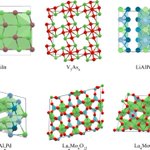
Matlantis CSP runs these searches on Matlantis PFP, a universal machine learning interatomic potential covering 96 elements. It has found stable crystal structures not reported in the Materials Project database, in systems such as In-Li, As-V, Al-Li-Pd and La-Mo-O.
In the webinar, Kohei Shinohara (Preferred Networks), who works on the development of Matlantis CSP, covers how to put this into practice: choosing a search method, designing the search conditions, and reading the results so they connect to experiments and next steps.
📅 Thursday, October 1, 2026
🕒 7:00 AM PDT / 10:00 AM EDT / 3:00 PM BST / 4:00 PM CEST (11:00 PM JST)
💻 Online (Zoom), free to attend
Register: matlantis.com/en/resources/e…
#Matlantis #CrystalStructurePrediction #MLIP
1
57
💧 The hydrogen economy will run through metal tanks and pipelines, and hydrogen makes that metal brittle.
One defense is an alumina film grown by atomic layer deposition, yet the film itself traps hydrogen: low-temperature growth leaves unreacted OH groups that lower its dielectric strength and thermal conductivity, and no instrument can see what form it takes. In npj Computational Materials, Dr. Turlo's group at Empa ran molecular dynamics in LAMMPS with the machine learning interatomic potential Matlantis PFP, generating amorphous structures by annealing defective bayerite at ALD growth temperatures instead of melt-quenching.
⚗️ The structures reproduce the measured density, composition, Al-O bond length and coordination number up to 36.4 at.% hydrogen, where melt-quenching yields H2 absent from real films. The team predicted the Al Auger parameter shifts XPS measures, reading hydrogen chemistry off them: high hydrogen content puts almost all of it into OH ligands, while at the lowest content the prediction falls short of experiment, marking the co-existence of interstitial protons and bridging O-H...O configurations.
🌱 Tying those shifts to hydrogen chemical states turns a routine XPS run into a probe of hydrogen inside a film, aiding the design of hydrogen barriers, separation membranes and fuel cells.
📄 doi.org/10.1038/s41524-025-0…
#Matlantis #Hydrogen

54
Matlantis™ retweeted

PFN group delivering full-stack AI tech from custom chips to end-user service: PFN and PFCI will start accelerating selected calculations (for crystal structures, etc.) on the Matlantis™ materials simulator with PFN's MN-Core™ 2 AI chips in 2026.
preferred.jp/en/news/pr20260…

Interview: how the developers of Matlantis PFP built the universal machine learning interatomic potential (MLIP) that many said was impossible.
Before PFP, there was no such thing as a universal model. Quantum chemistry cost scales as the cube of the atom count, so every new material meant building a new one-off model, and simulating a few dozen atoms on a catalyst surface could take six months to two years.
So Takamoto and Chikashi Shinagawa, who led the development, look back on how that changed.
⚛️ Some of what they cover:
- The failure mode that shaped the design: a model that learns the rules from data alone can look highly accurate on paper, and then errors accumulate until the structure explodes mid-simulation
- How equivariance and higher-order tensor representations encode physical law in the network architecture itself, so the model cannot return behavior physics forbids
- Why DFT data generation, not model training, consumes the bulk of the compute: more than 3,200 GPU-years so far, with over 90% of the data still designed by hand
- Why Matlantis was deliberately built as an API-driven platform for professionals instead of a one-button tool
🔬 The future they describe is a quiet one: when you set out to develop a new material, first you buy a microscope, then you bring in Matlantis. Simulation as ordinary lab infrastructure, not news.
Read the full interview: matlantis.com/en/resources/b…
#Matlantis #MaterialsScience #MachineLearning

104