

Dad | QB Method 20+ yrs Developing QBs (HS → NFL) Building Quarterbacks Through Structured Curriculum & Defensive Mastery 🎥 QB Room Membership ↓
Las Vegas, NV
Joined January 2020
- Tweets1.5K
- Following24.3K
- Followers29.6K
- Likes20.8K




Pinned Tweet
Most quarterbacks don’t struggle because they can’t throw.
They struggle because the game is moving too fast.
Coverage rotation. Pressure tells. Situational football.
Pre-snap decisions. Post-snap answers.
That’s the gap.
The QB Room is where I slow the game down and teach quarterbacks how to think, not just what to do.
Inside the QB Room ($19/month):
• Breakdowns on coverages, pressures, and defensive structure
• Game-film based teaching you can apply immediately
• Situational football: down & distance, field position, clock, personnel
• Concepts that connect practice, film study, and game day
This isn’t drills. This isn’t hype.
It’s how quarterbacks learn to see the game clearly and make better decisions when it matters.
If you’re serious about developing as a quarterback, or coaching one, this is where that work lives.
👉 Join the QB Room here: qbmethod.com/portfolio/items…

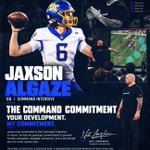
Jaxson Algaze has made the commitment to invest in his development, and I’m proud to welcome the El Toro quarterback to the QB Method Command Intensive.
What stood out to me during my initial conversation with Jaxson was his level of self-awareness. He has a clear understanding of where he wants to improve and recognizes that meaningful development requires more than physical ability. That perspective provides a strong foundation for the work ahead.
An important part of our work together will focus on the speed and efficiency of processing information. At the quarterback position, recognizing defensive structure, directing protection, and making decisions within the timing of the offense are essential. The objective is to develop a quarterback who can consistently connect what he sees with how he responds.
My commitment to Jaxson is to evaluate where he is today, identify opportunities for refinement, and provide the instruction and structure necessary for his continued development. From conceptual understanding to physical execution, every part of that process deserves intentional attention.
I appreciate Jaxson and his family trusting me with an important part of his development. That responsibility is something I take seriously, and I look forward to working with him.
Welcome to the Command Intensive, Jaxson.
YOUR DEVELOPMENT. MY COMMITMENT.

The level of detail required to play winning football at the quarterback position cannot be overstated.
Here’s Kirk Cousins preparing to execute an offense, not just know the plays, but execute. He’s recording play calls, rehearsing the terminology, visualizing each concept, and testing his ability to process the information as he would hear it in the helmet on game day.
This is an important distinction in quarterback development. Knowing the playbook is not the same as being able to access, communicate, and execute it under pressure. The objective of preparation is to reduce the cognitive burden on Sunday so that attention can shift from recalling the call to identifying defensive structure and making the correct decision.
Winning quarterback play requires an extraordinary level of preparation. The freedom to play instinctively is earned through disciplined repetition.
Jaxen Shaheen has made the decision to invest in his development, and I’m proud to welcome him to the QB Method Command Intensive.
Jaxen is a young quarterback with a great deal of development ahead of him. At this stage, the objective is not simply to improve how he throws the football. It is to establish the foundation for how he understands the position, processes information, and takes command of an offense.
My commitment to Jaxen is to evaluate where he is today, identify the areas that require refinement, and provide the instruction and structure necessary for his continued progress. From defensive recognition and progression discipline to mechanical efficiency, every part of his development deserves intentional attention.
I appreciate Jaxen and his family trusting me with an important part of that process. I take that responsibility seriously.
The standard is straightforward. He commits to the work, and I commit to providing the honest evaluation, detailed instruction, and developmental direction he deserves.
Welcome to the Command Intensive, Jaxen.
YOUR DEVELOPMENT. MY COMMITMENT.

We ask young quarterbacks to make a commitment to their development. To invest their time, accept coaching, study the game, and take responsibility for their progress.
That commitment deserves an equally serious response from the people responsible for developing them.
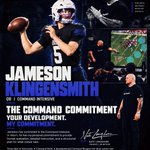
Jameson Klingensmith has committed to the QB Method Command Intensive. Today, I’m publicly making my commitment to him.
Jameson, I will study your game, evaluate your decision-making, and identify the areas of your development that require attention. We will work through the details of quarterback play, from defensive recognition and progression discipline to mechanical efficiency and situational command.
You will receive honest evaluations, detailed instruction, and a structured development plan built around your individual needs. I will explain what needs improvement, why it matters, and how we intend to address it.
I cannot promise playing time, scholarship offers, or outcomes outside our control. I can promise my preparation, my experience, my attention, and my accountability to the standard of instruction you deserve.
Your responsibility is to come prepared, remain coachable, and commit to the process. Mine is to make sure that investment is met with meaningful instruction and a clear direction for what comes next.
That is the commitment I am willing to put my name behind.
YOUR DEVELOPMENT. MY COMMITMENT.

Nick Saban makes an important distinction here about the ability to sustain intensity, and its direct relationship to focus, discipline, and consistent performance.
A lot of quarterbacks can demonstrate intensity for a week. Preparing for a rival, making their first start, or entering league play can create a heightened sense of urgency. The challenge is maintaining that same standard of preparation week after week, throughout a long season.
Intensity is not something a quarterback can manufacture on game day. It is developed through the repetitive discipline of preparation. Every film session, every protection identification, every coverage recognition exercise requires intentional focus, even when the work becomes tedious.
That discipline must carry into every snap. Survey the front, identify pressure indicators, assess leverage, confirm the post-snap picture, and execute the progression. Now compound that level of concentration across 60–70 snaps per game, regardless of the score, situation, or result of the previous play.
Then repeat that process game after game, week after week.
The best quarterbacks are not defined by their ability to occasionally elevate their intensity. They are defined by their ability to sustain it.
Consistency in performance is a product of sustained intensity, disciplined preparation, and attention to detail.
This is how it is supposed to be! Arm in arm, finding a way, together! Appreciate you sharing Les! Love it!

I’ve always prided myself on being a good judge of character. And when I look at Coach Doege, I see a man who loves my son the way a father hopes someone will.
When he got hired, Winnona and I actually met him before Noah did. We walked out of that meeting, and knew. He and Noah were the same person.
Being the parent of a quarterback is something you can’t fully explain. You feel every snap. Every mistake. Every bit of praise and blame. You watch your son carry the weight, and you carry it with him. I see that same weight in Coach.
Watch him late in a game. When the outcome is finally decided and the camera finds him, you can literally see him exhale. That’s a feeling I know all too well. He’s right there with Noah, living every snap. He played the position. He understands the pressure. But the amount he cares… that’s the difference
Coach, the sacrifices you, Abi and Leighton make so our son can chase his dreams are things our family can never fully repay. We know every hour you give Noah is time your family shares with ours. We see it, and we’re grateful.
On top of all that, the man is a football genius. Why wouldn’t any QB in America want to learn from someone who understands the game at that level and loves you that deeply
You set the standard for the coach and the man I want my son around.
Love you Coach @mrsFeef
We spend a lot of time talking about the commitments we expect from young athletes.
We ask them to show up, work hard, remain accountable, trust the process, and honor their commitments. And when they fall short, we rarely hesitate to call out player's flaws.
But accountability should work in both directions.
Where are the public commitments from coaches to the players they are responsible for developing?
If I’m going to ask a young quarterback to invest his time, effort, focus, and trust in me, I believe I owe him an equally serious commitment in return.
Not a promise of playing time, scholarship offers, or outcomes I cannot control. A commitment to the things I can control.
I will prepare for you. I will study your game. I will give you honest evaluations, including the difficult conversations. I will teach you the details of the position, explain why they matter, and help you understand how to apply them. I will identify where your development needs attention and establish a structured plan to address it.
And I will hold myself accountable to that standard.
Mason Muhammad has committed to the QB Method Command Intensive. I’m publicly making my commitment to him.
Mason, bring your effort, attention, and willingness to be coached. In return, you will get my preparation, my experience, my instruction, and my personal investment in your development.
I believe more coaches should be willing to make that commitment publicly. If we’re going to demand accountability from our players, we should be equally willing to accept accountability for the quality of our teaching.
That’s the standard I’m willing to put my name behind.
YOUR DEVELOPMENT. MY COMMITMENT.

I was sitting at the Baccarat Bar at the Wynn recently, visiting with the father of a high school quarterback, discussing QB play. (Great spot, by the way. Highly recommend.) Today, he sent me this video with a simple message: “EXACTLY what we were talking about.”
Couldn't agree more.
I've watched this happen for over 20 years. We identify quarterbacks with exceptional physical traits, reward them with recruiting rankings, and too often mistake their athletic advantage for mastery of the position.
At the high school level, a quarterback can be the best athlete on the field and overcome poor decisions with superior physical ability. But as the competition improves, those advantages narrow. Suddenly, identifying coverage, managing protection, processing progressions, and delivering accurately within a compressed window become the difference between playing quarterback and simply making plays.
The concern isn't that we're evaluating physical traits. Those matter. It's that we're often evaluating what is easiest to measure rather than what is most important to project.
A 70-yard throw tells me something about arm strength. It tells me very little about whether that quarterback can recognize a rotating safety, eliminate a covered primary, and deliver the ball to his second option before panic sets in.
That's the evaluation challenge, and more importantly, the development opportunity.
The quarterback position is not a throwing position. It is a command position. Physical talent creates opportunity. Processing, decision-making, and repeatable accuracy determine how effectively that opportunity translates as competition improves.
TRAINING IS NOT THE SAME AS DEVELOPMENT.
One thing I've noticed in conversations with quarterbacks recently is how many have access to good coaching, consistent training, and plenty of repetitions, but struggle to explain exactly what they're working to improve.
Ask a quarterback what he did at training yesterday, and he can probably describe every drill. Ask him what specific limitation that drill was designed to correct, and the answer isn't always as clear.
For example, a quarterback struggling with pocket movement doesn't necessarily need more movement drills. He first needs to understand whether the issue is pocket depth, base integrity, pressure recognition, or an inability to maintain his throwing profile while redirecting.
Those are different problems requiring different developmental priorities.
Effective development begins with an honest evaluation, establishes a clear order of correction, and gives the quarterback the knowledge to take ownership of his work between coaching sessions.
The objective isn't to make a quarterback dependent on more instruction. It's to develop a quarterback who understands how to improve.

A quarterback should know how to develop when his coach isn’t standing next to him.
Film study. Defensive recognition. Protection ownership. Mechanical correction. Situational football.
That’s what we’re teaching at the QB Method Command Intensive in Las Vegas, Nov. 27–29.
Three days of instruction. A Command Audit. A structured development roadmap. Continued guidance after the event.
The objective is independent command, not just more repetitions.
Limited QB positions.
QBMethod.com

One of the best times to study defensive football is actually during the season.
The concern I hear sometimes is that learning more will interfere with what your offensive staff is already teaching. It should be the opposite. Defensive Mastery is not another offense to install. It is a framework for seeing the defense more clearly so you can execute your own offense faster.
If your coach gives you a protection, a progression, or an answer versus a certain coverage, you still follow that system. The value is that you begin recognizing the structure underneath it. Fronts become easier to identify. Pressure indicators become more obvious. Middle open versus middle closed becomes cleaner. Leverage starts telling you where access may exist.
That reduces hesitation.
You are not replacing your team’s language or rules. You are improving the speed at which you understand what those rules are responding to.
The better you understand the defense, the faster you can get from identification to execution.
That is what Defensive Mastery is built to develop.
Study the defense. Then operate your offense with more command.
Available now in Digital and Paperback formats.
qbmethod.com/defensive-maste…
Keelon Russell continues to show real week-to-week growth in the areas that matter most at quarterback.
Against Mississippi State: 16/22, 285 yards, 3 passing TDs, 1 rushing TD, 0 turnovers.
The bigger takeaway was the operation. Cleaner progression discipline. Routine accuracy that kept the offense on schedule. Decisive movement when the pass structure closed. Better poise carrying the responsibility of the position.
Still room to refine game-clock management and deep-ball placement, but the trend is clear. The game is becoming more organized for him.
#QBMethod #AlabamaFootball

Another successful Football Education Friday at Sapolu Destined Academy. I’ve been really impressed by the intent and focus these young men have brought to this series. We’re not just teaching terminology, we’re teaching them how to recognize structure, understand leverage, and process the game with more clarity.
There is a lot of potential in this room. Certainly some future first-day picks, but more importantly, a group learning that talent creates opportunity and preparation helps sustain it.

Sliding is not protection.
At no other point in life do we willingly hand responsibility for our safety to somebody else simply because there’s a rule telling them how they’re supposed to behave.
So why do we teach quarterbacks to do it?
When you slide, you’re trusting a defender running full speed, in the middle of competition, to perfectly control his body because the rulebook says he should.
Take control of your own safety.
Learn to attack defender halves.
Understand leverage. Choose which half of the defender you’re attacking. Get your body out of the direct collision path and create glancing blows instead of square contact.
Done correctly, you accomplish two things:
Protect yourself by avoiding direct, violent collisions.
Steal additional yards every time you finish a run.
This isn’t about being reckless. It’s the opposite.
It’s teaching quarterbacks how to control the contact instead of hoping the defender does it for them.
Don’t surrender your safety to the rulebook. Learn how to protect yourself.
Absolute disaster for NC State with a marquee win sitting right in front of them.
The final sequence exposed failures at multiple levels: poor clock management leading into the situation, poor ball security with the game on the line, and poor execution of basic end-of-game mechanics.
Situational football has to be practiced with intent. Teams can convince themselves certain plays or situations may never show up during a season. Then they do, and there is no time to learn them in the moment.
End-of-game periods cannot be treated like filler during the week. Clock mode, ball security, substitution mechanics, communication, and operation have to be rehearsed until they become automatic.
The game eventually demands what your preparation has built.
Zone blitzes create pressure without completely abandoning coverage structure. They typically bring 5 rushers with 6 in coverage, while still playing a 3-deep, 3-under structure behind the pressure. The key distinction is personnel: when at least one secondary defender is part of the rush, it becomes a true zone blitz. Nickel Fire, Storm, and Trail are three examples of how defenses can change the pressure path while keeping predictable zone rules behind it.
For the quarterback, the challenge is recognizing who is entering the pressure, who is replacing into coverage, and where the first clean window will appear. The defense may change the picture, but the structure still gives you answers if you can identify it quickly.
This is exactly what Defensive Mastery is built to teach. Fronts, pressures, coverages, modifiers, and the rules that connect them, organized into one complete framework for quarterbacks and coaches. Available in digital and paperback.

Three quarterbacks. Three different styles. Three outstanding performances.
Kevin Jennings was surgical. Drew Mestemaker delivered the weekend’s biggest upset. C.J. Carr commanded an efficient Notre Dame offense.
Different paths. Same result: command the position.
Quarterbacks tonight: stay level. Don’t get too high after a big play, and don’t get too low when adversity hits. Your team needs the same command, focus, and body language every snap. Confidence is good. Emotional volatility is not. Be the quarterback your team can count on.


This play is a great snapshot of the current Bryce Underwood experience.
There’s a lot to love: climbs the pocket, keeps his shoulder profile downfield, two hands on the ball, then explodes to the edge. Once he decides to run, he puts his foot in the ground and gets north-south.
2nd & 14 and he’s about to erase it with his legs. There aren’t many QBs in the country who can do that.
Now finish the play.
Once you become a runner, put the ball away. The most dangerous defender is often the one you don’t see. Western Michigan gets a late punch on the football, and suddenly a great individual play becomes a scrum with possession in the officials’ hands.
The refinement for Bryce is simple:
Don’t let elite ability create unnecessary risk.
Great playmakers extend drives. Great quarterbacks protect them.