
The latest stories in science, brought to you by the @ScienceMagazine news team.
Washington, D.C.
Joined October 2008
- Tweets45.9K
- Following638
- Followers766K
- Likes1.1K
On #NationalPumpkinDay, learn more about how pumpkin, squash, and gourds would likely have gone the way of the dodo were it not for humans domesticating them. scim.ag/49hJAxd
Europe’s torrid summer set a gruesome record, killing more than 50,000 people in the continent’s cities from excess heat, according to research accepted for publication.
The toll is nearly double the estimated deaths in European cities during two of the deadliest past heat waves, in 2003 and ’22. Approximately two-thirds of this summer’s deaths stem from global warming that exacerbated the sweltering conditions, the scientists concluded.
The new study is a grim reminder that heat-related deaths continue to be a major problem in Europe despite growing awareness of what it takes to protect vulnerable people.
Learn more: scim.ag/3WvfjXj
The National Institutes of Health (NIH) has spent the past decade compiling information on hundreds of U.S.-based scientists it believes tried to illegally help their country of origin, most often China. But it’s never been clear what triggered NIH’s aggressive pursuit of these scientists, many of whom eventually lost their jobs or even went to jail, and why it was so much more extensive than efforts at other federal agencies.
Mystery solved. Science has learned that Tam Dao, an academic psychologist–turned–FBI special agent for counterintelligence, laid the groundwork for NIH’s campaign.
Dao remains an important player in the debate over research security. Now head of campus safety and research security at Rice University, he will be tackling a question that arguably should have been asked before NIH plunged ahead: How often do foreign governments try to steal research at U.S. universities?
Read more: scim.ag/4staPfR
There are glimmers of hope amid the relentless bad news about the explosive epidemic of the Ebola Bundibugyo virus in the Democratic Republic of the Congo. scim.ag/4siIecX
After a deadly blowout on the Deepwater Horizon rig in 2010 sent oil gushing, an emergency response team gambled on an unprecedented tactic. It sent robotic submersibles to the wellhead, 1500 meters below the surface, to inject chemical dispersants to break up the oil into tiny droplets and dissolve it.
The hope was that by diluting the oil, the approach would minimize harm to wildlife. The move likely spared many seabirds, turtles, and shallow-water fish from oil that would otherwise have pooled at the surface. But it may have taken an unexpected toll in the deep sea.
A 13-year survey, begun the year after the spill, has discovered a steep, sustained decline in fish, crustaceans, and cephalopods in the deep waters of the gulf. The most likely cause is the oil spill, researchers report in a new study, although they don’t directly blame the dispersants.
Learn more: scim.ag/3W2yfMW
When you type an unpublished idea into a chatbot or coding agent, could it end up being used by the company that built the model—or a rival who asks the right question a year later? And what can you do to reduce the risk?
No setting makes a chatbot fully private, but experts suggest steps that can make leaks much less likely: scim.ag/4sihqtz
Famed bat researcher Rodrigo Medellín Legorreta is pushing back against a government that views wildlife as a “nuisance.”
Learn more: scim.ag/4zf5pHp #ScienceMagArchives

ALT Bats are the focus of Rodrigo Medellín Legorreta’s research and conservation efforts. He helped bring the lesser long-nosed bat, or tequila bat, back from the brink of extinction. Now, the conservation biologist is puzzling out how North America’s two biggest bats—the woolly false vampire bat and the spectral bat—manage to coexist on the Yucatán Peninsula and how they will cope with climate change and forest fragmentation due to the Maya Train.
Like most insects, the wings of tobacco hawk moths are covered in tiny hairs. These microscopic strands help insects taste and stay stable in flight.
But the tobacco hawk moth’s wing hairs do something researchers haven’t documented in any other insect: they help the animal smell.
Learn more: scim.ag/4hKrfeZ
“They have found the original homeland of modern horses.” #ScienceMagArchives scim.ag/3VyPvJB
Beginning in the 1950s, malaria control programs sprayed a powerful insecticide known as dieldrin on the inside walls of homes, where Anopheles mosquitoes—the insects that spread the disease—often rested. Within a few years the bugs had developed a genetic mutation that made them impervious to the poison.
Dieldrin was eventually abandoned as resistance spread and concerns mounted over its toxicity. But the story didn’t end there.
Decades later, the mosquitoes have held onto one of the mutations that helped them survive the pesticide, despite the fact it makes them less active. Recent research may explain why: The mutation appears to make Anopheles mosquitoes more sensitive to sound, which may make it easier for them to home in on mates in noisy African cities, researchers report.
What once helped the insects avoid death may now be helping them find mates. Learn more: scim.ag/4rU1u0f
Ninety-nine million years ago, this lizard tail parted ways from its owner—the first direct evidence of tail shedding in the fossil record.
Learn more: scim.ag/4dKPR6e
Japan’s MMX mission aims to retrieve samples from Mars’s mysterious moon. They could reveal how it formed—and hold pieces of Mars itself.
Learn more: scim.ag/4ybLS9Z
Exclusive: A physician-scientist recommended by NIH Director Jay Bhattacharya to lead the agency’s mental health institute is no longer in the running. Instead, HHS Secretary Robert F. Kennedy Jr. favors a researcher who studies treating mental illness with diet. scim.ag/4smMCYF
The Rubin vase illusion demonstrates how some visual information escapes our awareness—a phenomenon researchers explored in monkey brains. scim.ag/4BoWCV8
A livestock virus that was first detected in Europe this summer can infect humans as well, confounding scientists’ expectations. In a new paper, French researchers describe a cancer patient infected with the Shamonda virus who died earlier this month.
The man was an unusual case: His immune system was severely weakened, making him much more vulnerable to infections. Still, the European Centre for Disease Prevention and Control is working with French authorities and European partners “to investigate the potential public health implications of this first human infection,” the agency said in a statement.
This one case does not mean the virus, which is likely transmitted by midges, poses a broader threat to human health, says Martin Beer, a veterinary virologist at the Friedrich Loeffler Institute. “But it is definitely another sign that the risk the virus might pose to humans needs to be investigated.”
Read more: scim.ag/3VY1wbH
The Advanced Research Projects Agency for Health, whose mission is to fund bold, edgy biomedical research, is making a $41 million bet on repurposing drugs approved for other conditions and natural products such as supplements to stave off Alzheimer’s. scim.ag/47vAf2X
Do you have what it takes to win Science’s #DanceYour PhD competition? We want you to top last year’s winning entry from a scientist who translated physics’ piezoelectric effect into dance.
Submit your entry by 29 January 2027: scim.ag/4i5WelJ
On 20 October, the U.S. Food and Drug Administration approved the use of bepirovirsen to treat chronic hepatitis B infection, although the agency required monitoring of a liver enzyme and platelet levels to forestall side effects.
Read more of our coverage: scim.ag/4v8vjdU
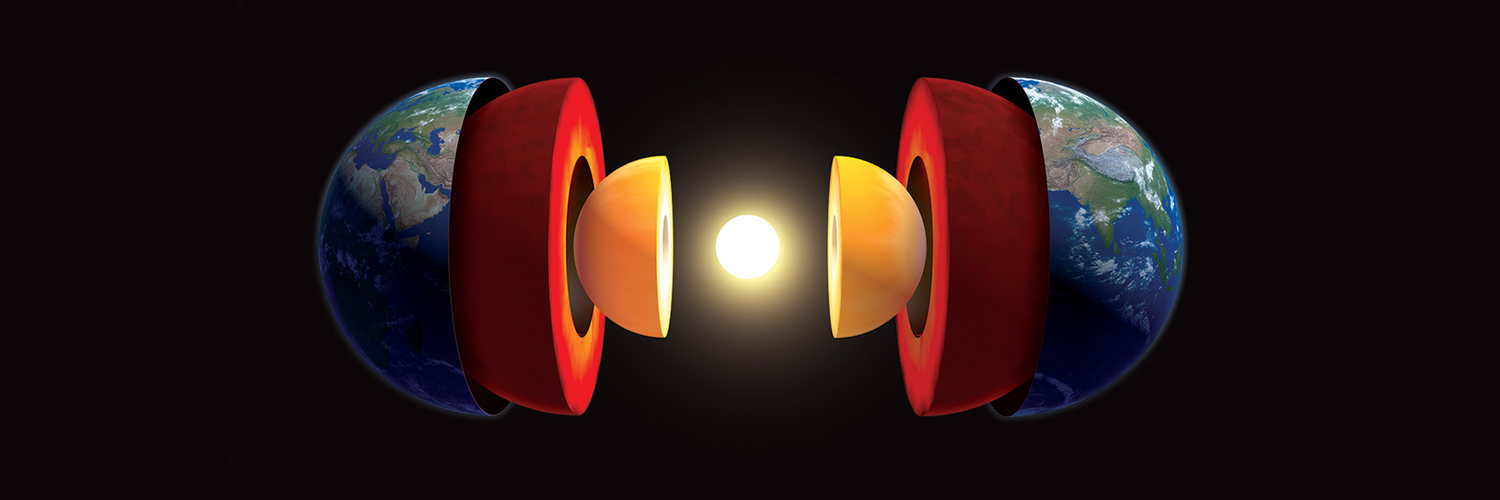
Four years ago, a dozen scientists packed into a control room at the European X-ray Free-Electron Laser (XFEL) Facility in Germany. A sliver of iron thinner than a human hair was squeezed to deep-Earth pressures between the tips of diamond anvils, then blasted to extreme temperatures by the x-ray laser. A surprising picture emerged on the consoles, says Sébastien Merkel, a geophysicist at the University of Lille who leads the $2.5 million project, called HotCores.
The crystal structure of the iron was cubic—the first time the arrangement had been seen at such high pressures and temperatures. The result seemed impossible, Merkel says. “It’s really the last thing we expected,” he says. “It reopens a topic that I thought was closed.”
For decades, experiments and computer simulations of Earth’s inner core, an alien world of solid iron some 5000 kilometers below the surface, suggested the iron atoms there form close-packed hexagons. But word of the new result has quietly roiled the small community of inner-core researchers. If the structure is instead what is commonly called body-centered cubic (BCC), it could change how heat is conducted, altering when in geological history the inner core began to solidify and how heat and elements were released into the molten outer core. Those processes affect how the outer core churns, powering the dynamo that generates Earth’s magnetic field. “If the structure is different, then the properties will be different,” says Shuai Zhang, a high-pressure researcher at the University of Rochester.
The finding was difficult to publish. It finally appeared in August in the journal Physical Review B, after several high-profile journals turned it down, Merkel says. The delays may reflect resistance to reopening a question many researchers thought was settled. Yet to Jon Eggert, a materials physicist at Lawrence Livermore National Laboratory, “The data is very clear. I’m convinced they see BCC.”
Learn more: scim.ag/4ihduok
With high-speed cameras and a “pitch cannon,” researchers are refining the automated ball-strike system about to call its first World Series. scim.ag/3UfezoC #LongReads


