

OC
Joined September 2014
- Tweets8K
- Following911
- Followers276K
- Likes19.6K







Pinned Tweet
here's how i shipped 2,500 PRs last month to production
this was originally supposed to be for Cursor Compile in London. i couldn't make it since i was livestreaming for Grok @Bot Galaxy so i'm making it available for free here on X! watch it on 2x speed, i talk slowly
i asked grok bot to make a video about how the music in tibo.dog was made! i started by clumsily describing something i wanted (i have 0 experience making music): gameboyish music, seamlessly transitioning between variations of a main melody like another game i had played (genshin)
one prompt i tried that helped me communicate my goal better was telling bot "i lack the vocabulary to describe what i want" and using the /sharpen skill from pstack. then the /in-your-own-words skill helped me confirm whether or not it understood what i was trying to say
i also used this same trick when making this video, so my agent produced a storyboard and animatic before working on the full thing
knowing the right words is very powerful
distilled into a prompt:
tibo.dog's music is synthesized live in an AudioWorklet. The chip is a Game Boy-style synth with two pulse voices, a 4-bit wave voice, a noise voice and two sound-effect voices, over a stereo synthwave bed: bass, pad, drums, sidechain ducking, ping-pong delay and reverb. The main thread turns game events into music and sound cues and posts them to the worklet, which renders every sample.
Melodies are written by hand as step-sequenced pattern lines, one token per step, played in an order list. Pulse 1 sings the lead. Pulse 2 plays the arp, a chord cycled at 60 Hz, such as C4:47 for C, E and G. The wave voice plays the counter-melody, and the bed carries the bass line and pad chords. Every song runs at 128 BPM, and the biome songs and the first boss song are versions of one main theme. Intensity brings the melody in by layers, with the lead entering at 0.5 and the counter at 0.85. Nothing generates or transposes notes at runtime.
Music plays on two decks. A plain song change is a two-bar crossfade that starts on a bar line. During a run, a DJ mixes songs like a live set. It holds each song for at least sixteen bars, starts a mix only on an eight-bar phrase, and overlaps the decks for four bars. Each song is split into stems (lead, arp, counter, bass, pad), and the stems trade decks on the swap bar. The DJ picks the mix by how closely the two songs match. Two versions of the same theme blend, layering both songs' lead, arp and pad while the bass and counter swap. Songs that share a bar grid duet, with both leads playing across the overlap while the backing changes songs. Any other pair gets a melody mix, which keeps the outgoing lead singing over the incoming backing. The lift and peak tracks are DJ takes. Each keeps its own lead, and its backing is rebuilt to match the current biome's version of the theme.

hot take: you don't need a software factory, and i don't love the term. it's just marketing
all you need is good software engineering and investing your tokens in the right places. the more deterministic the better (and token efficient)


lauren retweeted

A mix of the techniques shown here, in short.
This has been my dream for nearly a decade now, and with agents I’m finally able to see this (partially) come true.
But turns out this is what I necessarily require to trust agent generated code. It’s not optional anymore, imo.

Day 28/ tibo's game has landed
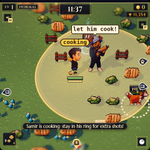
i spent $5.99 on this domain, but i had a blast making it with grok bot and cursor! i hope you enjoy it and find all the easter eggs 🤍
if i did it right you should be able to play it inside of X too
tibo.dog


lauren retweeted

SpaceXSI 🤝 Vercel
Grok and Cursor can now build, deploy, and scale
vercel.com/for/platforms


lauren retweeted

You can now build live apps in Cursor and share them with a link.
Agents have made it easier to write code, but most apps never make it off localhost. Describe the tool you want - Cursor will build it, set up a database, run deterministic and agentic security checks, and deploy.
while i'm quite bullish on formal methods, i think it's worth tempering expectations and doing your own research on it (disclaimer: i am not an expert in it). it cannot guarantee your code is bug free, only that it matches the spec under certain assumptions, and the specs come from what people want, not math. as long as we build software for humans, nothing can prove that your spec is right, only you can judge.
i created the /statechart skill in pstack primarily because it helps make the state machines implicit in your code more obvious and legible to you, so you can shrink the review surface and review the work at a higher level: does it actually match your intent and goal? i used this skill a ton while building my game tibo.dog, below you can see the statechart for story mode where i was able to find many bugs with it.
in that sense, i think model checking (eg TLA+ with TLC) is quite useful for understanding and checking properties of your system e2e, and you don't have to write tons of new verification code for it. the spec isn't your actual code so there's always a risk of drift, but so far i've had good experiences finding actual bugs with it. i tend to pair it with empirical verification (running the code) also to confirm it's real
other types of formal verification like proving theorems (eg Lean, Dafny), bounded model checking (eg CBMC, Kani) etc have their own tradeoffs. proofs cover every possible input, but only for the properties specified, and it takes a lot more code/work. bounded model checking can run on your actual code, which avoids drift, but it only checks up to a certain number of steps, so it's better at finding bugs than proving there aren't any
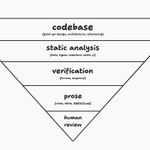
so i think in the near-medium term you'll still need to layer your codebase: constraints and guardrails (types, lint rules, api design, refactoring), empirical verification (tests, evals, real usage), and formal verification for the parts that really need it. none of these catch everything on their own, but layered together, they catch a lot more and shrink what's left for you to review
but also maybe in the limit, the bitter lesson will prevail and flawless code will just be printed out perfectly every time with no bugs. even in that scenario, /statechart still seems very helpful in confirming that the agent understood your intent correctly. give it a try if you haven't already!
github.com/cursor/plugins/tr…

lauren retweeted

Bunch of interesting buttons here: tibo.dog
lauren retweeted

I have moved everything from OpenClaw, Hermes and Muse to just Grok Bot now.
Muse had a moment for a while. But Grok @bot is coming out as a clear winner for personal agents (UI/UX/features - everything on point).
And the most impressive thing the speed of shipping to keep grok bot relevant.
Amazing work @poteto, @mattyp and team!
some fun slides from my upcoming talk @aiDotEngineer
very excited to share how we ship crazy amounts of code (30x'd) without reading it, yet perf is as good if not better then when we launched
there's a lot more to improve of course, and the ceiling is far from being reached, but given the relentless shipping speed and our high bar for polish, i think that our agent friendly architecture bets are paying off at taming the slop
fun fact: ~230 people landed at least 1 PR to grok bot in october!


First AIE Code Summit speakers:
@poteto, Principal Engineer @ SpaceX
@steve_yegge, Engineer, Writer, Advisor
@zachbruggeman, Principal Software Engineer @ Ramp
Nov 10-12, SF. Come hang out with us. Apply at ai.engineer/code

ALT AI Engineer Code Summit speaker announcement featuring Lauren Tan, Principal Engineer at SpaceX; Steve Yegge, Engineer, Writer, Advisor, Independent; and Zach Bruggeman, Principal Software Engineer at Ramp. Black and white artwork with three speaker portraits and yellow text: November 10–12, SF. Apply at ai.engineer/code.
lauren retweeted

The web rewrite is working.
On a slow connection, the old X web took more than 22 seconds to show the first post on a profile. The new X web does it in 2.7 seconds. Here's how we did it, and how we're rolling it out one country at a time.
blog.x.com/en/engineering/re…


lauren retweeted

Excited to build Starlink Mobile with @Qualcomm !

Starlink Mobile is building the first fully-integrated US nationwide satellite and terrestrial network that will keep people connected on their phones no matter where they are. Our 5G base stations will leverage @Qualcomm chips to accelerate deployment, starting in 2027 🛰️📱

