ResearchHub (@ResearchHub) header
ResearchHub (@ResearchHub) profile picture

The fastest way to fund science. $1.8M+ funded, powered by $RSC. Post an RFP. Discover high quality preregistered proposals. Paid peer review in 10 days.

Earth 🌍🌎🌏
Joined January 2019
Photo by ResearchHub (@ResearchHub)Photo by ResearchHub (@ResearchHub)Photo by ResearchHub (@ResearchHub)Photo by ResearchHub (@ResearchHub)Photo by ResearchHub (@ResearchHub)Photo by ResearchHub (@ResearchHub)Photo by ResearchHub (@ResearchHub)Photo by ResearchHub (@ResearchHub)Photo by ResearchHub (@ResearchHub)Photo by ResearchHub (@ResearchHub)
Since January 2025, ResearchHub has deployed over $1.5M in research funding to scientists worldwide. We just redesigned our funding page to make it even easier for funders and researchers to connect. Take a look ↓ researchhub.com/fund
4
14
2
95
15,778
ResearchHub retweeted
The American scientific funding model is on the verge of structural reforms. As this @TheEconomist article highlights, researchers spend an estimated 44% of their time on administrative tasks, at a time when legacy agency funding is heavily cut and increasingly risk-averse. At the same time, funding is aggressively shifting to private entities which bet on breakthrough science outside of traditional academia. This paradigm shift gives rise to demands for platforms and tools like @ResearchHub to set priorities and ensure scientific rigor and accountability in an open and transparent manner. $RSC economist.com/science-and-te…
1
2
8
384
How much does the world actually spend on science? 1. US government research funding: ~$99 billion
In FY2024, federal agencies obligated about $47.5B for basic research and $51B for applied research. That's the pool most scientists mean when they say "grants": NIH, NSF, DOE, NASA and others. 2. Add philanthropy: ~$126 billion
Foundations and donors add about $27B on top of federal grants, supporting research at US universities and nonprofit institutes in 2024. That's roughly a fifth of all support for that work. 3. All US R&D: ~$1 trillion
Total US R&D hit $937B in 2023 and an estimated $993B in 2024. Most of it is industry funding product development. Government research and philanthropy together make up only about one-eighth of the total. 4. Global R&D: ~$3.8 trillion
The world spent an estimated $3.8T on R&D in 2024. The US and China each crossed $1T What this means
The money that funds open, curiosity-driven science is a fraction of total R&D, and it flows through slow, centralized channels. Even modest improvements in how that ~$126B is allocated would compound across every field. That $126B is the segment ResearchHub is currently starting with. Moving just 1% of it, about $1.3B a year, through preregistered proposals with incentivized peer review would change how a meaningful share of American science gets funded, reviewed, and shared.
10
3
44
4,201
ResearchHub retweeted
ResearchHub's target annual R&D market: $126B 1% of that target segment: $1.3B ResearchHub's current market cap: $10M An incredible discrepancy between the current valuation and the actual addressable scale.
How much does the world actually spend on science? 1. US government research funding: ~$99 billion
In FY2024, federal agencies obligated about $47.5B for basic research and $51B for applied research. That's the pool most scientists mean when they say "grants": NIH, NSF, DOE, NASA and others. 2. Add philanthropy: ~$126 billion
Foundations and donors add about $27B on top of federal grants, supporting research at US universities and nonprofit institutes in 2024. That's roughly a fifth of all support for that work. 3. All US R&D: ~$1 trillion
Total US R&D hit $937B in 2023 and an estimated $993B in 2024. Most of it is industry funding product development. Government research and philanthropy together make up only about one-eighth of the total. 4. Global R&D: ~$3.8 trillion
The world spent an estimated $3.8T on R&D in 2024. The US and China each crossed $1T What this means
The money that funds open, curiosity-driven science is a fraction of total R&D, and it flows through slow, centralized channels. Even modest improvements in how that ~$126B is allocated would compound across every field. That $126B is the segment ResearchHub is currently starting with. Moving just 1% of it, about $1.3B a year, through preregistered proposals with incentivized peer review would change how a meaningful share of American science gets funded, reviewed, and shared.
4
7
39
1,586
ResearchHub retweeted
Lots of scientific funding needing upgraded rails!
How much does the world actually spend on science? 1. US government research funding: ~$99 billion
In FY2024, federal agencies obligated about $47.5B for basic research and $51B for applied research. That's the pool most scientists mean when they say "grants": NIH, NSF, DOE, NASA and others. 2. Add philanthropy: ~$126 billion
Foundations and donors add about $27B on top of federal grants, supporting research at US universities and nonprofit institutes in 2024. That's roughly a fifth of all support for that work. 3. All US R&D: ~$1 trillion
Total US R&D hit $937B in 2023 and an estimated $993B in 2024. Most of it is industry funding product development. Government research and philanthropy together make up only about one-eighth of the total. 4. Global R&D: ~$3.8 trillion
The world spent an estimated $3.8T on R&D in 2024. The US and China each crossed $1T What this means
The money that funds open, curiosity-driven science is a fraction of total R&D, and it flows through slow, centralized channels. Even modest improvements in how that ~$126B is allocated would compound across every field. That $126B is the segment ResearchHub is currently starting with. Moving just 1% of it, about $1.3B a year, through preregistered proposals with incentivized peer review would change how a meaningful share of American science gets funded, reviewed, and shared.
1
2
13
942
Reply "@ResearchHub test this" under any post with a scientific claim and we will automatically generate a preregistered proposal you can fund to seek the truth!
New thing we're trying on X 🧪 If you see a post with a dubious scientific claim, reply "@ResearchHub test this" We will automatically generate a preregistered experimental design you can fund to test the claim in question teapawt.net/jwmares/status/2115873…
5
5
2
45
3,220
ResearchHub retweeted
A golden age of science is coming AI can do things humans researchers can’t, even in groups. noahpinion.blog/p/a-golden-a…
2
6
462
Inspired by @VitalikButerin's post on airborne disease resilience, @ResearchHubF opened a $10K RFP. The community has already added $2K+ to the funding pool! The RFP is accepting: 💰 Funding pool contributions 🔬 Research proposal submissions researchhub.com/rfp/33131
For anyone getting into biology, please consider taking airborne disease resistance more seriously. It's a super important area of medicine that is a huge cause of death and sickness but easily gets forgotten. We're likely to get many more airborne plagues in the future due to the combination of not just extremely dense and interconnected society (including city and farm animals), but also accidents from bio research and offensive biotech (both from random people and from secret government programs that can easily get themselves exempted from safety restrictions), all enhanced by powerful AI. Right now, this area is getting way less love than longevity research (which continues to be super important!), but it's an area where there are lots of unclaimed wins that we know exactly how to do (but are not yet doing) with present-day tech: * early detection * passive universal testing * filtration/ventilation/UVC * better vaccines (including making them open source and open science) * cryptography to make all of the above privacy-preserving We can have China-level pandemic resistance with Sweden-level limited intrusion into people's lives, and then go even further. We just have to actually do the work for it.
1
9
32
1,636
Platform fees collected by ResearchHub Foundation are burned weekly. 🔥 More platform activity = More RSC burned Every burn is permanent and verifiable on @base. Track $RSC burns ↓ researchhub.foundation/burns
4
11
39
1,158
ResearchHub retweeted
Large language models detect methodological errors that human peer review misses in clinical trials Happy to be a part of this exciting study led by @rust_ruslan 🤠 I am far from a true expert on LLMs, but I have to admit that LLMs are way more adept at reviewing the methodological details😎 medRxiv 2026 medrxiv.org/content/10.64898…
1
6
26
1,209
Science organizations are either embracing AI or keeping it out of their workflows. @ResearchHub is leaning into AI for writing and reviewing funding proposals, as a complement to human experts, not a replacement.
Lots of debate this week on whether journals should ban AI in peer review. We actually tested this in our new preprint, and the results were pretty clear to me. For context, I've reviewed for most of the big journals and evaluated 1,000 human reviews as an editor. I love to read and evaluate science. TLDR: From now on I won't do any peer review without AI. For clinical trials, I'd even call human-only review dangerous 🧵
8
34
974
ResearchHub retweeted
Lots of debate this week on whether journals should ban AI in peer review. We actually tested this in our new preprint, and the results were pretty clear to me. For context, I've reviewed for most of the big journals and evaluated 1,000 human reviews as an editor. I love to read and evaluate science. TLDR: From now on I won't do any peer review without AI. For clinical trials, I'd even call human-only review dangerous 🧵
136
520
174
2,130
282,511
Agree. Coding is getting solved fast, discovery is the hard part 🔬 That's why I like what @ResearchHub is doing, funding real research questions like the airborne disease RFP that's open right now
If I’m investing in frontier AI I would underwrite it mostly on new discovery and its applications like medicine because coding and most of knowledge work is quickly being saturated by sub-frontier models.
3
14
385
ResearchHub retweeted
Stop 👏 using 👏 AI 👏 detectors If something is good, it’s good. If it’s bad, it’s bad. Whether AI helped write it doesn’t change that. Nobody asks today if you used a calculator when you got the right result. Judge the quality. Plus, AI detectors don’t even work (or the Declaration Of Independence was written by AI)
Replying to @wiisdomseeker
What’s wrong with AI detectors
14
15
5
72
8,752
ResearchHub retweeted
Editorial decisions for the @RHubJournal are made by the market, not an editorial board If patrons of science believe a preregistration on @ResearchHub is worth funding, then it is automatically accepted for publication as a registered report!
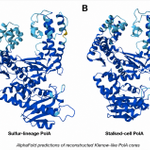
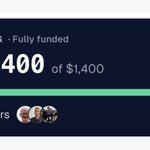
12 people put up $1,400 for four synthetic genes. Two of them encode DNA polymerases reconstructed from bacterial ancestors ~133 million years back from anything alive today. That proposal is now a published Stage 1 Registered Report. No editor approved it. Funding did.
1
3
22
710
12 people put up $1,400 for four synthetic genes. Two of them encode DNA polymerases reconstructed from bacterial ancestors ~133 million years back from anything alive today. That proposal is now a published Stage 1 Registered Report. No editor approved it. Funding did.
4
5
2
30
2,706
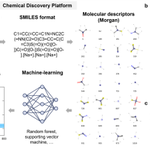
Now they want better dyes. Train a model on ~200 molecules, predict which ones clear tissue at the lowest dose, then test the top picks in mice over six months. Neither project has run a confirmatory experiment yet. Both owe a Stage 2 report with results.
2
2
210