Cutting-edge research, news, commentary, and visuals from the Science family of journals. Follow @NewsfromScience for stories from our News team.

Washington, DC & Cambridge, UK
Joined April 2009
Researchers have developed an AI-based approach to help physicians with real-life clinical workups, starting with the patient’s chief complaint, systematically asking questions and deciding what laboratory and imaging tests to order, and then continuing the evaluation on the basis of the answers received. Learn more this week in Science: scim.ag/3U8xn94
21
76
7
313
32,193
Science Magazine retweeted
The new issue of #ScienceSignaling has arrived! The humble sea slug reveals how transfer RNAs become modified during behavioral habituation and learning, new work shows how a mutant form of STAT3 causes a genetically dominant immunodeficiency, and more. scim.ag/3WNtfMs
3
6
2,675
"What mattered, I realized, was not to be some imaginary perfect mentor with all the answers, but to get to know my mentee ... and offer whatever guidance and support I could based on my own experiences." #NationalMentoringDay scim.ag/4o6PAxt
2
7
1
30
8,422
A new study in @SciImmunology demonstrates how mechanical sensing in gut macrophages can lead to colitis-associated visceral pain in mice. scim.ag/4ytUjxp
3
4
39
8,520
A newly resurfaced photo taken by Rosalind Franklin—photo 49—shows she was aware of the helical structure of DNA and explains why her published image—photo 51—does not have indications of her understanding of its shape. Learn more in the latest episode of the #SciencePodcast🎙️: scim.ag/4BpAwly
5
3
1
17
9,065
The NOSTER & Science Magazine Microbiome Prize rewards innovative research by early-career investigators on the functional roles of the microbiota in human or veterinary health and disease. Apply by 14 February 2027: bit.ly/4yHVbii
2
7
7
11,001
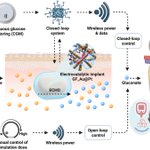
An implantable, wirelessly powered electronic device could offer a drug-free approach to managing the intertwined metabolic disorders of obesity and type 2 diabetes. The device uses electrocatalysis to remove excess glucose from the bloodstream on demand. Learn more in Science: scim.ag/47twScK
8
16
12
81
18,509
Home decorating isn’t unique to Homo sapiens. More than 40,000 years ago, bands of Neanderthals turned a spacious rock shelter in the mountains of Spain into a cozy home, fashioning wood into tools and windbreaks and burning it for heat and light. That picture comes from a first-of-its-kind trove of Neanderthal wooden artifacts from a domestic space, found at a cliffside site called Abric Romaní, 50 kilometers west of Barcelona. Learn more: scim.ag/3VK5zZb @NewsfromScience
6
26
3
138
17,950
By applying a unique polyene scaffold, researchers engineer a next-generation, broad-spectrum antifungal that selectively targets ergosterol without binding to cholesterol, avoiding severe toxicity linked to drugs like amphotericin B. Find out more in @ScienceTM: scim.ag/3UycT9T
4
1
26
12,289
Animals and plants use conceptually similar immune systems to detect microbes and activate defenses. In both lineages, pattern recognition receptors (PRRs) perceive pathogen- or microbe-associated molecular patterns (PAMPs or MAMPs) and host-derived damage-associated molecular patterns (DAMPs). Whereas animals rely on specialized immune cells, plants harness individual cells expressing diverse PRRs. In the apoplast, which lies outside the plasma membrane and includes the cell wall, PRRs detect immunogenic fragments released from microbial proteins by plant hydrolytic enzymes. Conversely, pathogen-secreted enzymes can degrade constituents of the apoplast, generating DAMPs that activate immunity. In three new Science papers, researchers report expansions of this surveillance, revealing receptor architectures and mechanisms that enable plants to discriminate immunogenic carbohydrates. The findings illustrate how ligand specificity and receptor assembly confine immune activation to the context of microbial challenge. Learn more in a new #SciencePerspective: scim.ag/4ib9BRC
4
41
172
28,700
Last call: Apply for the BioInnovation Institute & Science Prize for Innovation This prize recognizes bold researchers who are asking fundamental questions at the intersection of the life sciences and entrepreneurship. The Grand Prize winner will receive a cash prize of USD 25,000 and have their winning essay published in Science, in print and online. Apply by 1 November 2026: bit.ly/3TuI19S
5
20
13,968
Researchers in @ScienceAdvances have developed a multiplexed and implantable fiber sensor that monitors the bloodstream for real-time levels of sodium and potassium, two electrolytes that regulate important bodily functions like heart rhythm and fluid balance. scim.ag/4yyM9UE
3
13
76
15,983
Japan’s MMX mission aims to retrieve samples from Mars’s mysterious moon. They could reveal how it formed—and hold pieces of Mars itself. Learn more: scim.ag/4sgWWRI @NewsfromScience
10
53
3
197
18,453
A @ScienceTM analysis of trial data from stem cell transplant recipients shows how immune suppression with either cyclophosphamide or tacrolimus shapes T cell reconstitution—and has opposing effects on the risk of graft-versus-host disease or infection post-transplant. scim.ag/47xj5BT
2
6
35
12,102
"For years, I worked hard to hide my history of homelessness. Now, I am more neutral—it was a challenging and sometimes unpleasant chapter, like puberty, or, more recently, learning Bayesian statistics. I am committed to not letting my history define me. But I also don’t want my colleagues to assume no scientist could have a past like mine." #ScienceWorkingLife scim.ag/4jAvtZd
9
20
4
104
21,440
New in @SciRobotics: The Ultra Mobility Vehicle bicycle robot leverages its own inertia and momentum to perform jumps, track stands, wheelies and other athletic moves. scim.ag/4yyunAT
9
4
2
26
14,422
Science is publishing an Erratum to replace the July 2026 Editorial Expression of Concern for the February 2026 Research Article “Hafnium oxide interface stabilization for efficient, photothermally stable perovskite solar cells.” scim.ag/4z1WcT5
1
2
22
17,152
How does the #glycome of gamma-delta T cells affect their activation toward an autoimmune state? Learn more in Science #Immunology about these important sugar molecules and their impact on inflammatory disease. scim.ag/47UlTJn
4
14
67
16,985
Does generative AI dilute markets for human-created work? In a new #SciencePolicyForum, researchers discuss how market dilution theory, which could affect AI use in science, requires conceptual clarity and empirical evidence: scim.ag/4eDnln9
7
5
25
13,779
Wolves have made a spectacular comeback in Europe. But attacks on livestock and humans have caused a heated debate about the limits of coexistence. Learn more: scim.ag/4oNnWa4
24
182
22
696
82,108
People who lived 5500 years ago on the shores of Siberia’s Lake Baikal survived by hunting deer and game and catching fish. At times, marmots were on the menu, too—a decision with deadly consequences. Learn more: scim.ag/4sdUV9f
27
53
6
236
52,490