

I help people reconnect with who they really are, through the practice of mind:body attunement 🌕 work with me 👇
Victoria, British Columbia
Joined June 2021
- Tweets9.2K
- Following366
- Followers11.2K
- Likes10.1K


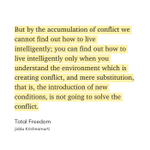
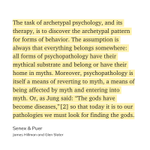
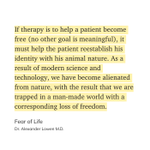
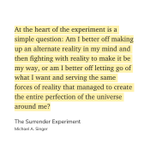
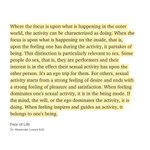


fascinated by “selective inattention” (also known as “defensive exclusion”). this is when someone is exposed to a confronting question/statement, and they reflexively “slide away” from it - change the subject, get distracted, etc
what’s interesting is that it’s not conscious - they’re not aware they’re doing it, and they don’t even realize until someone points it out. sometimes, they won’t even remember the original question
the unconscious mind is blocking out information of its own accord, filtering the world into something more palatable
in therapy/coaching work this is expected and normal. the place where it’s more harmful is parenting - the parent can be reflexively rejecting/dismissive without even realizing it, but the child feels it
the same old work is required here: to notice your blind spots, finds the knots of emotional reactivity, and do all you can to release them.
the single most influential piece of “old programming” in the human psyche is the belief that belonging is a finite resource
for millions of years, our ancestors needed to cooperate with their community in order to survive. we are hardwired with “you must get along with the 100ish people around you”
now, in the modern world, that translates to status-seeking, people-pleasing, self-martyrdom… or just generally staying in a life that doesn’t feel great (nor serves others)
but belonging is a felt experience. and not only are there billions of people to befriend and coexist with, the felt experience of belonging can be accessed in many ways
you don’t have to be religious, but a feeling of connection to God is one of the quickest way to access a feeling of belonging that is not reliant on conformity
but there’s also connection to nature, connection to self, a sense of harmony with your environment… many ways to access the experience your brain is hardwired to seek
opting out of belonging-seeking is probably not possible (unless you’re willing to invest in a monk-like practice). but being thoughtful about how you choose to satisfy this primary drive is available to everyone
three questions to begin:
a) what does it feel like when you experience abundant belonging? what is the “signature”, the sensations in your body?
b) what are all the times you’ve experienced that, big and small?
c) which of those experiences do you find particularly beautiful or resonant - the ones you’d be happy to devote your life to?
seek belonging, but seek the belonging that calls to you. there’s enough of it to go around
detecting grandiosity is maybe a key skill in SV
detecting it in a founder helps you know whether to invest
detecting it in yourself helps you know whether you need to accelerate or reassess
grandiose people putting money behind grandiose people = bad outcomes

when many people talk about “narcissism” in a casual sense they’re actually talking about “grandiosity”
narcissism is a very specific & intense diagnosis (0.5-1% of the population). grandiosity, on the other hand, has been called an epidemic
grandiosity “means you have larger fantasies and wishes for yourself than your real life experience can support” (Robert Moore)
this can manifest as the kind of selfish/inconsiderate/destructive behaviour that we call “narcissistic”, but it can also manifest as depression, or mania. it can show up in big ways or small ways; more of a spectrum than narcissism
but it comes down to inflated expectations: “I deserve better, things should be better, people should treat me better”. sometimes that’s true, of course, so we come back to that test: can reality actually support these expectations?
persistent grandiosity is a tough way to live and I think our culture encourages it. how many people on here expect to be highly “agentic” tech founders making tens of millions? how many people post about “delusional optimism” being a strategy?
we don’t want to overcorrect and sell ourselves short - the real work is in discernment. “is this grandiosity? how can I tell? how can I stay grounded while staying in pursuit of my highest ambitions?” not the sexiest questions, but essential to remain balanced
1
8
590
when people talk about delusional optimism, they often see it like this:
“Kanye became Kanye because he was delusionally confident enough to walk into a record exec’s office and play his music”
maybe. but consider the opposite:
“Kanye became Kanye because he knew he was the type of person to risk total embarrassment in pursuit of his goals, and that made him ridiculously confident”
many people try to use delusional confidence as a SUBSTITUTE for becoming the type of person who can realistically say “I have a reasonable shot at making it”
the latter is NOT grandiose. they’re optimistic, of course, but it’s based on reality
SpaceX’s plan to go to Mars is ridiculously optimistic. but it’s not grandiose, because they’ve based it in an assessment of risk factors, technological projections, etc. that’s the difference here
be optimistic. don’t be fantastical. and learn to discern the two
(the argument here is not “Kanye West isn’t grandiose” lol. of course Kanye obviously struggled with grandiosity, in a way that ended up hurting him… just saying in this particular instance his confidence was not ungrounded. “five beats a day for three summers”, etc)
when many people talk about “narcissism” in a casual sense they’re actually talking about “grandiosity”
narcissism is a very specific & intense diagnosis (0.5-1% of the population). grandiosity, on the other hand, has been called an epidemic
grandiosity “means you have larger fantasies and wishes for yourself than your real life experience can support” (Robert Moore)
this can manifest as the kind of selfish/inconsiderate/destructive behaviour that we call “narcissistic”, but it can also manifest as depression, or mania. it can show up in big ways or small ways; more of a spectrum than narcissism
but it comes down to inflated expectations: “I deserve better, things should be better, people should treat me better”. sometimes that’s true, of course, so we come back to that test: can reality actually support these expectations?
persistent grandiosity is a tough way to live and I think our culture encourages it. how many people on here expect to be highly “agentic” tech founders making tens of millions? how many people post about “delusional optimism” being a strategy?
we don’t want to overcorrect and sell ourselves short - the real work is in discernment. “is this grandiosity? how can I tell? how can I stay grounded while staying in pursuit of my highest ambitions?” not the sexiest questions, but essential to remain balanced
grandiosity is easy to detect in aggregate - obviously not everyone on tech twitter is going to end up as a wealthy founder
but harder to detect in the individual - “is THIS particular person going to end up exceptionally successful? does reality support that expectation?”
and hardest still to detect it in ourselves, where the very act of observation distorts what we see. here’s where outside counsel is essential - “am I seeking a bounded, realistic, possible outcome, or am I chasing a fantasy?”
when many people talk about “narcissism” in a casual sense they’re actually talking about “grandiosity”
narcissism is a very specific & intense diagnosis (0.5-1% of the population). grandiosity, on the other hand, has been called an epidemic
grandiosity “means you have larger fantasies and wishes for yourself than your real life experience can support” (Robert Moore)
this can manifest as the kind of selfish/inconsiderate/destructive behaviour that we call “narcissistic”, but it can also manifest as depression, or mania. it can show up in big ways or small ways; more of a spectrum than narcissism
but it comes down to inflated expectations: “I deserve better, things should be better, people should treat me better”. sometimes that’s true, of course, so we come back to that test: can reality actually support these expectations?
persistent grandiosity is a tough way to live and I think our culture encourages it. how many people on here expect to be highly “agentic” tech founders making tens of millions? how many people post about “delusional optimism” being a strategy?
we don’t want to overcorrect and sell ourselves short - the real work is in discernment. “is this grandiosity? how can I tell? how can I stay grounded while staying in pursuit of my highest ambitions?” not the sexiest questions, but essential to remain balanced
1
6
725
when many people talk about “narcissism” in a casual sense they’re actually talking about “grandiosity”
narcissism is a very specific & intense diagnosis (0.5-1% of the population). grandiosity, on the other hand, has been called an epidemic
grandiosity “means you have larger fantasies and wishes for yourself than your real life experience can support” (Robert Moore)
this can manifest as the kind of selfish/inconsiderate/destructive behaviour that we call “narcissistic”, but it can also manifest as depression, or mania. it can show up in big ways or small ways; more of a spectrum than narcissism
but it comes down to inflated expectations: “I deserve better, things should be better, people should treat me better”. sometimes that’s true, of course, so we come back to that test: can reality actually support these expectations?
persistent grandiosity is a tough way to live and I think our culture encourages it. how many people on here expect to be highly “agentic” tech founders making tens of millions? how many people post about “delusional optimism” being a strategy?
we don’t want to overcorrect and sell ourselves short - the real work is in discernment. “is this grandiosity? how can I tell? how can I stay grounded while staying in pursuit of my highest ambitions?” not the sexiest questions, but essential to remain balanced

the core of the mother complex is a yearning for an experience of total care: to have all your needs & desires met at once
this can show up as a fantasy about the perfect partner (who meets all emotional & sexual needs) or achieving the kind of social stature where everyone falls over themselves to give you what you want
the hidden danger here is that the only time that such a state is actually realized (to such a perfect degree) is in the womb: absolute protection, care, warmth, intense closeness
so the man with a mother complex desires to return to the womb. but returning to the womb is a return to pre-life, which is to say it is a yearning for a form of death. it is a rejection of life itself
the simple answer is that such a man must learn to choose life. but who would make such a choice? why would someone choose to exit Eden, of their own free will? why give up the fantasy of perfect care, when it offers such comfort? these are the questions he must find an answer to… the fundamental “why” of life itself
great tweet. also suggests a really good practice for improving emotional intuition (and also learning to not let other people’s emotions skew your system):
a) read a tweet
b) ask “what emotion was this written from?”
c) ask “how do I know that?” -> in terms of what you feel in your body as you read it -> what gives you the sense of “ah, this is coming from THIS place?”
d) ask “do I like feeling this way?”
you sense into their felt experience (speculatively) by sensing into your own, and then you can decide what to do with that… rather than unconsciously flitting from felt state to felt state while scrolling

you can sense that many of the tweets on this website are written from an emotion the author is experiencing if you pay some attention to it
“emotions want to move” and tweeting/writing is one way of doing it. it is understandable to get the urge to blurt out such artifacts
however, it is not particularly good for a person to be exposed to people releasing their unprocessed emotions into the world packaged as strong opinions, judgements, and most dangerously, dictates on what is right and how things ought to be. especially so if it is not perfectly obvious to them that this is what’s happening, and they read what’s written without much mental distance or filtering
this is of course not only true for social media and applies irl too, but i believe there we’ve at least millions of years of evolution on our side to read a person beyond their words

when you’re scrolling, your reaction to people’s posts reveals something about who you are & what you feel. you’re looking in a series of mirrors
when you’re posting, though, you’re the mirror. and you see, through people’s replies, what THEY see in your mirror.
and that can be both gratifying and disturbing. especially if you think you’re creating a photograph - “how can you see that in this photo, it’s not there!”. but you’re not sharing a photo. you’re sharing a mirror
3
33
1,198
“cure the symptom and lose the god”
if you view your pain as purely something to escape - not only is that a more disempowered position (since you are purely a “victim”) but you cut yourself off from a source of meaning
seeing your suffering as a *collaborator* in your growth both allows you to see yourself in a better light (your struggle is not a character flaw but a necessary process) AND creates the possibility of alchemizing that suffering into better understanding
the downside is… it’s hard. it asks a lot of you. but maybe you’re ready to have more asked of you

scott 🌞 retweeted
what many people miss about inner work is that when it’s done honestly, it’s a continual process of simplification
to integrate all parts of ourselves we must get to the raw truth of them… and intellectualization obscures that
“I have avoidant attachment” might be a true statement, but it’s less raw (and therefore less healing) than something like “I’m terrified of letting someone down the way I let my mother down”
but that’s the place we need to go (in time): to the pure emotion, without the distance of abstraction
if you’re a smart person who’s unsure what to devote yourself to in the age of AI, reach out
never been a better time to get clear on your intrinsic desires + wholeheartedly pursue them. I’ve helped many people find that reorientation

The biggest opportunities right now:
1. build for solving loneliness (the more AI floods everything, the more people crave real human connection, IRL and small social)
2. build for places with no cameras and no recording (being offline and unseen is turning into the new status symbol)
3. build for the crisis of young men. Millions of guys in their 20s feel completely lost with work, dating, and purpose. Whoever builds real brotherhood, mentorship, and an actual path forward wins a massive market (and helps a ton of people).
4. build for protecting people's brains (feeds are turning everyone's attention to mush, tools that protect your focus and mood are an easy sell)
5. build for the death of "everyone agrees" (you can find a chart or a podcast clip to prove any point now, people are starving for one source they actually trust)
6. build for day 2, not day 0. Anyone can launch an app in a weekend now. But how can you keep it running, fix the mess, and grow it for 3 years.
7. build for throwaway software (not everything needs to be a $20 a month subscription, tiny apps made for one trip, one wedding, or one group chat are coming)
8. build for people whose ego just got bruised by AI. Millions of smart people are realizing their job was mostly pattern matching. Help them figure out what they're good for next.
9. build for things that take effort on purpose (when everything is instant and free, nothing feels earned, people will pay for slowness and craft)
10. build for people who miss being told they're wrong. AI agrees with everything you say now. Real rooms where smart people actually push back on your ideas are becoming a luxury.
11. build for skin in the game. The internet is full of free takes and bots. Any platform where people have to put real money, real names, or real work behind what they say wins.
12. build for agents that need to spend money (they're getting virtual cards and budgets, someone builds the spend controls, fraud protection, receipts)
13. build for the end of fake email jobs (half of corporate America knows their job is theater, build the exit ramp for people who want to do real work)
14. build for the friend with great recommendations (nobody trusts Yelp reviews etc anymore because it's all bots and SEO, people will pay one obsessive person to just tell them where to eat and what to buy)
15. build for life after the chat box. Typing prompts already feels old. The best AI products won't look like chatbots at all, they'll just sit in the background and proactively handle things.
16. build for markets too small to matter before (500 lobster fishermen was never worth a team, now it's a real business if you can figure out what to build value to add to these fishermen lives!)
17. build for helpful without being creepy. AI is getting very personal very fast. Whoever figures out how to make it feel warm instead of weird owns consumer tech.
18. build for small private rooms (the public internet feels like an ad and a bot farm, all the good conversations and deals are moving into small invite-only groups)
19. build for someone taking the blame. AI can write the contract or read the scan, but a machine can't look you in the eye when it goes wrong. People still pay for a human on the hook.
20. build for learning that actually keeps up (a four year degree is way too slow for how fast things move now)
21. build for the anti-AI premium (as everything gets generated, human-made and unpolished become status symbols people pay up for)
note: more trends/ideas ideabrowser.com (free to sign up)
22. build for the return to the physical (screens fill with slop, people crave the real world, the hands on, the local, the analog)
23. build for the caregiving wave. The population is aging fast, tens of millions are caring for parents, and the whole burden is landing on families with no support.
24. build for finding things you didn't know to search for (algorithms just feed you more of what you clicked yesterday, people miss stumbling onto something totally different)
25. build for the housing and rootlessness problem (people can't afford to settle down, and the whole idea of a stable home base is up for grabs)
26. build for anti marketing (the slickest, most polished websites now look like AI slop or a scam, sometimes a plain text page from 1998 converts better because it feels like a real person built it)
27. build for agents that sit on hold for you (canceling a gym membership, fighting a medical bill, haggling with your internet provider, aint nobody got time for that)
28. build for software you actually own (people are exhausted from renting 30 different subscriptions every month, pay once and run it on your own machine is a massive wedge)
29. build for stuff that only works locally. The internet feels like one giant mall where every city has the exact same coffee shops and trends. Things that refuse to scale are suddenly cool again.
30. build for the 90% automated, 10% human sign-off model (clients don't actually care if AI did the heavy lifting, they just want one real expert to check the work and put their name on it)
31. build for infinite creative testing. Some brands are lighting money on fire on Meta because their ads die in 10 days. Build an automated pipeline that pumps out 100 fresh UGC and static ad variations a week based on what's actually converting in their ad account.
32. build for cold outreach that doesn't look like cold outreach. Mass blasting 50,000 people with "Hope this finds you well" is dead lol. Build an agent that watches for one specific trigger like a new VP hire or a broken checkout page, builds a custom teardown on the fly, and sends it before a human SDR even wakes up.
33. build for programmatic free tools instead of blog posts. Spin up 200 tiny, hyper-specific calculators, little apps and templates for one niche, rank them, and turn the traffic straight into conversions.
34. build for the food and toxin awakening (people are finally waking up to ultra processed food, microplastics, and why everyone feels sick and tired all the time)
35. build for the death of third places (there is almost nowhere left to just hang out without spending $50, which is why run clubs, saunas, and neighborhood clubs are blowing up)
36. build for people who can't retire at 65. Either they can't afford it or they're going to live to 95 and don't want to spend 30 years watching TV. The second act"market is huge.
37. build for the "undo" button for agents. Giving an AI access to your inbox, calendar, or bank account is still terrifying. Whoever makes it safe to let go of the wheel wins.
38. build for the sports betting and day trading hangover (a whole generation of young people are addicted to gambling on their phones and blowing up their bank accounts)
39. build for the death of the attention span. Smart adults can't even sit through a movie without checking their phone or finish a book anymore, and they're starting to hate themselves for it.
40. build for keeping marriages alive. Couples are stretched thin with work, kids, and money, and traditional therapy is $250 an hour with a waitlist. Anything that actually saves relationships is priceless.
41. build for people who don't own anything anymore. You rent your apartment, lease your car, stream your music, and subscribe to your software. Anything that helps regular people actually own an asset again wins.
KEEP BUILDING
the spiritual belief “everything is fundamentally okay” is an important one, and often brings with it much relief & gratitude. we feel we can finally put down a weight we’ve been carrying our whole lives, trying to fend off some unnameable threat
however, if we stop there, we end up in a perpetual adolescence where nothing really matters and all is well. the next evolution of the belief is “everything is fundamentally okay… and also, some paths are preferable”
here the ego reasserts itself not as an obstacle but as a source of clarity: “I actually want this, not that”. we again take up a sense of responsibility towards our lives - but not the heavy weight of existential dread, rather the responsibility of a creator
failure isn’t “bad” but it isn’t preferred, and that means that we again have to think about strategy and tactics and models of reality. good! now we are re-engaged with the world, as a patient collaborator with what’s emerging - not just a witness, but a participant…