

We support enterprises, product houses, and startups with custom software solutions development and IT consulting | Regular business updates & events
Worldwide
Joined March 2011
- Tweets2.3K
- Following1.7K
- Followers1.3K
- Likes1.2K




Our Co-Founder and Group CEO, @KrasovskyValery examines the business behind Anthropic’s planned IPO: revenue growth, adjusted profitability, and the compute commitments shaping its economics.
Read his analysis below.

So, @AnthropicAI is going public, with trading expected to begin on November 19. Its shares are being bought by the companies selling it chips and cloud services.
A bit of a long read, but an interesting one, in my view, especially since the business is actually profitable :) And this is not investment advice. 🙂
1) Anchor investors: @Google, @nvidia, @AMD, @Broadcom, @MicronTech, @Microsoft, and TSMC. Together, $26 billion. All seven sell chips or cloud services.
Anthropic’s compute commitments: $900.9 billion. Its market capitalization at the IPO: $920 billion–$1.02 trillion. In other words, it has already signed commitments for almost as much as the entire company is worth.
Not all in one year: roughly half by the end of 2030, with $70.7 billion due over the next 12 months. The money goes around in a circle.
2) The IPO: @NasdaqExchange, ticker ANT. 825 million shares at $70–78, up to $64.4 billion. Of those, 801 million are being sold by the company and 23.6 million by existing shareholders. The company will not receive that money.
Plus $26 billion from anchor investors. Up to $90.4 billion in total.
@SpaceX in June: $75 billion at its IPO, or $86.2 billion including the additional offering. @OpenAI has just raised $11 billion, but privately.
Including options, Anthropic’s valuation reaches up to $1.4 trillion. Back in August, the figure being discussed was $2 trillion.
3) Q3 revenue: $16.96 billion versus $1.38 billion a year earlier, a twelvefold increase. Revenue for the first nine months: $33.2 billion.
Around 80% comes from businesses and developers paying for tokens; the rest comes from subscriptions.
Growth slowed: 47% quarter over quarter, following 144%. The reasons given in the filing: insufficient capacity to meet demand, summer seasonality, and restrictions on customers violating the rules. Plus $600 million in discounts.
The latest figure: an annualized revenue run rate of $81 billion as of October 31, up $10 billion in a month.
4) Reported results: an operating loss of $1.7 billion in Q1, a profit of $974 million in Q2, and a loss of $567 million in Q3.
For the first nine months, the operating loss was approximately $1.3 billion, or 4% of revenue. The net loss for the same period was $104 billion.
5) Is this business profitable? If you exclude two items that are not costs of running the business itself, yes.
The first is the revaluation of convertible notes. The company’s valuation rose, so its notes were revalued. This accounts for most of the $104 billion net loss and is not included in operating results at all.
The second is charitable donations in shares: $2.1 billion over nine months, including $2 billion in Q3.
The programme is unique and forms part of the owners’ plan: the founders pledged to give away most of their wealth, and employees were given the same mechanism. An individual donates their shares, and the company adds shares of its own.
A total of 934 million shares have been reserved for the programme, more than are being sold in the IPO.
Excluding charitable donations, the operating results look like this: a $1.5 billion loss in Q1, a $1 billion profit in Q2, and a $1.4 billion profit in Q3. A profit of $800 million over nine months. Two consecutive profitable quarters.
Where does the profit come from? In Q2, of every dollar of revenue, 48 cents went to compute, 44 cents to everything else, and 8 cents remained.
A year earlier, compute alone cost $1.77 for every dollar of revenue. In Q3, it rose back to 58 cents because demand exceeded contracted capacity, forcing the company to purchase approximately $5 billion in expensive short-term capacity.
The caveat: neither item costs the company cash, but both dilute shareholders.
6) Fable 5.2, released on November 9: 1,000 agents formalized a proof of Fermat’s Last Theorem in 30 hours.
According to Anthropic, two open problems in black hole physics were solved. Claude writes more than 90% of Anthropic’s code changes under human direction.
Pricing is down 20% ($8/$40 instead of $10/$50), with responses up to 30% faster.
7) Tokens. The price per token is falling.
Fable 5.2 costs twice as much per token as Opus 5.5 ($8/$40 versus $4/$20), but on complex coding tasks it achieves the same result at half the cost per task because it uses fewer tokens, according to an Anthropic test.
And customers keep buying more: revenue grew 47% quarter over quarter despite discounts.
An enterprise user without Claude Code spends less than $75 a month. The top 5% using Claude Code spend roughly twenty times as much.
The cheaper the token, the bigger the bill.
8) OpenAI wanted to raise $30 billion at a $1.4 trillion valuation. It is now raising up to $20 billion at $1.25 trillion. Its IPO has been postponed, with 2027 as the target.
Anthropic is ahead on revenue: $11.6 billion versus $6.7 billion in Q2, and an annualized run rate of $81 billion at the end of October versus approximately $50 billion for OpenAI in September.
It also gets to the public market first, gaining liquid shares it can use to pay for chips, talent, and acquisitions.
9) Who owns it? The seven founders collectively hold approximately 13% of the shares. Dario Amodei owns 1.8%, worth $17–19 billion at the IPO.
But they control 50.1% of the voting power through a single Class F share with no economic rights. A founder retains that voting power as long as they hold at least 2% of their original stake. In other words, they can give away 98% and remain in control.
A separate trust appoints a majority of the board.
Public investors are buying economic exposure, not a say.
What does this tell us?
— The business is real and already profitable if you look at the business itself. Revenue has grown twelvefold in a year. Excluding the revaluation of notes and charitable donations in shares, the nine-month profit is $800 million. Those two items are paid for through shareholders’ ownership stakes rather than the company’s cash.
— Growth is being constrained by hardware, not demand. There is not enough capacity, and the filing states this explicitly.
— There is profit when demand fits within long-term contracts, and less of it when additional capacity has to be bought at high prices. Hence the $900.9 billion committed in advance: thirteen years of revenue at the Q3 run rate. The bills are fixed. Revenue is not.
— The money to buy these shares will come from selling other shares, primarily AI stocks, rather than from existing cash.
Then come the indexes: funds tracking the Nasdaq-100 will have to buy ANT at any price. To make room, they will sell small portions of the rest of the index: Nvidia, @Apple, Microsoft, Alphabet, @Meta, and @amazon.
As happened with SpaceX: an IPO at $135, then $226 a few days later. After fifteen trading days, funds bought $4.3 billion worth, according to @jpmorgan’s estimate, at approximately $160. A week later, the shares were down 15%. By August, they were at $105.
Those who got in first and sold to the funds made money. Retirement accounts paid the price.
This will be interesting. 🙂
1
38
Our DeLorean is going places. And Lisbon is next! 🚗⚡
This year, our iconic #DeLorean has already travelled across cities and countries, making appearances at some of the biggest tech events, including VivaTech, DevTalks, and GITEX.
Much like the businesses we help grow, this machine is built to go the extra mile. And along the way, it has become more than just a head-turner. It's a meeting point for people shaping the future of business, sparking conversations, and tackling big challenges.
Now, it's time for @WebSummit Lisbon!
We'll be bringing the DeLorean to the heart of the tech community, creating a space to meet, grab a coffee, exchange ideas, and talk about the challenges and opportunities of doing business in the AI era.
Want to find us? Comment "DeLorean" and we'll send you more information on where you can spot the car during Web Summit.
See you in Lisbon! 👋

1
3
85

Do we still need Middle engineers? 🤔
Here is the answer: youtube.com/shorts/RVEbxE9Zz…
#ai #softwareengineering

5
94

Most companies agree that #AIsovereignty matters. Yet compliance requirements and deadlines often take priority when budgets are allocated.
But what if the same investments could serve both purposes?
Explores 5 architecture decisions that can turn compliance spending into long-term capabilities: better visibility into AI dependencies, greater control over data transfers, stronger data protection, and the flexibility to switch providers when needed.


1
3
53


.@KrasovskyValery shares his takeaways from @NVIDIAGTC in Berlin and the “Build in Europe” discussion on what it takes to build companies in the AI era.
🇩🇪 Berlin and Germany are making a bid to become Europe’s AI capital.
NVIDIA GTC in Berlin brought together thousands of participants to explore the future of artificial intelligence. @JensenHuang, @nvidia's Founder and CEO, attended in person, speaking about a new industrial revolution: AI is moving beyond the digital world and transforming physical production.
Germany is stepping up its push for AI leadership. At the Invest in Germany summit in October 2026, companies announced investment commitments exceeding €225 billion. @amazon plans to invest more than €16 billion in Germany in 2027, including €4.8 billion to expand @awscloud infrastructure in Frankfurt. NVIDIA CEO Jensen Huang announced planned investments in four German startups: Agile Robots, Avelios Medical, Mirelo, and Reflex Aerospace. This forms part of NVIDIA’s commitment to invest nearly $10 billion in Europe’s technology ecosystem. Germany also plans to quadruple its AI computing capacity by 2030.
💡 Another highlight was NVIDIA’s “Build in Europe” side event, featuring Howard Wright, VP of Ecosystems at NVIDIA; Sara Öhrvall of @SSEBusinessLab & SSE Ventures; Gunnar Pétur Hauksson of Treble; and Erwan Menard of @CrusoeAI.
The discussion focused on building the next generation of companies in the AI era. Four key principles:
1. Start with a distinctive problem. Find a problem truly worth solving, rather than using technology for its own sake. Stay close to users so you can continually test your solution in real conditions.
2. Use computing resources wisely. You don’t need one model for everything. Match different models to different tasks and keep token costs under control. AI efficiency brings a new set of economics.
3. Build big companies with small teams. The old model meant scaling by adding people. The new one relies on AI, automation, flexibility, and productivity. The question is increasingly how much more you can build with a smaller team, alongside how quickly you can hire.
4. Strong teams need a shared mission and the right balance. Stay connected, make the mission clear, and bring together complementary skills and strong leaders. Too many “alphas” without a common direction can be a problem; too few strong leaders can be one too. Build a team that works as a whole.
My main takeaway: AI is changing both what we create and how we build businesses. The next generation of major companies may start with very small teams, provided they have the right problem, technology, people, and mission.


10
154
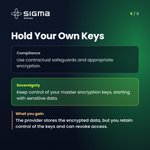
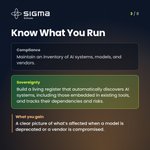
What if your compliance budget could also buy you data sovereignty?
At the Analytics & AI Summit in Dublin, Marian Faryna of Sigma Software shared 5 practical ways to turn regulation into stronger data and #AI architecture:
🔹 Know what AI systems, models, and vendors you run.
🔹 Control where your data goes with a central gateway and traceable cross-border transfers.
🔹 Hold your own encryption keys to strengthen data protection.
🔹 Capture data lineage and quality evidence while pipelines run. You can’t recreate yesterday’s logs tomorrow.
🔹 Keep the exit open. Make switching cloud providers a practical option, not just a contractual right.
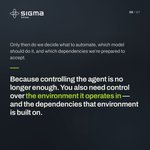
His key message: build compliance into your architecture from the start. One investment can help you meet regulatory requirements, reduce future compliance costs, and retain control when vendors or regulations change.
Which of these five areas would be the biggest challenge for your organization?

8
73
Sigma Software Group and @respeecher have launched a text-to-speech (TTS) model designed for enterprises and public sector organizations serving Swedish-speaking users.
Trained on native Swedish-language data from the start, the model delivers natural pronunciation and intonation, with low latency for real-time conversations.
For businesses looking to create more consistent customer experiences, Respeecher’s voice technology also enables custom-branded voices across customer touchpoints.
👉 Read the article: sigma.software/about/media/s…
#VoiceAI #ArtificialIntelligence #EnterpriseAI #Respeecher


(1/3) Hej vänner! 🇸🇪
Together with @sigmaswgroup, we’ve launched a custom-trained Swedish text-to-speech model.
Unlike many TTS models built around English first, ours was trained on Swedish-language data and validated by native speakers.

9
79
In 2017, only 3% of companies met basic data-quality standards. By 2025, just 7% said their data was ready for AI.
At the Analytics & AI Summit in Dublin, Sigma Software’s Stanislav Samko explored the barriers behind that gap: disconnected legacy tools and scalability limits that emerge as data volumes grow.
He shared our work with the Hasson Lab at Princeton, where hundreds of hours of naturalistic recordings needed to become usable for research into early human development. Our team built the data foundation that turned those recordings into a structured, analysis-ready asset.
Having data and being able to reach it are two different things. Companies need a plan and measurable steps to make data and AI transformation happen. Expecting it to emerge alongside business as usual leaves the same barriers in place.
#DataEngineering #AI #SigmaSoftware


10
99
AI is making products faster to build and easier to copy. The real business value increasingly lies in domain expertise, proprietary logic, and integration into real workflows.
@KrasovskyValery shares what this shift means for founders, investors, and the agentic products being built at Sigma Software Labs.
Looks like I’m ready to join the team helping @elonmusk boost @Tesla's and @SpaceX stock price with fantastic PR. 😎
I own a DeLorean, forever associated with Back to the Future. Now Musk is taking us forward again with the new Tesla Roadster, SpaceX-inspired technology and demonstrations blurring the line between engineering and science fiction. A flying car for everyday use? Still an open question. But as PR, it’s brilliant. 🚀
🛒 @grok vs. @amazon
After reports that Amazon blocked Grok AI agents from making purchases, Musk suggested creating an Amazon competitor.
It’s not a business announcement yet, but it raises a big question: who will own the customer relationship — the marketplace or the AI agent shopping on the customer’s behalf?
💻 One developer, three Office alternatives
Brandon Thomas has introduced WordCraft, GridCraft and DeckCraft — open-source alternatives to Word, Excel and PowerPoint, built with AI assistance.
Not full Microsoft 365 replacements, but proof that AI dramatically lowers the barrier to building software.
🔗 github.com/storytold
🎨 PixelCrew: an AI team
Founded by @gitlab co-founder Dmytro Zaporozhets and Andriy Dyadyura, PixelCrew attracted investment from u.ventures.
Its vision: specialized AI agents — researchers, art directors and UX designers — collaborating on digital products from idea to design and code.
🧪 Klarent: testing becomes the bottleneck
Founded by former Google engineers, Klarent develops AI agents for software testing. As AI accelerates coding, quality assurance becomes the next bottleneck — and a new business opportunity.
⚖️ Legal AI: can specialized startups win?
Anthropic and OpenAI are expanding into legal AI, while Harvey continues building its specialized platform.
A powerful model isn’t a complete business product. Integrations, security, trust and deep understanding of real workflows still matter.
💡 The bigger picture — and what we do at Sigma Software Labs
AI makes products faster and cheaper to build, but also shortens the time they remain unique.
__
At Sigma Software Labs, we’re building the next generation of AI agentic applications, combining AI capabilities with 20+ years of technology and business expertise across advertising technologies, aviation, logistics and other industries.
Some startups will become independent businesses, others will be acquired, and some will lose their edge as models evolve.
Others will become customer-specific AI platforms — combining specialized agents, proprietary business logic and deep integration into enterprise workflows. That’s where domain expertise can turn AI capabilities into lasting business value.
For entrepreneurs and investors, the key question is:
What can we build with AI before the big models become good enough to do it themselves — and what will remain valuable when they do?
Back to the future. This time, there’s much less time to accelerate. ⚡
#AI #AgenticAI #Startups #SigmaSoftwareLabs #Innovation


8
74

Sigma Software retweeted

I spoke at @sigmaswgroup AI Practitioner Summit last week where experts across life sciences, ad tech, government etc unpacked the reality of internal AI adoption.
It was a great event and here are my key insights:



Lower token prices may lead to higher AI usage, not lower overall spending.
@KrasovskyValery and Anatolii Kochetov discuss AI economics, engineering roles, guardrails, and what 10x productivity really means in AI Practitioner Series, Episode 1:
youtube.com/watch?v=ZfR-Zcbz…
11
148