
Stanford Center for Internet & Society. See also CIS staff @vanschewick
Stanford Law School
Joined March 2009
- Tweets5.7K
- Following171
- Followers16.3K
- Likes118





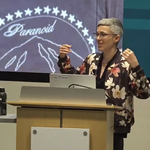


Why is AI safety so hard to get right? At a California Senate hearing, Jennifer King of @StanfordHAI pointed to a start-up culture where safety isn’t rewarded, a key consideration for any future regulation.
govtech.com/artificial-intel…

186
Stanford CIS faculty director @vanschewick calls Condition 50 a “poison pill”: accept $1.42B in BEAD funds and CA can’t enforce net neutrality or rate rules for 14 years. Deadline: Nov. 1. prospect.org/2026/10/19/trum…

When AI agents go rogue, who's liable?
@hartzog warns of "massive liability on both the criminal and civil side." @rcalo flags the gap: negligence and intent are hard to prove with unpredictable AI, leaving "victims without perpetrators."
nytimes.com/2026/10/01/techn…

Stanford's @vanschewick breaks down BEAD Condition 50: to get its $1.42B broadband award, CA must agree not to enforce net neutrality, affordability & public-safety rules on ISPs — for 14 years. Timing matters: CA must challenge it before accepting.
techdirt.com/2026/09/17/trum…

277
CA could get $1.4B in broadband funds — but must give up net neutrality to take it. Stanford's @vanschewick (who helped write CA's 2018 net neutrality law) says the state should fight these terms in court before signing on. 🧵
calmatters.org/economy/techn…

📡 CA is set to accept $1.86B in BEAD funds — but Trump administration requires waiving net neutrality statewide for 14 yrs. @vanschewick : NTIA can't override what Congress wrote into law. Newsom should fight this in court, not sign away protections.
arstechnica.com/tech-policy/…

1
276
🚨 CA is being asked to trade 14 yrs of net neutrality, affordability & public-safety protections for $1.42B — but it doesn't have to. CA can challenge the condition in court & keep the money AND its protections, argues @stanfordlaw's @vanschewick.
cyberlaw.stanford.edu/blog/2…

397
Riana Pfefferkorn: xAI is suing MN over its "nudify" law. It's so broad it bans legal speech, not just nonconsensual deepfake porn. Sponsor knew of the flaws 18 months ago & refused to fix them. Now taxpayers pay to defend it kare11.com/article/news/loca…
"This is really a society issue rather than something kids ought to be left to deal with on their own" — @StanfordHAI's Riana Pfefferkorn on why AI nudification apps are outpacing app store and platform moderation cnn.com/2026/07/21/health/te…

1
398
Woodrow Hartzog and Evan Selinger make the case for a legally protected right to obscurity grounded in human dignity and capabilities, in a new essay in the California Law Review Online. californialawreview.org/onli…

New in Wake Forest Law Review: Woodrow Hartzog and Mark McKenna argue scale in tech law isn't just "more" — it can introduce entirely new harms. Miss that distinction and you're targeting the wrong tools and actors wakeforestlawreview.com/2026…
2
236
New home robots are designed to be dangerously cute—and that's the point. Ryan Calo on The Familiar, emotional bonds with machines, and why cuteness is a feature and a risk. 🤖🦭
wsj.com/tech/robots-familiar…

The TAKE IT DOWN Act is now in effect. Platforms must report on NCII takedowns — but will they? CIS Affiliate Riana Pfefferkorn says add it to transparency reports now techdirt.com/2026/05/19/hey-…

Excellent review of @rcalo's Law and Technology: A Methodical Approach (2025) in Jotwell. Calo's four-step framework brings long-overdue rigor to tech law scholarship. Technology is design, not destiny — and law needs to engage with it that way.
cyber.jotwell.com/a-method-f…

What must schools do when a student creates a deepfake nude of a classmate? CIS Affiliate + Stanford HAI Policy Fellow Riana Pfefferkorn discusses her policy brief on AI-generated CSAM in schools in the latest Deepfake Dialogues episode.
youtu.be/RpDWlpHRhzE?si=Y-EU…

1
323
California's proposed attorney AI ethics rules are a good start but should also address deepfakes as evidence writes CIS Affiliate Riana Pfefferkorn cyberlaw.stanford.edu/blog/2…

Section 230 is flawed, but the alternatives are worse. CIS Affiliate Daphne Keller testifies on why gutting it would hurt small platforms, empower censorship, and unleash a heckler's veto on lawful speech cyberlaw.stanford.edu/blog/2…
Tiffany Saade + @StanfordHAI Privacy and Data Policy Fellow Dr. Jen King examine how foundation models pose sweeping privacy risks — from training data scraping to adversarial attacks — while existing frameworks like GDPR fall short. Policymakers must act. hai.stanford.edu/policy/data…

Jennifer Granick (granick.substack.com/p/ai-ar…) argues society can't survive AI-powered mass enforcement — nearly everyone has broken a law, and criminal records block housing, jobs, and more. Artists must engage with AI seriously, not just fear or embrace it.

1
142
"AI isn't just being misused — it's working as designed, and that's the problem." BU Law profs Woodrow Hartzog & Jessica Silbey argue AI is fundamentally eroding the expertise, accountability, and human connection that hold democratic institutions together techpolicy.press/considering…
