

SA’s Leading Treasury Services Company
Pretoria
Joined May 2010
- Tweets4K
- Following598
- Followers845
- Likes281








The Dollar is trading firmer once more this morning as inflation concerns come into play as Oil trades above the $100 mark again. US bond yields are slightly higher, while stock markets have taken an absolute hammering, with tech stocks leading the way. Concerns over tighter AI regulations and possible restrictions on data-centre buildouts. The Dollar continues to gain support from Fed rate hike bets, with today's nonfarm payrolls and unemployment numbers likely to provide further impetus to the greenback.
Rand weighed by the stronger Dollar, higher Oil price, and lower Gold price
The Rand has opened back above the R16.50 level this morning on the back of the recovery in the Dollar, the higher Oil price, and a drop in Gold. The local unit is currently trading at R16.53. with traders taking a cautious stance ahead of the US labor data later today. Results from Wednesday's municipal elections continue to be tallied, with the picture emerging of a future made up of predominantly coalition politics.
Gold has eased back down to $4,040 as the Dollar and Oil rebound, once again raising inflation concerns and higher-for-longer interest rate expectations. Oil prices have recovered from this week's midterm election rout, with Brent crude back around the $100 mark. While hopes of a diplomatic resolution to the US-Iran war remain, attacks on shipping in the Gulf continue, and bottlenecks are still limiting crude flows.
#MarketUpdate #DollarStrength #StockMarketNews #FinancialMarkets

The US midterm elections delivered a decisive win for the Democrats, exceeding what markets had priced in going into the vote; betting markets had assigned only around a 70-78% probability of a clean Democratic sweep, so the scale of the result caught some positioning off guard. The Dollar has dropped sharply as a result.
Why does this matter for the dollar? A stronger-than-expected Democratic showing raises the odds of political gridlock in Washington over the remainder of Trump’s term, meaning less scope for major new fiscal spending, but also a higher risk of fresh standoffs over the debt ceiling and government funding down the line. Markets tend to read this combination as modestly dollar-negative, less fiscal stimulus reduces inflation and bond-supply concerns, while heightened political risk chips away at the dollar’s safe-haven appeal. Attention now shifts to how a Democratic-controlled chamber might approach US trade policy and AI regulation as areas like data-center permitting and AI infrastructure guardrails return to focus, though no immediate policy changes are expected given the gridlock.
Importantly, this isn’t a one-way dollar story. The Fed is still widely expected to hike rates again in December, which should provide some underlying support and cap how far the dollar falls from here. Tomorrow’s US non-farm payrolls and unemployment data will be the next key test, giving markets fresh clues on whether that December hike stays on track.
Oil has collapsed more than 10%, dropping to around $94, on growing hopes that the US-Iran conflict is moving toward resolution. This has stripped a large chunk of the “risk premium” built into oil prices and, by extension, into the dollar as fears of a supply disruption from the conflict fade.
Gold has surged to around $4,116 an ounce, boosted by the weaker dollar and reduced safe-haven demand. With US bond yields also easing, gold has a double tailwind: a softer dollar makes it cheaper to buy, while lower yields reduce the opportunity cost of holding a non-interest-bearing asset.
The rand has strengthened to around R16.35 to the dollar, its best level in two weeks, supported by the weaker dollar, firmer gold, and improved risk appetite across emerging markets and commodity currencies. If sustained, lower oil prices and a stronger rand could translate into cheaper fuel and a better inflation outlook ahead. On the local front, yesterday’s municipal election results won’t be finalised until the weekend, with coalition negotiations then taking centre stage.

When a business holds R5 million in surplus cash, even a small difference in the interest earned can have a meaningful impact. For finance teams, that makes comparing investment options an important part of managing company funds.
Money market and income funds offer different yields, fee structures, investment profiles and withdrawal arrangements. Understanding these differences helps businesses make decisions based on their cash requirements rather than choosing a fund solely because it is familiar.
TreasuryONE's Money Market Fund platform allows businesses to compare funds from six established South African asset managers, with information on returns and fees available in one place.
Compare available funds: treasuryone.co.za/money-mark…
#TreasuryONE #MoneyMarketFunds #InterestOptimisation #CorporateFinance #CashManagement

Election results will draw market attention this week, but coalition negotiations and developments in the Middle East could have a more lasting influence on the rand.
In our latest market review with ETM Analytics, we examine how the US midterms could affect spending decisions, bond markets and the dollar. Locally, the focus is on municipal coalitions, service delivery and what these arrangements could mean for investor confidence.
The near-term outlook points to the rand remaining within its established trading range, with some room to strengthen. A further escalation in the Middle East and a rise in oil prices remain key risks to that view.
Watch the full weekly review: youtube.com/watch?v=V92YdhDo…
#MarketReview #ElectionResults #RandCurrency #CoalitionNegotiations #InvestorConfidence #MiddleEastRisks

Managing corporate surplus cash should be simple. Yet many finance teams still spend valuable time contacting investment providers, comparing rates, completing paperwork and arranging investment placements or withdrawals.
What if you could compare investment rates and manage your surplus cash from one online platform?
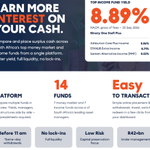
TreasuryONE's Money Market Funds platform gives businesses access to 14 money market and income funds across six of South Africa's leading asset managers, making it easier to identify competitive returns without the administrative burden.
The platform allows finance teams to compare yields, select suitable funds and submit investment, switching and withdrawal requests electronically, all from one dashboard.
Why should your business consider the platform?
🔷Competitive returns: Compare yields across multiple funds to find attractive investment opportunities.
🔷Easy online transactions: Submit investment and withdrawal requests electronically, without unnecessary paperwork.
🔷Access to your cash: No fixed investment terms, with same-day withdrawals available on money market funds for qualifying requests submitted before 11:00.
🔷Less administration: Manage investment requests across multiple funds from one convenient platform.
🔷No platform fees: Businesses can access and use the platform at no cost.
Even a 0.5% improvement in annual returns on R20 million in surplus cash could generate an additional R100,000 in interest income, assuming the balance remains invested throughout the year.
For CFOs and finance teams, the opportunity is clear: better visibility of investment options, easier transactions and the potential to earn more on cash already sitting in the business.
Your surplus cash should be working harder, without creating more work for your finance team.
Explore TreasuryONE's Money Market Funds platform:
treasuryone.co.za/money-mark…
Minimum investment R1 million. Returns are variable and subject to fund-specific risks and fees. Past performance does not guarantee future returns.
#TreasuryONE #CashManagement #CorporateTreasury #MoneyMarketFunds #CashOptimisation

The Dollar is in consolidation mode as traders remain cautious in the run-up to today's US midterm elections. A potential Democratic party sweep of Congress would see the Republicans lose their ability to pass any legislation without Democrats support. The DXY index is back up at 101.90 after having fallen to a 1-month low yesterday. Safe-haven demand and higher-for-longer US interest rates continue to be the underlying reason for Dollar strength, while headwinds come from a falling Oil price, and lower US bond yields. The Aussie Dollar has weakened slightly this morning after the RBA hiked rates as expected, while the Chinese Yuan has lost ground after the RBoC raised the FX reserve requirement in a surprise move.
The Rand has opened softer at R16.62 on the news that the US has decided to remove South Africa from the African Growth and Opportunity Act (AGOA), ending duty-free access to US markets for key industries, in a move that was reasonably anticipated. Markets impacted are exported vehicles, ferroalloys, fruit and nuts, and spirits.
Gold is trading around the $3,925 level this morning, having recovered from last week's huge sell-off. The massive drop in the Oil price yesterday has calmed some inflation fears, providing support for Gold. Brent crude, which had fallen over 7.0% yesterday, is trading a touch higher on the news of US strikes on the Iranian island of Qeshm.
#DollarDrift #USMidterms #ForexMarket #SafeHaven #InterestRates #OilMarket

Paying foreign suppliers? You could be paying more than you need to.
If your business pays R1 million a month to overseas suppliers, a difference of just 1% in your foreign exchange rate could be costing you R120,000 a year.
Most businesses negotiate hard with their suppliers to secure the best possible prices. Yet when it comes to paying those same suppliers in foreign currency, many simply accept the exchange rate offered by their bank without comparing it.
The reality is that even a small difference in your exchange rate can have a significant impact on your bottom line over time.
At TreasuryONE, we believe businesses of all sizes should have access to competitive foreign exchange rates, transparent pricing and the technology to make international payments quickly and securely.
That's why we offer SME Forex, an online platform that makes paying foreign suppliers easier and potentially more cost-effective.
Through our platform, businesses benefit from:
🔷Competitive exchange rates backed by TreasuryONE's extensive foreign exchange expertise.
🔷Real-time FX quotes so you can see your rate before committing to a transaction.
🔷No hidden fees, giving you greater transparency over your international payments.
🔷Fast, secure online transactions, allowing you to book your rate and submit payments in minutes.
🔷Local expert support from a South African team that understands exchange control requirements.
With more than 25 years of experience in the foreign exchange market and Investec as our settlement banking partner, TreasuryONE brings corporate-level FX expertise to businesses that may not have access to a dedicated treasury team.
Our challenge to South African importers is simple: Before making your next international payment, compare your exchange rate.
You don't need to change banks or commit to anything to see whether you could be getting a better deal.
Visit smeforex.co.za and request a live quote. It takes less than a minute to compare.
Because the price you negotiate with your overseas supplier is only part of the cost. The exchange rate you pay matters just as much.
#TreasuryONE #SMEForex #ForeignExchange #InternationalPayments #Importers #BusinessSavings

Brent dropped over 3% to around $110 a barrel after a report that Trump wants to give diplomacy with Iran more time before deciding on fresh strikes following Tuesday’s US elections. But analysts call this a “temporary pullback” as Iran’s Supreme Leader has told his military to prepare for renewed confrontation even as talks continue, and attacks on tankers near Hormuz haven’t stopped.
Asian and US futures bounced after Friday’s brutal selloff (the Nasdaq’s worst day since June, chipmakers down over 7%) triggered by weak AI-related earnings from Alphabet and Amazon. China’s market got an extra boost from regulators meeting banks to discuss supporting stock buybacks. The key question now, is this just a healthy correction in an overcrowded AI trade, or the start of something bigger? Most strategists lean toward “correction, not collapse,” with some calling the dip a buying opportunity.
Betting markets put the odds of Democrats winning at least one chamber of Congress at 93%, so a divided government is largely expected and shouldn’t cause major market swings on its own. The bigger risk is what happens after the vote, if Trump resumes military action against Iran once the political constraint of the election is lifted, that’s a real multi-week risk for oil and risk sentiment, not something to ignore just because the vote itself goes as expected.
Gold bounced about 1% to near $3,915/oz after a brutal 3.7% slide on Friday. Lower oil prices are easing some inflation worries, and bargain hunters stepped in after the metal’s slide below $4,000. But it’s still fragile with nearly 150 tons added to gold ETFs since mid-July are now sitting at a loss, and a close back above $4,000 is needed to restore a more neutral near-term outlook.
Emerging-market currencies slipped to a one-month low as investors stay cautious ahead of the US election and this week’s jobs data. The view is that neither the US midterms nor Wednesday’s SA local elections should move the rand much directly as the outcomes are well-telegraphed. The bigger swing factor is Friday’s US non-farm payrolls, which has historically moved USD/ZAR by around 10c.
Friday’s US payrolls report is the headline event, with the Fed watching closely for signs the labour market is cooling. Elsewhere, the RBA is expected to hike Tuesday, the Bank of England is tipped to raise rates Thursday for the first time in three years, and Sweden’s Riksbank may also hike. Locally, the SARB holds its Market Practitioners Group conference Tuesday with updates on the Zaronia transition, while SA’s November fuel-price relief kicks in Wednesday.

Artificial intelligence is dominating conversations about the future of corporate treasury. Will AI automate treasury operations? Will it replace traditional Treasury Management Systems? Could organisations soon build their own treasury applications rather than invest in commercial solutions?
These are important questions. But after more than two decades of working with corporate treaury teams, we believe there is an even more immediate question worth asking: 𝘼𝙧𝙚 𝙤𝙧𝙜𝙖𝙣𝙞𝙨𝙖𝙩𝙞𝙤𝙣𝙨 𝙩𝙖𝙠𝙞𝙣𝙜 𝙖𝙙𝙫𝙖𝙣𝙩𝙖𝙜𝙚 𝙤𝙛 𝙩𝙝𝙚 𝙤𝙥𝙥𝙤𝙧𝙩𝙪𝙣𝙞𝙩𝙞𝙚𝙨 𝙖𝙡𝙧𝙚𝙖𝙙𝙮 𝙨𝙞𝙩𝙩𝙞𝙣𝙜 𝙞𝙣𝙨𝙞𝙙𝙚 𝙩𝙝𝙚𝙞𝙧 𝙩𝙧𝙚𝙖𝙨𝙪𝙧𝙮 𝙤𝙥𝙚𝙧𝙖𝙩𝙞𝙤𝙣𝙨?
Read the blog here: treasuryone.co.za/treasury-o…
#ArtificialIntelligence #CorporateTreasury #TreasuryManagement #AITreasury #FinTech #FutureOfFinance

The yen rose after the Bank of Japan kept rates unchanged but said underlying inflation has hit its 2% target for the first time, signaling more rate hikes (likely starting in December). USD/JPY fell to around 157. The yen is also benefiting from a broader shift into “safe haven” assets as tech stocks sell off globally, with some strategists now seeing the yen as a useful hedge against an AI-driven market shock. Japanese bond yields fell as investors piled into government debt for safety.
Brent jumped back above $116 a barrel after reports that a US military commander briefed Trump on strike options against Iran, with Trump repeatedly hinting he may resume attacks after next week’s US midterm elections. Despite oil still managing to flow fairly freely through the Strait of Hormuz, low global inventories and tight supplies of refined fuel (like diesel) continue to support higher prices. Brent is now up 12% this month alone and sitting at a six-month high.
Gold fell toward $4,000/oz, on track for a second straight monthly loss, as rising oil prices add to inflation worries and a renewed tech-stock selloff raises the risk of investors selling gold to cover other losses. The Fed left the door open to another rate hike this year, and US inflation data came in hotter than expected, both weighing on the precious metal. Silver has been hit even harder as its down about 15% this month, as speculative investors unwind bullish bets built up during its rally earlier in the year.
#YenStrength #BankOfJapan #SafeHavenAssets #TechStocks

The Dollar lost some ground after the Fed's decision to keep interest rates unchanged yesterday in line with market expectations. Uncertainty still hangs over the Fed's future monetary policy path as Fed Chair Kevin Warsh refrained from confirming a December rate hike, highlighting that upcoming data would dictate future moves. Warsh did, however, confirm that inflation and price stability remain the Fed's main focus. Traders are still pricing in a roughly 80% probability of a December rate hike. Warsh also announced that the Fed plans to reduce its market footprint by cutting its policy decision meetings to 7 in 2027 and to 6 in 2028. The DXY index is currently at 101.15, with the Euro still under some pressure ahead of the ECB interest rate decision later today. Traders will be watching today's US PCE inflation indicator very closely, while we also have US Q3 GDP data due out today.
The Rand remains in a tight trading range, driven by Dollar moves, US interest rate expectations, commodity prices, and the movements in the Oil price.
Gold is down around 0.5% this morning as markets digest Fed Chair Kevin Warsh's comments after the FOMC yesterday. US bond yields have moved slightly higher, while the price of Oil has eased lower, the situation in the Middle East remains very volatile. Talk of possible US strikes on Iran is raising the geopolitical risk premium and keeping markets on edge.

A healthy cash reserve can give a business room to manoeuvre when trading conditions change. It provides a buffer against delayed customer payments, unexpected expenses and seasonal fluctuations. It also gives management the ability to act when an opportunity arises.
But maintaining a cash reserve requires more than setting money aside. Businesses need to consider where that reserve is held and whether it is delivering a reasonable return without compromising access.
Money market funds can form part of this approach, offering professionally managed investment options with a focus on capital preservation and liquidity.
Through TreasuryONE's Money Market Fund platform, businesses can compare different funds and choose options that align with their cash requirements and investment objectives. A well-managed reserve strengthens the business today while helping prepare it for what comes next.
Explore your options: treasuryone.co.za/money-mark…
#TreasuryONE #CashReserves #BusinessFinance #LiquidityManagement #MoneyMarketFunds

USD/ZAR is trading around R16.66 this morning. The weakness reflects broader emerging-market jitters tied to elevated US rate-hike expectations, plus rising hedging costs ahead of today’s Fed decision. On the local front, last week’s mid-term budget, briefly boosted the rand to around R16.37, but those gains were given back as oil rose and gold fell. Views on the rand are split.
Brent jumped back above $115 a barrel after a nail-biter Israeli election left Netanyahu and challenger Gadi Eisenkot essentially tied, with neither securing a majority. The result matters for oil because reports suggest the US and Israel may be preparing a fresh, intense military campaign against Iran after the US midterms and a weakened or ousted Netanyahu could complicate Trump’s plans for that. Markets are now pricing in a higher chance of renewed escalation, keeping oil prices elevated and sensitive to any fresh headlines from the Gulf.
Gold dipped toward $4,000/oz, pulling back on expectations that the Fed will hold rates steady, balanced against rising oil prices and sticky inflation data. Gold is still recovering from last week’s AI-stock selloff, when investors sold bullion to cover other losses. Chinese households have been buying the dip, but Indian buyers are holding off on festive purchases, betting prices could fall further.
The Fed is widely expected to keep rates unchanged today, even after September inflation data came in hotter than forecast. Markets are pricing less than a 10% chance of a hike today, but see a hike as more likely in December. Investors will be watching new Chair Kevin Warsh closely, as he has avoided giving guidance so far, but he faces pressure to explain why the Fed isn’t acting now amid persistent price pressures, with three regional Fed presidents already pushing for a hike in July.
AI-related stocks bounced hard across Asia and the US as confidence in the AI trade recovered following a rough patch. That tech rebound, along with a possible hawkish tone from the Fed today, has left Treasury bonds vulnerable, as investors have built large bullish bond positions on recent safe-haven buying, and any hawkish surprise from Warsh could trigger a sharp yield reversal.

The rand has lost ground against the dollar, but its performance against other major currencies shows continued resilience. Dollar strength remains a key driver as markets weigh persistent US inflation and the outlook for interest rates.
In this week’s TreasuryONE and ETM Analytics market review, we examine the Federal Reserve’s upcoming decision and how elevated energy prices could keep pressure on monetary policy.
Locally, stronger tax collections and a positive response to the medium-term budget policy statement have supported sentiment. Sustained economic growth and investment remain essential to turning those fiscal gains into lasting progress.
Watch the full weekly review: youtube.com/watch?v=f6OO27aS…

The Dollar is holding at firmer overnight levels ahead of tomorrow's Fed FOMC meeting. Markets are expecting the Fed to keep interest rates unchanged, however, the focus will be on what Fed Chair Kevin Warsh has to say at his press conference after the meeting. A hawkish tone, with signals of a further rate hike this year still, is anticipated. Markets are already pricing in 80% chance of a December hike. The DXY index is back above the 102.00 level, with the Euro falling below 1.1200 and the Yen giving back some of its recent gains. The Dollar also continues to attract some safe-haven demand due to the geopolitical risks in the Middle East.
The Rand is consolidating at just above the R16.60 mark, with the weaker Gold and other precious metal prices weighing on the currency. The general lack of risk appetite, and caution ahead of the Fed FOMC, is currently limiting demand for emerging market assets.
Gold is trading a touch softer at $4,007, with traders remaining extremely cautious as the Fed monetary policy decision looms, while Platinum and Palladium are both trading over 1.5% weaker. Global oil prices have edged lower, with Brent crude down around 1.0% at $114.80. Diplomatic mediation driven by Qatar has lifted hopes of some resolution to the Middle East crisis, however, ongoing infrastructure and shipping attacks continue to keep prices elevated.
#MarketUpdate #ForexTrading #InterestRates #GlobalEconomy

Global markets are starting the week on a slightly positive note, although investors remain cautious ahead of several important events. Technology shares, particularly those linked to artificial intelligence (AI), have come under pressure as investors question whether the sector's strong growth can continue. Attention now turns to interest rate decisions from the US Federal Reserve, European Central Bank and Bank of Japan, with all three expected to keep rates unchanged. The Fed's announcement on Wednesday will be particularly important, as investors look for clues about future interest rates. Major technology companies, including Microsoft, Alphabet and Amazon, will also release earnings this week, while US economic growth and inflation figures could influence the direction of the dollar and global markets.
Oil prices have eased slightly this morning, with Brent crude trading around $114 per barrel after reaching a six-month high last week. Reports of possible talks in Tehran have raised hopes of easing tensions between the US and Iran, although the situation remains uncertain. Continued attacks on Saudi Arabian oil infrastructure and concerns about further military action could quickly push oil prices higher again. Meanwhile, gold has fallen sharply, trading around $4,000 per ounce following its biggest weekly decline since June. High oil prices and weaker gold prices remain an unfavourable combination for South Africa and the rand.
The rand struggled towards the end of last week, weakening from around R16.33 to R16.60 against the dollar, despite South Africa's better-than-expected Medium-Term Budget Policy Statement. The main pressure has come from falling gold prices, rising oil prices and a relatively strong US dollar. The rand could weaken further towards R16.75 this week, particularly if Middle East tensions escalate or the Federal Reserve delivers a more hawkish message on Wednesday.
#MarketUpdate #InvestorNews #GlobalMarkets #TechStocks #InterestRates #OilPrices

Continued concerns over AI expenditure have seen a rotation out of tech stocks back into the safety of US bonds. The Nasdaq closed 2.60% lower last night, while the US 10-year bond yield rallied to its best level in over a month, hitting 4.95%. Currency markets are fairly subdued this morning, with the DXY index at 101.65 as the Euro trades just above 1.1200 and the Pound just below 1.3400. The Yen rallied sharply from 158.10 to 156.80 yesterday on rate-hike expectations and safe-haven demand. Heightened geopolitical risks, the continued high Oil price, and the higher-for-longer Fed rate outlook continue to provide underlying support for the Dollar.
The risk aversion in markets, along with falling precious metal prices and elevated energy costs are keeping the Rand on the back foot for now. The Rand is currently quoted at R16.52, and we are likely to see some consolidation around current levels ahead of next week's key central bank interest rate decisions.
Gold fell by 2.7% yesterday, closing at $4,024, as surging Oil prices and global inflation risks raised the prospect of tighter monetary policy outlooks. Gold briefly slipped to $3,987 in the Far East this morning but has recovered to be currently trading at $4,010. Brent crude continues to climb, currently trading above the $114.00 level, as Houthi rebels again struck critical Saudi infrastructure in Riyadh, while in the Strait of Hormuz, 3 vessels hit sea mines, and Iran claimed responsibility for striking 4 ships in the Persian Gulf.

The Dollar DXY index is down at 101.50 this morning, with falling US Treasury yields and renewed AI expenditure concerns pulling the Dollar lower. The 10-year US bond yield is down at 5.08% versus yesterday's 5.13%, while US futures and Asian equity markets are all in the red this morning. The Yen has firmed to 157.50 on a possible further rate hike by the Bank of Japan, while the Euro and Pound have made further gains against the greenback this morning. Increased geopolitical risks are, however, limiting further Dollar losses, with the US ordering the evacuation of non-essential personnel from its Saudi embassies. Overnight strikes by Houthi rebels on Saudi Aramco's Shaybah oilfield and the King Fayd International Airport killed three people.
The Rand, which had reacted fairly positively to the Medium-Term Budget Policy Statement yesterday, has opened on a softer note this morning. The local currency is currently at R16.41, up from last night's R16.36 stronger closing level. Weaker precious metal prices this morning, along with generally softer EM markets, are seeing the Rand weaken.
Gold has dropped to a 1-week low of $4,088 this morning despite a softer Dollar and lower US bond yields. The fresh Houthi attacks on Saudi Arabia, higher oil prices, and growing bets of a Fed rate hike in December are keeping investors away from bullion for now. Brent crude is currently trading at $111.10 on the back of the escalation in the conflict in the Middle East.

𝗧𝗿𝗲𝗮𝘀𝘂𝗿𝘆𝗢𝗡𝗘 𝗶𝘀 𝗮𝘁 𝘁𝗵𝗲 𝗙𝗶𝗻𝗮𝗻𝗰𝗲 𝗜𝗻𝗱𝗮𝗯𝗮 𝘁𝗼𝗱𝗮𝘆!
Come say hi at the stand and see our Cash Flow Forecasting in action.
#FinanceIndaba #CashFlowForecasting #CashFlowManagement #FinanceTech #AIInFinance #FinancialForecasting #CorporateFinance

Businesses are often careful about how they spend money, yet far less attention is given to what happens to the money they hold. Surplus cash may remain in a familiar bank account for months, earning a modest return while better options go unexplored. Over time, the difference can become significant, particularly for companies holding substantial cash reserves.
A disciplined approach to cash management includes regularly reviewing where funds are invested, what they are earning and how quickly they can be accessed.
TreasuryONE's Money Market Fund platform gives businesses access to a range of South African money market and income funds, allowing them to compare returns, fees and fund managers in one place.
Even the most conservative cash strategy deserves regular attention. Small improvements in how surplus funds are managed can contribute to stronger financial performance over time.
Explore the available funds: treasuryone.co.za/money-mark…
#TreasuryONE #MoneyMarketFunds #CashManagement #BusinessFinance #SMEFinance
