






Valar Labs retweeted

And a mountain of peer-reviewed evidence from @valarlabs here: valarlabs.com/evidence

Valar Labs retweeted

We don't need to wait for AGI to be solved to start working on cancer :) @valarlabs Our vision for AI native precision oncology

Every cancer patient and oncologist faces the same difficult question: which treatment will this tumor respond to?
Too often, the information or biomarkers don’t exist. Some patients get treatment they didn’t need, and some miss the treatment they did.
This week we are launching a new blog series on why Valar Labs exists to address this issue and our vision for AI native precision oncology.
The answer has been hiding in plain sight. Every cancer patient’s tumor is placed on a glass slide, and that slide holds hundreds of thousands of cells, far more than any person can see. We built our AI system, CHAI, to read all of it and to turn the biology on the slide into actionable information for providers.
Our north star: to inform every clinical decision in cancer, for every patient.
And we’re seeing early signs that our approach generalizes across 20 major cancer types.
Part 1 of our new 4-part series lays out why:
valarlabs.com/blog/towards-a…

Today we’re announcing that Vesta Bladder has been validated in ANZUP 1301, a randomized prospective Phase III trial. The results are peer reviewed and the landmark results published in European Urology, the highest-impact medical journal in urology. This study validates our AI with Level 1B evidence, amongst the highest benchmark for an oncology biomarker.
Most AI in medicine is evaluated on retrospective archives. In this study, our locked AI biomarker was applied to pretreatment pathology slides from ANZUP 1301, a 501-patient prospective randomized Phase III trial of BCG alone versus BCG plus mitomycin in high-risk non-muscle-invasive bladder cancer. The AI model was frozen before it ever saw a trial slide. This study is a very high level of evidence because the treatment the patient received was randomized, free of influence from other factors.
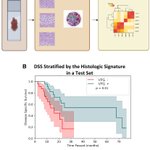
The results: patients flagged as biomarker-present were 25% of the evaluable patients. For them, adding mitomycin raised 5-year freedom from high-grade recurrence from 61% to 81%, a 20-point absolute difference. In biomarker-absent patients, the two regimens performed the same (75% vs 71%). The biomarker–treatment interaction was significant.
In plain terms, Vesta identifies roughly 1 in 4 patients for whom BCG alone falls short and who do markedly better with escalated therapy. It does that from routine pathology that every patient already has. That matters more than ever during the ongoing global BCG shortage.
Read the publication: authors.elsevier.com/c/1n~As…
@ANZUPtrials

Summary of our recent publication in @EurUrolOncol externally validating Vesta Bladder Risk Stratify to prognosticate progression risk in Non Muscle Invasive Bladder Cancer
@perunom
Valar Labs retweeted

#ArtificialIntelligence applied to TURBT specimens in muscle-invasive #BladderCancer. @ylotan joins @TiansterZhang to discuss the CHAI biomarker, an AI-based tool applied to TURBT H&E slides from clinical T2 muscle-invasive bladder cancer. The assay analyzes tumor cells, fibroblasts, immune cells, and vascularity to identify patients at higher risk of recurrence and cancer-specific death, independent of neoadjuvant chemotherapy use, CIS, age, and sex.
#WatchNow > bit.ly/4cPLwxU @UTSWMedCenter

Valar Labs retweeted
@valarlabs we are building algorithms to personalize care across the spectrum of bladder cancer for every stage and every therapy
Valar Labs retweeted
Precision oncology is expanding in Muscle Invasive Bladder Cancer! Happy to share our collaborators’ and teams’ new peer reviewed work to develop a new AI biomarker to predict aggressiveness of MIBC tumors using upfront H&E pathology alone : sciencedirect.com/science/ar…
@pjhensley11 @UroDocAsh @ylotan @LauraBukavinaMD @UrogerliMD @UroCancerMD @DrWoldu @tjroycemd @valarlabs

Valar Labs retweeted
Great list and grateful several of these stellar investors are on team @valarlabs
@vintweeta @eddie_eltoukhy @hardimanjames
@a16z @DCVC @pearvc


Which metastatic hormone-sensitive prostate cancer patients benefit from triplet therapy vs doublet therapy?
Excited to share new work in @JCOPO_ASCO with @ChrisSweens1 , @Prof_IanD , @neerajaiims and the @ANZUPtrials + @eaonc teams: an AI-powered histology biomarker for mHSPC, developed and validated on two phase III RCTs. ascopubs.org/doi/10.1200/PO-…

An exciting finding was the biomarker × treatment interaction was significant for OS (P=.003) and PFS (P<.001). Unfavorable-risk patients benefited from triplet over doublet (OS HR 0.45); favorable-risk patients did not. Limitation was that docetaxel was not randomized in this study.
1
1
45
These biomarkers are available clinically upon request as part of the Vesta Prostate Portfolio.
Contact valarlabs.com/contact
1
32
Valar Labs retweeted

New publication! There is great interest in identifying which patients with mHSPC benefit from treatment intensification by adding doce to ADT+ARPI. A newly published AI–based biomarker derived from routine H&E slides addresses this q. Now in JCO PO: ascopubs.org/doi/10.1200/PO-…
Valar Labs retweeted

It’s graduation day for our absolutely 💯 amazing @CleClinicUro chiefs and our @SUO_YUO fellow @hjwang26 !! How is this possible 🥹 I hope you stay curious, be courageous, and always put patients first . Special 🙏 @cjweight for always hosting and @valarlabs for 🌮🌮 truck


Valar Labs retweeted
@UroDocAsh raises a great point and the key question as to which NMIBC patients will benefit the most from escalated options over BCG monotherapy. AI+path precision oncology tools like Vesta Risk Stratify @valarlabs that individualize predictions of progression risk and recurrence risk can enable selection of higher risk patients.
@AstraZeneca let’s collaborate
@IBCG_BladderCA @joanfundi @VigneshPackiam @UrogerliMD

The approval answers one question, but leaves another unanswered: which patients truly derive enough benefit to justify escalation beyond optimized BCG?
The FDA approval of durvalumab plus BCG in high-risk NMIBC was driven by a meaningful improvement in disease-free survival (HR 0.68), mainly recurrence free survival. Checkpoint inhibitors are not benign therapies, carrying ~ 15% risk of serious treatment-related adverse events.
At the same time, this trial also demonstrated that patients with BCG-naïve high-risk NMIBC have low rates of progression and bladder cancer mortality, when treated with BCG appropriately.
For many patients, the balance between reducing recurrence and exposing them to potentially significant toxicity is not straightforward.
That raises a practical question: who should actually receive treatment intensification?
@ASCO 26 we are presenting for the first time a Computational Histology AI (CHAI) biomarker validated across multiple phase 3 prospective RCTs to identify patients who would benefit from intensification of chemotherapy in first line metastatic colorectal cancer.
In collaboration with @FoundationGono @ChiaraCrem1 @p_ciracimd and many more
