

Official X account of the World Health Organization Regional Office for Africa - WHO/AFRO
Brazzaville, Congo
Joined April 2012
- Tweets28.9K
- Following820
- Followers337K
- Likes15.7K




Pinned Tweet
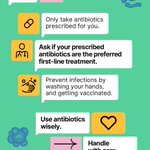
Today marks the start of World #AMRAwarenessWeek!
Tackling #AntimicrobialResistance (AMR) is a shared responsibility, and we all have a role to play.
Do your part: use antibiotics responsibly and avoid self-medication.
Learn more about #AMR: who.int/campaigns/world-amr-…


This support includes:
🔹 6 ultra-low-temperature freezers (3 × 10² litres and 3 × 630 litres);
🔹 3 freezers (300 litres each, −25°C);
🔹 2 refrigerators (390 litres each, +2°C to +8°C);
🔹 25 vaccine carriers, each equipped with 4 ice packs.


1
2
162
Additional equipment includes:
🔹 15 ARKTEK containers for ultra-low-temperature storage;
🔹144 containers of phase-change material (PCM) coolant for the ARKTEK containers;
🔹120 additional ice packs.
This equipment will help ensure that candidate vaccines and biological samples are stored and transported under the required temperature conditions, preserving their integrity and supporting the TUMAINI vaccine trial.


1
105
WHO African Region retweeted
Community engagement, a key public health intervention in the fight against #Ebola.
"Together we can defeat this disease."
WHO African Region retweeted
Cambridge Dictionary’s #WordOfTheYear2026 is 'Human'.
At WHO, we believe in human action, human courage, and human care.
For nearly eight decades, WHO has been working to protect, promote and improve the health of people everywhere: in conflict zones, disasters and crises; in clinics, communities and refugee camps; and through vaccination campaigns, emergency responses and life-saving care.
People helping people.
Every person pictured here is real. None of them is AI-generated.


WHO African Region retweeted

🌱 Nearly 8,900 farmers in Migori have moved away from tobacco to crops such as beans, soya and groundnuts.
Tobacco farmers from Embu County came to see how they made the switch.
🔗 Read their story: afro.who.int/countries/kenya…
#GrowFoodNotTobacco

Join us this Thursday for the next EPR Deep Dive. The question on the table: where did we get it wrong on cholera?
Special guest Prof. Louise Ivers, Faculty Director of the Harvard Global Health Institute, joins Dr Marie-Roseline Bélizaire, Regional Emergency Director, Dr Fred Kapaya and Dr Banda Khalifa of WHO Africa.
Thursday, 19 November 2026, 13:00 to 14:00 Brazzaville (WAT)
Registration is free: echo.zoom.us/webinar/registe…

Tackling antimicrobial resistance (#AMR) starts with awareness and education.
A university professor explains how WHO’s AWaRe tool is being used in the classroom to help students better understand antimicrobial resistance and the importance of responsible antibiotic use.
#WorldAMRAwarenessWeek
who.int/publications/i/item/…
WHO African Region retweeted

The #Ebola outbreak in #DRC remains a public health emergency of international concern, following the advice from today’s @WHO Emergency Committee meeting.
We call for the cooperation of all governments and all partners to scale up the response further, and raise the resources needed to protect communities over the coming months.
We call for protection of health workers, health facilities and all responders in the affected communities amid the ongoing conflict.
Updated recommendations to the government of DRC and all other countries will be issued in the coming days.

WHO African Region retweeted

Medicines that have protected us for generations are losing their effectiveness. Infections are harder to treat, and essential medical procedures, from surgery to cancer treatment, are becoming less safe. Antimicrobial resistance (AMR) is putting lives at risk.
Our region is making progress, but we must turn that progress into more consistent protection for communities.
Every infection prevented and every appropriate use of antimicrobials helps preserve these lifesaving medicines.
AMR is everyone’s business. Through our individual choices and collective commitment, we can help ensure these medicines work when we need them, now and for generations to come.

Today, on #GISDay, discover how Geographic Information Systems #GIS helped reach every last child during polio vaccination campaigns in the Republic of the Congo.
From tracking vaccination teams to identifying missed households, GIS-powered solutions helped strengthen campaign monitoring and contributed to the closure of the poliovirus type 2 outbreak earlier this year.
Technology with purpose. Innovation that saves lives.
#EndPolio


#HPV vaccination is one of the most effective ways to prevent cervical cancer.
Who should get vaccinated? Find out 👇🏾
#ViralFactsAfrica
@viralfacts
WHO African Region retweeted

Today is #WorldCervicalCancerEliminationDay.
In Ghana, Cervical Cancer is the second most common cancer in women and leading cause of cancer deaths.
Last year Ghana rolled out an #HPV vaccination campaign and now it is in the routine vaccination. @who and partners have been supportive of this cause.
On this day, let's take you back to back to the progress and the journey
Watch⬇️
Dr Rosalitta Jaida Toogbabu, a resident doctor at Princess Christian Maternity Hospital in #SierraLeone 🇸🇱 is on a mission, with the support from colleagues near and far, to transform cervical cancer care in her country.
Read her story here: bit.ly/4sYh4Zf

Today is World Cervical Cancer Elimination Day.
Cervical cancer could become the first cancer eliminated as a public health problem.
To achieve this, @WHO has set the 90-70-90 targets for 2030:
✅ 90% of girls fully vaccinated against HPV by age 15
✅ 70% of women screened for cervical cancer by age 35 and again by age 45
✅ 90% of women with cervical precancer or cancer receiving treatment
Together, we can #EndCervicalCancer 🎗️

Additional equipment includes:
🔹 15 ARKTEK containers for ultra-low-temperature storage;
🔹144 containers of phase-change material (PCM) coolant for the ARKTEK containers;
🔹 120 additional ice packs.
This equipment will help ensure that candidate vaccines and biological samples are stored and transported under the required temperature conditions, preserving their integrity and supporting the TUMAINI vaccine trial.


3
202
At the first #AfricaHealthDataForum in Nairobi, countries adopted the Nairobi Health Data Action Agenda, committing to invest in stronger health information systems that drive better policies, smarter investments and healthier lives.
afro.who.int/news/african-he…

WHO African Region retweeted
Congratulations to Eritrea on this historic public health milestone.
This achievement shows what is possible through sustained political commitment, community leadership and strong partnerships. We have taken a step closer towards a world free from the suffering caused by neglected tropical diseases.

Congratulations, Eritrea 🇪🇷, on eliminating trachoma as a public health problem!
The country becomes the 11th in the WHO African Region and the 34th globally to reach this milestone, following years of sustained efforts by the government, health workers, communities & partners.
who.int/news/item/16-11-2026…