

The world beats a path to people who deliver. Join me here and on the People and Projects Podcast for practical insights on leadership & project management.
Chicago
Joined May 2008
- Tweets5.3K
- Following991
- Followers1.1K
- Likes2.5K





Less than two years.
One leader.
When hired, they brought in a playbook that worked at their last company. Perhaps that should have been the first warning.
A pretty decent organization turned toxic.
Lots of talented people left. Those who stayed could be described as shell-shocked.
That leader eventually got walked out. But the damage had been done.
I was curious, so I looked up the departed executive on LinkedIn. Their headline?
"Transformational leader"
Well, for the record... they did transform it! Just not the way the profile wanted to imply.
Before we shake our heads at that leader, consider this....
It’s not a question of WHETHER you and I are having an impact. We are. Probably a lot of good and some not so good. The problem is we are often more blind to our impact than we realize.
That’s true at work. It’s true at home too.
I don't have an easy formula for seeing our impact more clearly. No "five easy steps."
But I've learned the hard way: reality is undefeated. I've learned I have to surround myself with people who will tell me what I need to hear. And (just as challenging) be open to it when it's said.
Psychological safety is easy to talk about. It takes time. But without it, a team can be destroyed.
In under two years.
What’s helped you hear the things you need to hear?

"Handy" is a word rarely used with my name. Ha!
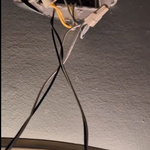
For months, a light fixture in our kids' rooms didn't work. I had all kinds of excuses. Mostly, I'd rather call somebody.
Then I watched a YouTube video. Talked with Chat. And... the new light is ON!
Small win. But it reminded me of something I hear all the time in our workshops: "I'm just not a good negotiator." Or presenter. Or delegator.
I get the "strengths" stuff. But if it's skill-based, you can develop the skill. And so much of what we face is about skills.
You get better at negotiating by negotiating. And by watching people who do it well.
Maybe you won't be the best. But you can get better!
What's a skill you once said "I'm just not good at" that you've gotten better at?

My dad loved getting a paper check.
His name was Bill. A trip to the bank was part of his outing.
Mobile deposit? Take a picture of the front and the back with your phone? Not a chance.
I think about him when I hear a team say they're building something "everybody" will use. Maybe.
But I bet they're forgetting some stakeholders. I know because I've made that mistake too many times.
One idea that has helped? Identifying stakeholders much more broadly than just the obvious ones. And developing personas.
During a project management workshop I was leading, this exact scenario came up. The organization I was at strongly preferred that every constituent they pay would utilize direct deposit.
But they know there are some "Bill's" out there. Using personas helped them avoid forgetting an important stakeholder group.
The hard lesson I've had to learn: if we overlook the "Bills", we'll eventually find out. Unfortunately, too often, the discovery is right after launch. :)
What's an example of a stakeholder group you've seen that is often overlooked until later?

Years ago, we had a VERY senior leader with a "tell."
While someone was presenting, every once in a while he'd take off his wedding ring. Set it on the table. And start spinning it.
The tell? You'd lost him. Everyone in the room knew it. To those of us who had to present to him, we knew it was like the mafia kiss of death!
Now, I'd love to tell you I don't have a "ring spin" tell of my own. My guess is my team (or family) could tell you what it is!
I'm still nodding. Still in the chair. But starting to check out.
So here's what I try to remember:
* Even when I am still engaged, it may not appear that way to others. For example, taking notes on my laptop might look like email to those who can't see my screen.
* I try to be mindful of watching the people, not just the slides. Eye contact says volumes.
What's a "tell" you've seen that indicates people are starting to check out?

My wife gave me some feedback.
On my best days, it's not usually a problem. We have a great marriage, and I take it in stride.
On my worst days, I overreact. I take it personally.
Here's the thing.... Whatever that feedback was? She probably didn't mean it personally. I just took it personally.
I'd love to tell you I only did that at home. But it can easily spill over at work based on feedback from a stakeholder or team member.
So here's the idea that changed my marriage, and it's applicable at work, too
I learned it from Mike Roberto. He calls it cognitive vs affective conflict.
Cognitive is about the idea. Affective is when it's personal.
When I started taking feedback from my wife (and clients, workshop participants, etc.) as cognitive instead of affective, I stopped overreacting.
It's a reminder that:
* How it's said is on them.
* How I take it is on me.
My favorite response when feeling defensive? "Tell me more...." or some version of that. It helps me stay curious.
Mind you, I'm not perfect at this. But as a guy who grew up thinking any sort of conflict was bad, this has been a game-changer.
Which is harder for you: hearing feedback from a boss or from someone at home?

We'll be going into our first winter with a Model Y. Any lessons learned by @Tesla owners to make your winter season even better?
I had a guy on my team years ago who was one of the smartest people I've ever hired.
He was also a bull in a china shop, if you know what I mean.
One day, I was so frustrated by the fallout with stakeholders from his personality that I just said it. I came out something like: "When you walk down the aisles here, it's like you're throwing grenades. There are bodies in your wake. You've got to stop it."
There was nothing nice about the words. It was said out of frustration.
I don't even remember saying it.
But recently he got back in touch. "You once told me..." and he repeated it.
He continued: "I hated it at the time. But I've been telling people for decades that was the best coaching I ever got."
Really?!
Here's what I've learned. I don't like difficult conversations. But avoiding them almost always makes things worse.
I'd probably say it more kindly now. :)
What's a hard piece of feedback you got that turned out to be a gift? I'll add some in the comments!

I landed late in Baltimore before a keynote.
No driver.
I called the car service. The owner's first answer: "Nobody told me."
A little later, he called back. And years later I still remember what he said:
"Mr. Kaufman, I have screwed up."
Turns out, he'd booked it for the wrong month.
Here's the thing.... The second he owned it, there wasn't much left to be upset about. I told him that in five days nobody would remember this. And I offered to buy the replacement driver a coffee.
I'd love to tell you my first reaction to my mistakes always sounds like his second call. It doesn't. If I'm not careful, it can sound like his first one.
Blame. Justify. Point at the process.
So here's the lesson I keep relearning:
→ When you mess up: don't blame, don't justify. Just own it.
→ When someone else messes up: go low. Help them solve it.
I talked through this on episode 260 of the People and Projects Podcast, "How to Respond When You Mess Up."
Which is harder for you: owning your own mistake, or being gracious when someone else makes one?

YOU MUST DO THE THING YOU THINK YOU CANNOT DO. ELEANOR ROOSEVELT
Today I'm celebrating 25 years of being in business.
But I don’t think it would have happened without one crucial “Yes” seven years before the launch.
Microsoft invited me to present at their annual TechEd conference. It would be in front of 7,500 people. At the time, speaking in front of 10 was enough to make me panic.
Why did I say yes? I have no idea!
But I do know this: those first 5 seconds on stage (the photo in this post) were terrifying. I was doing the thing I thought I could not do.
Seven years later, I launched our company. Since then, I’ve had the joy of helping organizations around the world lead and deliver projects more successfully. Today I’m in front of audiences at least 100 times a year.
I feel a deep sense of gratitude today.
🙏 Grateful to be loving this work 25 years in.
🙏 Grateful for everyone who has been part of our workshops, keynotes, LEAD52, and podcast community.
🙏 Grateful for the conversations we have here each week.
🙏 Grateful to a God with a sense of humor to provide a career path that I love, doing what I most feared decades before.
Eleanor Roosevelt said it well:
“You gain strength, courage, and confidence by every experience in which you really stop to look fear in the face. You are able to say to yourself, ‘I have lived through this horror. I can take the next thing that comes along. ... You must do the thing you think you cannot do.’”
I’ve lived that. My guess is you have too.
👉 What’s something you once thought you couldn’t do, but did anyway?

CONFIDENCE OFTEN ARRIVES AFTER THE ACTION, NOT BEFORE IT.
We often assume confidence is the feeling that gives us permission to speak up, make a decision, or accept a difficult assignment.
But haven't you seen this? In practice, the sequence is often reversed. We act while feeling uncertain. Maybe it doesn't go perfectly, but it goes well enough that the experience becomes evidence that we can handle more than we thought.
I kept waiting before starting a business. I had lots of excuses. I was not fearless when I made the jump 25 years ago this week! But 25 years later, I have nothing but deep gratitude that I moved forward despite the anxiety.
(BTW, if taking the full jump seems too risky, try making the next step smaller instead of waiting for the fear to disappear. I had about 7 years of smaller steps before making the big jump career-wise)
👉👉 What's an example of how you've seen confidence arriving after the action, not before it?
Check out my discussion with Kelli Thompson in episode 440 for more on this.

Long time @evernote paid subscriber.
When cancelling tonight, they didn't ask why.
Makes me wonder how often I miss opportunities to learn.
AI ISN'T THE ONLY THING BEING TRAINED.
Your mind is, too.
Every article you read.
Every news update you consume.
Every conversation you have.
Over time, those inputs shape how you think and how you lead.
I've never been tested for ADHD, but I'm guessing I'd score pretty well. 🐿️
Fred Marshall joined me in episode 513 to talk about his new book entitled Thrive. It's an important read at a time of foundational change in the world around us.
I've actually changed my social media habits since the discussion.
Lesson: Being intentional about what gets your attention may be one of the most practical leadership skills today.
👉👉 What's one thing you do to stay focused when there are so many forces trying to get your attention?

WHEN FEAR GETS LOUD, RETURN TO THE FACTS.
Have you ever noticed that the lead-up to a stressful meeting is often worse than the meeting itself? Not always, but I've certainly seen that pattern before.
It's so easy to get worked up in the days and hours leading up to it. Our minds can quickly produce a list of everything that might go wrong.
Kelli Thompson offers a practical response: name the worried thought, then look for evidence. One of my mentors said it this way: Name the lie, insert the truth.
What's true? What's some evidence? Consider:
-- You have prepared.
-- You understand the project.
-- You were invited into the room for a reason.
-- You may not know every answer, but you can follow up.
Check out episode 440 with Kelli for more ideas (and better sleep the night before the meeting)!

YOUR EXPERIENCE CAN GUIDE YOU.
IT CAN ALSO LIMIT YOU.
We all carry mental maps shaped by family, culture, work, success, and disappointment.
Those maps help us navigate. But a lesson that served us well years ago may quietly become an assumption that no longer fits.
One of my maps that needed re-writing? "It's just easier if I do it myself. It will get done correctly. On time. And it would take too long to get them up-to-speed."
That worked as a first line manager, at least at times. But it held me back going to Director and Vice President. I needed a new map.
Cornelia Choe joined me episode 511 to talk about this and more. One idea is to try asking: If I were new to this situation, which assumption would I be most willing to question?
👉👉 What is a leadership belief you have had to update over the years?

In a world of lame AI assistants, the one used by @SiteGround was truly helpful in debugging a problem. 👏👏
FEAR DOES NOT HAVE TO DISAPPEAR BEFORE YOU MOVE.
I wanted to start a company years ago. But it seemed to scary. So many things could go wrong. No guaranteed salary. No benefits.
So I didn't move. Until it was clear my current job situation wasn't any more certain than making the jump.
I jumped. And I'm so glad.
You don't have to wait for fear to disappear. Cornelia Choe told me in episode 511 that she calls it optimistic fear.
It does not ignore risk or pretend everything will work out. It keeps the danger in view while leaving room for curiosity, options, and useful action.
The next step does not need to be a major commitment. It can simply be one conversation that helps you understand the situation more clearly.
For me, that was starting conversations with people already doing keynote speaking and workshop facilitation. I couldn't believe how generous people were in sharing insights! Suddenly the thing that seemed unbearably risky seemed possible.
👉👉 What's an example of when you experienced optimistic fear in a way that moved you forward?

Ask "What results do I want to buy from them?" Barry Wolfe
Instead of asking “What do I want to pay them to do?” ask “What results do I want to buy from them?”
Barry puts together a case for why that simple shift, from verbs to nouns, can change the way you write job descriptions, give feedback, and align teams.
Check out the discussion with Barry in episode 490 of the People and Project Podcast.

“There is no shortage of good days. It is good lives that are hard to come by. A life of good days lived in the senses is not enough. The life of sensation is the life of greed; it requires more and more. The life of the spirit requires less and less; time is ample and its passage sweet. Who would call a day spent reading a good day? But a life spent reading -- that is a good life.” Annie Dillard
I don't know about you, but 2026 sounds like a sci-fi movie to me! And we're now halfway through the year!
In this quote, Annie has her own definition of what a good life is. But how about this? What's something from the first half of the year that was meaningful to you? I'd love to celebrate with you! Leave a comment below.

In a world filled with marginal vendor support, I am so impressed with @SiteGround . Time and again, they have been super responsive without canned, templated responses. If you've been thinking about changing where you host, I have nothing but high praise for this support team!
Just made a doctor's appointment. They use @elise_ai on the phone and I can confidently say it was the best, almost natural interaction I've had with a voice agent to date.
I actually messed with it a bit to see how it would handle the situation and it was flawless. Well done.