
AI-pilled | AI Analyst
Paris, France
Joined February 2015
- Tweets4.3K
- Following2.1K
- Followers728
- Likes7.9K





OpenAI's @thsottiaux told @lennysan that builders should imagine models ~10x better within a year. I turned that, plus @RichardSSutton's Bitter Lesson, into an open-source skill for Claude Code and Codex that scores your plan at 3, 6 and 12 months.
First run, on itself: 7, 5, 3.
1
1
92

Same list price, different bill. We tested OpenAI and Anthropic models on 4 enterprise tasks at JDN. Claude Sonnet 5.5 and GPT-6.1 Sol cost the same per token, yet Sonnet came out up to 1.7x pricier. Main culprit: Claude's tokenizer counts 46-63% more tokens for the same text.
1
61
Mistral Large 4: a 1T-parameter MoE trained on just 3,800 Nvidia Grace Blackwell GPUs. We benchmarked it at JDN against GPT-6 Luna and GLM-5.3. Short version: strong on French, legal and security review, weak on agentic coding. Numbers below.
1
1
160
Mistral AI just unveiled Mistral Large 4, trained on 4,000 Grace Blackwell GPUs: "two to three times fewer than most Chinese labs", says cofounder Guillaume Lample. It matches the best Chinese open models, beats them on several benchmarks. Open weights in three weeks.
journaldunet.com/intelligenc… (in french)

122
Paris-based Delos (€10M raised) rents out AI "employees" with their own phone number, email and computer. I hired one as a journalist at JDN, on a beat made up for the test. She ran a phone interview on her own, for less than €4.
1
65
OpenAI just shipped 20+ launches at DevDay.
The headlines: always-on agents called Dots, a near-Astra model at 1/5 the price, and a $500/month ChatGPT plan.
But the real story is what's missing. 🧵
1
390
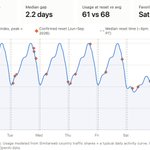
I mapped all 24 confirmed Codex @thsottiaux resets since June against an estimated weekly usage curve for OpenAI (weighted by country time zones).
Result: resets land in usage troughs, not peaks. Only 6/24 hit above-median load. Saturdays & Tuesdays are the favorites.
Capacity play or just PT office hours? 👀

56
France may have just produced the perfect AI culture-war story.
C’était ça ou mourir, a bestselling novel and Goncourt contender, was dropped after plagiarism allegations and suspicions that AI had been used in the writing process. The author denies using AI.
But the bigger story is the Goncourt Academy’s position: it said it does not want to endorse books written with the help of AI. That is a very hard line.
And it perfectly captures the gap in the AI debate right now. In Silicon Valley, the question is increasingly: how much can AI augment human creativity?
In France and parts of Europe, the question is still often: should AI be allowed into the creative process at all? Of course, plagiarism, disclosure and authorship matter. But treating any use of AI as inherently disqualifying makes little sense.
This controversy says a lot more about Europe’s relationship with AI than it does about one book.
70
Question for @ArtificialAnlys @simonw @emollick @natolambert @kimmonismus has anyone benchmarked the actual usage you get today from Claude Opus 5.5 vs GPT-6 Astra/Sol subscriptions ?
I’d love to see the caps converted into an API-equivalent ($/tokens) for each plan. Anyone done this?
74
A 3D site that explodes the male human body into 2,234 individually modeled pieces.Bones. Muscles. Arteries. Veins. Nerves. Organs.
Click any structure. Isolate it. Pull the whole body apart.Built with GPT-6 Astra.This isn’t a render. It’s a full interactive atlas in the browser.We are in a renaissance of learning.

since you guys loved the exploding tesla..
I used GPT-6 Astra to create a 3D website that pulls apart the male anatomy into 2,234 modeled pieces!
we are in a renaissance of learning
354
AI isn't just generating funny cat pictures.
Google just launched a weather model that updates hourly and brings reliable forecasts to regions that never had them because traditional models required supercomputers they couldn't afford.
Farmers planting smarter. Storms detected earlier. Lives saved. In the real world.
The most exciting AI story of this decade might be written in satellite data, not in your prompts.

WeatherNext 3 is a major breakthrough in how we forecast global weather. ⛅
Developed with @GoogleResearch, the model learns directly from real-world, real-time observations to give more localized highly accurate predictions faster. 🧵
82

.@Doctolib (France’s dominant online healthcare platform, kind of like a French Zocdoc + telemedicine giant) just launched a research program. They’re going to use pseudonymized health data from their 50 million users to develop AI tools that actually improve care pathways, predict risks, and make their services more useful for patients and doctors.
They’re working with serious French research institutes to do it. And of course the French human rights league + the usual regulatory machine immediately jumped on them over privacy, consent, and “risks.” They’re literally trying to build better, more relevant healthcare tools with AI… and the entire French over-regulation apparatus just lands on their heads.
At this point they might as well move the whole thing to the US, they’d face way less harassment for doing the exact same thing.
This country is wild 😂

📲 Doctolib lance un programme de recherche scientifique qui utilisera les données personnelles de utilisateurs, censé permettre "d'améliorer les parcours de soins grâce à l'IA", un projet qui fait bondir la Ligue des droits de l'Homme.
➡️ u.afp.com/SrHP

149
@LIGNEP_SNCF bonjour,
Que se passe-t-il avec le train au départ de Esbly (direction Paris Est) à 7h56 ?
Merci !
2
121
Running Kimi K3 locally at full speed in BF16 would theoretically require around 32 Nvidia B300 GPUs: €2.5–3.7M in infrastructure and roughly €6,000–10,000 a month in electricity. Unless you process 400M+ tokens every day for years, the API is far cheaper.

Releasing the model weights and technical report of Kimi K3.
Kimi K3 is our most capable model: a 2.8T MoE model with native visual understanding and a 1M-token context window.
New model architecture: 2.5x the intelligence per unit of compute, not just more params.
Alongside Kimi K3, we're opening up more of the stack behind it — high-performance attention kernels, MoE communication library, and infrastructure for running agent environments at scale.
Model weights: huggingface.co/moonshotai/Ki…
Tech report: github.com/MoonshotAI/Kimi-K…
Tech blog: kimi.com/blog/kimi-k3

105
Every time a new Chinese model is released, the same question returns: are the United States losing their lead in artificial intelligence? At this point, the question is legitimate. DeepSeek, Kimi, Qwen, GLM and MiniMax are releasing models that compete with the best American systems on several benchmarks. In some cases, they even outperform them on specific coding, reasoning or tool-use evaluations.
More importantly, they are doing so at dramatically lower prices. Kimi K2.6, for example, costs around $0.95 per million input tokens and $4 per million output tokens, compared with $3 and $15 for Claude Sonnet 5. That makes Kimi roughly three to four times cheaper. Against the most expensive frontier models, the price gap can exceed a factor of ten. When two models appear relatively close on paper, it is therefore reasonable to ask why companies should continue paying significantly more for an American model.
For now, however, I do not believe this marks the end of American dominance. The main reason is that benchmark performance is no longer sufficient to evaluate the real value of a model. A system may perform extremely well on a coding or reasoning benchmark without being equally effective once deployed inside a real agent.
In production, the model must manage context, select the right tools, interpret their outputs, recover from errors, maintain a coherent objective and operate reliably over dozens of successive steps. Raw model intelligence is only one part of the equation.
The second part is the harness: the entire software environment surrounding the model, including context management, memory, tool orchestration, validation loops, permissions and error recovery. This is probably where American laboratories still retain one of their strongest advantages.
OpenAI, Anthropic and Google are no longer developing standalone language models. They are building complete systems in which the model, the tools, the infrastructure and the final product are designed together. Claude is optimized for Claude Code, OpenAI’s models are adapted to Codex and its agentic APIs, and Gemini is increasingly integrated across Google’s infrastructure and product ecosystem.
This integration can create a substantial performance gap that standard benchmarks fail to capture. Kimi may appear close to Claude on a leaderboard, but on a complex software engineering task inside Claude Code, Claude is still likely to perform better.
The reason is not necessarily that Claude is dramatically more intelligent in isolation. It is that the model has been trained, tuned and evaluated within the environment in which it is expected to operate. Its behavior is better aligned with the tools, prompts and execution loops of the product.
This matters because agentic systems amplify small differences. A slightly weaker decision during the first step can lead to the wrong file being opened, the wrong tool being called or an unnecessary branch of analysis. Over fifty or one hundred agent turns, these small errors accumulate. The model may consume more tokens, enter unproductive loops or fail to complete the task altogether.
A model that is three times cheaper per token can therefore become more expensive in practice if it requires twice as many tokens and completes fewer tasks successfully. The relevant metric is no longer simply the price per million tokens. It is the cost of a correctly completed task.
The second reason American leadership remains difficult to overturn is the frontier dynamic itself. Chinese laboratories have demonstrated genuine technical expertise. Their progress in mixture-of-experts architectures, training efficiency, open-weight models and inference optimization should not be underestimated.
Describing Chinese systems as simple copies would be inaccurate. Nevertheless, many of these laboratories still appear to operate primarily within a catch-up dynamic. They are becoming exceptionally effective at reproducing or approaching capabilities first demonstrated by American frontier models, often at a much lower cost. They are not yet consistently defining the next generation of capabilities.
Distillation plays an important role in this dynamic. The basic principle is straightforward: a laboratory queries a more advanced model at scale, collects its outputs and uses those responses as training data for another system. This can transfer a significant proportion of the original model’s reasoning patterns, coding behavior or tool-use capabilities.
The result can be an excellent functional clone: cheaper, sometimes open-weight and highly competitive on measurable tasks. But reproducing the outputs of an existing model is not equivalent to mastering the complete research process that produced it.
The laboratory behind the frontier model still controls its training data, reinforcement-learning pipeline, internal evaluations, safety mechanisms and product integration. It is also already working on the next generation while competitors are reproducing the current one.
The sustainability of this catch-up strategy is also uncertain. American laboratories are investing in mechanisms designed to detect large-scale extraction and distillation. These include behavioral classifiers, coordinated-account detection, API monitoring, rate limits and more restrictive access to advanced reasoning traces. Such protections will probably never eliminate distillation entirely.
Chinese actors may continue to access frontier systems through intermediaries, third-party APIs or distributed accounts. However, these defensive measures could increase the cost of extraction and reduce the quality of the resulting training data.
This creates a plausible scenario in which the gap widens again over the coming months. If American models continue to progress while becoming more difficult to distil, and if they are increasingly co-designed with proprietary harnesses, the advantage of frontier laboratories could become less visible on public benchmarks but more pronounced in real-world agentic performance.
Their competitive advantage would no longer be limited to having the best base model. It would come from controlling the entire stack: chips, infrastructure, training, model, harness, tools, distribution and user feedback.
The conclusion is therefore more nuanced than the benchmark rankings suggest. This is probably not the end of American AI dominance. It is, however, the end of uncontested American dominance.
Chinese laboratories are now capable of releasing models that rival the leading American systems on selected metrics while exerting enormous downward pressure on prices.
They have already transformed the economics of the market and forced US companies to justify their premium.
American laboratories nevertheless retain several structural advantages. They remain more likely to define new frontier capabilities, they control highly integrated agentic ecosystems, and they have access to the feedback loops generated by millions of users operating their models inside real products. Chinese laboratories are closing the gap at remarkable speed, but matching benchmark performance is not the same as matching the complete technological system.
My current hypothesis is therefore that the gap could widen slightly again in the near term, particularly in complex agentic use cases. That scenario could be overturned if Chinese laboratories develop stronger proprietary harnesses, discover their own frontier-level breakthroughs or maintain effective indirect access to American models.
The outcome remains uncertain, but the terms of the competition are becoming clearer: the next phase of the AI race will not be won by the model with the highest benchmark score.
It will be won by the organization capable of building the most effective, integrated and economically viable AI system.
🤖 Made with AI

217
Claude Code’s limits on the Pro plan are honestly ridiculous. One single prompt ran for 13 minutes, failed to complete the task, and somehow burned through the entire token allowance. That’s not a usable developer experience.
74
In France, some medical practices are putting up signs telling patients not to check their symptoms on Google or ChatGPT before seeing a doctor. This is apparently tolerated. It’s completely stupid.
We just had a clear example where ChatGPT correctly flagged a possible heart attack that multiple doctors missed. Resisting AI as a diagnostic aid doesn’t protect patients, it puts them at risk and makes doctors look outdated.

ChatGPT ne balaie pas les 3/4 des maladies par "c'est du stress" au moins. Et face à mon cas actuellement, mon médecin lui-même a avoué y avoir eu recours comme simple aiguillage car il était dépourvu (rare médecin honnête dont l'ego n'est pas touché).
112