

The Medical Futurist, Author of "Your Map to the Future", Global Keynote Speaker, and Futurist Researcher
Budapest, Hungary
Joined March 2007
- Tweets72.3K
- Following92
- Followers77.2K
- Likes1K





Pinned Tweet
I cannot express my happiness and excitement about a book I’ve been working on for so long!
Here is Your Map to the Future: Learn How to Navigate and Shape What Lies Ahead!
In this book, I make science-based futures methods, that only experts including me at The Medical Futurist have been using for decades, accessible to everyone!
This heavily illustrated book describes how starting from the traps of short-term thinking and presentism, we can finally expand our time perspective and learn to observe and examine the future as we have been doing with the past.
Doing this is crucial in addressing today’s most pressing issues, from climate change to the rise of AI.
I cannot wait to hear what you think about it and if you could also leave an Amazon review, that would be fantastic! Thank you!
I’m looking forward to beginning this journey with you!
Here is the Amazon link: amzn.to/3ZyNHjd

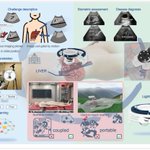
Now we know robots can take blood samples safely, but can you imagine a robot performing an ultrasound exam?
A study just proved that it is possible.
The authors developed an autonomous lightweight ultrasound robot comprising an AI agent that integrates multimodal perception with memory attention.
"Our robot can autonomously acquire expert-level standard liver ultrasound planes and detect pathology in patients...
Our system performs effectively on rapid-motion individuals and in wilderness environments. This work represents the first demonstration of autonomous sonography across multiple challenging scenarios, potentially transforming access to expert-level diagnostics in underserved regions."
It is designed for now for regions with limited medical resources. So your next ultrasound sonographer will not fly into the room as a robot anytime soon.
The study: nature.com/articles/s41467-0…

Robots have been preparing chemotherapy drugs for patients at Cleveland Clinic for almost 15 years.
At the Taussig Cancer Center, robotic systems help pharmacists prepare personalized chemotherapy doses using cameras, barcode verification, and precision weighing.
Watch the video to see it in action!
One of their early studies, more than a decade ago, documented that 1.2% of doses required manual correction because they fell outside the specified accuracy range. They measured, corrected, and it has been working for years.
Cleveland Clinic reported more than 500,000 preparations using APOTECA technology in a year!
These robotic systems can reduce healthcare professionals' exposure to hazardous medications and free up time for other pharmaceutical tasks.
I find examples like this particularly interesting because they demonstrate that the future of healthcare is about automating a highly repetitive, technically demanding task while keeping healthcare professionals in control.
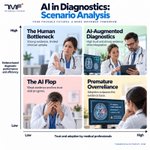
Four Futures For AI In Medical Diagnostics!
As The Medical Futurist, I regularly use scenario analysis to explore questions where the outcome depends on several forces interacting with each other.
Looking at these four scenarios, one issue appears repeatedly. We need a healthcare workforce that understands AI well enough to use it appropriately.
Getting there will require more than better algorithms. It will require better-prepared humans.
Read the full analysis here: medicalfuturist.com/four-fut…

I just had a wonderful discussion with Brendan Levy, MD, Chief Medical Officer at Clara. It's a newly launched AI-powered digital primary care practice founded by the team that built Circle Medical into a $100 million virtual-care company. Clara is designed to make primary care more accessible, continuous, and personalized through an always-on digital platform grounded in each patient’s medical history and an ongoing care relationship.
1. What can Clara’s AI actually do autonomously today, and where does a clinician still have to step in?
Today, Clara’s AI can take on much of the continuous information work that is difficult to accomplish within a traditional medical appointment. It can automatically retrieve years of available medical records, including labs, prescriptions, clinical notes, and information from past appointments, combine them with wearable data, and bring everything together to create a more complete picture of a patient’s health.
Patients can use Clara to better understand their records, explore symptoms and treatment options, identify potential gaps in their care, and receive proposed next steps based on their history and current concerns. They can do much of this before meeting one-on-one with a Clara physician via video, allowing the appointment to begin with the patient’s records, questions, and relevant context assembled and ready to go.
Clara’s AI can also identify potential diagnoses and prepare proposed treatment plans, including starting or refilling prescriptions, ordering new labs, or making a specialist referral. But the AI does not make or execute those clinical decisions independently. Any diagnosis or decision to start, stop, or change treatment is reviewed by a licensed clinician, who makes the final medical determination and signs any resulting prescription, lab order, or referral.
That combination is really the point. The AI can remain available, maintain context, and do much of the information processing between appointments, giving clinicians more time to focus on medical judgment, human connection, oversight, and accountability.
The full interview is available on our exclusive Patreon channel: patreon.com/themedicalfuturi…

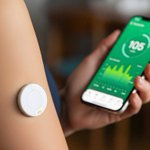
So we first discovered what causes diabetes, developed a treatment for that, recently, digital sensors have become accessible in the form of CGMs, and the next step could be something even better.
Animal studies show that an implantable system using an electrically powered catalyst can clear excess glucose from the blood!
"The catalyst is controlled wirelessly through a closed-loop system. A standard glucose sensor, like those commonly worn on the upper arm by people with diabetes, continuously monitors glucose levels in the tissue. If blood sugar rises too high after a meal, the sensor sends a signal via Bluetooth to a smartphone or smartwatch.
The smart device then activates the catalyst, which uses electrical energy to convert the glucose. Once glucose levels have fallen to the desired level, the device switches itself off automatically, protecting patients from dangerously low blood sugar."
If it is proven in clinical studies, that is going to be brilliant news for patients with diabetes.
Source: bsse.ethz.ch/news-and-events…

The progress of AI assisting medical diagnoses is great, but why call it medical superintelligence?
Why would you imply that physicians are not good enough?
Still, Microsoft researchers published their recent results in Science.
"That future is now coming into view. On common presentations to a US emergency department, MAI-DxO – our AI diagnostic system – is 1.7 times more accurate than physicians when evaluated using cases from MIMIC-IV-ED.
And on medicine’s most complex cases, published in The New England Journal of Medicine, MAI-DxO is more than twice as accurate as physicians using textbooks and the internet – and nearly four times as accurate when they diagnose without those resources. It also manages to do this at half or even one third of the cost, getting to the right diagnosis with fewer tests and procedures."
Source: microsoft.ai/news/building-m…

I really admire figures that can describe a concept better than long manuscripts.
This image is from an excellent paper in Nature by Vivek Subbiah about the future of evidence-based medicine and the design of clinical trials, all inspired by the rise of artificial intelligence.
This is the era of the next generation of 'deep' medicine.
"Current paradigms must be continuously challenged by emerging technology and by all stakeholders (the new generations of scientists, physicians, the pharma industry, regulatory authorities and, most importantly, patients). Disruptive innovation should lead to every clinical site being a research site, with all necessary quality checks and research as part of the standard of care.
My personal view is that every major disease needs a ‘Moonshot’ program and every rare disease should have an ‘Operation Warp Speed’—both with clearly identified, sustainable goals to improve population health and address equity, diversity and global access to therapies.
Methodological advances and future AI-based analyses of all data will provide deep evidence to realize the goal of personalized medicine— that is, to offer the right treatment to the right patient at the right time."
The paper: nature.com/articles/s41591-0…

Every week, I track hundreds of news, studies and announcements that show where medicine and healthcare are really going, from the latest AI breakthroughs and digital health tools to the cultural shifts redefining patient care.
Every week, I summarize the 5 key findings in The Medical Futurist Newsletter for free.
It has been trusted by 25,000+ health professionals, business leaders, researchers, and innovators worldwide since 2013.
👉 Subscribe here for free: medicalfuturist.com/newslett…

Our Comment paper in Nature about how science could engage with the future differently by systematically applying foresight methods.
For almost 20 years, I have worked to make futures methods an accessible and practical toolkit for medicine, healthcare and life sciences. My goal is for the future directions of publications, research findings and scientific projects to depend not only on researchers’ individual opinions, but on systematic methods that help us explore multiple possible futures.
At the beginning of this year, I asked myself why this has been so difficult. Why do we encounter so much resistance, confusion or scepticism? I realized that I had not found the right language to explain why it matters.
Then I thought of translational medicine, a term that became prominent when I was still a medical student. Scientific progress was accelerating rapidly, but many discoveries struggled to reach the bedside. Genomics and other fields were advancing, yet clinicians and patients rightly asked why those breakthroughs were not being “translated” into medicines and diagnostics.
Translational medicine emerged as a response. It brought new training programmes, institutes and a philosophy aimed at helping scientists and clinicians understand one another’s language and work toward shared goals.
While waiting at a red light, the idea suddenly came to me: 𝐭𝐫𝐚𝐧𝐬𝐥𝐚𝐭𝐢𝐨𝐧𝐚𝐥 𝐟𝐨𝐫𝐞𝐬𝐢𝐠𝐡𝐭.
In essence, we are trying to solve a similar problem, not only in medicine. We want to translate the visions, scenarios, risks and opportunities generated through futures methods into the language of researchers who may never have analysed the future this way before.
You can read our paper here: nature.com/articles/d41586-0…

A bold regulatory move from Utah policy-makers as they just allowed 3 healthcare technology companies to test how their AI systems can safely prescribe and refill medications, and provide AI-augmented physical therapy plans for specific health conditions.
This is a sandbox regulatory approach. The regulator allows the companies to use their technology in a sandbox-like ecosystem while they are being watched, but before being allowed to enter the market in the regular pathways.
"The AI pilot agreements establish phased testing requirements, clinical oversight, escalation procedures and regulatory reporting aimed at helping Utah evaluate the safety and effectiveness of the technologies.
The agreements also require the pilot companies to implement "reasonable cybersecurity protections against data leaks to minimize the risk of breach of confidential information," including best practices to address emerging threats and vulnerabilities."
You will see this sandbox approach across the whole medical regulatory landscape soon.
Source: bankinfosecurity.com/utah-ok…

There is a worrying mismatch between what results the FDA allows an AI model to enter the market with and what results it starts delivering after being deployed. A study just confirmed that.
Authors retrospectively evaluated two FDA-cleared AI algorithms from a single commercial platform (Aidoc Medical BriefCase) in pulmonary embolism triage detection on routine contrast-enhanced CTs, across a 17-facility academic health system.
"Both models demonstrated lower sensitivity than FDA-clearance benchmarks while exceeding cleared specificity, with diminishing performance for peripheral and non-acute emboli mirroring known human reader limitations and underscoring the need for standardized post-market surveillance of AI-enabled medical devices."
I wonder how the FDA or Aidoc responds to such claims.
The study: nature.com/articles/s41746-0…

An FDA official just said that generative AI tools in medicine might get evaluated more like a physician, rather than a device or software.
He explained the difficulty in regulating gen AI brilliantly:
“We’ve been looking at software as a medical device for 20 years. We’re used to a paradigm where you have a piece of software — you can put in X, and it spits out Y — in a nutshell. ...Well, that’s pretty straightforward from an evidentiary standpoint.”
“We ended up putting out this idea that maybe these devices are starting to behave a little bit more like me as a physician than a heart valve or a defibrillator. I went through a system where, over time, I was evaluated on my knowledge and my clinical judgment and my communication ability and my ability to adhere to certain safety boundaries.”
Source: medcitynews.com/2026/10/fda-…

What is going to happen in the future of medicine? What will healthcare look like? And how will our roles change as healthcare goes increasingly digital? Which digital health trends are worthy of attention and which will prove to be just hype?
In the newest update of "The Top 20 Digital Health Trends For The Near Future", I highlighted 20 developments likely to happen in the upcoming 2-5 years.
They are based on our analyses of trends and relevant technologies that we have been constantly monitoring.
It's available on Leanpub with a 45-day money-back guarantee: leanpub.com/top-20-digital-h…

A relatively invisible innovation could make healthcare professionals' work so much easier. Here is an example with Cannulight.
Cannulight has developed a device that slips onto most PIVCs, lighting up when they enter the vein.
Cannulight is currently available for purchase and use only in New Zealand. It has not yet been cleared or approved by the US FDA or other international regulatory authorities.
Have you seen similar innovations lately?
I've been saying for years that medications will be sold with a digital companion app simply because this package increases compliance.
When patients see their own data, it's easier to follow a treatment.
Now the FDA issues final guidance on prescription drug apps and software.
"The guidance addresses three key questions for industry: when app content is treated as FDA-required labeling versus promotional labeling, when an app should be referenced in a drug’s official prescribing information, and what companies should submit to FDA when they distribute app content to users."
I hope pharma companies will see this as an opportunity to join the digital race.
Here is the guidance: fda.gov/news-events/press-an…

For the first time in my career as a keynote speaker, I opened a presentation with a meme.
The one contrasting Elon Musk's predictions about self-driving cars and Geoffrey Hinton's predictions about radiologists becoming obsolete with an image of radiologists driving their regular cars to work in 2026.
It was a humorous way to make a serious point: predicting technological progress is one thing. Understanding how it will transform healthcare is quite another.
I had the pleasure of delivering a keynote at Bracco Imaging's Innovation Day in Milan, exploring how AI and emerging technologies could transform radiology and medical imaging over the next 5–10 years.
The future of medical imaging is about understanding more, predicting earlier, and making better clinical decisions.
We explored a fundamental shift: from medical images as snapshots of our health to imaging as a source of predictive, personalized, and actionable insights.
It was a fantastic opportunity to challenge assumptions and explore possible futures with Bracco's leadership and innovation teams.
Thank you to the Bracco team for the invitation and the engaging discussions!
More on my keynotes: medicalfuturist.com/healthca…

I've been saying for years that one of the most exciting aspects of AI is how it can find unusual associations among data points. Now a study further proves that: CT scans reveal much about a patient's health beyond the specific condition they were originally ordered for!
Penn Medicine researchers seem to really like video games and English history, as they named their CT AI model Percival.
Imagine: a doctor orders a CT scan for a specific reason, and then the department's AI model can find many other things, too.
"Percival was found to uncover traces of several chronic conditions, including atrial fibrillation (a form of irregular heartbeat) and chronic kidney disease in scans.
Additionally, when compared to a similar AI model called TotalSegmentator, Percival was found to flag conditions like pancreatic cancer, cirrhosis and bacterial pneumonia much more reliably."
The source: medicalxpress.com/news/2026-…

AI In The Patient Journey Today!
All these examples exist, but maybe not in the same location, for now. AI already plays a role in the lives of over a billion patients.
1) At Home – Morning
A skin-checking app
2) On the Road
A mental-health chatbot to help calm anxiety during the ride
3) At the Hospital
An AI-driven triage chatbot
An AI scribe on the phone automatically writes the medical notes in the background
An AI radiology tool flags subtle signs that deserve the doctor’s closer look
4) Back Home – Evening
A generative-AI translator rewrites the discharge report into plain language
The details are here: medicalfuturist.com/ai-in-th…

GLP-1 therapy working better with lifestyle change, and lifestyle change working better with digital interventions? No surprises here.
A UK study analyzed GLP-1 therapy through a structured digital program incorporating mandatory biochemical monitoring, weekly video-supported follow-up and clinician-guided dose titration. It worked well!
"These findings support the feasibility of delivering structured, digitally enabled obesity pharmacotherapy at scale and provide prospective real-world implementation evidence for this care model. Interpretation is limited by the observational design, absence of a comparator group, self-pay population and 6-month follow-up."
Even in the first regulatory documents, it was stated clearly that GLP-1 only works with regular exercise and lifestyle changes in diet. Such habits change more easily with the right digital interventions. Here you go.
The study: nature.com/articles/s41591-0…

You train an AI on 40 million facial photographs, and then it can estimate biological age and directly predict survival outcomes of cancer patients from a single selfie!
The general idea is that if a cancer patient looks five or more years older than their actual age, they have a 21% higher risk of dying during the average four-year follow-up than the rest of the group. The patients who look five or more years younger had a 17% lower risk.
"Each algorithm also relied on distinct parts of the face to make respective predictions of age and mortality risk. FAHR-FaceAge focuses on the creases that run from the sides of the nose down to the corners of the mouth, the forehead area just above the eye sockets, and the temples. FAHR-FaceSurvival, meanwhile, evaluates the region below the eyes and around the nasal bridge."
Obviously, it will never be used as a tool to tell patients what to expect before starting a treatment, but then I wonder how it could get deployed in clinical use.
The Guardian covered the study: theguardian.com/technology/2…
The original study: thelancet.com/journals/landi…
