
Professor @Pennmedicine We create #CellTherapy #Genetherapy - Tmunity (Kite) & Capstan (Abbvie) CoFounder, Past President @ISCTGlobal, @PNASNexus AE
Philadelphia, PA
Joined November 2010
- Tweets14.4K
- Following479
- Followers9.8K
- Likes6.2K






Pinned Tweet
🎙️Excited to announce the website for Ring That Bell 🔔 which I co-wrote w internationally acclaimed Irish country music artist @mags__mccarthy. It tells the emotional story of a cancer patient facing relapse and the fierce advocacy, support, and groundbreaking science that offer new hope.
#cancer #cancerresearch #immunotherapy #hope
ringthatbellsong.com/

Self-dealing, Graft, Grift, or Profiteering?

New: Members of a little-known but influential panel of experts picked by RFK Jr. to recommend which preventive services insurers must cover have major conflicts of interests and could stand to gain $$ from the decisions they make: statnews.com/2026/11/11/kenn…

132
Honoring veterans from ‘Gulf to Goat’
Last year, CAR T cell therapy pioneer Carl June completed a 1,200 mile bike ride and fundraiser for cancer research alongside his classmates, veterans from the Naval Academy’s Class of 1975 penntoday.upenn.edu/news/pen…

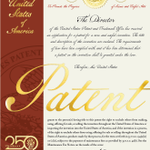
Patents issued this year are coming with this nifty cover page implying the USPTO was also founded in 1776. The first US Patent was actually granted on July 31, 1790, to Samuel Hopkins for a process of making potash and signed by George Washington. As of today, >12 million US patents have been issued.


GD2 is widely recognized as a target in neuroblastoma, but remains underappreciated in sarcoma.
Pleased to be a coauthor of this new study demonstrating that GD2 CAR T cells effectively kill Ewing sarcoma cells in 2D and 3D models, including cells with low GD2 expression, and infiltrate tumors and suppress growth in vivo. Led by @giugolli @massdomi & colleagues

#EwingsSarcoma (ES) is an aggressive cancer for which effective treatment options remain a significant unmet medical need.
💡 This new @cddpress article supports the efficacy of GD2 CAR T cells against both in vitro models and a localized in vivo model of ES!
🔗 go.nature.com/4AdWUNj

With GD2, reports of on target off tumor toxicity are of concern. Designing CARs against OAcGD2 may open an avenue for safer targeting of this solid tumor antigen.
biorxiv.org/content/10.64898… Others are pursuing this angle as well.

4
223
The Misinformation Virus is killing paople
theguardian.com/technology/2…

1
589
Congratulations to @kiranmusunuru & @AhrensNicklas for not only pioneering individualized gene editing for Baby KJ, but also helping shape the regulatory pathway for the patients who will follow, with implications far beyond one patient or one disease.
The FDA's new draft guidance (in reply) is an important advance, recognizing that multiple patient-specific variants of a gene-editing therapy can be evaluated within a common regulatory framework, while maintaining rigorous standards for safety and efficacy.
This is how science and regulation should work together.inquirer.com/health/fda-guid…

Individualized Human Genome Editing Products: Considerations for BLA Submission and Postapproval Management #FDA fda.gov/regulatory-informati…

2
192
Bruce Levine, Ph.D. 🇺🇦🥼🔬🧬🧪💉 retweeted

If you ever needed the data to show what happens when vaccine disinformation spreads and trust in science is undermined - here it is.

Bruce Levine, Ph.D. 🇺🇦🥼🔬🧬🧪💉 retweeted

We're reporting only a fraction of measles cases in the US; some estimates put it as low as 20% in states like PA. This outbreak is much larger than what's reported and is spilling into highly vulnerable communities like babies and pregnant women. We will lose our Measles elimination status this month, and it will take years of responsible public health management to get it back.
bloomberg.com/news/articles/…

America Votes, China Plans
China sets out its stall for global biopharmaceutical preeminence as the US faces further uncertainty over research funding and regulation @medicine_maker themedicinemaker.com/issues/…

1
428
☝️@medicine_maker China is pursuing a coordinated, long-term strategy to become a global leader in biopharmaceutical innovation, while the United States risks eroding its competitive advantage through unpredictable research funding, regulatory uncertainty, and fragmented policy.

1
1
299
The biotech China question @statnews The answer isn't isolation. It's investment in American science and innovation. We cannot afford to surrender leadership in the industries that will define the future of medicine. statnews.com/2026/05/18/biot…

126
Bruce Levine, Ph.D. 🇺🇦🥼🔬🧬🧪💉 retweeted
You cannot fire scientists, halt ongoing research and clinical trials, drive away the next generation and then declare a “golden age” of American science. These cannot fundamentally coexist.
As we head into the elections here is a breakdown breakdown of the damage done to the U.S. scientific ecosystem so far:
Defense research labs lost roughly 14% of their staff. The Pentagon itself warned of “potentially grave consequences for the future of national defense.”
NIH staffing fell by 1/5. More than 2,000 biomedical research grants were delayed or canceled, affecting work on cancer, Alzheimer’s and other major diseases affecting the health of American public.
HHS announced a wind-down of mRNA vaccine development at BARDA, affecting 22 projects worth nearly $500 million through cancellations, cuts and restructuring and halting new mRNA projects under the program.
The National Science Foundation lost roughly 1/3 of its staff and withheld more than $1 billion in funding.
The Energy Department lost more than 1,000 scientists and technical staff. Grant awards from its two major science offices fell by more than $500 million during the administration’s first year.
NASA lost 20% of its employees with Ph.Ds.
Foreign Ph.D. applications at leading universities fell 21%. Schools reduced admissions as funding uncertainty made it harder to support future scientists and removing a pathway for sustaining scientific excellence globally.
Meanwhile, a proposed rule would give political appointees greater control over who receives research funding, screening applications for supposedly “anti-American values.”
Thankfully Congress rejected the massive proposed budget cuts and courts forced funding restorations. But neither can replace the time and investment already made. We can’t just simply flip the switch back on.
And while the federal government can still spend roughly $200 billion on research - we continue to witness the dismantling of the capacity to turn funding into discovery.
And make no mistake - other countries are happy to step in - including China - who are recruiting the talent we are losing.
The treatments we will need in 20 years depend on the research we conduct today. So do our security, our prosperity and our ability to maintain our lead globally.
Vote tomorrow because science depends on it.

Unproven cell therapies are not just a threat to patients. They threaten the entire field.
Clinics selling unproven, unregulated cell therapies exploit patient hope, expose patients to serious harm, undermine public trust, and divert patients from legitimate clinical trials.
Regulatory oversight is not the enemy of patient access. It is essential to demonstrating safety and efficacy. The cell therapy community must do more than condemn bad actors. We need better patient communication, stronger enforcement, rigorous clinical evidence, and sustainable access to treatments that work.

Unproven, unregulated cell therapies continue to pose risks to patients and challenges for the field.
This Cytotherapy article examines the issue and proposes a framework for clearer, more consistent terminology.
🗒️ Read more: buff.ly/BRJxRys


Dismantling America’s Scientific Research Machine Disables America's Global Leadership nytimes.com/2026/10/31/clima…

1
1
708
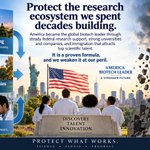
Dismantling America's scientific research engine means cures not developed, makes America weaker and less resilient in many ways
National Security: Pentagon research labs have lost 14% of their staff. The Defense Department warns of grave consequences for national security. Scientific expertise underpins our military superiority. Losing it puts America at risk.
Competition With China: China is closing the gap in scientific research while America loses scientists and research funding. Foreign Ph.D. applications are down 21%. Scientific leadership is a strategic asset that could take decades to rebuild.
Taxpayer Investment: America invests $200 billion annually in federal research. Canceling grants, disrupting experiments, and losing scientists wastes years of taxpayer-funded work. Fiscal responsibility means protecting that investment.
Medical Breakthroughs: Cancer immunotherapy, gene therapy, and modern medicines emerged from decades of federally funded research. More than 2,000 NIH grants have been delayed or canceled. Today's cuts threaten tomorrow's cures.
American Jobs: University research drives biotechnology, startups, patents, and high-skilled jobs. As grants disappear and scientists leave, other nations recruit our talent. America risks handing its competitors the next generation of breakthroughs.
American Leadership: Eight decades of bipartisan federal research investment made America a global leader in medicine, defense, and technology. Scientific excellence isn't a partisan issue. It's fundamental to our security, prosperity, and future.
187
