

Brain: A Journal of Neurology. Publishing leading studies in neurological science since 1878.
London
Joined January 2014
- Tweets7.3K
- Following166
- Followers76K
- Likes265






Pinned Tweet
We are pleased to announce that registration for the 2027 Brain Conference is now OPEN!
The conference will be held on 12 March, 2027.
Visit the website to view our speakers, register to attend and see information on abstract submissions: conference.guarantorsofbrain…

Aloui et al. used genetic sequencing to study 74 families with moyamoya angiopathy, a rare cerebrovascular disorder, and identified known disease-associated variants and novel candidate genes. shorturl.at/WQx9i

Mottolese et al. show that mosaic CDKL5 deficiency drives progressive age- and region-specific remodelling of inhibitory brain circuits. Studies in mice and human brain tissue suggest that mosaicism actively contributes to disease progression. shorturl.at/W75aY

Preventing autoimmunity after alemtuzumab in multiple sclerosis: regulatory T cells resist expansion
New scientific commentary by David PJ Hunt shorturl.at/ceDxe

Williams et al. argue that the contribution of APOE to Alzheimer’s disease burden has been underestimated due to ε3 commonly being considered neutral, despite increasing risk relative to ε2. shorturl.at/WDPoM

Plessis-Belair and Sher identify distinct cell-cycle signatures in patients with ALS in the Answer ALS database. Elevated G1- or G2-phase cyclin expression is associated with slower functional decline, whereas S-phase markers predict faster progression. shorturl.at/hV1vW

Flavell et al. show that discordance between patient, informant and clinician ratings of behaviour can distinguish behavioural variant frontotemporal dementia from psychiatric mimics of the disease with high accuracy. shorturl.at/Tapvq

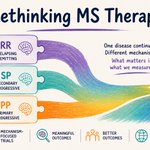
Sormani et al. argue that MS should be viewed as a biological continuum rather than as distinct clinical forms. Evidence from trials suggests that therapies targeting shared biological mechanisms can slow disability progression across the disease spectrum. shorturl.at/2DdMB

Mapping brain imaging heterogeneity in multiple sclerosis
New scientific commentary by Tomas Uher & Guy Nagels: shorturl.at/JhHz8

Gibson et al. analysed postmortem brains from over 7000 older adults. Lewy body pathology was present in more than one in four people, with anatomical distributions of pathology differing by sex and showing distinct associations with co-pathologies. shorturl.at/TR9LS

Hendriks et al. argue that data sharing safeguards should be tailored to the likelihood of reidentification and sensitive inferences, helping to maximize scientific value while protecting individuals and communities. shorturl.at/KPHJH

3
1,302
Using Bayesian analyses, Klingbeil et al. identify right frontal lesions and right-dominant structural disconnection in frontal cortico-subcortical circuits as key correlates of post-stroke depressive symptoms. shorturl.at/Lbsvy

Zanello et al. examine the life and achievements of Jean Bancaud who, together with Jean Talairach, pioneered SEEG. Although initially met with scepticism, the methodology they developed remains the cornerstone of preoperative epilepsy assessment today. shorturl.at/G0F1D

Not letting go: tRNA sequestration as a unifying mechanism driving synthetase-linked neuropathies
New scientific commentary by James N Sleigh shorturl.at/itmq8

Morrison et al. examined immune cells in the blood and CSF of people with Guillain-Barré syndrome, and found that inflammatory T cells were enriched in the CSF and that IVIg treatment was associated with a shift towards anti-inflammatory T-cell states. shorturl.at/SAi85

Chen et al. show that rigid and repetitive behaviours occur across dementia syndromes, most prominently in behavioural variant FTD. These symptoms are linked to structural and functional changes in the brain’s reward hub, the nucleus accumbens. shorturl.at/KHS2h

Cederberg et al. present the results of a double-blind, placebo-controlled trial in patients with severe TBI, showing that treatment with Salovum® - a medical food supplement enriched with antisecretory factor - almost halved the 30-day mortality rate. shorturl.at/ww8Tv

Progress divides the room: patients, biology and the 2024 McDonald criteria
New scientific commentary by Nikos Evangelou & Christopher Gilmartin shorturl.at/8YG81

3
1,079

Chen et al. investigate the role of the cerebellum in social behaviour in early-stage behavioural variant frontotemporal dementia, and find that specific cerebellar regions work with cortical networks to support social understanding. shorturl.at/EFLut

Hayes et al. explore how Alzheimer’s pathology affects the relationship between vascular neuropathology and cognitive scores. shorturl.at/NHyQq
