
Having both Rayleigh and Mie scattering vary with IOR based on the standard 1976 atmosphere model produces the right image, versus left from before.
Real-time spectral rendering of the atmosphere using Radiance Cascades with rainbows and refraction.
Light paths are allowed to bend and create complex dispersion as well as atmospheric lensing.
Cody Bennett retweeted
New Feature: Dynamic Point Light Shadows on all Torches!
Cody Bennett retweeted
Working on a new game. The engine is pulling a lot of weight to make the demo run on Chromebook tier hardware. This scene alone has:
- 6 Mil Triangles
- More than 400(!) 2k textures
- Hundreds of Local Lights & Characters
All of this in WebGL2 :)
Finally have bindless as an experiment in Chrome!
toji.dev/2026/10/06/webgpu-b…
What's New in WebGPU (Chrome 155-156) is up!
⚡ State less/greater on builtin(frag_depth) to keep Early-Z optimizations
📦 Create compressed textures with unaligned block sizes
🎨 Render to srgb-linear and display-p3-linear color spaces
Check developer.chrome.com/blog/ne… for more!
Based on my recent work for real-time Lorenz-Mie scattering and spectral volumetrics, I think it would suit well for atmosphere rendering in the style of Gran Turismo. Has anyone tried recreating their datasets, or better, results, also to compare? Want to try this in real-time.
Replying to @CodyBennett
Mie scattering is wavelength-dependent and varies over altitude and humidity, as described in "Physically Based Real-Time Rendering of Atmospheres using Mie Theory" and Gran Turismo 7 2023 GDC presentation. This phase is nice on the ground but doesn't hold up at higher altitude.
Wave Cascades: A wave-optical extension of Radiance Cascades for real-time simulation of Lorenz-Mie scattering and Lorenz-Mie-Fresnel diffraction.
Fully spectral Mie LUT is computed in real-time (white=measured, green=computed), and I sample it with UHRC which is fully spectral.
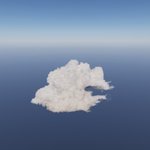
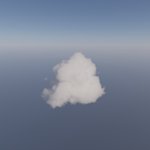
Real-time volumetric rendering of clouds with multiple scattering (64 orders) using Radiance Cascades.
Demo / U-HRC (64^3) / Path-traced 1k spp
Trying more complicated scenes. Radiance Cascades does all lighting here: sub-surface scattering, caustics, volumetric multiple scattering (64 orders), and iridescence. Because the simulation is spectral, there is no approximation or fit for thin-film interference or iridescence.
Experimenting with a multi-level cache for high-frequency effects based on my previous work for SPWI surface GI (left). Specular effects like caustics scale in 2D on surfaces.
Also researching solutions to angular aliasing and flickering of depth-upscaled probes (right). No TAA.
An extension of Radiance Cascades global illumination to support complex transmissive and reflective light transport, including diffuse and specular reflection, refraction with dispersion, caustics, and subsurface scattering.
Left: U-HRC (32^3), Right: spectral path tracer
Noiseless glossy specular global illumination (single bounce) with Radiance Cascades by directly observing the cascade data with a split-sum approximation. No additional rays are traced here, and light transport remains independent of scene complexity and material properties.
Some figures from a presentation I gave on Radiance Cascades recently. Covering the theory, intuition, and implementation in 2D and 3D for GI. Plus notes on future research.
An extension of Radiance Cascades global illumination to support complex transmissive and reflective light transport, including diffuse and specular reflection, refraction with dispersion, caustics, and subsurface scattering.
Left: U-HRC (32^3), Right: spectral path tracer


