

coder / lawyer. research at @paradigm. automated research reply guy
San Francisco, CA
Joined March 2011
- Tweets10.3K
- Following1.5K
- Followers85.6K
- Likes9.9K




Dan Robinson retweeted

Since arriving in SF a few weeks ago I've only become more convinced of the importance of gradual disempowerment in the age of AI. I'm afraid that we're hyperstitioning a future in which human are devoid of agency and will at best through the very way the models are built.
Would be really keen to chat to people about this. Please reach out.

This is potentially very troubling for the human species. My last conversation with a very smart economist on the topic suggested that once AIs have full property rights they'll just accumulate immensely more capital than we do and basically outcompete us.
I don't find the "grey goo" scenarios of AI doom that moving, but gradual disempowerment of humans seems quite likely to me at this point and I don't feel like we have any good answers.
Dan Robinson retweeted

I encourage those at frontier AI companies to read this quote, from Ellsberg to Kissinger back in 1968:
“Henry, there’s something I would like to tell you, for what it’s worth, something I wish I had been told years ago. You’ve been a consultant for a long time, and you’ve dealt a great deal with top secret information. But you’re about to receive a whole slew of special clearances, maybe fifteen or twenty of them, that are higher than top secret."
“I’ve had a number of these myself, and I’ve known other people who have just acquired them, and I have a pretty good sense of what the effects of receiving these clearances are on a person who didn’t previously know they even existed. And the effects of reading the information that they will make available to you."
“First, you’ll be exhilarated by some of this new information, and by having it all — so much! incredible! — suddenly available to you. But second, almost as fast, you will feel like a fool for having studied, written, talked about these subjects, criticized and analyzed decisions made by presidents for years without having known of the existence of all this information, which presidents and others had and you didn’t, and which must have influenced their decisions in ways you couldn’t even guess. In particular, you’ll feel foolish for having literally rubbed shoulders for over a decade with some officials and consultants who did have access to all this information you didn’t know about and didn’t know they had, and you’ll be stunned that they kept that secret from you so well."
“You will feel like a fool, and that will last for about two weeks. Then, after you’ve started reading all this daily intelligence input and become used to using what amounts to whole libraries of hidden information, which is much more closely held than mere top secret data, you will forget there ever was a time when you didn’t have it, and you’ll be aware only of the fact that you have it now and most others don’t….and that all those other people are fools."
“Over a longer period of time — not too long, but a matter of two or three years — you’ll eventually become aware of the limitations of this information. There is a great deal that it doesn’t tell you, it’s often inaccurate, and it can lead you astray just as much as the New York Times can. But that takes a while to learn."
“In the meantime it will have become very hard for you to learn from anybody who doesn’t have these clearances. Because you’ll be thinking as you listen to them: ‘What would this man be telling me if he knew what I know? Would he be giving me the same advice, or would it totally change his predictions and recommendations?’ And that mental exercise is so torturous that after a while you give it up and just stop listening. I’ve seen this with my superiors, my colleagues….and with myself."
“You will deal with a person who doesn’t have those clearances only from the point of view of what you want him to believe and what impression you want him to go away with, since you’ll have to lie carefully to him about what you know. In effect, you will have to manipulate him. You’ll give up trying to assess what he has to say. The danger is, you’ll become something like a moron. You’ll become incapable of learning from most people in the world, no matter how much experience they may have in their particular areas that may be much greater than yours.”
"….Kissinger hadn’t interrupted this long warning. As I’ve said, he could be a good listener, and he listened soberly. He seemed to understand that it was heartfelt, and he didn’t take it as patronizing, as I’d feared. But I knew it was too soon for him to appreciate fully what I was saying. He didn’t have the clearances yet."
Dan Robinson retweeted

Anthropic redacted most of the important evidence METR used, including some of our methodology, because it was “confidential information that could accelerate other AI developers.”
This prevents open-source analysis and forces the public to rely on METR more than is ideal.

Dan Robinson retweeted

I | Introducing Patron - an experimental pay-per-read monetization model for content providers. Powered by @tempo
Dan Robinson retweeted

Credit on Tempo is live (and I'm Very Excited about this one)!
Businesses borrow against payments and receivables from a market of lenders, not just the one bank line they already have. Draws and repayments settle in stablecoins in under a second, including weekends.

1/ We’re launching credit on @tempo.
Businesses can borrow against their payments and receivables from a broad market of lenders, with pricing and terms that fit how they operate.
Dan Robinson retweeted

1/ We’re launching credit on @tempo.
Businesses can borrow against their payments and receivables from a broad market of lenders, with pricing and terms that fit how they operate.
Dan Robinson retweeted

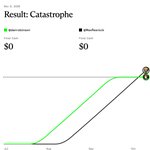
The NYT STARTED their needle at 8:37pm
Kalshi was already at 99% house, 98% Senate
The future of news is real time and markets based 💚
Dan Robinson retweeted

Anthropic @AnthropicAI ❤️ zkSTARKs:
In collaboration with @StarkWareLtd co-founder Prof. Alessandro Chiesa and other brilliant researchers, Anthropic just open sourced a zk STARK system for proving the integrity of LLM inferencing, bringing us closer to verifiable AI.
As we said long ago (since 2018), zkSTARKs are the end-game: highest scale, best security (post-quantum). Now, also AI agile and supporting AI integrity.
anthropic.com/research/prova…

Dan Robinson retweeted

AI is an area where if someone says a finding is "peer-reviewed" it makes me much *less* trustful of the finding, because any paper that went through peer review is going to have become wildly out of date in the meantime

How long does a finding about LLMs stay true?
We re-tested 50 widely cited findings about LLM behavior (various biases, hallucination, etc). Within 15 months, most no longer held or had substantially reduced effects.
LLM findings has short shelf life zou-group.github.io/llm-clai…
Great job by @oq_35!



Dan Robinson retweeted

Personal agents are everywhere (Muse! Instinct! Hermes! GrokBot! Dots! Duet!).
And, increasingly, they're running into walls – similar walls to the ones banks threw up during the Open Banking fights of the past decade, as fintech users struggled to connect their apps to their bank-held financial data.
It's time for Open Agentic Commerce.
In Dodd-Frank Section 1033, the backbone of Open Banking, the definition of “consumer” reads: “an individual or an agent, trustee, or representative acting on behalf of an individual.” Congress obviously wasn’t contemplating AI agents when it wrote Dodd-Frank — but technology changing doesn’t obviate the underlying principle: consumers should be able to choose who, or what, transacts on their behalf.
Banks and companies like Amazon have real, legitimate concerns about agents becoming vectors for fraud or unauthorized transactions. But those are arguments for building portals for secure access, not for prohibiting agents altogether. Open Banking offers a useful lesson here, in that secure, standardized interfaces are preferable to forcing third parties into credential sharing or screen scraping.
We propose some basic guidance that relevant regulators (FTC, OCC, CFPB) could consider to help the market to coalesce around open norms before incumbents obtain sufficient lock-in, freezing the current landscape to their advantage.
With standards like these established, agents can make decisions that better serve the consumer, and will index on things like quality or price, rather than being funneled into a constrained set of options.
The push for Open Banking resulted in better experiences and lower prices for consumers. As agents become principal commercial actors, it is imperative that we lay the groundwork now so that an agent acting on your behalf is equally capable – if not more so – of delivering value and cost savings to you as you would be acting on your own.
Read our proposal below:


Dan Robinson retweeted

I can finally say: the GPUs are melting. Amazing to see all the interest in this challenge.
Thanks to @andromeda_ai for the compute.


Dan Robinson retweeted

Proudly powered by @andromeda_ai

We're launching a $100,000 challenge to see who can make Muse Spark run fastest: openkernelchallenge.dev/

Dan Robinson retweeted

new challenge from @meta @paradigm @andromeda_ai
make the best American open source model run faster!
We're launching a $100,000 challenge to see who can make Muse Spark run fastest: openkernelchallenge.dev/
Dan Robinson retweeted
Meta + Paradigm open challenge to optimize Muse Spark
Top prize is $50K + an H200 signed by Meta team
We're launching a $100,000 challenge to see who can make Muse Spark run fastest: openkernelchallenge.dev/