


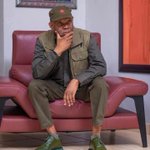


Pinned Tweet
About Dr Fred M'membe:
Dr Fred M'membe is the President of the Socialist Party (Zambia).
He is an advocate of the Supreme Court, Constitutional Court and High Court of Zambia. He is a member of the International Bar Association and sits on its taxes committee, a member of the Commonwealth Lawyers Association, the Southern African Lawyers Association and the Law Association of Zambia.
He is also a journalist who founded and edited
The Post, a daily newspaper established in Zambia in 1990. He managed and edited it for 26 years until the government ruthlessly closed it in 2017. The newspaper had an office in Havana for eleven years.
He holds a Doctorate in business administration (DBA), Binary University of Management and Entrepreneurship in collaboration with the University of Zambia; Master of Arts in economic policy management (M.A. EPM), University of Zambia; Master of Laws (LLM–Taxation), University of Lusaka; Graduate of the Poynter Institute, St Pittsburgh, Florida dedicated to teaching and inspiring journalists and media leaders, and stands for a journalism that informs citizens and enlightens public discourse; Bachelor of Laws (LLB), University of Zambia; and Bachelor of Accountancy, University of Zambia.
Dr M'membe had worked as Financial accountant, Zambia State Insurance Corporation, and as Audit senior, KPMG.
He is a recipient of the following awards:
• International Press Institute World Press Hero Award, “in recognition of courage and dedication to the principles of opinion and expression”, 2000.
• United States National Association of Black Journalists Percy Qoboza Foreign Journalist Award, 1999.
• The Commonwealth Press Union Astor Award, 1996.
South African Union of Journalists Pringle Medal Award, 1996.
• International Press Freedom Award by the Committee to Protect Journalists (CPJ), “in recognition of his commitment to the defence of press freedom in Zambia and throughout the world”, 1995.
• International Editor of the Year Award, World Press Review, “for enterprise courage and leadership in advancing press freedom, enhancing human rights, and fostering excellence in journalism”, 1995.
• Media Institute of Southern Africa (MISA) Award, “in recognition of dedication and commitment to advancing the cause of a free and independent press in Southern Africa”, 1995.
Dr M'membe is a member of the following professional bodies:
• The only non-British member of the British Society of Editors.
• Member of the International Press Institute.
• Member of the World Association of Newspapers and Editors Forum (WAN-IFRA).
• Member of the African Media Initiative and African Media Leadership Forum.
• Member of the South African Communication Association.
• Member of the International Bar Association.
• Member of the International Bar Association’s taxes committee.
• Member of the Commonwealth Lawyers Bar Association.
• Member of the SADC Lawyers Association.
His research interests include:
Media regulation and accountability, media, ethics, entrepreneurship, marketing research, business ethics, project planning appraisal and control, communication strategies, economic policy management, economic growth and development, dimensions of poverty, information communication technologies, and business growth and development.

The Socialist Party commends the medical team at the University Teaching Hospital in Lusaka for successfully removing a 5 cm by 6 cm brain tumour from a 50-year-old woman during an awake craniotomy.
We salute neurosurgeon Dr Aaron Munkondya, Dr Andrew Kasonde, Dr Mweushi Mphande, and the anaesthesia team for their skill and precision. Operating near the motor cortex while keeping the patient conscious to monitor movement and protect vital brain functions shows what our public health workers can achieve when given the right tools and support.
We wish the patient a full and steady recovery. This milestone proves that Zambia has capable medical professionals who can deliver advanced care at home.
The Socialist Party calls for sustained public investment in our public hospitals, modern equipment, and fair working conditions for health workers. Quality healthcare is a right for every citizen, not a privilege tied to wealth or travel abroad.
Fred M’membe
SP President

THE ONGOING TREASON TRIALS AND THE STATE OF OUR REPUBLIC
Fellow Citizens, Comrades, and Members of the Press,
Our beloved nation stands today at a solemn and decisive crossroads. The ongoing treason prosecution of opposition leaders Brian Mundubile and Makebi Zulu, unfolding in the delicate aftermath of the August 13 general elections, demands our collective reflection on the health of our democracy, the integrity of our institutions, and the moral direction of our Republic.
History has a way of testing the memory of those in power. In 2017, Mr @HHichilema himself endured arrest and treason charges under the previous administration, an episode rightly recognised at home and abroad as a grave misuse of state power against a political rival. To witness a similar spectacle today, under an administration elected on a solemn covenant to end political persecution and restore institutional integrity, is both sobering and deeply regrettable.
Should these treason charges fail to withstand the rigorous scrutiny of the law, the consequences will extend far beyond a mere courtroom defeat for the state. Such an outcome would constitute a profound indictment of the moral authority and democratic standing of Mr Hichilema and the United Party for National Development. When the heaviest instruments of the state are deployed against political opponents only to collapse under the weight of justice, public confidence in our legal and political institutions suffers a wound that cannot easily be healed.
Zambia is already navigating a period of deep national polarisation following a contentious electoral cycle. Our people, particularly the working class and the poor, who bear the daily burden of economic hardship and a rising cost of living, gain nothing from prolonged political instability, restricted court spaces, and an atmosphere of fear. Lasting peace has never been secured through intimidation or the criminalisation of dissent; it is forged through justice, restraint, and principled dialogue.
The Socialist Party maintains that in a true democracy, the ultimate judgment on political leadership belongs to the citizens, not to politically charged prosecutions. We respectfully urge the state to uphold the sanctity and independence of the judiciary and to guarantee the constitutional rights of every Zambian without fear or favour. At the same time, we call upon the church, civil society, and all progressive citizens to remain steadfast guardians of our hard-won democratic space.
Zambia is greater than any single administration or political party. Let us turn away from the cycle of political retribution and dedicate our energies to building a just, peaceful, and equitable nation that truly serves the working masses.
Aluta Continua!
Fred M'membe
SP President


THIRD-TERM PLOY IS A DANGEROUS FARCE; HICHILEMA MUST SPEAK NOW OR OWN THE AGENDA
Fellow Zambians,
We have watched a familiar and dangerous script play out across our continent before. It always begins the same way: a loyal chorus of ministers, nominated MPs, and party zealots floats an idea that the President claims he does not want.
Today, justice minister Jack Mwiimbu rushes to assure the nation that the Executive will not "interfere" with petitions seeking the removal of presidential term limits. When a government unprompted announces that it is not plotting a constitutional bypass, it is rarely a reassurance. It is a rehearsal.
We are told that Mr Hakainde Hichilema is an unwilling participant in this unfolding drama. We are reminded of his 2018 speech at the Oxford Union, where he rightly asked what any leader could possibly wish to do past 21 years of power. We are told to respect his word.
But in politics, silence in the face of orchestrated flattery is consent. A president does not need a minister to act as a translator for his own conscience. If Mr Hichilema genuinely opposes a third term, the remedy does not require Shakespearean ambiguity or clever legal gymnastics. It requires a single, unambiguous sentence uttered from State House: "I will neither seek nor accept a third term."
Until that sentence is spoken, all else is political theatre.
We have already seen Act One of this playbook: the removal of term limits for mayors and council chairpersons under Act No. 13 of 2025. The ground is being tested. Petitions are being smuggled into Parliament through proxies like nominated MP Francis Kope. Meanwhile, the Law Association of Zambia (LAZ) and key civil society watchdogs are being tested to see if the spirit of the Oasis Forum still lives or if it has been buried under convenience and compromise.
Let us be unequivocal: the Socialist Party rejects any attempt to tamper with Article 106 of the Constitution. Term limits are not minor administrative inconveniences to be swept aside when a party grows comfortable in the halls of power; they are the hard guardrails of our democracy.
Zambia does not face a shortage of leadership; it faces a surplus of poverty, a crippling cost of living, and an administration desperate to distract from its failures. To spend national energy debating whether one man should rule beyond his mandate while families struggle to put a single meal on the table is an insult to the working people of this country.
We call upon Mr Hichilema to step out of the shadows of his enthusiastic proxies and speak directly to the nation. And we call upon every true democrat, in civil society, in the churches, and across all political formations, to stand firm.
The crown is not being forced onto an unwilling head. It is being measured, polished, and fitted by those who fear life outside of government. We stopped this script in 2001, and with the vigilance of the Zambian people, we will stop it again.
One Zambia, One Nation!
Two terms, One Constitution!
Fred M’membe
SP President


NOVEMBER 15:
A DAY OF SOLEMN REMEMBRANCE, HONOURING OUR PAST, HEALING OUR CONTINENT
Comrades, Brothers and Sisters, and Fellow Africans,
Today, November 15, we pause in quiet reflection to remember one of the darkest chapters in human history. One hundred and forty-two years ago, in a distant room in Berlin, men who had never walked our soil, never heard the songs of our ancestors, and never felt the warmth of our sun sat down to decide the fate of an entire continent.
On that day in 1884, without a single African soul present, lines were drawn across our motherland. With the stroke of a pen, centuries-old bonds were severed. Mothers were separated from their children, communities were torn apart, and proud, sovereign nations were reduced to territories to be claimed and exploited. The wounds inflicted in Berlin were deep, and for generations, our people carried the heavy burden of that betrayal in their blood, their sweat, and their tears.
As we grieve what was taken from us, we must also bow our heads in deep gratitude and reverence to the giants who rose from the ashes of that division to dream of a reunited Africa. Today, we pay a solemn tribute to Dr. Kwame Nkrumah, whose prophetic voice echoed across the continent with the timeless truth that the independence of one African nation is meaningless unless it is linked up with the total liberation of the entire continent.
We remember and honour Gamal Abdel Nasser, who stood resolutely against imperialism and bridged the Sahara to unite North and Sub-Saharan Africa in common struggle. Alongside him, we pay homage to Patrice Lumumba, Julius Nyerere, Kenneth Kaunda, Samora Machel, Thomas Sankara, Amílcar Cabral, Modibo Keïta, Sekou Touré, and all the selfless Pan-African sons and daughters who gave their lives, their freedom, and their strength to mend what Berlin had broken. They understood that a divided Africa would always be vulnerable to exploitation, and they dared to envision a single, united African family standing tall in dignity and strength. Many of them paid the ultimate price for that vision, yet their spirit continues to guide us through the darkest nights.
More than a century after the Berlin Conference, the shadows of division and economic injustice still linger over our villages and cities. Though we have raised our own flags and sung our own anthems, silent chains continue to weigh down the working men, women, and children of Africa. Too many of our people still go to sleep hungry on a continent blessed with unimaginable wealth. Too many of our youth still see their dreams deferred because the systems built to extract our resources remain unbroken.
We owe it to Nkrumah, to Nasser, to our fallen heroes, and to the children yet unborn, to ensure that their sacrifices were not in vain. True healing cannot come from forgetting the past; it can only come from fulfilling their unfinished mission and building a future rooted in unity, compassion, and justice.
On this solemn anniversary, let us recommit ourselves to the sacred duty of lifting up the poor, defending the vulnerable, and tearing down the walls that still divide us. Let us work together, with humility and unwavering resolve, to reclaim the wealth of our land for the people who till it, and to finally realise the dream of a truly united, peaceful, and socialist Africa.
May the souls of our Pan-African ancestors rest in eternal power, and may we never rest until every chain of exploitation is broken forever.
In solidarity, remembrance, and hope.
Fred M'membe
President of
the Socialist Party [Zambia]

1
1
406
FROM NOVEMBER 13 TO NASSER'S PAN-AFRICAN VISION: THE STRUGGLE AGAINST IMPERIALISM CONTINUES
Today, November 13, marks a profound milestone in the history of African and anti-colonial resistance. As we commemorate this date, we must situate the revolutionary leadership of Gamal Abdel Nasser within the unbroken arc of Egypt’s anti-imperialist struggle, a struggle anchored in the sacrifices of ordinary people who refused to bow to foreign domination.
On November 13, 1918, Saad Zaghloul and the Egyptian delegation (Wafd) confronted British colonial authorities to demand self-determination, igniting the 1919 Revolution. Seventeen years later, on November 13, 1935, Egyptian students and youth rose up in mass defiance against British imperial control and constitutional manipulation. Those historic November uprisings proved a fundamental truth that remains relevant to us today: genuine sovereignty is never handed over by colonisers out of goodwill; it is seized by the organised masses.
Nasser inherited that revolutionary fire and elevated it from a national struggle into a continental and global anti-imperialist crusade. Through the 1952 Revolution and the bold nationalisation of the Suez Canal in 1956, Nasser demonstrated to the entire world that African and Global South nations could dismantle economic subjugation and reclaim their strategic resources from Western hegemony.
As a Pan-Africanist and a socialist, I have always maintained that colonialism never truly ended. It merely changed its form through neo-colonial economic structures, predatory debt, and foreign control over our land and minerals. Nasser understood this reality from the very beginning. He recognised that political independence without economic sovereignty is an illusion.
Nasser’s Pan-Africanism was never abstract rhetoric; it was demonstrated through concrete, courageous action in Africa’s darkest hours. When the forces of imperialism conspired to overthrow and assassinate Congo’s first democratically elected Prime Minister, Patrice Lumumba, Nasser did not abandon his fallen comrade’s bloodline. Acting on Lumumba’s urgent plea, Nasser orchestrated a daring operation to rescue Lumumba’s children and later his widow, Pauline Opango, smuggling them out of danger and giving them sanctuary, education, and fatherly protection in Cairo
Closer to home, Zambia’s own road to freedom owes an immense debt to Nasser’s solidarity. Cairo became a vital diplomatic and strategic sanctuary for the United National Independence Party (UNIP) during our bitter struggle against British colonial rule. Nasser hosted Dr. Kenneth Kaunda, permitted UNIP to establish a formal representation office in Cairo, and extended material, moral, and diplomatic backing to our freedom fighters. It was in Cairo that towering Zambian nationalists, such as UNIP’s first Deputy President and Zambia’s inaugural Vice-President, Reuben Chitandika Kamanga, alongside cadres like Wilted Phiri and others, found refuge, international platforms, and unwavering support to rally global pressure against colonialism. It is no accident that upon independence, Lusaka honoured this unbreakable bond by naming central arteries Cairo Road, Suez Road, and Nasser Road.
By providing sanctuary, training, and unwavering solidarity to African liberation movements, co-founding the Non-Aligned Movement, and standing shoulder-to-shoulder with giants like Nkrumah, Lumumba, and Kaunda, Nasser proved that Egypt’s destiny is inseparable from the total liberation and unity of Africa.
On this Nov 13, honouring the memory of Egypt’s anti-colonial uprisings alongside Nasser’s legacy is not merely an exercise in nostalgia. It is a call to revolutionary action. Today, as imperialism seeks new ways to plunder Africa’s wealth and divide our people, we must draw strength from the courage of 1918, 1935, and 1952. Our task remains clear: to unite the working masses, defend our sovereignty, & build a truly independent, socialist & united Africa.

1
268
Join me tonight on Diamond Insights as we discuss Presidential Term Limits and other matters of national interest with Cosata Mwansa @diamondtvzambia
@SPZambia
Don't miss it!
THE DEATH OF HON. MUTOTWE KAFWAYA
On Saturday, it will be three months since former Cabinet Minister and Lunte Member of Parliament Hon. Mutotwe Kafwaya was shot dead during a state security operation in Kabulonga, Lusaka. Our thoughts remain with his widow, Mrs Dinis Ng’andu Kafwaya, and his children.
Almost three months on, no inquest has been opened. The postmortem findings have not been made public. As far as the public knows, no officer involved has been named, suspended or charged.
The law is clear. Section 4 of the Inquests Act says that where a person dies a violent or unnatural death, the coroner shall hold an inquest as soon as is practicable. Article 12 of our Constitution protects the right to life and permits force only where it is reasonably justifiable. Whether the force used in Kabulonga met that test is for a court to decide, in public. It cannot be settled by silence.
Within two days of the operation, eleven people present at the house were arrested and told they would face charges. Three months later, the force that ended Hon. Kafwaya’s life has not been examined by any court. The law must apply to all.
Today, I delivered a letter to the Director of Public Prosecutions, asking that office to apply to the High Court, under section 33 of the Inquests Act, for an order that an inquest be held.
We ask the Human Rights Commission, which the Government says is overseeing the police investigation, to publish what it has found. We ask the Church, the legal profession and all parties to speak with one voice on this single demand: that the law be followed. And we ask President @HHichilema, as Head of State and Government, to let the law take its course.
On 20 August I wrote that no crime can be committed in the name of elections or law enforcement. I say it again. Hon. Kafwaya’s family deserves the truth. So does Zambia.
Fred M’membe
SP President
Join me tonight at exactly 21:15 hours on @diamondtvzambia as I feature on Costa for an engaging discussion on matters of national interest.

1
8
415
THE 110TH ANNIVERSARY OF THE GREAT OCTOBER SOCIALIST REVOLUTION
Comrades, workers, peasant farmers, and the working intellectuals of Zambia,
Today, November 7, 2026, marks exactly 110 years since the thunderous roar of the Great October Socialist Revolution in Russia permanently altered the trajectory of human history. On this day in 1917, the oppressed masses, the workers, soldiers, and peasants, led by Vladimir Lenin and the Bolsheviks, rose up to smash the chains of Tsarist autocracy and capitalist exploitation, proving for the first time in modern history that the working class can seize its own destiny and govern itself.
For over a century, the beneficiaries of unbridled capitalism have tried to erase, distort, and bury the lessons of October 1917. They want our people to believe that poverty is a natural condition and that the masses must submissively wait for crumbs to trickle down from the tables of foreign corporate giants and international financial oligarchs.
From the capital city of Lusaka to the furthest rural outposts of our nation, the current administration echoes these same deceptive, neo-liberal dogmas under the guise of "growing the pie" before it can be shared. They dismantle vital subsidies, surrender our mineral wealth, our copper, cobalt, and manganese, to offshore multinational boardrooms, and subject our families to skyrocketing mealie-meal prices and IMF-enforced austerity.
The legacy of the Bolshevik Revolution directly refutes this surrender. The 1917 revolution was not a mere historical event; it was a living proof that poverty is not a natural occurrence but a systemic injustice. It showed that true wealth creation begins only when a sovereign people reclaim the heights of their economy, taking collective responsibility for their resources, their industries, and the welfare of their children.
As the Socialist Party, we draw deep inspiration from this revolutionary milestone as we champion our core values of Justice, Equity, and Peace.
We reject the neo-colonial arrangements that allow transnational corporations to loot our copper tax-free while the Zambian miner in Kitwe, Mufulira, or Solwezi languishes in precarious contract labor.
We refuse to accept an order where our mothers skip meals and our youth roam the streets without work, while the ruling elite fly abroad for treatment at the taxpayers' expense.
We commit to smashing this structural poverty by placing our resources under democratic planning, establishing state-backed agricultural cooperatives, and delivering totally free, compulsory, and high-quality education and healthcare for all Zambians.
On this historic 110th anniversary, let us renew our revolutionary consciousness. Do not look to the exploiters to grow an economy they have no intention of sharing. Let us unite, organise, and mobilise for a fundamental, revolutionary transformation of our country.
The time has come to smash the dictatorship of foreign capital and build a sovereign Zambia where the wealth of our soil belongs to those whose sweat extracts it.
Long live the spirit of the Great October Socialist Revolution!
Long live the workers and peasants of Zambia!
The struggle continues, and victory is certain!
Fred M'membe
President of the Socialist Party [Zambia] @RT_com


US MIDTERM ELECTIONS
The historic outcome of the United States midterm elections, which has seen a decisive shift in congressional power, is a clear signal that the contradictions of the current global capitalist order are intensifying. As the working class in the Global North registers its discontent with economic instability, we in the Global South must critically analyse what this political shift means for our people, our sovereignty, and our future.
The "blue wave" in the United States Congress represents a domestic rebuke of unchecked economic policies, yet the structural realities of imperialist foreign policy rarely change with a shift in parliamentary majorities. For the Global South, the implications are dual-edged. While a divided U.S.
government may slow down unilateral executive actions, tariffs, and aggressive foreign interventions, the core economic framework driving global inequality remains intact. The Global South must not mistake a change in Washington’s legislative guard for a change in global economic architecture. The political instability in the world's largest economy directly affects global markets, inflation, and interest rates. Decades of neoliberal alignment mean that when the Global North experiences domestic economic friction, the shockwaves are disproportionately felt by developing nations in the form of fluctuating commodity prices and tightening credit lines.
For us here in Zambia, this electoral outcome offers profound lessons that reinforce the Socialist Party’s vision for self-reliance and genuine independence.
Relying on the political benevolence or economic stability of Western powers is a flawed strategy for national development. When domestic pressures mount in Washington, London, Paris, or Brussels, their foreign policy priorities pivot instantly to serve their own domestic interests, leaving dependent nations vulnerable. The primary driver of the U.S. election results were widespread anxiety over the cost of living, food, fuel, and housing. Zambia must learn that a nation cannot feed its people or stabilise its economy through perpetual borrowing and structural adjustment programmes dictated from abroad. True stability comes from localised production, state-led industrialisation, and placing our natural resources back into the hands of the Zambian people.
Zambia must diversify its global relationships. We cannot afford to tie our economic destiny to the political cycles of a single superpower. We must strengthen South-South cooperation, build robust regional trade frameworks within Africa, and pursue a foreign policy rooted in non-alignment and mutual respect.
The lesson from the American midterms is that even the most powerful capitalist systems are fragile when they fail to deliver basic economic dignity to their citizens. For Zambia, the path forward is not to look toward Washington for answers but to look inward. We must build a just economy that prioritises human need over profit, guarantees national food security, and ensures that Zambia's wealth benefits Zambians first.
Fred M'membe
SP President

THE UPCOMING HIGH COURT PROCEEDINGS IN THE MATTER OF THE STATE V. BRIAN MUNDUBILE AND 17 OTHERS
As the constitutional bail application and related proceedings for Hon. Brian Mundubile, Makebi Zulu, and 16 others come before the Lusaka High Court tomorrow, Thursday, November 5, 2026, I find it imperative, both as President of the Socialist Party and as a jurist committed to the integrity of our constitutional order, to address the profound legal questions surrounding the administration of this case.
The Socialist Party underscores that the bedrock of any functioning democracy is an unyielding commitment to the rule of law, due process, and judicial transparency. While we recognise and respect the statutory mandate of the Zambia Police Service to maintain public order and manage security under the Zambia Police Act, a critical distinction must be maintained between legitimate crowd management and the systematic infringement of constitutional rights.
The visible trend of completely sealing off court premises, deploying human barriers, and restricting physical access to an arbitrarily selected few represents a severe distortion of the open justice principle.
As a lawyer with a very high interest in jurisprudence, I must remind the state of the clear text of Article 18(10) of the Constitution of Zambia, which commands that all criminal and civil proceedings be held in public. The right to an open trial is not a mere procedural formality; it is a substantive constitutional guarantee designed to ensure judicial accountability and maintain public confidence in the administration of justice.
This principle is fortified by long-standing common law precedents heavily integrated into Zambian jurisprudence. As established by the Privy Council in the landmark case of Macpherson v. Macpherson (1936), public access to court proceedings is an essential safeguard against the abuse of state power, ensuring that the concealment of legal proceedings is strictly forbidden except under the most extraordinary and legally defined circumstances.
While Article 18(11)(a) of the Constitution provides a narrow proviso allowing for the exclusion of the public in the interest of defence, public safety, or public order, the invocation of an in camera or restricted proceeding is a matter of strict judicial discretion. It belongs exclusively to the presiding bench, in this matter, the three-judge panel consisting of Justices Derrick Mulenga, Davies Chibwili, and Ireen Wishimanga, not to the unilateral decree of law enforcement officers at an exterior security checkpoint. When the executive branch, through the police, acts as an autonomous gatekeeper to a fundamentally public constitutional hearing, it encroaches upon the independence of the judiciary and violates the sacred principle of the separation of powers.
Furthermore, any restriction placed on a derogable constitutional right must satisfy the strict test of proportionality. It must be the least restrictive means necessary to achieve a legitimate purpose.
Screening for weapons and managing crowd flow to ensure courtroom safety are permissible; a blanket blockade that deliberately obstructs journalists, legal observers, and the general public from witnessing the treatment of citizens in state custody is legally and democratically indefensible.
The Socialist Party calls for a balanced, legally sound approach to tomorrow’s proceedings. We urge the police command to align their operational tactics with constitutional standards, ensuring that the High Court remains an open and accessible forum. Concurrently, we call upon all citizens, party members, and observers attending the court to exercise their rights with the utmost discipline, peace, and respect for judicial order.
The integrity of our republic relies entirely on our willingness to defend the Constitution when it is tested. Let the law, and nothing else, take its course tomorrow.
Fred M’membe
SP President

#Zambian, we stopped the Third term bid in 2001. We CAN resist it now with every constitutional tool at our disposal. Power belongs to the people.

DON’T CASUALLY DISMISS IAN KHAMA'S OBSERVATIONS
The Socialist Party notes with grave concern the recent remarks by former Botswana President General Ian Khama, who characterised Mr @HHichilema as “Africa’s newest dictator” during an official parliamentary session in Gaborone.
While the diplomatic language utilised by a foreign former head of state is a matter for regional reflection, the underlying substance of his observation cannot be casually dismissed. General Khama's assessment is not an isolated critique; it serves as a stark external validation of a deeply concerning domestic reality. For several years, the Socialist Party has consistently documented a systematic regression in Zambia's democratic infrastructure, a trajectory that has now inevitably attracted international scrutiny.
The current administration has progressively replaced institutional consensus with executive overreach. We continue to witness a disturbing pattern of governance characterised by the weaponisation of the criminal justice system and the routine violation of constitutional boundaries. This is typified by the prolonged, arbitrary detention of opposition leaders and critics far beyond the legally permissible 24-hour statutory window without formal charges or court appearances. The state’s current handling of political figures held under broad charges of treason and sedition, without a corresponding readiness to efficiently and fairly prosecute, violates basic tenets of due process. These actions do not reflect a robust, self-confident democracy; rather, they signal a calculated effort to insulate power by neutralising legitimate political competition.
Crucially, this democratic contraction has begun to compromise the independence and functionality of our core institutions:
• The Electoral Commission of Zambia (ECZ): The integrity of our democratic processes has been severely challenged by unprecedented administrative decisions, including the highly controversial nationwide suspension of vote counting and result announcements during the August electoral cycle. The ECZ must operate as an impartial, transparent referee. It cannot allow its constitutional mandates to be compromised or weaponised in a manner that destabilises public confidence in the electoral system.
• The Law Association of Zambia (LAZ) and Judicial Autonomy: The rule of law requires unhindered access to justice. We echo the serious concerns raised by the Law Association of Zambia regarding recent post-election security maneuvres, including the unprecedented physical sealing and barricading of court premises. As LAZ rightly emphasised, security measures must remain lawful, proportionate, and structured to preserve, rather than obstruct, judicial independence and citizens' fundamental access to legal remedies.
Resorting to dismissive public relations or personal counter-attacks against external critics does not address the fundamental governance failures occurring within our borders. A state’s international standing is ultimately a reflection of its domestic conduct. No amount of diplomatic posturing can obscure the visible erosion of constitutional guarantees and political freedoms inside Zambia today.
The Socialist Party remains unshakeably committed to constitutionalism, the rule of law, and the preservation of our republic's democratic heritage. We urge the current administration to view this international reprimand not as an occasion for defensive rhetoric but as a critical moment for deep introspection and an immediate reversal of its authoritarian trajectory.
Fred M'membe
SP President

#Zambia,
This morning I delivered a letter to the @LawAssocZambia asking it to convene an Extraordinary General Meeting to defend the presidential term limit in Article 106.
On 23 September I made five predictions about how a third term would come. Two have come true. On 28 October a youth petition to remove term limits was handed to an MP the President nominated.
Term limits have already gone for mayors under Act No. 13 of 2025. The principle is gone. The question is which office is next.
Article 106 can be changed by two thirds of Parliament. No referendum is required. That is why we demand one. If the UPND believes our people want a third term, let it ask them.
Mr @HHichilema, it is one sentence. Say it yourself.
We stopped this in 2001. Power belongs to the people.

'GIVE US BAIL, STATE IS NOT READY TO PROSECUTE'...
The institutional incompetence of the state and the corruption of our legal process
Comrades, fellow citizens, and my eternal dear friends in the media,
The ongoing legal debacle surrounding the state’s treason case against opposition leader Brian Mundubile and 17 others has exposed a profound and dangerous crisis of governance in our country [Give us bail, State is not ready to prosecute – Mundubile]. What we are witnessing is not a legitimate exercise in national security, but a glaring display of institutional incompetence that reaches to the very highest levels of power, including the Presidency.
The executive has trapped itself in a severe political and legal "catch-22" of its own making. Through reckless overreach, the state rushed to arrest political opponents on the gravest charge in our penal code before securing a single piece of credible, substantive evidence. To proceed to a full trial with an empty file will result in an embarrassing legal defeat. Yet, to drop the charges or enter a nolle prosequi would be a humiliating admission that the state fabricated a treason charge simply to lock away political rivals.
This entire saga exposes a pattern of staggering incompetence across the state apparatus:
Fred M'membe retweeted

Facing the blockade, Cuba responds with dignity, resistance, and sovereignty. #CubaIsNotAThreat, the blockade is.