

Introverted Ex UniAdmin, Friend of the Environment. ❤️ Cats, enjoyed Country Walks & Gardening before #FND #WearAMask #CovidIsAirborne #adoptDontShop
Sheffield, England
Joined March 2020
- Tweets2.6K
- Following835
- Followers188
- Likes18.3K


Fi retweeted

“when people go to work when sick, they infect many other people, both within their own workplace and when travelling there and back.
Staying home when sick would require a major public education campaign, although the benefits would be huge”
interesting 🧵 by @alanbarnard1 👇🏼

Fi retweeted
What does it mean when a virus is “airborne” [or spreads “through the air”, as per the #WHO]?
another example of clear, evidence-based messaging on infection prevention by a public health agency 👇🏼
too bad they don't seem to post here on Twitter/X anymore 😢

and then you stumble upon some evidence-based advice on how to really reduce the risk of infection and transmission of “respiratory” (as in, carried through the air, formerly: airborne… I'm looking at you, #WHO) 👇🏼
source: facebook.com/100063903101656…


Fi retweeted
"The real danger is, of course, long Covid. And we just don't know. It's so unpredictable who's going to get it."
Dr Amir Khan on ITV's Lorraine talking about #LongCovid and the importance of prevention.
Fi retweeted
All of these 'respiratory viruses', THEY'RE AIRBORNE.
Yes, washing your hands is a great idea. Brilliant. Really important.
BUT IT DOESN'T STOP YOU INHALING VIRUSES THAT ARE DRIFTING THROUGH THE AIR.
Wear a mask designed to stop particle inhalation, and wear it properly.
Fi retweeted

I’m triggering a high air pollution alert for London on Tuesday 10 November.
I urge everyone in the capital, especially those most vulnerable, to stay safe and follow health advice to minimise their exposure.
Please switch off engines when idling and avoid burning garden waste, which contributes to pollution.
london.gov.uk/mayor-london-i…

Fi retweeted
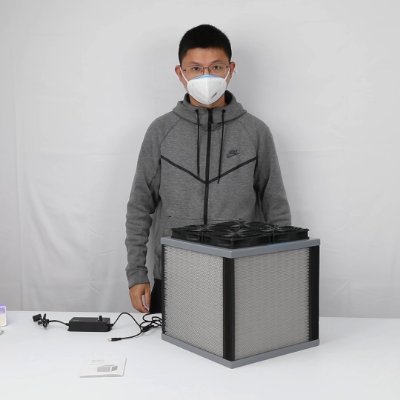
With an N95 mask, at least 95% of the viruses and bacteria in every breath you take are filtered out. With an air purifier, it takes three air changes for 95% of the viruses and bacteria to be filtered out.
The advantage of an N95 mask is that you don’t have to wait for three air changes, and it can block droplets, which an air purifier cannot do directly. Of course, you don’t have to choose one or the other—you can use both at the same time.
Fi retweeted
I have fond memories of Bonfire Night growing up in the 1980s. Treacle toffee, black peas, jacket potatoes cooked in the bonfire, fireworks lighting up the sky and the occasional rocket going somewhere it shouldn’t!
I don’t want to lose those traditions. But we need to lead with our heads, not just our hearts.
What happened across #Lancashire this weekend was unacceptable. Something needs to change.
On Saturday 7 November, a PurpleAir monitor I installed opposite Chorley and South Ribble Hospital recorded an hourly PM2.5 average of 168.8 µg/m³ (US EPA corrected), with brief peaks above 350 µg/m³.
PM2.5 particles can penetrate deep into our lungs, with some entering the bloodstream and increasing the risk of heart and lung disease. The attached illustration shows their size.
Official Defra monitors also recorded high hourly levels: 150 µg/m³ in Wigan, 149 in Blackburn and 119 in Preston. This was widespread pollution, not an isolated sensor reading.
Pollution was elevated before Saturday evening. Fireworks, bonfires and potentially wood burning were likely contributors, while calm, foggy conditions allowed smoke to accumulate.
Consider the hospital opposite my monitor. Were staff warned? Were precautions taken? How well did its ventilation and filtration protect vulnerable patients?
The British Heart Foundation estimates 17,000 people in Chorley have heart and circulatory disease, including 1,900 diagnosed with heart failure. PM2.5 exposure is linked to heart attacks, heart failure admissions and premature death.
So where were the public health warnings?
Defra’s Friday forecast reportedly predicted LOW pollution, with locally MODERATE levels near bonfires. Actual readings were far worse. Why weren’t prominent warnings issued when monitors revealed the danger?
The government launched an opt in air quality alert service in August. But how many people know about it? I’ve monitored pollution for years and hadn’t heard of it. Forecast based alerts can also miss unexpected spikes.
This isn’t new. On Bonfire Night 2022, Wigan Centre recorded the highest hourly PM2.5 reading in Defra’s national monitoring network: 255 µg/m³. Yet the highest daily PM2.5 pollution index was only Moderate.
Daily averages can conceal severe hourly spikes. We need warnings based on what is actually happening.
At home, Saturday’s outdoor PM2.5 average was 89.3 µg/m³, far above the World Health Organization’s daily guideline.
My automated home ventilation has been off since Thursday evening. Despite this, I’ve had to turn up my air purifiers to counter rising indoor PM2.5.
Most households don’t have pollution monitors, ventilation controls or air purifiers. Nor should they need them to breathe reasonably clean air.
We cannot know how many people this episode harmed, but air pollution damages health. The Royal College of Physicians estimates it costs the UK upwards of £27 billion a year.
I’m calling for five changes:
① Prominent pollution warnings, like severe weather alerts, triggered by actual measurements as well as forecasts, with advice to reduce exposure and avoid adding to pollution.
② Specific warnings for vulnerable people, including hospital patients, care home residents and those with heart or lung conditions.
③ Clear reporting of dangerous hourly PM2.5 readings, not just daily averages.
④ A gradual shift from private fireworks to organised displays that can be postponed when weather traps pollution, plus stronger action on domestic wood burning.
⑤ Indoor air quality monitoring in public buildings, starting with hospitals, care homes and schools, with a simple public rating.
We have the technology and evidence to do better. What we need is the political will.
This can’t happen again. Traditions matter. But people’s health matters more.
#BonfireNight #AirPollution #PM25 #PublicHealth #Chorley
aurnhub.defra.gov.uk/sites/d…


The gift of Pollution on bonfire night! My phone has been pinging with alerts the last hour (you have to register to receive alerts).
Thankful for my #smartair
Sqair purifiers today. #AirPollution #BonfireNight #Pollution

1
38
Fi retweeted

This #CleanAirNight 17th November, 2026, share the facts about woodburning.
#AirPollution #WoodBurning #Health

Fi retweeted
#AirPollution awful 7 November 2026 7.37pm
Foggy, still conditions, neighbours still lighting their unnecessary #WoodBurners making it worse!
Where are the warnings & advise not to light polluting #WoodBurningStoves if you have an alternative source of heating @andyburnham?

Fi retweeted

🔥If your bonfire wasn't built today - then please MOVE IT NOW.‼️
It won't take nearly as long as you think, and then you can relax and enjoy it tonight.
I've seen the face of someone handing me a hedgehog smelling like a barbecue and screaming.
You never want to be that person.

Fi retweeted

One of the most fascinating things about human learning is how we can learn certain lessons ONCE and remember them for the rest of our lives.
I will NEVER eat canned tuna again.
Why? Because over a year ago, I experienced half a day of projectile vomiting after eating it. One experience. One lesson. Permanently etched into my brain.
You probably know someone who won’t touch tequila because of one disastrous night. Or someone who became violently ill after eating seafood and hasn’t gone near it in decades.
Psychologists call this conditioned taste aversion. It’s an extraordinary form of learning that can occur after a SINGLE experience, even when hours separate ingestion from illness.
From an evolutionary perspective, it makes perfect sense. Eat something. Get sick. Remember it. Avoid it. Survive.
Now think about COVID.
You can enter a room, inhale infectious aerosols, become infected, and have absolutely no sensory warning.
No rotten smell. No foul taste. No immediate indication that anything is wrong.
Symptoms may not appear for days. Some infections produce no noticeable symptoms at all. And longer-term consequences can be even harder to connect to the original exposure.
Our brains are remarkably good at learning from certain sensory experiences. They’re much less reliable at recognizing invisible, delayed threats.
And that’s what fascinates me.
If COVID smelled like rotten eggs or seafood, I suspect our collective behavior around indoor air would look VERY different.
People would open windows. Demand better ventilation. Wear respirators. Leave rooms.
Instead, we repeatedly expose ourselves to a virus we cannot smell, taste, or see.
And the cruelest irony of all…
COVID doesn’t have a smell. But it can take away yours.
I learned to avoid canned tuna after ONE afternoon.
Imagine how differently we’d treat the air we share if our brains received the same unmistakable warning.


Fi retweeted
UK air isn’t that bad, right? PM2.5 there was ~9.9 µg/m³, almost 2x the WHO limit (5). Still, more PM2.5 meant higher risk of heart & lung disease, diabetes, even Alzheimer’s. No level is safe.
doi.org/10.1007/s00439-026-0…
