

Chief Marketing Officer, @projecteleven | Author, B is for Bitcoin
Toronto → NYC
Joined October 2010
- Tweets30.7K
- Following1.5K
- Followers3.8K
- Likes58.2K










Pinned Tweet
Google, 5 days after publishing their 2029 timeline for post-quantum cryptography migration, announced quantum computers will be able to steal crypto in 9 minutes.
That means every Bitcoin transaction is at risk.
Wake up. Migrate to PQC. Or this beautiful experiment is over.


*i spend too much time looking at charts. i want to relax and have a drink with my friends at the bar.*
the bar:

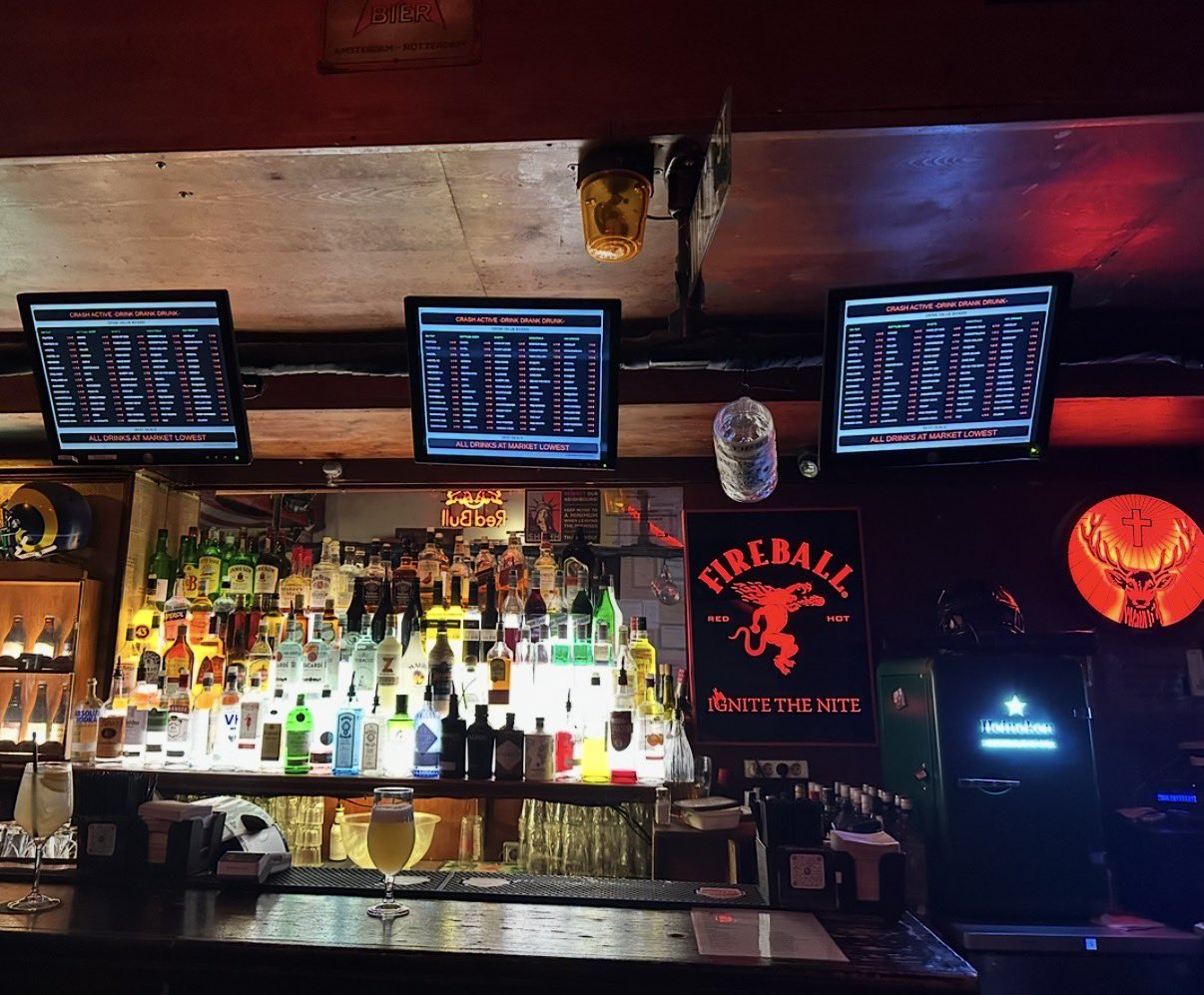
Was recently at a bar where drinks were dynamically priced,
i.e. the more people bought a particular drink, the more expensive it became (price would then decayed over time towards a floor).
Fascinating to watch a few market mechanisms play out in a bar:
People ventured outside their usual orders in search of cheaper alternatives, often discovering new favorites in the process.
Others treated rising prices as signals of quality, happily paying premiums to try expensive drinks they’d never had before.
More experienced drinkers behaved like value investors, picking up underpriced drinks they already knew were good while everyone else chased the popular ones.
Price discovery, information leakage, herding, and utility trades all unfolded over rounds of drinks.
More bars should try this.

Custodians holding your coins may soon have a financial reason to take quantum seriously.
If better security = cheaper insurance, upgrading pays.
Could be huge 🧐
Project Eleven and Relm Insurance Partner to Explore Quantum Risk in Digital Asset Insurance
The first partnership to explore post-quantum security as a factor in pricing digital asset insurance.
Project Eleven, the post-quantum security company for digital assets, today announced Relm Insurance as a development partner for Strongpoint, its flagship institutional custody product. The collaboration will explore how an institution’s post-quantum security controls could be evaluated within digital asset insurance underwriting, helping both companies better understand how quantum readiness may influence future assessments of digital asset risk.
As quantum computing advances, a sufficiently powerful machine could derive private keys from exposed public keys and compromise digital assets. Institutions need custody infrastructure capable of adapting its cryptography before such a machine becomes available. Strongpoint is built for that transition. The platform combines classical and post-quantum signing and separates institutional controls from the cryptography layer, enabling institutions to replace signing algorithms while preserving approval rules and audit history.
“Every institution holding digital assets will eventually need to prepare for post-quantum cryptography. The open question is whether that transition happens on the institution’s schedule or under pressure,” said Alex Pruden (@apruden08), CEO and Co-Founder of Project Eleven. “Insurance plays a critical role in how markets assess and manage risk. We believe there is an opportunity for institutions that invest in stronger post-quantum defenses to eventually see that reflected in how their risk is evaluated. Working with Relm is an important first step toward understanding what that could look like in practice.”
Exploring Post-Quantum Risk in Insurance Underwriting
Through the development partnership, @RelmInsurance and Project Eleven will explore how post-quantum security could be assessed within existing digital asset insurance frameworks. Areas of investigation include key exposure, signing systems, transaction approvals, migration readiness, and third-party dependencies.
Relm will also provide input into the design and development of Strongpoint, helping Project Eleven understand how institutional custody infrastructure can better support insurance underwriting and risk assessment. This collaboration will help inform Strongpoint’s approach to security controls, auditability, and the evidence institutions may need to demonstrate their post-quantum readiness to insurers.
Joseph Ziolkowski, founder and CEO of Relm Insurance, said, “Insuring exposures across the digital asset ecosystem requires underwriters to anticipate how risks will evolve. Quantum computing is a clear example of an emerging threat that should shape the way we assess risk today. Our work with Project Eleven will explore how institutions identify their exposure, demonstrate effective controls, and prepare for the transition to post-quantum readiness. Bringing underwriting expertise into that process early can help lay the groundwork for insurance solutions that support confidence, resilience, and continued growth in digital assets.”
The collaboration is exploratory, with a focus on developing a shared understanding of post-quantum risk and the controls that could help mitigate it. Any future implications for underwriting or insurance premiums would be subject to further evaluation and Relm’s independent underwriting processes.
Institutions can learn more about Strongpoint at projecteleven.com/strongpoin….

I have been fired from my job leading comms and social media for @projecteleven*
*Promoted to Chief Marketing Officer
Anyway, I’m hiring a Social Media Lead
If you are the best social media person you know, apply at the link or DM me: jobs.ashbyhq.com/projectelev…

Huge and true!

Hanging with old friends and my favorite children's author of the classic "B is for Bitcoin".
@GraemeMoore


Oratomic (a quantum computing company founded 7 months ago) has raised $775 million in total funding…
Me and the boys might be weird but we’re not wrong

Project Eleven grows more powerful by the day.
Project Eleven Launches Strongpoint for Post-Quantum Custody with Zcash Foundation as Initial Development Partner
Zcash Foundation joins Project Eleven to shape institutional custody infrastructure for the post-quantum and AI era as more than $1 trillion in digital assets remain at risk of attack by sufficiently powerful quantum computers.
Project Eleven, the post-quantum security company for digital assets, today introduced Strongpoint, its flagship custody platform built for navigating the transition to post-quantum cryptography. @ZcashFoundation joins Project Eleven as an initial development partner, helping shape Strongpoint’s institutional custody architecture.
Strongpoint is designed to give institutions a consistent control layer for securing and managing digital assets as networks change the cryptographic standards underneath them. Rather than rebuilding key-management, transaction approval, and audit infrastructure for each new signature scheme or network migration, institutions can maintain a common set of security controls while the underlying cryptography evolves.
“Institutional digital asset custody was built for a world where the cryptography underneath it rarely changed,” said Alex Pruden, CEO of Project Eleven. “Quantum computing is upending that model. If every network adopts a different solution, institutions could be forced to rebuild their security infrastructure again and again. Strongpoint is built around crypto-agility, so the cryptography can change without the infrastructure changing with it.”
“Institutions holding shielded ZEC need custody infrastructure that respects Zcash’s privacy model today and can adapt as cryptographic standards change,” said Alex Bornstein, Executive Director of Zcash Foundation. “Project Eleven is building Strongpoint with the crypto-agility and technical foundation needed to support those requirements over time, helping strengthen custody infrastructure for the broader ecosystem.”
Zcash Foundation Joins as an Initial Development Partner
Zcash Foundation joins as an initial development partner for Strongpoint, bringing its expertise in privacy-preserving cryptography and protocol engineering to Strongpoint’s institutional custody architecture. Zcash’s privacy-preserving design introduces sophisticated key-management and transaction requirements, making it a valuable environment for developing custody infrastructure capable of supporting evolving cryptographic standards.
The collaboration will help inform how Strongpoint handles network-specific requirements while maintaining a consistent institutional control framework across assets and cryptographic schemes.
Post-Quantum Migrations Are Taking Different Paths
The digital asset industry’s post-quantum transition is becoming a coordination challenge. Among the networks represented by the 20 largest assets in CoinGecko’s Layer 1 (L1) category by market capitalization, Project Eleven found that only 10 have published a network-specific technical proposal, roadmap or implementation path for migrating transaction or account authentication to post-quantum cryptography.
Those approaches span at least six proposed post-quantum signature schemes and vary significantly in how they address account migration, key rotation and legacy-asset recovery. Even where technical roadmaps exist, operational readiness remains uneven, leaving institutions to navigate different standards and requirements across networks.
For institutions operating across multiple networks, that fragmentation means accommodating different cryptographic standards and migration requirements without losing a consistent security model. Strongpoint is designed to provide that common operating layer while allowing the cryptography beneath it to change independently.
Early Access and Deployment
Project Eleven targets production deployment in Q4 2026 and is working with a limited group of development partners ahead of general availability. Additional development partners and supported networks will be announced. Institutions interested in early access can request more information at projecteleven.com/strongpoin….
Founded in 2024 by Alex Pruden and Conor Deegan, Project Eleven raised a $20 million Series A led by Castle Island Ventures in January 2026, bringing its total funding to $26 million. The company recently acquired Riva Labs, a specialized engineering firm with deep expertise in post-quantum signatures, wallet infrastructure and blockchain cryptography, expanding Project Eleven’s in-house research and protocol-engineering capabilities.
Methodology: Project Eleven reviewed the 20 largest assets in CoinGecko’s Layer 1 (L1) category by market capitalization on September 25, 2026. A network was counted only where an official network organization, foundation, core development team or recognized protocol-improvement process had published a network-specific technical proposal, roadmap or implementation path for migrating transaction or account authentication to post-quantum cryptography. General research programs, statements of intent and post-quantum work that did not specify such a migration path were not counted. Draft technical proposals were included and do not imply network approval or adoption.

If my grandmother had wheels she would’ve been a bike


TSA isn’t letting me board my flight to Singapore for TOKEN2049.
@aubreystrobel, working in coordination with the TSA and the federal government, has sentenced me to death for wearing a hoodie, sweatpants, and running shoes at the airport.
I wish this were true, but it isn't.

Quantum Isn't Coming For Your Bitcoin zerohedge.com/crypto/quantum…

