

National Best Selling Author. Tech Entrepreneur. Investor. Explorer of Human Potential. Author of #TheLastBookWrittenByAHuman
Provo, UT
Joined May 2013
- Tweets2.6K
- Following199
- Followers2.2K
- Likes3.4K




Pinned Tweet
Wow! Thank you to everyone who's leaving such thoughtful comments.
This is a topic I talk about in-depth in my book: "The Last Book Written by a Human."
I'll link it below for anyone interested:
jeffburningham.com/book/

165
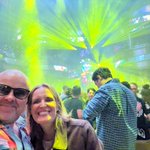
Sal and I pulled off three concerts and two games in 44 hours in Vegas.
Music and sports are our two favorite things in LV, and this trip we didn't waste a minute:
- @BYUCougars vs. @TheRunninRebels, courtside with our friend @bsant25_, BYU's athletic director
- @Raiders vs. @RamsNFL at Allegiant Stadium
- @steveaoki at Omnia, where Sally lost her phone on the dance floor at 2 a.m. and got it back at 4 (a story for another day)
- @Metallica at the Sphere, our least favorite of the five, though the Sphere itself is the most immersive room I've ever stood in
- @TheChainsmokers at Encore Beach Club, where $40 and good timing got us on stage (also a story for another day)
We slept a little, danced a lot, and just had so much fun together. We were usually at least a decade older than almost everyone else on the dance floor, but that did not slow us down!
We’re back home now and already looking forward to the next one.
What’s the last concert you went to?

5
6
718
I may be walking away from sports betting undefeated, 3-0 over the last year, because I think it's one of the worst things happening in America right now.
About a year ago, I had $1,000 sitting in a Robinhood account. So I ran a little experiment to understand a growing trend that I was feeling and see how the machine works from the inside.
I placed three sports bets, starting with the @Seahawks to win the Super Bowl. You could feel momentum building in December! And then twice on @BYU when I felt they were underrated. I won all three, and the $1,000 is now above $7,000.
But I know exactly how this ends if I keep going, and so does the app. The most dangerous part of the experiment was actually winning. Winning doesn't make you want to stop. It makes you want to bet again, and I’ll be honest, the pull is real.
What got me to quit was something I started seeing everywhere this year. College students, young entrepreneurs I teach, and my own two 20-something sons, placing small bets on Kalshi because it's so marketed and easy. I know they’d say they’re just having fun, but I know that eventually they're going to lose.
Then Sal and I walked through the casinos in Vegas a couple weekends ago, and I just felt kind of repulsed seeing the patrons being taken advantage of. I kept wondering why we even call it gambling. The house doesn't gamble. The money moves from the people who have less to those who have more.
It’s more like systematic theft.
And that’s all Kalshi and these “prediction markets” are.
Don't take my word for it. @mckaycoppins of @TheAtlantic spent an NFL season betting $10,000 of his magazine's money and lost $9,891 of it. President Christofferson, one of the top leaders of my church, recently called gambling "morally wrong" and built on "the desire to obtain something for nothing." And last month, my friend @AGDerekBrown, Utah's attorney general, sued Kalshi, saying these apps are engineered to do one thing: empty your wallet.
I wrote in my book, “The Last Book Written by a Human,” that in the Old Game, the goal was always more, and what you had was never enough. An app that lets you bet on anything, anywhere, 24 hours a day, is simply that.
With inflation this high and income inequality rising, most people can't afford to lose any money, and nobody builds a big business like this on customers who consistently win.
So I'm cashing out, and I'm done putting my money into something I don't like. I hope my sons do the same.
Anyone else want to join me?

2
3
535
My twin granddaughters are finally here, and my heart is so full.
Bella Rose: 4 lbs 8 oz
Kate Lilibet: 3 lbs 12 oz
When you see a hand that size wrapped around your finger, you can't not think about how miraculous life really is.
Existing at all is the greatest mystery and the greatest miracle. I've said that for years, and I believe it more now, sitting in a NICU - where these little girls will be staying until they can breathe and eat on their own. Sally and I have been there holding them as much as we can!
Their mom paid a dear price to get them here. My daughter-in-law is five feet tall, and by the end she was carrying over eight pounds of babies. She stopped by our house that Sunday evening on her way to the hospital, worn out and very emotional.
We hugged her and loved her and sent her on her way, praying for her sake that it was time for the babies to arrive safely on this earth.
Our oldest son is 25. He and his wife now have a two-year-old at home and newborn twins in the hospital, which is a lot for two young parents, and they are handling it with a lot of grace.
One night I held Bella for an hour while she peacefully slept, her specialty right now! It was so precious. It feels like a little bit of heaven has come down to earth in these two girls.
Welcome to the world, Bella and Kate 🫶


I shared something personal here recently about my years as a bishop, and a good amount of the comments turned into people arguing with each other.
I’d shared my heart in that post, not perfectly, but just how it was. Then people started quoting scripture at each other and declaring what bishops are and aren’t guilty of.
My honest first reaction was: Please, stop.
No matter what we perceive our differences to be, we always share far more in common than we think.
None of us chose where we were born. If you were born in Saudi Arabia, you probably grew up Muslim. If you were born in Utah, you probably grew up Mormon. If you were born in China, you’re probably a Buddhist. A lot of what we defend as our deepest convictions arrived with an address on it.
None of us chose our parents either, and there’s no such thing as a perfect family. So every one of us carries a wound from childhood, whether it’s capital-T trauma or the more ordinary kind. That wound is unique to each of us, and it’s also the same in all of us. The human condition comes for us all.
Remember that, please.
Our differences are what make life beautiful. And they don’t need to be our collective undoing.
How much of what you believe do you think came from where you were born?

3
619
Parties should never define us. We are people first, and on Tuesday night I saw a little piece of what that could look like.
I've run for office, and I've lost, so I watch election nights differently than most people. Three things stood out to me this time:
1. The power of course correction. Whatever you think of the results, Americans still have the ability to change direction, and that makes me proud and happy.
2. Radical inclusivity. @ChrisPappasNH became the first openly gay man elected to the U.S. Senate. @KeishaBottoms became the first Black woman elected governor of any state. @AbdulElSayed will be the first Muslim senator. @DebHaalandNM is the first Native American woman elected governor. @ByronDonalds is Florida's first Black governor.
That's a lot of firsts for one night. I feel this diversity building and love it!
3. The power of swing voters. It has never been about parties. It's about people voting their conscience, and voting for leaders they actually, truly believe in.
I wrote in my book about what I call the Human Political Movement. Through my experience running for office, I saw how a two-party system forces complex human beings into artificial boxes, pitting neighbors against each other. The citizens who disagreed most passionately on issues shared many of the same core values and hopes for their families and communities.
The Human Political Movement isn't a party. It doesn't fit inside any party. It's about transcending left and right and focusing on what matters most: our collective human flourishing.
I'm not saying we got there on Tuesday. But I saw a little piece of it, and it made me excited, hopeful, and proud to be an American.
I go deeper on all of this in "The Last Book Written by a Human," linked in my bio.
What was your biggest takeaway from Tuesday night?

1
2
306
I love the way America course corrects! ❤️
Radical inclusivity is a theme for me tonight.
As well as the power of the swing voter 💪🏼 They exist & we need more!
4
379
Most of my wealthy investor friends love AI for three reasons, and they’ll happily tell you about two of them.
I am one of these guys also, so I am speaking directly to myself here.
The first is money. There hasn’t been anything this big to put capital into in a very long time. Nobody is hiding that one.
The second is efficiency. A lot of us are efficiency addicts. AI helps us get more done, which inflates the ego and makes us feel more valuable. It’s a little ridiculous when you really think about it.
The third is the one nobody wants to talk about. A lot of these guys want to live forever. They think they should, and AI looks like the way it finally happens.
Some are funding longevity research on the bet that AI compresses 50 years of biology into 10. Some talk about feeding in everything they’ve ever written and said, so a version of them keeps advising long after they’re gone.
(It sounds like science fiction right up until you hear how seriously it gets discussed over dinner.)
I wrote a chapter in my book about standing at the top of a mountain I’d spent years climbing - the one made of money, success, and power - and finding out there is nothing up there. I mean absolutely nothing. The goal in that game was always more.
Wanting to live forever is that same game with a longer timeline. It’s the ego’s last and largest project.
In the process of living, we hopefully learn to die well. To let go, to move on, to become something more. I don’t believe we were meant to go on forever, and I say that as someone who would have loved the idea 20 years ago.
No one needs Jeff Burningham forever. I’m not even 50 yet, and already getting sick of myself. Let it go 🙂
So love AI. Make money with it. But we don’t need you to be more efficient. We want you more present. And we don’t need more income inequality because of AI. Row in the other direction, please!
I get into this quite a bit in the book I’m writing now and will release sometime next year. Let me know if you would like to preorder a copy. I may limit the print.

248
For five years I sat in an office every Sunday while people came in to confess the worst things they'd done. I was barely 30.
I served as a bishop in my church, leading a congregation of about 500 people. Part of that role is what we call being a common judge, which is where the confessions came in.
Early on I would leave the lights off, lock the door, and kneel in the dark, praying. How could I possibly judge these people, with so many of them being more than twice my age?
Then one morning I caught sight of a picture of Christ on the wall, and it occurred to me that he would not have been judging any of them. He would have just listened, and pointed them toward healing.
So I flipped the lights on and changed my title. Instead of judge, I decided I was a repentance coach. I had never heard another bishop call himself that, but it felt right.
What I saw over those five years changed how I see people permanently. A wealthy businessman and a struggling single mother would come in on the same afternoon carrying roughly the same wound.
It shocked me how many quiet crises people carry. Unimaginable amounts of guilt, regret, and sorrow.
I would come home in emotional shock, and my wife would hold me while I tried to process it all.
But I’m grateful for that soul-stretching experience. It taught me about how important compassion is, and why we shouldn’t make assumptions.
Whoever you’re mad or annoyed at today - cut them a break. They likely need it worse than you know.

Thank you to everyone who's leaving such thoughtful comments.
This is a topic I talk about in depth in my book: "The Last Book Written by a Human."
I'll link it below for anyone interested:
jeffburningham.com/book/
13
My heart goes out to people like @AnthropicAI CEO @DarioAmodei, which I realize may sound strange.
He has said publicly that he puts the odds of things going really, really badly with AI at about 25%, and I believe him.
Think about the position those creators are in. He and the people building these tools are asking for help in public, and they’re not being coy about it. They are starting to get an inkling of what they are working with…. And they can't simply stop, because if they stop, others won't - China won't, and the “dark web” won't. I’m not defending them, and I don’t envy any of them.
I've spent 20 years investing in technology companies, which is why I take his number seriously instead of filing it under doomer talk.
We've built dangerous things before. Nuclear weapons are the obvious one, and we spent decades putting treaties, inspectors, and deterrence around them. I'm not aware of anything we've ever created that carried odds like these. And yet we're running toward it. And to what end!?
Do we need regulation? Of course. But regulators and politicians aren't built to move at this pace.
I wrote in my book (The Last Book Written by a Human) that the age of AI will either cause us to wake up to our potential or move us right out of the way. I still believe that.
So if the regulation isn't going to arrive in time, then the wisdom has to come from us - from the people. What defines this era is how we treat each other, what we feed these machines, and what kind of people we're becoming while we build them.
No one can supply that for us. No outside entity can or should be expected to save us.
That's the heart of The Last Book Written by a Human, which is linked in my bio. I'm also giving away my course, Becoming Wise in the Age of AI, for free for the next while. Comment below or send me a DM if you'd like it.

1
140
I’ve spent my whole life inside my faith tradition, including a two year mission and five years leading a congregation etc, and I’ve slowly come to the conclusion that our religions have become too institutional.
Those five years meant a great many Sundays in an office listening to people tell me the hardest things in their lives.
And I found that almost everyone who sat down already knew. Deep down, they knew what was true for them and what they needed to do next. What they were looking for was permission, or company, or someone who wouldn’t flinch at what they’d say.
I loved that congregation, and like most faith communities, mine is wonderful.
But I believe we can have more direct experience with God, and somewhere along the way many of our institutions started acting as an intermediary for that rather than a coach or a guide as we walk “the road less traveled” for ourselves.
Faith was always meant to be transformational, but so many of us have ended up treating it as something transactional instead - attend this, check that, and the outcome is supposed to follow.
We’re outsourcing our consciences to others, and drawing adversarial lines that don’t need to be there.
I visited the home of Mother Teresa in Calcutta India a couple of years ago and learned that she didn’t draw those lines. When she was asked whether she converted people to her religion, she said she wanted to convert them to be a better Catholic, a better Hindu, a better Muslim, a better Buddhist. I think about that often.
So here’s what I’d offer, from a guy still working on himself:
Enjoy the benefits of your faith tradition, but take your faith into your own hands. Learn to hear your own conscience, and then do the harder thing and learn to trust and follow it.
Nobody ever found their answer in my office because I handed it to them. They found it because they finally listened to themselves, and I happened to be in the room. And that was sacred to witness 🙏
I know this is a continuum for many of my friends and family, so I would love to hear your thoughts?

Four very large things feel like they’re coming to a head at the same time, and I fear we aren’t as prepared for any of them as we should be.
I’m no doomer and I am not trying to frighten anybody. Most people who’ve spent any time with me would call me an optimist. My book is optimistic on nearly every page.
But all month, I haven’t been able to shake this feeling that a reckoning is coming soon, and I see it coming in four places.
1. Financial. We've been borrowing against our grandchildren for decades, and the bill is starting to arrive. I’m bracing for what looks like a decade of slower growth, higher borrowing costs, and a government with much less room to help anybody when the next hard thing shows up.
2. Political. We’ve started treating our neighbors as enemies rather than as people we happen to disagree with. Once somebody is an enemy, you don’t owe them anything, not even a modicum of respect or dignity. That’s how ordinary disagreements turn into something much more vile.
3. Religious. We have left our spiritual heritage behind and traded stale institutional bureaucracy for direct experience with the divine. This is not a good deal and leaves many individuals feeling empty.
4. Technological. At some point, as I argued in my book, we may not be the ones in control of AI. The news on this front lately has made this abundantly clear. And it is coming even sooner than we may have expected.
This is not me reacting to the headlines. I wrote almost two years ago that the old game was crescendoing to its conclusion and that the signs were everywhere.
Pain is how most of us learn. It’s how I’ve learned my greatest life lessons. This reckoning, I think, is going to force us to learn some painful lessons - people losing savings, losing work, losing friends over politics that won’t matter in short order.
But not one of those four gets solved by one side hating or beating the other. Not one. This is less a competitive game and more of a collective story that is unfolding.
Here is my hope. A reckoning can strip away the things we thought separated us. When the money is tight, and the institutions are thin, and the technology is in nobody’s hands, the differences we’ve spent years fighting about stop looking so important.
I think this is going to force us to see that we are a lot more alike than we are different. The only question is whether we can accept all of this with ease, love and grace or wait for the reckoning to teach it to us in more harsh ways.
Are you feeling this too?

1
8
812
When I was called as a bishop at 28, I chose a counselor nearly twice my age, and about six months in he told me something only a few people knew.
He was about 47, single, and a vice president at BYU. We served together and built things shoulder to shoulder in our little ward, and he quickly became one of my best friends.
We’d spent hundreds of hours together when he told me he was gay.
At the time he felt he had to live undercover, and I became one of the few people in his life who knew.
What I remember most was his loneliness and strength. How hard it had been for him to fit into a faith tradition he genuinely loves but at times felt outside of.
It taught me something I’ve carried for 20 years now. Every culture hands us a set of structures and asks us to fit inside them, mine very much included. Many of them are good. But most of us never notice them, because they happen to fit us. For the people who don't fit, the weight is enormous, and I don't think the rest of us have any idea how heavy it often is.
My chief of staff and good friend, Patrick Risk, has a similar story, and my heart goes out to everyone in such a difficult position.
My counselor is retired now. He wrote a book about his experience, and still serves in that same stake. Whatever he decides is best for his own life has my full support, always has, always will!
He was nearly twice my age, and our lives looked almost nothing alike. But underneath all of it we were the same. We were brothers, and we wanted the same things most: to love and to be loved.
I haven’t met an exception to that yet, and I spent nearly five years in a room where people confessed their most raw truths to me.
I’m writing more about what those years taught me in my newsletter. Comment below or send me a DM if you’d like to join us there.

9
66
16,209
Jeff Burningham retweeted

BYU SHOULDN’T HAVE BEEN LEFT OUT OF THE PLAYOFF LAST YEAR.
BYU SHOULDN’T BE LEFT OUT OF THE CHRISTIAN CONVERSATION.
BYU SHOULDN’T BE DISRESPECTED FOR THEIR RELIGIOUS BELIEFS.
BYU SHOULDN’T BE LOOKED DOWN ON BY ANYONE.
BYU SHOULD BE THE #1 TEAM IN THE COUNTRY.
GOD’S PLAN!

I visited all 29 Utah counties when I ran for governor, and the thing I never forget is watching neighbors agree on about 93% of things, but spend most of their time and energy “fighting” about the other 7%.
The 93% was the stuff that actually mattered to all of us. We all want our kids safe. We all want our work to mean something. We want our town to be thriving in 30 years.
Yet the other 7% was a lot louder. People would get genuinely heated about minutiae with somebody they'd known for 40 years.
I see the same thing everywhere now. Neighbors being unkind over policy that won't touch their lives for years (if at all), over questions where - if they sat down together for an hour - they'd find they mostly agree and neither of them hold any sway anyway.
We are largely missing the mark.
I believe most of this division is illusory. We make it up, egos love this, and a lot of people make money causing disunity among us. Social media, the news, and political parties all gain by highlighting our differences instead of reminding us that as humans, we always share so much more in common.
And it’s costing us dearly. Every hour we spend fighting over the 7% is an hour we don’t spend on the 93%, which is where nearly every problem we could actually solve together is sitting.
I lost that race, but what I learned from it became one of the main threads in my book, "The Last Book Written by a Human."
It's linked in my bio if you'd like to give it a read.

Are we selling out our children and grandchildren?
Total US debt passed $40 trillion in August. This year we'll pay about $1 trillion just in interest on it, which is more than the roughly $885 billion we spend on our entire national defense. Another important issue entirely, but as a comparison. And the Congressional Budget Office projects that interest bill will double to $2.1 trillion by 2036.
What are we doing?
Then add inflation, which keeps eating into everyone's savings. And add what feels like an AI bubble, which a lot of those same savings are now riding on. That's a lot of weight resting on the next generation.
We launched Peak Capital right around the time that Lehman Brothers fell and other large financial institutions were wobbling. Since then I’ve invested in hundreds, probably closer to a thousand, RE and VC deals.
Working with business leaders and in capital for over two decades, I've had the privilege to sit in a lot of backroom conversations the public never hears, so I'm not saying this from the outside.
To be fair, there's a real argument on the other side. People have been calling deficits a crisis for 40 years and the sky hasn't fallen, yet. And a lot of the AI money is going into real things - data centers, chips, power plants - that will still be standing even if the stock prices fall.
I'm not giving anyone financial advice here, and I'd be glad to be wrong.
But every one of these is a choice we're making now. It feels like we are handing our kids and grandkids a bill they had no say in, and we're the generation that can still change that.
Most of us work hard so our kids can have a brighter future than we did, and on this one it seems like we are doing the opposite.
What's your take?

Any day now I really hope to be holding two new granddaughters, and I've been thinking a lot about the world we're handing them.
My oldest son is 25, he already has a two-year-old, and he and his wife are about to welcome identical twin girls! They aren't due until December, but they're expected much sooner, so Sally and I have been spending even more time with the family lately.
I've been less optimistic than usual about the world these girls are coming into. There's so much anger and division in the air right now, financial instability, and they'll grow up alongside an AI that I'm not convinced any of us will be able to control.
There may not be much I can do to change the macro issues in the world for them, but I can set a good example. I can stay regulated emotionally. I can be present when I'm with my children and grandchildren. I can try and bring them comfort.
I believe our phones are doing us a lot more harm than some of us realize. They're our connection to so much of the toxicity in the digital world. So our family tries to put our phones away for the second half of Sundays, and we don't allow phones at the dinner table because we're there to be together.
But here's what gives me hope:
I write in my new book that the power of children is play. Kids have a magical way of seeing everything through the lens of possibility. They are naturally nonjudgmental, honest, and present.
It's funny how many hours a week I spend as an adult trying to get back to being like a child and developing those qualities again. These two girls will arrive completely innocent and beautiful, all of them already perfect just as they are, and I don't see why we'd try to change that. The world around them will be messy, noisy, and complicated, like it is for all of us. But what they bring with them can carry them through it all.
My hope is less about teaching them something new and more about helping them remember who they are and the miraculous gifts they already have.
So excited for this coming addition to my family.

The most common career advice in the world right now:
“Learn to use AI. Get good at prompting. Become the person on your team who knows the tools.”
To be fair, it isn’t bad advice. If you aren’t fluent with these tools by now, you’re at a real disadvantage.
But I’ve been investing in technology companies for 20 years, and I’ve watched this pattern play out enough times to know how it ends. A new tool or technology comes onto the playing field. Everyone redesigns their whole business, resume, and LinkedIn profile around it. And then that skill set becomes commonplace because the market absorbs the advantage. It becomes commoditized.
Anything you can pick up in an afternoon, everyone else can too.
So what's actually worth investing your time into?
It’s the part of the work no model will do for you. Sitting with a decision that has no correct answer. Knowing what a choice will cost the people it lands on. Being the one others trust when the stakes are real and the data can’t decide for you.
In other words: being a wise, compassionate, real person.
That’s who will actually come out ahead in the AI revolution.
That’s most of what my course is about. It’s called “Becoming Wise in the Age of AI” and it’s free right now. Comment below or DM me and I’ll send it over.

1
3
395
I got robbed in Soweto, and it happened because I stopped to buy candy for a group of kids.
I was in South Africa recently, tracking lions and following Mandela's path from Cape Town to Robben Island to Johannesburg. Which is how I ended up in Soweto, a place built to keep black laborers far enough from Johannesburg that white neighborhoods never had to see them.
More than a million people live there now, and I've never been anywhere in the world like South Africa where the racial tension was so palpable.
My guide walked me into one of the poorest corners of it, where I was the only white person I could see in any direction. Somewhere in there my gut told me we were being a little too casual. But I've been to over 70 countries and didn’t listen to that intuition, justifying our plan based on past experience.
Then a group of kids gathered around us and I pulled cash out of my phone case to buy them some candy. That was the mistake. Some men saw it and came over to tell us we owed a fee to be in the area.
Voices rose in a language I don't speak and more men kept drifting over, until it was a small crowd of them and just two of us. And my guide was arguing, genuinely upset, because he'd spent all day showing me a South Africa that had changed and wasn't going to let these guys rewrite it.
So I was the one calming him down. I gave them everything I had, a hundred dollars, and told them it wasn't cool what they were doing but here was a donation. Then we got in the car and lived to see another day.
Three things I keep coming back to.
The most dangerous person there wasn't the man taking my money. It was my guide, who cared more about defending a story than about seeing what was in front of him. Be wary of the guides in your life who need the narrative to hold up more than they need the real, complicated truth.
I also didn't ignore my gut out of carelessness. I overruled it with experience. But I clearly overvalued that.
And I don't think of those men as villains. People are in pain, all of us are, and most of us take advantage where we can, in small ways or big ones. That isn't a Soweto thing, it's the human condition, and I'd rather have compassion for it than pretend I stand outside of it.
It's still in the top five scariest travel experiences I've had. But I'm not upset about the hundred dollars. I'm upset about the 10 seconds where I knew better and walked on anyway.
I'll tell a longer version of this story, and what I took from it, in one of my weekly newsletters soon. I'd love to have you on that list if you're not on it yet.
Comment below or DM me for an invite.

3
639
I appreciate all the comments here & thoughtful discussion 🙏🏻
The full story (and more robust thoughts on the subject) are found in my book called, The Last Book Written by a Human, which I will link below.
Regardless, I hope you will remember that no matter our differences, we are ALWAYS a lot more alike than different. And one of the most important ways that is true is that we all need and deserve to be loved 💯❤️
jeffburningham.com/book/

For five years I sat in an office every Sunday while people came in to confess the worst things they'd done. I was barely 30.
I served as a bishop in my church, leading a congregation of about 500 people. Part of that role is what we call being a common judge, which is where the confessions came in.
Early on I would leave the lights off, lock the door, and kneel in the dark, praying. How could I possibly judge these people, with so many of them being more than twice my age?
Then one morning I caught sight of a picture of Christ on the wall, and it occurred to me that he would not have been judging any of them. He would have just listened, and pointed them toward healing.
So I flipped the lights on and changed my title. Instead of judge, I decided I was a repentance coach. I had never heard another bishop call himself that, but it felt right.
What I saw over those five years changed how I see people permanently. A wealthy businessman and a struggling single mother would come in on the same afternoon carrying roughly the same wound.
It shocked me how many quiet crises people carry. Unimaginable amounts of guilt, regret, and sorrow.
I would come home in emotional shock, and my wife would hold me while I tried to process it all.
But I’m grateful for that soul-stretching experience. It taught me about how important compassion is, and why we shouldn’t make assumptions.
Whoever you’re mad or annoyed at today - cut them a break. They likely need it worse than you know.
2
8
3,143