

Founder @AdvancingEcoAg | Regenerative Agriculture Podcast | Plant immunity through nutrition | Profitable Regen ag |
Earth
Joined July 2013
- Tweets6.4K
- Following465
- Followers17.3K
- Likes8.5K






Pinned Tweet
Have you heard of a digital clone?
Here is mine: delphi.ai/johnkempf
This thing is trained on all the things I have published over the years. You can ask it questions 24/7/365
It is an interesting time, to have technology this good at impersonating someone, and being able to point at every thing you have ever said.
I also discovered I have written/spoken 4 million words that were recorded over the last decade. 🧐
Please let me know what you think!
Hard soil? Compaction? Must listen.

How can annual ryegrass break up hardpan and fragipan?
Lloyd Murdock has spent the last decade researching this.
Lloyd helped make no-till wheat standard practice in Kentucky, contributed research behind the soil penetrometer, and developed an algorithm for variable-rate nitrogen in wheat. He has been at the University of Kentucky for over 40 years as Extension Soils Specialist, and is now Professor Emeritus at the UK Research and Education Center.
On the #RegenerativeAgriculturePodcast, Lloyd and @Johnkempf discuss:
➡️ Why fragipans leave many eastern U.S. crops growing on just two feet of soil.
➡️ How annual ryegrass roots break down the fragipan at 3/4 of an inch to 2 1/2 inches per year.
➡️ A farmer who broke through more than a foot of fragipan with only four ryegrass crops in seven years.
➡️ How most roots stall above 300 psi of soil resistance, and why annual ryegrass can push through.
➡️ Why subsoiling only pays when more than 30% of a field has significant compaction.
➡️ How Kentucky’s state average wheat yield climbed from the 40s to 70 bushels by doing small things right.
➡️ How chlorophyll sensors and a high-nitrogen reference strip help fine-tune wheat nitrogen rates.
🎧 loom.ly/-Ir-kEo


🔥 possibilities are greater than commonly expected
Doubling production on a problem block.
Dan Brown had written off this block of hazelnuts at Four Ridge Orchard in Hillsboro, OR, and was starting to remove it.
📉 Production was down to 1500 lbs per acre.
This year Dan used a heavy foliar regimen, including AEA's Pinion, and it bounced back.
📈 Now it's up to ~3000 lbs per acre.
🦅 Check out Pinion: loom.ly/goe1W88
John Kempf retweeted
What have we learned from the 1980s farm crisis?
Wendy Johnson saw her parents survive the '80s by doing 3 things:
1️⃣ Diversification
2️⃣ Low-cost production
3️⃣ Little to no debt
She vowed to do the same when she founded Jóia Food & Fiber Farm.
Today on the #RegenerativeAgriculturePodcast, Wendy and John Kempf discuss:
➡️ What carried her parents through the 1980s farm crisis, and why it still applies
➡️ How direct marketing made her a price maker instead of a price taker
➡️ How her Kernza thrived through a 10-inch drought year and a 12-inch rain month
➡️ What it would take to treat agrarian labor like the skilled trades
➡️ Why she would rather be paid on practice and nutrition than on yield
. . . and more!
🎧 loom.ly/5_W6Cow
John Kempf retweeted

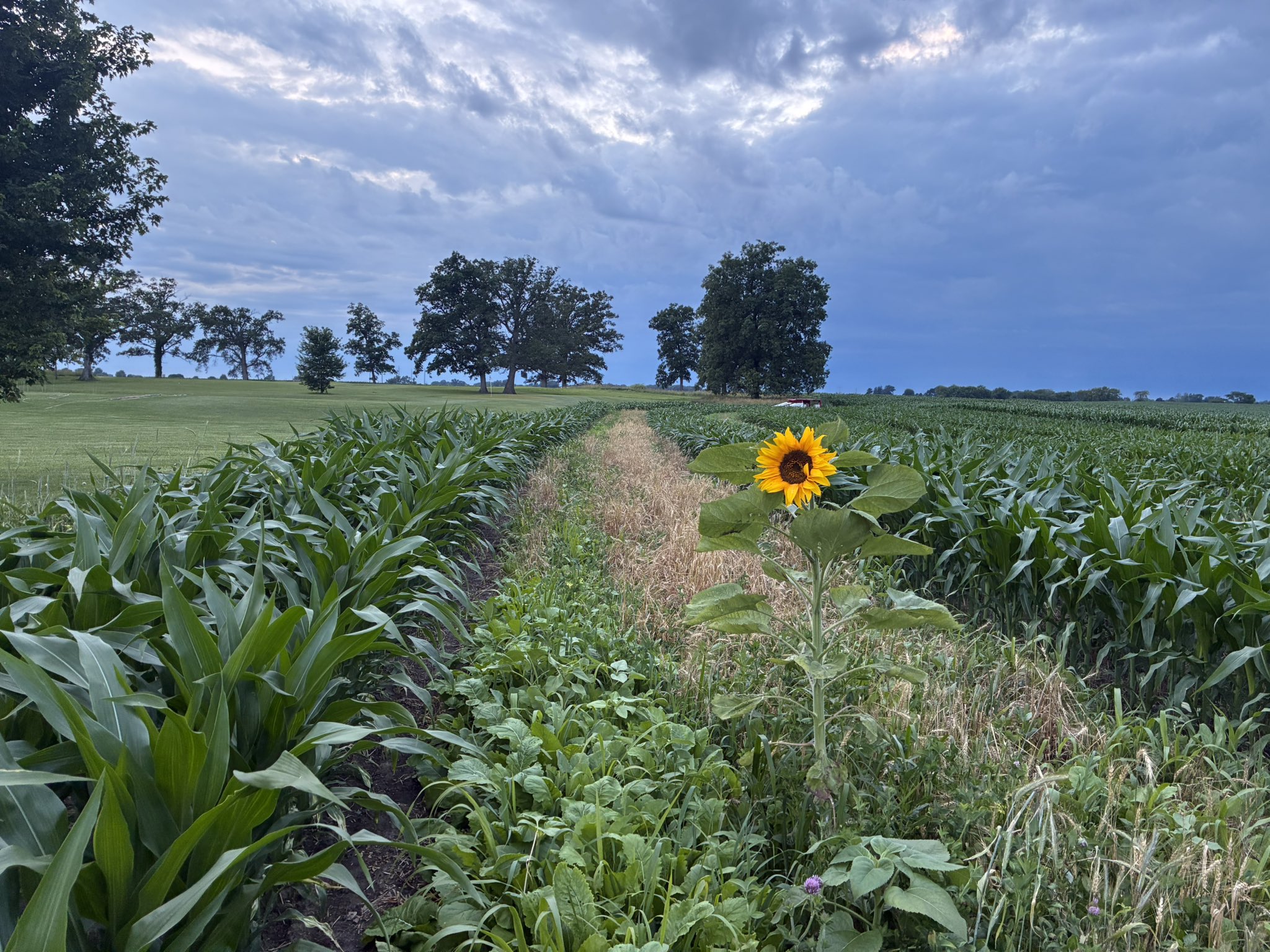
From a regenerative agronomy perspective I think we cracked the code this year.
Alleys were sown in wheat last fall.
Clover was droned on in February
12 way cover was droned on when the wheat was in dough stage and pushed down with a cultipacker letting the wheat and clover live
No tillage
No chemistry
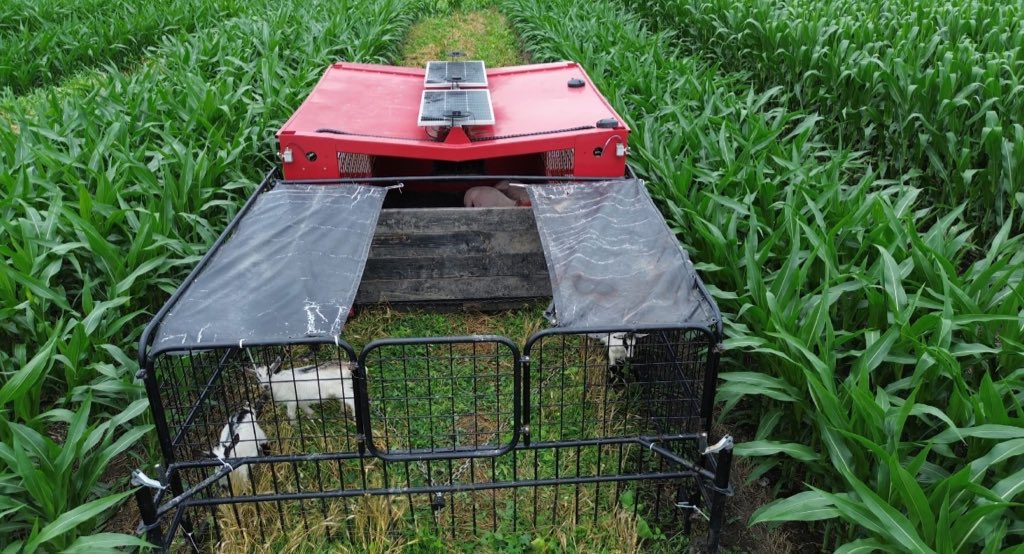
Just sequencing of plants and the impact of livestock
The science of @stockcropper is plants feeding animals and animals feeding plants… rotating crops and forage that turns biomass into fertilizer. Add the “edge effect” or overyielding of the edge rows of corn and this system is untouchable for acre profitability. It’s been proven and improved upon now for 6 years by me and @zebulousprime and backed up with 3rd party research from @PrecisionPlant
What’s funny about #farmweird is that no matter how great it gets… it’s “not feasible” because it doesn’t scale across the corn belt… but most importantly (in the lens of industry) we’ve decoupled the need and reliance for farm inputs.
I’ve always said “don’t study the ants, study the crumbs”
Response tells the truth.
So why continue to do it? Because happiness isn’t about how to get rich by selling products.
Happiness is a math formula
Quality of life + fulfillment - envy
We’re going to ride around the sun hopefully another 40 or 50 years… and get better and better at designing systems… and every year we gain more people that want to stop being a manager of death and start creating more life with more life.


Reduce your fertilizer needs next year. By a lot.
Free download of our Regenerative Soil Primer resource guide!
The guide includes:
➡️ Case studies showing how Soil Primer decreased nitrogen use, decreased soil compaction, and increased residue digestion
➡️ Descriptions of the three key ingredients
➡️ Application rates and timing
➡️ FAQ
[pdf]: tinyurl.com/bdezpfrb

John Kempf retweeted
40.5lb cantaloupe! Grown by 7-year-old Tucker Ruthruff.
Michigan state record is 50#, Tucker's dad Derek believes this is the biggest grown in the state in 18 years.
The Ruthruff family has been having a good year: not only did Tucker grow this monster melon, they got the state record cucumber (11.64lbs), and they're estimating their 3 Atlantic Giants are over 1500lbs, which means they're on track to get their GPC growers jackets this year.
"This is a big deal for us, as it's been a goal for the past 5+ years. It's even more special now that we're growing as a team," says Derek
The best news for AEA? "Pinion is an organic game changer!"
➡️ Not a speck of powdery mildew until last week
➡️ No downy mildey
➡️ Cut out myclobutanil entirely.
➡️ Decreased pesticide use as a whole in the patch.
"The biggest win for me when it comes to Pinion is that we've also used it on our kids market garden. Ellie's zucchini plants are still beautiful and were also powdery mildew free up until last week. We're talking zucchini plants that were started in May, have not been pruned, and don't have the best air circulation. Those plants should have collapsed from a snowstorm of powdery weeks ago."

I’ve been waiting for this technology for a decade.
Full mineral profile of a leaf in seconds.
Greater accuracy and less variability than lab analysis.
Calibrations for more crops and compounds are in the pipeline.
@Croptix is coming for corn!
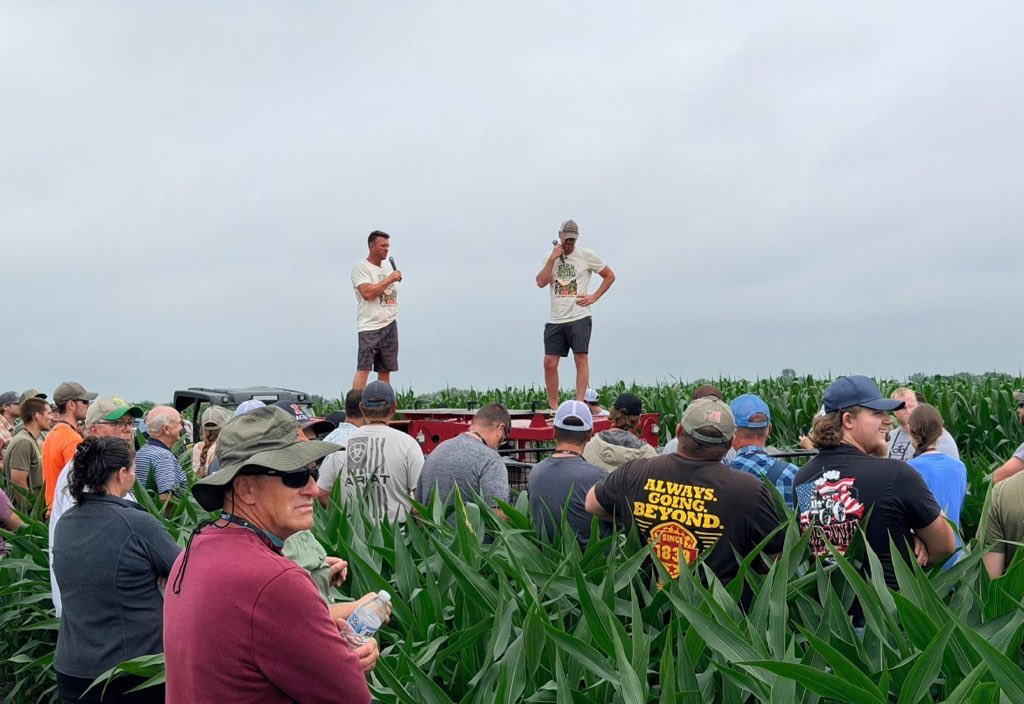
@Croptix stole the show at 2 field days last month—hosted by BASS Hybrids and Tailgate Nutrition—where Croptix CEO Perry Edwards gave the first-ever live demos of the sensor on corn.
Croptix will be available for corn, soy, and apples next year, and we've heard lots of interest from growers (AEA is a strategic partner of Croptix).
Having real-time plant nutrition data to be able to make same-day nutrient applications is a game-changer.
🌽 If you grow Corn, Soybeans, or Apples and want to use @Croptix next season, sign up here: loom.ly/IhQhvjo
John Kempf retweeted
Less than 1% bitter pit in Crimson Crisp!
Plus:
🚫 No fungicide
🚫 No up-front N
🎨 Great color
🪓 Very little cull
💥 Extreme flavor!
This is a full sap-guided foliar and fertigation program on certified organic apples at Sauk Farm. Sauk Farm is in the Skagit Valley, WA, which has very different climatic conditions than the drier parts of the state where apples are grown, presenting its own unique challenges.
We've been working with Sauk Farm for 3 years and they've made huge leaps forward each year in their nutritional programs, and are really getting to where they want to be.
Griffin is a phenomenal orchardist who's motivated to do all the right things, and a real pleasure to work with!
Nitrogen fertilizer creating a yield drag strikes again.
200 bushel corn on 50 lbs N.
150 bushels on 200 lbs ?
That's the response Ed Baumgartner has seen in some corn hybrids. Ed is a master corn breeder and co-founder of @BASS_Hybrids .
Ed joins @JohnKempf on the #RegenerativeAgriculturePodcast for a fascinating and wide-ranging conversation on corn:
➡️ Why corn inbreds developed before heavy nitrogen fertilization still carry the genetics for nutrient efficiency
➡️ Why Y-drop nitrogen placed too close to the stalk causes a yield hit on biologically responsive genetics
➡️ What plant characteristics signal high biological receptivity
➡️ Why Bass asked its seed producers to apply AEA’s Pinion this season in place of conventional fungicide
➡️ How AEA’s fertility guidance gives growers an off-ramp from high nitrogen and an on-ramp for soil biology
. . . and lots more!
🎧 loom.ly/G5QVf9M
John Kempf retweeted
"Challenging times lead to more resourcefulness."
@Johnkempf talks to one of the most resourceful growers we know: Mike Omeg of Orchard View Cherries. On the #RegenerativeAgriculturePodcast.
🍒 We've been posting photos and videos all summer of the insane crop of cherries Orchard View produced this year.
🍒 Mike explains how they grew a record crop while slashing input costs to respond to a down market for cherries.
✅ Cutting nitrogen from 300 total tons applied bulk to just 57 tons applied through fertigation, while also applying only 60% of the foliar urea
✅ Maintaining a strict $20/acre budget for foliars while using AEA's precision blends
✅ A block that produced 13 tons of cherries per acre in its sixth leaf, with firmness in the mid-300s and brix of 20-26
✅ Producing "once-in-a-lifetime" crops in back-to-back years
✅ Why Mike believes those trees can sustain that level of production for decades
It all adds up to the holy grail of regenerative ag: "We're starting to see biological precision and cost control reinforcing each other with really good crop outcomes."
🎧 loom.ly/SWQbPdQ
Keep getting anecdotes like this. Heard at an event today about Pinion outperforming fungicides on strawberries for various diseases, and managing phytophthora on pumpkins.
"Wow, this could fundamentally change how we farm"
Pinion keeps on winning.
Mike Omeg describes how the Pinion trial block is looking this time of year at 𝐎𝐫𝐜𝐡𝐚𝐫𝐝 𝐕𝐢𝐞𝐰 𝐂𝐡𝐞𝐫𝐫𝐢𝐞𝐬.
✅ no mildew on new leaf growth
🥴 conventional control has infected new growth
🎧 Listen to the whole interview with @JohnKempf : loom.ly/SWQbPdQ
🦅 Check out Pinion: loom.ly/goe1W88
#regenerativeagriculturepodcast
🔥
"Challenging times lead to more resourcefulness."
@Johnkempf talks to one of the most resourceful growers we know: Mike Omeg of Orchard View Cherries. On the #RegenerativeAgriculturePodcast.
🍒 We've been posting photos and videos all summer of the insane crop of cherries Orchard View produced this year.
🍒 Mike explains how they grew a record crop while slashing input costs to respond to a down market for cherries.
✅ Cutting nitrogen from 300 total tons applied bulk to just 57 tons applied through fertigation, while also applying only 60% of the foliar urea
✅ Maintaining a strict $20/acre budget for foliars while using AEA's precision blends
✅ A block that produced 13 tons of cherries per acre in its sixth leaf, with firmness in the mid-300s and brix of 20-26
✅ Producing "once-in-a-lifetime" crops in back-to-back years
✅ Why Mike believes those trees can sustain that level of production for decades
It all adds up to the holy grail of regenerative ag: "We're starting to see biological precision and cost control reinforcing each other with really good crop outcomes."
🎧 loom.ly/SWQbPdQ
John Kempf retweeted
Compaction improvement after 7 years of regeneration: “The difference is amazing.”
@Wilson_Creek Winery’s Greg Pennyroyal shows 2 trenches in 2 different blocks.
For those pitying poor Block 1, don’t worry: full AEA nutrition is underway to remediate that compaction.


John Kempf retweeted

"In 2025, median farm income was -$495 after adjusting for inflation, while median off-farm income reached $94,140. USDA expects both measures to remain relatively stable in real terms during 2026."
"About 86% of U.S. farms are small family farms....Across all family farms, 86% of households received more than half of their total income from off-farm sources in 2024."
Simply put, without an off-farm job, most family farms would not exist.

John Kempf retweeted

A very good follow, 10/10 recommend. The more you know, the more you realize the American food system is so fucked.

The soy sauce packet in your takeout bag isn't soy sauce. The biggest maker, Kari-Out in New Jersey, lists water, salt, hydrolyzed soy and corn protein, caramel color and sodium benzoate. No fermentation, no brewing. It's made in a couple of days by boiling defatted soy meal in hydrochloric acid, neutralizing it, then adding color and corn syrup so it looks and tastes close enough.
A lot of the bottles on the grocery shelf are the same thing. Kikkoman and the Japanese government went to the UN food standards body years ago and asked that the chemical version not be allowed to use the name soy sauce. The hydrolyzed protein industry and the USDA pushed back and it stayed. The brewed ones say naturally brewed on the label. If the bottle doesn't say it, it isn't.
John Kempf retweeted

One Microbe, Two Jobs: How Endophytes Connect Soil to Gut
lachefnet.wordpress.com/2026…
cc. @MattPowersSoil @IntegratedSoils @Johnkempf @DrSeanOMara @bschermd @janellison @CSUChicoRegenAg @UnderstandingAg @SusFoodTrust @ZwartblesIE @DrRagnar

John Kempf retweeted
This corn should have black layered 3 days ago.
"This is what a well timed application of cobalt and potassium will do," says Jake Ewing, who sent us this photo.
This corn is currently at 1/3 to go, which should be about 7 to 10 more days.
➡️ This extra time to grow can dramatically increase yield: up to 5 bushels a day for each day delayed
➡️ Our standard black layer delay foliar costs ~$34/acre.
You do the math.
🎧 You can hear Jake Ewing talk about cobalt & black layer delay with. @Johnkempf on the #RegenerativeAgriculturePodcast (starting at 16:44): loom.ly/fl_oMSY
