

Truth Seeker - National Treasure
London, England
Joined December 2011
- Tweets101K
- Following6.1K
- Followers269K
- Likes22.3K


Pinned Tweet
The recent unjust attacks on Candace @RealCandaceO for supporting her friend caused us to peruse and re visit our own text archive.
And among other interesting things (that we may share later). We found this.
A never before seen (other than by them), fun clip that we made for Charlie and Candace to welcome them to the UK.
So we share it with you their friends now.
This video was recorded on Dec 6th 2018
Think of it as a positive message in a bottle on the sea of eternity.
We think is so important that you perceive the energy and excitement that they generated that caused the expansion that they created together.
You can sense their igniting the purpose of Freedom and the life energy that they brought to bear.
When Charlie and Candace came to England to connect up with all the positive energy and conceptual and philosophical alignment that they did connect to here in the UK the tremendous anticipation and atmosphere was palpable.
We all felt, and knew really, that something great and miraculous was going to happen.
Our friends Lord a Lady Plunket had come to stay at Camelot Castle.
This was a few days prior to our London gathering and our introductory evening of Charlie and Candace - and their ideas - to the UK.
A few days later the Plunkets would leave Camelot Castle and travel directly to Windsor Castle where they had tea with their Majesties, The Queen and Prince Phillip - the Duke of Edinburgh and where they briefed them on Charlie and Candace’s arrival and explained their purpose and mission.
Their majesties were extremely interested by the pending events and asked to be kept informed, which they were.
Anyway we think this short video captures something of the excitement that we were all anticipating with this now historic impending arrival in the UK.
We texted it that night to Charlie and Candace.
As you can see below.
It was a purely benign moment.
Sometimes when battling evil in the present it is important to remember the POSITIVE ENERGY
That positive energy and positive intention is the only reason that evil attacks in the first instance.
We do hope you enjoy this candid moment - and that this memory reminds us all of our own positive purposes and goals and brings back and restores some of those positive hopeful feelings that we all felt at that time and that you feel and can percieve yourself the spiritual energy that was is and always will be Charlie.
Warmest Regards from Camelot Castle.
John and Irina.
John Mappin retweeted

🚨 NOW: First Lady Melania Trump OFFICIALLY announces that the humanitarian ceasefire she brokered between Russia and Ukraine has taken effect, and has been EXPANDED across the Kherson Region
The greatest First Lady ever 🙏🏻
"THE CEASEFIRE HAS COMMENCED. The ceasefire between Ukraine and Russia took effect at 4:00am Moscow time on October 27, 2026."
"Timing was accelerated two days ahead of schedule to protect the safety of civilians and to facilitate the delivery of critical humanitarian aid. The ceasefire’s geographic area has expanded beyond Oleshky, within the Kherson Region, to provide safe passage for the humanitarian convoys."
"General Valery Gerasimov, Joint Chief of the General Staff of the Russian Armed Forces has confirmed."
After personally appealing to Vladimir Putin to save thousands of starving civilians trapped in Oleshky, our First Lady just delivered an expanded ceasefire corridor with Russian military confirmation
She is THAT effective. 47 has even said she's better than some of the professionals 😅
The First Couple of PEACE


John Mappin retweeted

I applaud the leaders in both Finland and Norway, who have opened up discussions with Russia, another nuclear superpower, to call for peace.
The entire world should be supporting this peace negotiation effort, and opening up dialogue to ensure that our world is a safer place.

The leaders of Finland and Norway call Russian President Vladimir Putin to urge him to end the war in Ukraine, breaking with a longstanding practice among Western European leaders of shunning direct contact with the Kremlin. nbcnews.com/world/russia/lea…


Finally!!!
A British Politician demands accountability for the lethal experimental COVID Vaccine!!
It killed people and harmed so many lives and people's heath.
It is still being pushed and dispensed to adults and to Children!
Well done Rupert Lowe
@RupertLowe10

Well done Rupert @RupertLowe10
John Mappin retweeted

This was actually a fantastic answer. Don’t care what your opinion is regarding James Fishback. The majority of America feels this way about the Charlie Kirk assassination despite the DOD’s best attempts to Operation -Mockingbird the public.

Sanity.

THE CEASEFIRE HAS COMMENCED
The ceasefire between Ukraine and Russia took effect at 4:00am Moscow time on October 27, 2026.
Timing was accelerated two days ahead of schedule to protect the safety of civilians and to facilitate the delivery of critical humanitarian aid. The ceasefire’s geographic area has expanded beyond Oleshky, within the Kherson Region, to provide safe passage for the humanitarian convoys.
General Valery Gerasimov, Joint Chief of the General Staff of the Russian Armed Forces has confirmed.
Wow. How we miss him.
There is no one that come close to replacing this sanity input to the leaders of earth.
Thanks @AnaEscobarShow

A caller into my show wants the US to drop a neutron bomb on Tehran. He's a perfect example of a particular psychology that arises when the drums or war start beating in Washington that's both fevered and capable of justifying the most heinous acts.
What's most terrifying is we have US Senators who sound eerily similar.
John Mappin retweeted
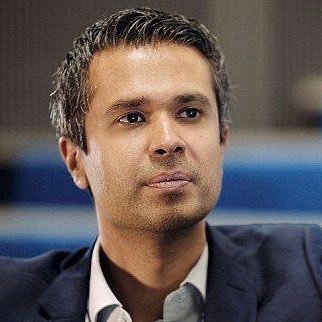
BREAKING:
Absolutely outrageous. Government advisers discussed behind closed doors the potentially fatal blood-clot risks of giving AstraZeneca Covid jabs to children as young as SIX in a clinical trial. Yet the trial continued despite healthy children being at extremely low risk from Covid. How was this ethically justified? Where was the transparency and informed consent? First do no harm. There must be accountability.
share.google/PodTvtMWPsAIprY…

John Mappin retweeted

Any attempts to push Russia out of the global gas market would backfire, Putin told participants at the Gas Exporting Countries Forum in Moscow.
“You know, there is a saying in Russia: Do not dig a pit for someone else, or you will fall into it yourself. This is exactly what happened in the EU countries today.”
John Mappin retweeted
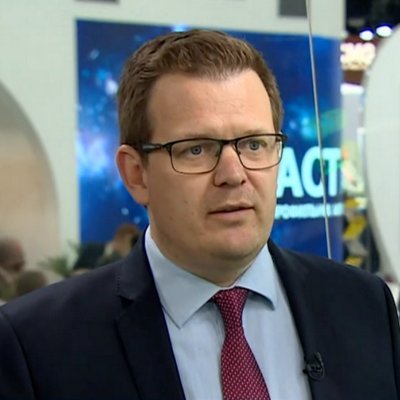
Welcome to the EU, where dissent is brutally crushed. Swiss Colonel Jacques Baud used to do intelligence analysis with NATO, but he has reached unacceptable conclusions about the war in Ukraine. Therefore, he has been sanctioned by the EU and cannot access banks, cannot buy food etc.
John Mappin retweeted
Do people silent on EU sanctioned Baud — no money, no food, no travel — realize he is an example to scare everyone else into silence?
Ursula implemented a censorship-by-punishment system to ban any dissent. She trialed it during COVID & sadistically perfecting it. Speak up!🧵👇


THE GEOGRAPHY TEACHER WHO TAUGHT BRITAIN TO FEAR RUSSIA
How one ambitious academic’s determination to make geography matter may have helped create a century of geopolitical paranoia
By John Mappin | IF Magazine
There is something almost comical about the possibility that a substantial part of Britain’s enduring fear of Russia may owe its intellectual origins not to a Russian invasion, a Soviet conspiracy or some great discovery by British intelligence, but to the professional ambitions of an English geography teacher.
His name was Sir Halford Mackinder.
And I suspect that most of those presently advocating an increasingly dangerous confrontation with Russia have never heard of him.
They should have.
Because Mackinder may have done more to establish the intellectual foundations of modern British Russophobia than almost any other individual.
And the extraordinary thing is that his original ambition was not necessarily to make Britain afraid of Russia.
It was to make Britain take geography seriously.
THE AMBITIOUS GEOGRAPHER
In 1887, a young Halford Mackinder became Oxford University’s first Reader in Geography.
At the time, geography occupied a comparatively modest position within the academic establishment. It was commonly regarded as a descriptive subject concerned with mountains, rivers, climates, maps and the location of foreign capitals.
Mackinder had considerably greater ambitions for it.
He wanted geography recognised as a serious intellectual discipline, one capable of explaining the course of history, the rise and fall of empires and the distribution of political power.
He believed geography could provide a unifying framework for understanding the world.
It was an intellectually ambitious undertaking, and in many respects a perfectly respectable one.
But there was a difficulty.
If geography was to acquire the status Mackinder believed it deserved, it needed to demonstrate that it could explain something enormously important.
Preferably something upon which the fate of nations depended.
And what could be more important to the British establishment of the early twentieth century than the survival of the British Empire?
Mackinder found his answer in Russia.
THE GREAT GEOGRAPHICAL FRIGHT
In January 1904, Mackinder presented a paper to the Royal Geographical Society entitled The Geographical Pivot of History.
It was an extraordinary proposition.
He argued that the great Eurasian landmass, with Russia occupying much of its strategic centre, possessed geographical characteristics that could eventually enable a continental power to challenge the maritime supremacy upon which Britain’s empire depended.
Britain had ships.
Russia had land.
And Mackinder believed that land, particularly when connected by modern railways and developed industrially, might ultimately prove more powerful than ships.
The argument was elegant, memorable and wonderfully alarming.
Russia’s immense territory, previously regarded in many respects as a handicap because of its distances, climate and difficulty of administration, was suddenly transformed into a potentially overwhelming strategic advantage.
Mackinder had discovered a way of making geography appear central to the survival of civilisation itself.
Whether he had discovered an immutable geopolitical truth was another matter entirely.
But one can hardly doubt that he had succeeded in making geography sound important.
THE THEORY THAT BECAME A WARNING
In 1919, Mackinder developed his argument in Democratic Ideals and Reality, producing the famous declaration:
“Who rules East Europe commands the Heartland:
Who rules the Heartland commands the World-Island:
Who rules the World-Island commands the World.”
There it was.
A formula sufficiently simple to be remembered by politicians and sufficiently ominous to alarm generals.
Control Eastern Europe, and one might eventually control the world.
And who occupied much of this supposedly decisive geographical territory?
Russia.
Mackinder’s actual concern was broader than Russia alone. He particularly feared the possibility of German industrial power combining with the resources and territory of the Eurasian interior.
Nevertheless, his theory created an enduring intellectual framework in which Russia’s geography could itself be interpreted as a strategic danger.
Not necessarily what Russia intended to do.
Not necessarily what Russia had done.
But what Russia might conceivably become capable of doing.
This is the critical distinction.
A geographical possibility had been elevated into a permanent strategic anxiety.
And once such an anxiety becomes embedded in the thinking of an establishment, it can acquire a life entirely independent of the circumstances that originally inspired it.
WHEN A THEORY BECOMES AN INHERITED FEAR
It would be historically inaccurate to suggest that Mackinder invented British hostility towards Russia.
Britain and Russia had already been imperial rivals for generations. The Crimean War and the Great Game in Central Asia long preceded his celebrated lecture.
But Mackinder offered something different.
He gave an existing political suspicion an apparently scientific justification.
The rivalry no longer needed to be understood merely as a disagreement between governments, dynasties or competing imperial interests.
It could be presented as a permanent consequence of geography.
And geography, unlike governments, does not change after an election.
This was the potentially dangerous legacy of Mackinder’s thinking.
Once the geographical existence of Russia itself becomes the foundation of a strategic threat, almost any Russian government can be regarded with suspicion.
Tsarist Russia.
Communist Russia.
Post-Communist Russia.
The ideology may change. The economic system may change. The leadership may change.
But the map remains.
And therefore, according to the most rigid interpretation of this doctrine, so does the threat.
One begins to see how a theory conceived in an Oxford academic environment might eventually contribute to a remarkably persistent form of geopolitical prejudice.
THE PHANTOM IN THE FOREIGN OFFICE
There is an important qualification here.
Mackinder did not single-handedly write British foreign policy, and the documentary record does not establish an unbroken chain of instruction from his Oxford lectures to today’s Foreign Office.
His ideas were initially more influential in some foreign strategic circles than within Britain’s own government.
Nevertheless, the wider geopolitical tradition he helped establish became enormously influential during the twentieth century.
American strategists revisited his arguments during the Cold War. The importance of preventing a hostile power from dominating Eurasia became a recurring theme of Western strategic thought.
And the language of containment, spheres of influence, buffer states and the balance of power continues to echo the geographical assumptions Mackinder helped popularise.
Consider the extraordinary persistence of the central idea.
Russia is dangerous because of its size.
Russia must be contained because of its geographical position.
Russia must not be permitted to exercise decisive influence in Eastern Europe because such influence might eventually threaten the wider balance of power.
What began as a geographical hypothesis can become, in the hands of less imaginative minds, a political reflex.
One need not deny the fact of military actions, to question whether this inherited framework sometimes encourages British policymakers to interpret every disagreement with Moscow as evidence of an existential struggle.
The problem arises when a strategic theory ceases to be examined and becomes an article of faith.
THE PECULIAR IRRATIONALITY OF BRITISH RUSSOPHOBIA
What interests me particularly is the emotional intensity with which sections of the British political and media establishment approach Russia.
There appears, at times, to be a peculiar satisfaction in the prospect of confrontation.
Diplomacy is treated as weakness.
Understanding an adversary’s security concerns is confused with endorsing his conduct.
The very suggestion that Britain and Russia might possess legitimate mutual interests is greeted in some quarters as though it were an act of disloyalty.
Yet rational foreign policy requires precisely the opposite disposition.
It requires the ability to distinguish between an actual threat and an imagined one.
Between the intentions of a government and the geographical circumstances of its country.
Between defending one’s own interests and perpetuating an inherited hostility.
Above all, it requires the capacity to recognise that the security of one nation cannot be considered entirely independently of the security of others.
Mackinder’s theory was developed in an age of empires, when great powers commonly assumed that their security depended upon controlling the destinies of smaller nations.
We should be rather cautious about allowing the assumptions of that age to determine our thinking in a nuclear one.
The existence of nuclear weapons makes the uncritical inheritance of nineteenth-century strategic rivalries particularly dangerous.
The stakes are no longer simply imperial prestige or commercial advantage.
They include the survival of millions of innocent human beings.
THE PROFESSIONAL AMBITION THAT OUTLIVED ITS AUTHOR
And here we return to the curious figure of Halford Mackinder.
I do not suggest that he consciously set out to manufacture hatred of Russia.
There is no sound historical basis for such an accusation.
Nor can we prove that his personal desire to elevate geography was the sole or even principal motivation behind his geopolitical theory.
But the connection between his academic ambitions and his intellectual achievement is undeniable.
He wanted geography to matter.
He developed a theory in which geography mattered enormously.
And that theory helped establish a tradition of strategic thinking in which the vast territorial position of Russia was regarded as a potentially permanent challenge to Western power.
The irony is considerable.
A man seeking to elevate the standing of an academic discipline may have contributed to a way of thinking that helped perpetuate international suspicion long after the imperial circumstances that gave rise to it had disappeared.
The geography teacher succeeded.
His subject became geopolitics.
And geopolitics became, for some of its practitioners, a sophisticated language in which ancient fears could be dressed as modern strategic necessities.
THE MAP IS NOT THE MAN
There is, however, a much more fundamental objection to this entire way of thinking.
A country is not simply a coloured shape on a map.
Russia is not merely a vast expanse of territory between Europe and the Pacific.
It is a civilisation inhabited by human beings.
Human beings with families, ambitions, affections, fears, histories and hopes not entirely unlike our own.
The same, of course, is true of Ukrainians, Poles, Britons and every other people whose lives can be reduced by geopolitical theorists to questions of territory and strategic advantage.
A map cannot tell us whether a particular individual desires peace.
A mountain range cannot tell us whether a government is acting wisely.
And the number of square miles occupied by a nation cannot establish its moral character.
Geography matters.
But geography is not destiny.
Still less is it a sufficient reason for permanent hostility between peoples.
The fundamental building block of civilisation is not the state, the empire or the geographical Heartland.
It is the individual human being.
And the purpose of diplomacy should be to protect human life, not sacrifice it upon the altar of an academic theory.
TIME TO RETIRE THE GEOGRAPHY LESSON
Perhaps the most important question we should now ask is not whether Mackinder was right in 1904.
It is whether Britain has become so accustomed to viewing Russia through the assumptions of geopolitical competition that it sometimes struggles to imagine any other relationship.
A century has passed.
Empires have collapsed.
Ideologies have risen and fallen.
Technology has transformed the nature of warfare, communication and economic power.
Yet the suspicion persists that the great landmass to our east must somehow represent an enduring danger simply because it exists.
That is not a sufficient foundation for a rational foreign policy.
Nor is it a particularly encouraging foundation for peace.
The British establishment might profitably revisit the work of Sir Halford Mackinder, not to accept his conclusions unquestioningly, but to understand how profoundly its strategic vocabulary may have been shaped by ideas developed in a very different world.
For there is a rather uncomfortable possibility at the heart of this story.
What if some of the fear that Britain has inherited about Russia is not the product of an objective assessment of present dangers, but the intellectual afterlife of an ambitious geography teacher’s attempt to make his subject indispensable?
If so, the tragedy would not be that Mackinder persuaded the world to take geography seriously.
It would be that subsequent generations sometimes forgot that his theory was only a theory.
And that no out of date, erroneous theory, however elegant, is worth starting a war over.
May Peace and Sanity Reign
🕊️🕊️🕊️🕊️🕊️🕊️
John Mappin
IF Magazine
@RealCandaceO @Nero @kadmitriev @realannapaulina @RealAlexJones @HarrisonHSmith @joekent16jan19 @JDVance @jimmy_dore @proud_diplomat @georgegalloway @Alice_Weidel @EvaVlaar @RupertLowe10 @SteveWitkoff @jaredkushner @OwenBenjamin

Wow! What is the source of Russiophobia?
Why did the Bristish come to hate Russia?
Professor Jeffrey Sachs
THE GEOGRAPHY TEACHER WHO TAUGHT BRITAIN TO FEAR RUSSIA
How one ambitious academic’s determination to make geography matter may have helped create a century of geopolitical paranoia
By John Mappin | IF Magazine
There is something almost comical about the possibility that a substantial part of Britain’s enduring fear of Russia may owe its intellectual origins not to a Russian invasion, a Soviet conspiracy or some great discovery by British intelligence, but to the professional ambitions of an English geography teacher.
His name was Sir Halford Mackinder.
And I suspect that most of those presently advocating an increasingly dangerous confrontation with Russia have never heard of him.
They should have.
Because Mackinder may have done more to establish the intellectual foundations of modern British Russophobia than almost any other individual.
And the extraordinary thing is that his original ambition was not necessarily to make Britain afraid of Russia.
It was to make Britain take geography seriously.
THE AMBITIOUS GEOGRAPHER
In 1887, a young Halford Mackinder became Oxford University’s first Reader in Geography.
At the time, geography occupied a comparatively modest position within the academic establishment. It was commonly regarded as a descriptive subject concerned with mountains, rivers, climates, maps and the location of foreign capitals.
Mackinder had considerably greater ambitions for it.
He wanted geography recognised as a serious intellectual discipline, one capable of explaining the course of history, the rise and fall of empires and the distribution of political power.
He believed geography could provide a unifying framework for understanding the world.
It was an intellectually ambitious undertaking, and in many respects a perfectly respectable one.
But there was a difficulty.
If geography was to acquire the status Mackinder believed it deserved, it needed to demonstrate that it could explain something enormously important.
Preferably something upon which the fate of nations depended.
And what could be more important to the British establishment of the early twentieth century than the survival of the British Empire?
Mackinder found his answer in Russia.
THE GREAT GEOGRAPHICAL FRIGHT
In January 1904, Mackinder presented a paper to the Royal Geographical Society entitled The Geographical Pivot of History.
It was an extraordinary proposition.
He argued that the great Eurasian landmass, with Russia occupying much of its strategic centre, possessed geographical characteristics that could eventually enable a continental power to challenge the maritime supremacy upon which Britain’s empire depended.
Britain had ships.
Russia had land.
And Mackinder believed that land, particularly when connected by modern railways and developed industrially, might ultimately prove more powerful than ships.
The argument was elegant, memorable and wonderfully alarming.
Russia’s immense territory, previously regarded in many respects as a handicap because of its distances, climate and difficulty of administration, was suddenly transformed into a potentially overwhelming strategic advantage.
Mackinder had discovered a way of making geography appear central to the survival of civilisation itself.
Whether he had discovered an immutable geopolitical truth was another matter entirely.
But one can hardly doubt that he had succeeded in making geography sound important.
THE THEORY THAT BECAME A WARNING
In 1919, Mackinder developed his argument in Democratic Ideals and Reality, producing the famous declaration:
“Who rules East Europe commands the Heartland:
Who rules the Heartland commands the World-Island:
Who rules the World-Island commands the World.”
There it was.
A formula sufficiently simple to be remembered by politicians and sufficiently ominous to alarm generals.
Control Eastern Europe, and one might eventually control the world.
And who occupied much of this supposedly decisive geographical territory?
Russia.
Mackinder’s actual concern was broader than Russia alone. He particularly feared the possibility of German industrial power combining with the resources and territory of the Eurasian interior.
Nevertheless, his theory created an enduring intellectual framework in which Russia’s geography could itself be interpreted as a strategic danger.
Not necessarily what Russia intended to do.
Not necessarily what Russia had done.
But what Russia might conceivably become capable of doing.
This is the critical distinction.
A geographical possibility had been elevated into a permanent strategic anxiety.
And once such an anxiety becomes embedded in the thinking of an establishment, it can acquire a life entirely independent of the circumstances that originally inspired it.
WHEN A THEORY BECOMES AN INHERITED FEAR
It would be historically inaccurate to suggest that Mackinder invented British hostility towards Russia.
Britain and Russia had already been imperial rivals for generations. The Crimean War and the Great Game in Central Asia long preceded his celebrated lecture.
But Mackinder offered something different.
He gave an existing political suspicion an apparently scientific justification.
The rivalry no longer needed to be understood merely as a disagreement between governments, dynasties or competing imperial interests.
It could be presented as a permanent consequence of geography.
And geography, unlike governments, does not change after an election.
This was the potentially dangerous legacy of Mackinder’s thinking.
Once the geographical existence of Russia itself becomes the foundation of a strategic threat, almost any Russian government can be regarded with suspicion.
Tsarist Russia.
Communist Russia.
Post-Communist Russia.
The ideology may change. The economic system may change. The leadership may change.
But the map remains.
And therefore, according to the most rigid interpretation of this doctrine, so does the threat.
One begins to see how a theory conceived in an Oxford academic environment might eventually contribute to a remarkably persistent form of geopolitical prejudice.
THE PHANTOM IN THE FOREIGN OFFICE
There is an important qualification here.
Mackinder did not single-handedly write British foreign policy, and the documentary record does not establish an unbroken chain of instruction from his Oxford lectures to today’s Foreign Office.
His ideas were initially more influential in some foreign strategic circles than within Britain’s own government.
Nevertheless, the wider geopolitical tradition he helped establish became enormously influential during the twentieth century.
American strategists revisited his arguments during the Cold War. The importance of preventing a hostile power from dominating Eurasia became a recurring theme of Western strategic thought.
And the language of containment, spheres of influence, buffer states and the balance of power continues to echo the geographical assumptions Mackinder helped popularise.
Consider the extraordinary persistence of the central idea.
Russia is dangerous because of its size.
Russia must be contained because of its geographical position.
Russia must not be permitted to exercise decisive influence in Eastern Europe because such influence might eventually threaten the wider balance of power.
What began as a geographical hypothesis can become, in the hands of less imaginative minds, a political reflex.
One need not deny the fact of military actions, to question whether this inherited framework sometimes encourages British policymakers to interpret every disagreement with Moscow as evidence of an existential struggle.
The problem arises when a strategic theory ceases to be examined and becomes an article of faith.
THE PECULIAR IRRATIONALITY OF BRITISH RUSSOPHOBIA
What interests me particularly is the emotional intensity with which sections of the British political and media establishment approach Russia.
There appears, at times, to be a peculiar satisfaction in the prospect of confrontation.
Diplomacy is treated as weakness.
Understanding an adversary’s security concerns is confused with endorsing his conduct.
The very suggestion that Britain and Russia might possess legitimate mutual interests is greeted in some quarters as though it were an act of disloyalty.
Yet rational foreign policy requires precisely the opposite disposition.
It requires the ability to distinguish between an actual threat and an imagined one.
Between the intentions of a government and the geographical circumstances of its country.
Between defending one’s own interests and perpetuating an inherited hostility.
Above all, it requires the capacity to recognise that the security of one nation cannot be considered entirely independently of the security of others.
Mackinder’s theory was developed in an age of empires, when great powers commonly assumed that their security depended upon controlling the destinies of smaller nations.
We should be rather cautious about allowing the assumptions of that age to determine our thinking in a nuclear one.
The existence of nuclear weapons makes the uncritical inheritance of nineteenth-century strategic rivalries particularly dangerous.
The stakes are no longer simply imperial prestige or commercial advantage.
They include the survival of millions of innocent human beings.
THE PROFESSIONAL AMBITION THAT OUTLIVED ITS AUTHOR
And here we return to the curious figure of Halford Mackinder.
I do not suggest that he consciously set out to manufacture hatred of Russia.
There is no sound historical basis for such an accusation.
Nor can we prove that his personal desire to elevate geography was the sole or even principal motivation behind his geopolitical theory.
But the connection between his academic ambitions and his intellectual achievement is undeniable.
He wanted geography to matter.
He developed a theory in which geography mattered enormously.
And that theory helped establish a tradition of strategic thinking in which the vast territorial position of Russia was regarded as a potentially permanent challenge to Western power.
The irony is considerable.
A man seeking to elevate the standing of an academic discipline may have contributed to a way of thinking that helped perpetuate international suspicion long after the imperial circumstances that gave rise to it had disappeared.
The geography teacher succeeded.
His subject became geopolitics.
And geopolitics became, for some of its practitioners, a sophisticated language in which ancient fears could be dressed as modern strategic necessities.
THE MAP IS NOT THE MAN
There is, however, a much more fundamental objection to this entire way of thinking.
A country is not simply a coloured shape on a map.
Russia is not merely a vast expanse of territory between Europe and the Pacific.
It is a civilisation inhabited by human beings.
Human beings with families, ambitions, affections, fears, histories and hopes not entirely unlike our own.
The same, of course, is true of Ukrainians, Poles, Britons and every other people whose lives can be reduced by geopolitical theorists to questions of territory and strategic advantage.
A map cannot tell us whether a particular individual desires peace.
A mountain range cannot tell us whether a government is acting wisely.
And the number of square miles occupied by a nation cannot establish its moral character.
Geography matters.
But geography is not destiny.
Still less is it a sufficient reason for permanent hostility between peoples.
The fundamental building block of civilisation is not the state, the empire or the geographical Heartland.
It is the individual human being.
And the purpose of diplomacy should be to protect human life, not sacrifice it upon the altar of an academic theory.
TIME TO RETIRE THE GEOGRAPHY LESSON
Perhaps the most important question we should now ask is not whether Mackinder was right in 1904.
It is whether Britain has become so accustomed to viewing Russia through the assumptions of geopolitical competition that it sometimes struggles to imagine any other relationship.
A century has passed.
Empires have collapsed.
Ideologies have risen and fallen.
Technology has transformed the nature of warfare, communication and economic power.
Yet the suspicion persists that the great landmass to our east must somehow represent an enduring danger simply because it exists.
That is not a sufficient foundation for a rational foreign policy.
Nor is it a particularly encouraging foundation for peace.
The British establishment might profitably revisit the work of Sir Halford Mackinder, not to accept his conclusions unquestioningly, but to understand how profoundly its strategic vocabulary may have been shaped by ideas developed in a very different world.
For there is a rather uncomfortable possibility at the heart of this story.
What if some of the fear that Britain has inherited about Russia is not the product of an objective assessment of present dangers, but the intellectual afterlife of an ambitious geography teacher’s attempt to make his subject indispensable?
If so, the tragedy would not be that Mackinder persuaded the world to take geography seriously.
It would be that subsequent generations sometimes forgot that his theory was only a theory.
And that no out of date, erroneous theory, however elegant, is worth starting a war over.
May Peace and Sanity Reign
🕊️🕊️🕊️🕊️🕊️🕊️
John Mappin
IF Magazine
@RealCandaceO @Nero @kadmitriev @realannapaulina @RealAlexJones @HarrisonHSmith @joekent16jan19 @JDVance @jimmy_dore @proud_diplomat @georgegalloway @Alice_Weidel @EvaVlaar @RupertLowe10 @SteveWitkoff @jaredkushner @OwenBenjamin
It's worth re reading this.
Candace Owens, Charlie Kirk and the Pursuit of Truth
By John and Irina Mappin | IF Magazine - International Edition.
Charlie Kirk built Turning Point USA on transparency, free speech, and a relentless pursuit of truth.
We are witness to that.
If Candace Owens had been assassinated, Charlie would have torn apart every lie and devoted every working day and night to uncovering the full truth.
He would not have trusted the authorities to deliver justice. He would have demanded it from the rooftops.
If Charlie had remained here, not the other way around, Charlie would have left no stone unturned until the full truth, the whole truth, and nothing but the truth was known.
Charlie would not have trusted the authorities to get to the truth and to ensure justice.
Charlie would not have waited for the funeral or memorial to happen. He would have gotten to work immediately.
He would have worked night and day to uncover exactly what had happened to his great friend.
Consider this: Charlie did not sleep for several days and several nights just to ensure that JD Vance became the vice-presidential nominee.
And although that job was supremely important for the country and its future, it was still ultimately simply helping to secure a job promotion.
Candace is working to get to the truth of who killed Charlie Kirk and why they did it.
Charlie’s execution is an assassination with potentially far-reaching political consequences for America and the world.
What we have seen so far beggars belief.
A crime scene apparently completely destroyed in days and plenty of evidence that simply does not seem to add up.
This investigation and the truthful answer as to who was really responsible for deciding that Charlie would be executed in front of the world will affect America’s future, its collective soul and conscience forever.
The truth, when known, and we believe it will be known, will have far-reaching international consequences.
The very idea that someone could be convicted and could receive the death penalty when there remains even the slightest shadow of doubt or a shred of uncertainty that they may not be guilty of that crime, and that Christian souls would tolerate that possibility, is anathema to all the teachings of Christ.
If there were circumstances where a suspect or someone standing trial for murder did not have a clean opportunity to receive the very best and fairest legal representation to present their case and defence to the world, it would have been abhorrent to Charlie Kirk.
It would go against every constitutional principle he lived, fought, and died for.
Erika is in mourning. May God bless her and her family.
Please give her and her family time to grieve.
Any civilised culture, Christian or otherwise, allows a grieving widow 40 days of mourning to make peace with the Lord and to respect the departed.
Those people who truly love her would gladly grant her all the space she needs. We certainly do.
But we are growing rather sick and ashamed of seeing people criticise Candace for doing her level best to get to the bottom of, and to the truth of, what happened to Charlie that day.
You don’t have to agree with Candace on every subject that she addresses on her shows to acknowledge that much of what she is presenting on the subject of Charlie’s death is extremely concerning to America and to the world, completely valid, and very relevant to the investigation.
She has an army of truth seekers worldwide who are helping her in her search and research.
This is a truly new and modern phenomenon that has never happened before.
This is not 1963, and boomers need to get used to it.
No one would question how bright Candace is, or that she may indeed be able to help her country get to the truth.
She is highly motivated to do so.
In our view, the official investigation should be immediately ordered by the appropriate legal authority to proactively share everything they know with Candace and her selected team.
That is, if truth and real understanding of who decided to assassinate Charlie and why is their sincere objective.
That would go some way towards restoring public trust in the system.
It is our view that her actions are not just the actions that any real friend would take for their friend.
They are the actions of the highest order of patriotism.
Candace’s actions are service to the whole country and to the world.
Beyond that, they are truly providential, divinely inspired and metaphysical.
There is a relationship between truth and all living things.
There is a relationship between truth and God.
Right now, Turning Point USA is at a vital moment.
If we continue to witness the mistreatment and suppression of a young woman and a mother of four young children, who is doing everything she can to help get to the truth about who decided that her friend and fellow Freedom Fighter Charlie had to die, they will lose the country and the world.
And America will have lost one of it's greatest living patriots only to see those factors against which he fought, and died for, win.
Candace’s extremely valid point, that her's has so far been one of the ONLY public voices from Charlie’s closest friends questioning the absurdity of some of the communications regarding what happened and demanding clarity, is well made, and frankly that point alone is shocking the world.
I have been receiving calls from senior Republicans and from Turning Point donors who agree with her, all last week and, they started up again this week.
They agree with Candace but, seeing the attacks she is experiencing, they are terrified to voice their views publicly or to agree with her.
Is that really where we are in 2025?
We noticed that in one of her episodes last week Candace felt that she needed to state that she is not suicidal, whatever the word suicidal has come to mean.
Few people following the matter believe the official version.
A low minority believe that the current suspect is guilty.
That statistic alone is an awful commentary on the state of the official investigation.
The world wants the truth.
The world, Charlie, and those who truly loved him and knew his purposes certainly deserve justice.
But justice needs not just to be done; it needs to be seen to be done, justly.
It must be truthful, fair, and clean.
“Trust me bro, I’ve seen the evidence. I was there, so you don’t have to see it,” is just not going to cut it.
If there are videos, show them.
If there is evidence, show it.
This is not 1963 and the world is not going to accept anything less.
This is not about who is right or wrong or whose theory is correct.
Candace’s investigation is about actually getting to the truth whatever that truth is.
If the current theory for the shooter is truth - OK. If that is a lie, then we need to know.
Every episode of Candace’s show since Charlie died, from her heartfelt emotional tribute to her exceptional journalism, has been incredible.
And anyone who cares for the truth and who wants to know who killed Charlie, for real, should watch every episode in sequence.
The fact is that what we are being told as his friends, or simply as people who had never heard of Charlie Kirk before his assassination, simply does not make sense to the vast majority.
It feels like gaslighting. It feels like we are being lied to. It is not hard to tell the truth to the public or to present the clear facts that illustrate the truth clearly.
Many extremely ethical people helped to build Turning Point and all associated groups, Turning Point Action and Turning Point Faith.
Many of these people, are existing and potential future donors.
We know many of them.
Ethical people will not stand for lies or injustice, either privately or publicly.
The existing and future donors who were friends of Charlie’s and those he loved deserve no less.
But please spare us the absurd and evil suppression of suggesting that Candace should not be doing exactly what she is doing.
She is doing no more and no less than what her friend Charlie would do for her.
Her actions are far more reasonable and experienceable than an assassin’s bullet to the throat.
Consider for a moment, the evil of possibly allowing the conviction of a potentially innocent party with the death penalty.
I can only begin to imagine the wrath of God and how upset Charlie will be if an innocent man were to be executed for his assassination, and what ill fortune would befall a Christian country and individuals that would allow this.
In this sense, Christianity and a leading Christian democracy are now on trial.
There is a special place in eternity reserved for those who would allow such an injustice.
We still, supposedly, live in a world with the right to a fair trial and the constitutional and legal right of presumption of innocence.
If Turning Point and those Charlie left in charge fail to stay true to the principles and purposes on which Charlie founded it, and with which he and Candace originally breathed life into it during its formative years, then Turning Point will end up like MySpace.
It will become just one more ineffective, rather dull, has-been activity.
I believe that God has other plans for Charlie and for his legacy.
A cover-up of the truth, is not, in my view, part of God’s plan.
Nor is it the Christian thing to do, whatever denomination of Christianity you may subscribe to.
I believe that people of goodwill from all over the world will ensure that.
Keep going, Candace.
Charlie is walking with you every step of the way.
He loves you deeply and you are right about your friendship with him.
Never at any time, through all the challenges that the political arena and life brought, did he ever withdraw his friendship from you Candace.
You were, and are, an eternal cornerstone in his life and in his Legacy.
What a great friend you are being to him.
We are witness to that.
All our love,
John and Irina

John Mappin retweeted
This is one of the reasons that L Ron Hubbard the founder of Scientology and Scientologists expose the crimes of psychiatry and psychiatric methods.
It tells you a lot about those who try to attack Scientology and their possible motives.
Visit cchr.org for more information. @Scientology @CCHR


In November 1941 the richest man in America drove his twenty-three-year-old daughter to a hospital in Washington without telling her mother, had two surgeons drill holes in her skull and cut into the front of her brain while she sang God Bless America to them, and when the singing stopped she had a mental age of two and the family did not speak her name for twenty years.
Rosemary Kennedy was the third child and the first girl, and she was slow. A nurse at the birth had held Rose Kennedy's legs together for two hours while they waited for the doctor, and the baby had been starved of air. She learned to read and write, but late, and in a family where the boys were being bred for the presidency and the girls for the right marriage, she was the one who could not keep up, the one who had to be coached and watched and given the simpler part in the photograph. She was also, by every account, the prettiest of them, and when the family went to London in 1938 she was presented at court in a white dress and curtsied to the King without a mistake.
Then she was twenty-one, and the trouble started. Moods. Rages. Slipping out of the convent school at night and coming back in the morning and not saying where. The nuns said she might be meeting men. For Joseph Kennedy, who was managing his sons towards the White House and could not have a daughter who might get pregnant or get talked about, that was the end of it. He had read about a new operation. Walter Freeman had promised the newspapers it calmed the agitated, and Joe Kennedy had never in his life been told that a thing he could pay for would not work.
Rosemary was given a mild sedative and kept awake. Freeman and his surgeon, James Watts, opened the skull on both sides and Watts pushed a blade into the frontal lobes and swept, while Freeman asked her to recite the Lord's Prayer and sing, and count backwards, so they would know how far to go. They went until she was incoherent. Then they stopped.
She came out of it unable to walk or speak. Years of therapy got her a few words and a limp. Joe moved her to a private hospital in New York and then to a convent school in Wisconsin, told the family she was teaching the retarded in the Midwest, and never went to see her. Rose, her mother, was not told what had been done until long after, and did not visit for twenty years. The brothers and sisters, including the one who became President, were told she was away. When Joe had his stroke in 1961 and could no longer manage the story, Eunice went to Wisconsin and found a woman of forty-three who did not know her, and came home and started the Special Olympics.
Rosemary lived to eighty-six, in the convent, and died in 2005 with her surviving sisters at the bed. The brother who became President had signed the first federal mental health law in 1963, and the family has said she was the reason.
Freeman kept operating for another twenty-six years. His notes on Rosemary have never been released.
That is what the expert's confidence looks like when it meets a powerful man with an inconvenient child. The science was published. The father was certain. The daughter sang to the surgeon until she could not.
Every institution that has ever decided it knows what is wrong with you and how to tidy it has the same two ingredients in the room, and the person on the table is still the only one who pays.
