

Professor of Nematology
Joined June 2016
- Tweets2.6K
- Following453
- Followers4.1K
- Likes5.5K






Billy Crow retweeted

“Fall soil samples collected after harvest (up to 6 weeks after the R8 growth stage) can be useful to monitor changes in [root-knot nematode] population densities or to make management decisions for the subsequent cropping season. Soil samples should be collected at an 8 to 10-inch (20 to 25-cm) soil depth within the root zone of the previously existing crop.”
From the Overview of Root-Knot Nematodes cropprotectionnetwork.org/pu… by @travisfaske @baldpathologist @MartinChilvers1 @PACropDoc @dsmuelle @OnofreLab @ppp_trey @Nemasoil @alabamaED @DTelenko @AlbertTenuta +more
@TheSCNCoalition @MahDuffeck @NematodeGuy @UFcropnematodes #USSoy

ALT Roots with root-knot nematode galls on them.
The @TloweTgrass demonstration of using fire to control bermudagrass mites was definitely a highlight of the turfgrass field day, second only to the nematode stop😁
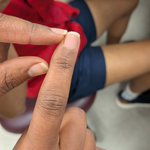
Can you see the root-knot nematode on her fingernail? You might need to blow it up to see her, but she is there

Sunn hemp is a nitrogen fixing legume that is resistant to the most damaging nematodes to Florida agriculture. It is increasingly used in Florida as a summer cover crop to improve the soil and manage nematodes
Our newest research paper compares the efficacy of fluopyram (Indemnify) with cyclobutrifluram (Trefinti) for management of lance Nematode. Great work @EricaGuri !
reference-global.com/article…


Our new review of turfgrass nematodes was just published in Annual Reviews of Phytopathology!
Plant-Parasitic Nematodes of Turfgrasses in North America - go.shr.lc/4yjWN1Q

Recent publication I am a co-author on.
Combined effects of lance nematode populations and use of plant growth regulators on creeping bentgrass putting greens - Tucker - 2026 - Crop, Forage & Turfgrass Management - Wiley Online Library share.google/q1OnAo3d8Y0uPCP…

We got new signage for the bay I share with an entomologist at our research farm. As a nematologist I find this fairly amusing, can you tell why?

5
11
866
😊

A wise man once said (cough, cough @TloweTgrass ) that if you’re not doing mist extraction for root knot nematodes then you’re missing the boat. 8 in the soil to almost 3000 with the mist. Always do both @NematodeGuy


4
558

I don't need to see the nematodes without knowing this corn is being attacked by one of two species. Nematology students, which nematodes are the likely culprit?

For those of you wondering about last week's post. Based on the corn root symptoms Dr. Crow suspected either sting or stubby-root nematodes as the problem. Here is the culprit, stubby-root nematode Nanidorus minor. ask.ifas.ufl.edu/publication…

2
143
This is a well done introduction to the fascinating world of nematodes with lots of quotes from N.A. Cobb, the father of American Nematology
youtu.be/g1m_20qh86I?si=f_9z…
Billy Crow retweeted

Interveinal chlorosis in cotton is a symptom of nutrient deficiency, but in this case reniform nematode is the likely underlying cause. From the long-term rotation trial @ufifasnfrec where reniform levels vary by cotton frequency.
Stunted plants have been in cotton more often.


The SON Extension Committee is hosting an exciting workshop at the @SON_nemaweb meeting in Baltimore next month!

