

Science • Space • Cosmic Mysteries Explained simply. Follow for what comes next.
- Tweets3.2K
- Following40.3K
- Followers44.5K
- Likes3.9K




ALT What If Future Aircraft Could Fly Without Burning Fuel? Engineers are testing an unusual propulsion technology that uses electricity, microwaves and ordinary air to generate thrust. The system heats compressed air into extremely hot plasma. As this gas expands and escapes through a nozzle, it produces thrust without conventional fuel combustion. The technology is still experimental, and powering passenger aircraft this way remains a major challenge. But it raises an exciting possibility: **Could electricity replace jet fuel in the future of aviation?


ALT **Your Body Changes, But What Makes You You?** Your body is constantly rebuilding itself. Skin renews approximately every month, red blood cells last around 120 days, and bones continuously replace old tissue with new. Yet some cells, including many neurons in the brain, can survive for decades or even a lifetime. Your body changes, but your memories, experiences and sense of identity create a remarkable continuity. So, if your body is constantly changing, what exactly makes you the same person you were years ago.


ALT Humanity May Soon Face an Intelligence It Cannot Control Meta's Chief AI Officer, Alexandr Wang, has warned that artificial superintelligence (ASI) could soon surpass human abilities across almost every field. He believes AI may eventually improve itself, accelerate scientific discoveries, and develop capabilities far beyond human intelligence. His biggest concern? Humans may struggle to maintain control over systems that become vastly more capable than us. Wang says the decisions humanity makes over the next year could shape the future of civilization. This is a warning about a possible future, not confirmation that superintelligence has already arrived. Source: TheWrap. (2026, November 23). Meta chief AI officer urges against 'handover of society' to AI.

ALT A Heart Device That Disappears After Saving Your Life? It sounds impossible, but scientists have created the world's smallest pacemaker—smaller than a grain of rice. It can be injected into the body without surgery and activated wirelessly through the skin. The real surprise? Once the heart heals, the device safely dissolves inside the body, leaving nothing behind. Researchers say this breakthrough could help babies with heart defects and adults recovering from heart procedures. A life-saving device that simply vanishes when its job is done. The future of medicine may already be here. Source: Rogers, J. A., Efimov, I. R., et al. Nature. Northwestern University. (2025).

ALT 🦷 **Brushing Your Teeth May Be Linked to Better Heart Health** A large South Korean study involving 161,286 adults found that brushing teeth three or more times daily was associated with a 10% lower risk of atrial fibrillation and a 12% lower risk of heart failure. Researchers followed participants for a median of 10.5 years. The association remained significant even after adjusting for several cardiovascular risk factors and lifestyle habits. Scientists suggest that better oral hygiene may help reduce harmful bacteria and inflammation in the body. However, this observational study cannot prove that frequent brushing directly prevents heart disease. Good oral hygiene may benefit more than just your teeth and gums.

ALT ⚡ Your Brain Could Be Connecting With Others in Ways You Can't See Have you ever "clicked" with someone instantly or felt the mood of a room without a word being spoken? Scientists know that your brain and heart generate tiny electromagnetic fields. Some researchers believe these fields may play a role in how people connect and influence each other—though this idea is still being explored and debated. Whether through biology, emotions, or something we don't fully understand yet, one thing is clear: humans are far more connected than they appear. Source : Cavaglià, M., & Firaux, T. Polytechnic University of Turin. *Electromagnetic field theories of consciousness.* McCraty, R. (2015). *Science of the Heart* (Vol. 2). HeartMath Institute.

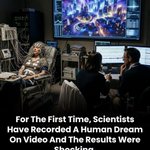
ALT 🧠 Scientists Have Found a Way to Decode Human Dreams What if scientists could get a glimpse of what happens inside your mind while you sleep? In a groundbreaking 2013 study, Japanese researchers used brain imaging (fMRI) and machine learning to identify visual elements of people's dreams. By analyzing brain activity, they could predict certain objects and scenes participants reported seeing in their dreams. The technology did not produce an exact video of a dream, but it opened an exciting window into the hidden world of human imagination. Scientists are still exploring how much of our private mental experiences can be decoded from brain activity.


ALT 🧬 A New Cholesterol Pill Just Delivered a 64.6% Reduction in Just 8 Weeks! What if a simple pill could dramatically lower the cholesterol circulating in your bloodstream? Scientists tested a new oral drug called enlicitide in a Phase 3 clinical trial. The results were remarkable: LDL, often called bad cholesterol, dropped by 64.6% after just eight weeks when the drug was added to existing statin treatment. The secret lies in a protein called PCSK9. By blocking it, enlicitide helps the liver remove more LDL cholesterol from the blood. But there is still an important question: Can lowering cholesterol this much also reduce heart attacks and strokes? That benefit has not yet been established by this trial. A promising step in the future of heart health!


ALT Proxima b Is One of Earth's Closest Potentially Habitable Neighbors Just 4.2 light-years from Earth, an intriguing planet called Proxima b orbits the nearest star to our Sun, Proxima Centauri. Discovered in 2016, this distant world lies within its star's habitable zone, where temperatures could potentially allow liquid water to exist on its surface. But there is a challenge. Proxima Centauri is an active red dwarf star that produces powerful stellar flares, potentially exposing the planet to intense radiation and threatening its atmosphere. Scientists have not confirmed whether Proxima b has an atmosphere, liquid water, or any form of life. The James Webb Space Telescope has also not captured a resolved image of its surface. Could this distant world hold clues to life beyond Earth?

ALT 🚨 Your Fingers Are Smarter Than You Think… Think your fingers wrinkle because they soak up water? That’s a myth. After a few minutes underwater, your autonomic nervous system quietly tells blood vessels in your fingertips to tighten. This shrinks the skin from underneath—creating wrinkles on purpose. Even more surprising? Doctors use this as a quick nerve test. No wrinkles can signal a problem. And those lines aren’t random… studies in Biology Letters show they actually help you grip wet objects better—like built-in traction. So those wrinkled fingers? Not a flaw… a hidden advantage. Source: Kareklas, K., Nettle, D., & Smulders, T. V. Biology Letters.

ALT 🧠 Children May Absorb More Mobile Phone Radiation Than Adults Research published in Environmental Research in 2018 found that children may absorb higher localized doses of radiofrequency energy from mobile phones than adults under certain conditions. This is partly related to differences in head size and developing brain anatomy. However, scientists have not established that everyday mobile phone radiation causes brain damage or learning difficulties in children. Parents can take simple precautions by encouraging speakerphone use, hands-free devices, and shorter calls. Understanding children's exposure is important, but scientific evidence must remain separate from speculation.

ALT 🕰️ Einstein’s Relativity Suggests a Strange Possibility About Time What if the past, present and future are all part of one enormous structure? According to Einstein’s theory of relativity, space and time are connected, forming a four-dimensional structure called spacetime. There is no universal present that every observer experiences simultaneously. This has inspired the fascinating idea of the **Block Universe**, in which past, present and future events all exist within spacetime. But this remains an interpretation of relativity, not a scientifically proven fact that the future is already fixed. Perhaps time is far more mysterious than our everyday experience suggests.

ALT **Neuralink Participant Plays GTA VI Using Only His Thoughts Imagine playing a video game without touching a controller! Neuralink has shared footage of a clinical trial participant playing GTA VI using its experimental brain implant. The technology translates brain signals linked to intended movements into digital commands, allowing him to control game actions using his thoughts. Beyond gaming, the technology aims to help people with paralysis regain independence by controlling computers and other devices through their brains. The technology remains experimental and is not approved for general use.

ALT A STOVE THAT STARTS WITH WATER? THIS ISN’T SCIENCE FICTION. Imagine filling your stove with water instead of natural gas—then turning the knob and getting a flame. The secret is hydrogen. An electrolyzer can use electricity to split water (H₂O) into hydrogen and oxygen. The hydrogen can then be used as a fuel to create heat for cooking. And here’s the fascinating part: when hydrogen burns, its main combustion product is water vapour. But there’s a catch: the stove isn’t getting free energy from water. Electricity is needed to produce the hydrogen in the first place. Hydrogen is an energy carrier, not an energy source. Researchers have already developed and tested hydrogen cooking-stove designs. The technology is real—but making it safe and practical for everyday homes remains an important challenge. The future of cooking may look very different from the kitchen we know today. Source: U.S. Department of Energy. (n.d.). Hydrogen fuel basics.