

Official account for the Mathematical Institute at the University of Oxford.
Oxford
Joined April 2014
- Tweets2.3K
- Following26
- Followers80.2K
- Likes34


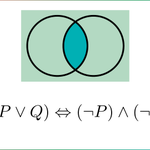


The first in-person lecture for our new students on day 1 is James Munro's Introduction to University Mathematics. It follows 5 pre-term online lectures to whet their appetite. Watch: youtu.be/jj29uEu7ozU
Here's James on an issue occupying the minds of maths teachers: AI.
If you have never enjoyed maths, you might be tempted to think that anyone studying it at university would love the subject almost 24/7.
It ain't necessarily so. Here are Nick and Rosie.
Oxford Mathematician Kaibo Hu has won one of this year's Philip Leverhulme Prizes. The award recognises outstanding researchers whose work has already attracted international recognition and whose future career is exceptionally promising.
Read more: maths.ox.ac.uk/node/85956

The fifth and final online lecture from James Munro's Introduction to University Mathematics course for our new first year students (two in-person lectures follow) goes to the heart of the subject by focusing on logic and proof.
Watch: youtube.com/watch?v=590wkRwS…

The Riemann hypothesis, one of the most important unsolved problems in maths today (unless AI, or a mathematician, sorts it before the lecture), was proposed only briefly by Bernard Riemann in his 8-page paper of 1859. David Rowe tells the story.
Book: maths.ox.ac.uk/node/82470

In response to OpenAI's 'solving' of 100s of maths problems, mathematicians stress that maths is not just about solutions, but also about the journey. Indeed, the techniques used in one direction may even produce progress in another. Here's Ramón.
Watch: youtube.com/shorts/79r9rCtCj…

First term, first day, first lecture. And so it begins. The learning thing. The quest for human understanding.
The fourth lecture in James Munro's 'Introduction to University Mathematics' course is all about functions. And for those who asked, it is numbered 'Lecture 3' because the first lecture is 'Lecture 0'. Naturally.
Watch: youtu.be/Dw_Ye5FpsvE

Rosie and Nick are just about to start their third year. Before they finished their second year, we had a chat about stuff: maths stuff and Oxford stuff.
Our new undergraduates arrive in Oxford this week in preparation for the start of term next week. Exciting times and there's much to take in, but no doubt James Munro's introductory online lectures are top of their list...
You can watch them too. Latest: youtu.be/USZekj182j4

Ramón has just left us for a postdoc position in Cambridge (it happens occasionally), but before he departed he discussed his research into using random walks to understand physical systems.
Watch the video: youtube.com/shorts/KwTe9xthN…
Read the case study: maths.ox.ac.uk/node/80941

Graham Farmelo's biography of Stephen Hawking has just been published. The title of this Public Lecture is the same as Hawking's 1980 Inaugural Lucasian Lecture. Graham will explain the genesis of that talk, the splash it made and its aftermath.
Details: maths.ox.ac.uk/node/82421

Is there any game that doesn't arouse the curiosity of a mathematician, however apparently simple?
Here's @MarcusduSautoy
James Munro's online 'Introduction to University Mathematics' course is sent to our new undergraduates to prepare them for the start of term in October when James greets them with a big welcome and two in-person lectures.
Here's the second online lecture: youtu.be/cASmou81OyY

Among his many interests, Kurt Gödel wrote a privately circulated formal proof for the existence of God using modal logic. But it was an earlier work from 1931 that upended mathematics and logic and which still applies today.
Here's Tibo to explain.
Our 'Introduction to University Mathematics' course provides an online primer for our new students prior to the start of their first term. Here James Munro explains how university mathematics differs from maths at high school.
Here's the first lecture: youtu.be/SVNdjdpRJY0
Machine-learning models are often fine-tuned for specific tasks from a pre-trained base model. One model might perform well on a language task, another on an image problem, another on a different domain altogether. Here's Bethan on model merging.
More: maths.ox.ac.uk/node/81438
For over 2,000 years scholars have marvelled at the Parthenon in Athens. The audacity, the beauty. And the architectural genius of the Greeks to introduce curves to correct optical illusions. Brilliant.
Except they didn't. Here's @AlainGoriely.
More: theguardian.com/science/2026…