

The Property and Environment Research Center (PERC) is the national leader in market solutions for conservation.
Bozeman, MT
Joined July 2010
- Tweets13.5K
- Following1.6K
- Followers5.4K
- Likes9.2K






What if recovering a species actually paid off? A newly proposed grizzly rule rewards conservation success. As populations climb the ladder toward recovery, they earn more state flexibility, and those still rebuilding keep stronger federal protection.
If numbers ever fall, federal protections return automatically. That gives states, landowners, and communities a real reason to keep investing in grizzly recovery.
See how it works: perc.org/grizzly-bear-4d-rul…
#grizzlybear #yellowstone #endangeredspeciesact #wildlifeconservation #wildlifemanagement
A remarkable recovery.
Since grizzly bears were listed under the Endangered Species Act in 1975, their populations have made an extraordinary comeback. In the Greater Yellowstone area alone, grizzlies have grown from 136 bears to more than 1,000 today.
This success was built through five decades of cooperation among federal agencies, states, landowners, sportsmen, and conservation groups.
Now, a newly proposed federal rule would reward conservation success with greater state management flexibility, while keeping federal protections in place if populations decline.
Learn more: perc.org/grizzly-bear-4d-rul…
#grizzlybear #endangeredspeciesact #wildlifeconservation
Sixteen years and two Supreme Court cases. That's how long the Sacketts spent answering a question a licensed contractor could have resolved in an afternoon.
New research from Andrew P. Morriss proposes a better way to protect wetlands: license the professionals who do the work, so problems get caught before ground is broken.
Read the full report: perc.org/2026/10/15/incentiv…
#wetlands #wetlandsconservation #conservation #propertyrights

By the late 1880s, perhaps 1,000 bison were left in North America. Today there are about a quarter million, and roughly 80% of them live on private ranches.
In The @WSJ Opinion, PERC research fellow Tate Watkins tells the story of the ranchers and markets that brought back our national mammal, from Ted Turner's herd of 45,000 to first-generation ranchers like Matt Skoglund of North Bridger Bison, who runs 250 head near Bozeman on land under a permanent conservation easement.
Read the full op-ed here: wsj.com/opinion/american-buf…


THIS IS A BIG DEAL. A bipartisan team of senators have introduced a wildlife recovery bill that builds off recommendations from PERC.
The Improving Species Recovery Act reflects real bipartisan support for making the Endangered Species Act work better for people and wildlife. For decades, bipartisan cooperation on this important issue has been elusive.
The landmark bill would set clear recovery benchmarks and reward recovery progress with gradual regulatory relief. It’s a practical solution to make the ESA work better for wildlife, states, and private landowners.
Earlier this year PERC CEO Brian Yablonski testified in a Senate hearing chaired by Senators Ricketts and Schiff. He shared pragmatic solutions to boost species recovery based on our extensive research, solutions that the Senators embrace in their bill.
We’re grateful to Senator Schiff (@SenAdamSchiff) and Senator Ricketts (@SenatorRicketts)
for working across the aisle to advance meaningful reforms to recover more species.
Read more: perc.org/2026/09/30/improvin…

The U.S. Forest Service has proposed rescinding the 2001 Roadless Rule, which restricts road construction and timber harvesting across nearly a third of national forest acreage.
A new PERC analysis examines what the data say about roadless areas, wildfire risk, and forest management, and finds that the trade-offs vary considerably from place to place.
Greater flexibility could help manage wildfire risk: Roadless fires account for roughly 25% of reported suppression costs, and 7.3 million roadless acres lie in wildfire-transmission zones. More flexibility could enable fuel treatments and faster suppression where fires threaten communities.
But more access comes with trade-offs: Human-caused fires are far more common near roads, meaning expanded access could increase ignitions and impose ecological and maintenance costs. And with just 74,000 roadless acres in direct-exposure zones, the benefits may be concentrated in relatively few areas.
Much of the current Roadless Rule debate centers on whether its nationwide restrictions should remain in their current form or be rescinded. Our analysis shows that the wildfire-management and conservation trade-offs warrant a more targeted approach.
Read the full article: perc.org/2026/09/21/the-road…
#roadlessrule #forestservice #wildfire

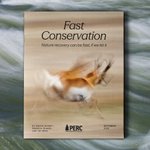
Restoring a river can happen in a day. Getting permission to do it can take years.
Fast Conservation, our new report, argues that permitting–not ecology–is the biggest bottleneck to restoring nature at scale. It can consume 30% of a project’s budget before a single tree is planted or a single culvert removed.
Conservation shouldn’t just mean preventing loss. It should mean making nature more abundant. That starts by recognizing conservation projects shouldn’t be regulated like the harm they’re meant to fix.
Read the new report: perc.org/2026/09/17/fast-con…
#conservation #environmentalpolicy #abundance

Cam Sholly is retiring after nearly 30 years with the National Park Service—the last eight leading Yellowstone through a pandemic, a 500-year flood, record visitation, and government shutdowns, all while delivering on the boldest infrastructure and housing upgrades the park has seen in decades.
PERC found in Cam a genuine partner. Together we helped implement Yellowstone's $100 international visitor surcharge, worked on transboundary wildlife issues with real wins for both wildlife and ranchers, and shaped infrastructure policies that benefited national parks across the country.
"Yellowstone is one of the world's greatest treasures. For the last eight years, it's had one leading it." — PERC CEO Brian Yablonski
Read Brian's full statement on Cam's legacy: perc.org/2026/09/11/statemen…
#yellowstone #montana #CamSholly #YellowstoneNationalPark


What did the World Cup teach us about funding America’s national parks?
In a recent op-ed, PERC CEO Brian Yablonski makes the case for investing in our parks by asking international visitors to help support the places they travel thousands of miles to experience.
With more than $24 billion in deferred maintenance, our parks need sustainable funding that matches the value they provide.
Read the full piece in RealClearPolitics:
realclearpolitics.com/articl…

In good company. In the Badlands. PERC's Sara Sutherland joined Theodore Roosevelt National Park superintendent Rachel Daniels on a panel at the new Theodore Roosevelt Presidential Library, discussing national park funding, partnerships, and the next 250 years.
#TheodoreRooseveltNationalPark #TheodoreRooseveltPresidentialLibrary #Medora #TeddyRoosevelt #NationalParks

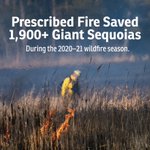
Sometimes the best way to fight fire is with fire.
New research published in Science found that prescribed burns conducted within the previous decade reduced giant sequoia mortality by 77% during California’s devastating 2020–2021 wildfire season. Researchers estimate those treatments saved at least 1,888 trees that otherwise would have been lost.
For more than a century, suppressing fire allowed fuels to build up across western forests. This study adds to a growing body of evidence that putting good fire back on the landscape can help protect some of the world’s oldest and most iconic trees when catastrophic wildfires strike.
Read the article: nature.com/articles/s41467-0…

Some conservation challenges simply can't be understood from a hearing room in Washington DC.
You have to see the Greater Yellowstone Ecosystem from the air, walk its landscapes, and hear directly from the people who steward them every day.
That’s why PERC, alongside the Boone and Crockett Club (@BC_Club1887) welcomed members of the Senate Stewardship Caucus and administration officials for a three-day conservation policy tour through the Greater Yellowstone Ecosystem.
Together with @SenatorHeinrich, @SenatorHick, @TimSheehyMT, and @GillibrandNY, participants met with ranchers, scientists, conservationists, and public land managers to explore the challenges and opportunities shaping conservation in the American West.
From Yellowstone National Park to working ranches, the tour highlighted a simple idea: the best conservation solutions are grounded in firsthand experience, informed by local knowledge, and built through collaboration across public and private lands. – at Bozeman, MT


Your map is lying to you. Seventy five percent of all wetlands live on private land. Two thirds of endangered species depend on it. But most maps show private lands as blank white space. The reality is far more colorful. Conservation happens everywhere—public and private working together as one interconnected system. It's time we redrew the map.
#conservation #publiclands #yellowstone #gye #workinglands

Today, a policy recommendation long championed by PERC and Rocky Mountain Elk Foundation (@RMEF) was officially implemented by the U.S. Fish and Wildlife Service. USFWS has rescinded the use of the blanket 4(d) rule under the Endangered Species Act, a critical step toward more effective, incentive-driven species recovery.
“For too long, the blanket rule treated threatened species the same as endangered ones, dulling incentives for recovery,” said Jonathan Wood, PERC vice president of law and policy. “By restoring a tailored approach, the Service can better reward progress and encourage proactive conservation.”
PERC and RMEF have long argued that recovering species requires stronger incentives for habitat restoration and stewardship. Under a one-size-fits-all framework, states and landowners have little reason to invest in improvements if regulatory burdens remain the same regardless of a species’ status.
The two organizations filed a joint lawsuit in 2024 challenging the blanket rule and submitted public comments in 2025 supporting its rescission.
“Smart policy should recognize improvement,” said Blake Henning, RMEF chief conservation officer. “Aligning regulations with a species’ status is a commonsense way to motivate the very actions that lead to recovery.”
A more flexible approach creates a “roadmap to recovery,” where incremental progress is met with regulatory relief—empowering local partners, rewarding conservation success, and accelerating species recovery.
#EndangeredSpeciesAct #Conservation #Wildlife

The grizzly bear is back from the brink, and a proposed new rule from the U.S. Fish and Wildlife Service would use creative, incentive-based collaborative conservation approaches to reward continued population recovery.
PERC is already implementing several projects that incentivize stewardship efforts including a grizzly grazing agreement in the Gravelly Range and a grizzly fence fund in Paradise Valley in partnership with landowners and conservation efforts.
We’re ready to put in the ground work required to help grizzlies and local communities thrive.
Learn more at perc.org/2026/07/15/a-bear-s….
A bear-sized step forward for grizzly recovery. 🐻
Today, PERC joined a coalition of conservation organizations celebrating the U.S. Fish and Wildlife Service's proposed rule for grizzly bear management—recognizing the bear's recovery as one of the most significant wildlife recovery achievements in the history of the Endangered Species Act.
The numbers tell the story: in the Greater Yellowstone area, grizzlies have grown from 136 bears in 1975 to more than 1,000 today—a success built through five decades of cooperation by states, landowners, sportsmen, and conservation groups.
Under the proposed rule, states are provided a path to managing areas that exceed local recovery objectives while the grizzly remains federally listed. It's not only a milestone for grizzly bears—it's proof of concept for how the ESA can incentivize recovery.
"For fifty years, states and landowners invested in grizzly recovery without any regulatory recognition of what they'd built. This proposal changes that and gives them reason to keep going."
- Jonathan Wood, PERC VP of Law and Policy
Proud to stand alongside our coalition partners: Rocky Mountain Elk Foundation (@RMEF), Wyoming Wildlife Federation (@wyowildlife), and Boone & Crockett Club (@BC_Club1887).
Read more: perc.org/2026/07/15/a-bear-s…
#GrizzlyBear
#Conservation
#EndangeredSpeciesAct
#WildlifeRecovery

This evening @SecretaryBurgum acknowledged the recovery of grizzly bears and announced a rule transferring management to states.
This is a milestone not only in the recovery of the grizzly bear but as proof of concept for how the ESA's flexibility can be used to empower scientific state management.

BREAKING: Governor Gianforte and Secretary Burgum are making the announcement that grizzly bear management should return to the states
#Mtpol

Thomas Jefferson is remembered as a Founding Father, but he was also an early champion of conservation.
Two years before writing the Declaration of Independence, he set out to conserve Virginia’s Natural Bridge, pioneering a uniquely American model of voluntary stewardship.
Read the full article from PERC’s summer magazine: perc.org/2026/06/24/thomas-j…

At its best, the American conservation tradition aligns the interests of private landowners, ranchers, hunters, and locals generally with the lands, waters, and wildlife they depend on.
This issue, published as the nation marks its 250th year, traces that tradition across two centuries and a continent: from its philosophical roots in the founding era, through the recovery of species that have come to symbolize the country, to the market innovations that have quietly conserved millions of acres.
What links these stories is a distinctly American approach: not preservation through prohibition, but conservation through private ownership, voluntary participation, and aligned incentives.
Read the full issue at perc.org/magazine.
#america250 #conservation

We are proud to support innovative efforts to maintain our national parks and public lands.
Congratulations to @RepWesterman and @RepHuffman for passing the America the Beautiful Act out of committee.
Let's get this done!
“As we celebrate America’s 250th anniversary, we have a unifying opportunity to invest in the stewardship of the lands and landmarks that define who we are as a nation. This legislation builds on the success of the Great American Outdoors Act, sustaining an innovative approach for funding upkeep of our national parks and forests while recognizing the beneficial role visitor fees play in supporting public lands. PERC looks forward to working with Congress to continue improving how we reliably care for these cherished places.”
- Brian Yablonski, CEO
