

Head of Research @bitcoinpolicy | Fmr Senior Advisor & Chief Speechwriter to @SecScottBessent | @Forbes Contributor | @PrincetonSPIA alum
Washington, DC
Joined June 2022
- Tweets1.4K
- Following1K
- Followers9.7K
- Likes39K




Pinned Tweet
NEW: BPI research reveals that a Marxist-Leninist group with documented ties to China has been a critical mobilizer in efforts that have blocked or delayed $23.6 billion in AI investment in the US.
Its scalps include 10 data center moratoria, 1 permanent data center ban, and 4 rejected or scrapped AI projects.
In Part II of our foreign influence investigation, BPI exposes the Party for Socialism and Liberation (or PSL) as the political arm of Shanghai-based Neville Singham, and lays bare a national campaign launched by the party to stop America’s data center buildout.
Singham is the subject of multiple federal investigations into his reported ties to the CCP. Our research uncovers the anti-data-center organizing of his activist vehicle, the PSL, across 21 campaigns in 14 states, in roles ranging from lead organizer to one member of a broader coalition.
This report adds to the mounting evidence that China and its surrogates are committed to stopping America’s data center buildout so that Beijing can gain the advantage in the AI race.


Sam Lyman retweeted

Britain has a Bitcoin opportunity. 🇬🇧
New research from Conner Brown and Joey Garcia explains how the UK can build on its strong legal foundations with practical changes to banking, tax, and market access.
The paper also looks at protecting self-custody, handling seized Bitcoin after victims are compensated, and testing how mining could use otherwise wasted energy.
Read the report: btcpolicy.org/articles/brita…


Sam Lyman retweeted

Go to a meeting on AI issues on Capitol Hill, and you inevitably either immediately precede or follow another meeting with one of the myriad of EA-funded groups flooding Hill staffers with very particular AI Safety messages. Potentially losing Nvidia as an active player in the policy space would be a tremendous loss.
Nvidia’s advocacy helped prevent the emergence of a uni-party Safety movement. And those risks are very real. Even several right-coded groups have dipped their toes in the Safety waters. The members of the White House Task Force are largely open model aligned, but we are facing a strong pro Safety majority in Congress.
And yes, I have started capitalizing Safety, as we need to call it what it is - a coordinated movement of connected organizations that often share funding sources advancing a specific political and social agenda.


As far back as 2024, @DrTechlash did pioneering research documenting the details behind the historic donation that seeded FLI with hundreds of millions of dollars.
Her work laid the foundation for the research that came after, including our own.
A must-read 👇


Sam Lyman retweeted

ICYMI: a banger report on AI safety, EA, and their connections to a crypto pump scheme.

NEW: The most powerful AI safety think tank in America is 94% funded by foreign money.
The Future of Life Institute built the intellectual foundation for the most stringent anti-AI legislation to come before Congress this year: the Data Center Moratorium Act and the Ban Superintelligence Act.
But the organization is bankrolled almost entirely by foreign billionaires, including one who expressed that China could be “the grown-up in the room” on AI policy and described China as being in a “much better position to regulate” advanced technology than the US.
And that’s only half the story.
Almost the entirety of FLI’s funding comes from a crypto memecoin pushed by Sam Bankman-Fried. Vitalik Buterin donated $665 million in Shiba Inu to FLI in May 2021. SBF, who had a yearslong relationship with FLI’s cofounder, listed Shiba Inu on FTX that same month, helping provide exit liquidity for FLI’s Shiba Inu donation that allowed it to cash out at a rate 20x higher than even Vitalik expected.
Effective altruists not only orchestrated this historic gift but have been at the forefront of leveraging it to shape AI safety regulation in the US in a direction that leans towards authoritarianism – so much so that Vitalik himself has since criticized FLI’s use of his donation.
American AI policy should be made by Americans. But to an alarming degree, it is funded by foreign billionaires whose allegiance is to a transnational ideology that puts US national and economic security second.

Jacob Coxon was a coordinated op to black pill the American people on AI.
But the bigger op goes all the way back to 2021.
It involves Sam Bankman-Fried, a memecoin called Shiba Inu, and a think tank called the Future of Life Institute.

NEW RESEARCH: $51 billion memecoin boom helped fund the AI safety movement.
Crypto memecoins have long been used to extract from retail traders. Sam Lyman's new report traces one token's connections to a behemoth AI safety think tank — and to FTX and Alameda Research, the now-defunct crypto businesses of Sam Bankman-Fried.
Read the report: btcpolicy.org/articles/how-e…
teapawt.net/SamLyman33/status/2120…

Sam Lyman retweeted
Undue foreign influence on AI is top of mind. A report from @SamLyman33 has new findings on that topic, with a special focus on one of the most powerful and well-funded "AI safety" think tanks in the world. And there's a crypto scam/SBF angle. Must-read. Link below.

NEW: The most powerful AI safety think tank in America is 94% funded by foreign money.
The Future of Life Institute built the intellectual foundation for the most stringent anti-AI legislation to come before Congress this year: the Data Center Moratorium Act and the Ban Superintelligence Act.
But the organization is bankrolled almost entirely by foreign billionaires, including one who expressed that China could be “the grown-up in the room” on AI policy and described China as being in a “much better position to regulate” advanced technology than the US.
And that’s only half the story.
Almost the entirety of FLI’s funding comes from a crypto memecoin pushed by Sam Bankman-Fried. Vitalik Buterin donated $665 million in Shiba Inu to FLI in May 2021. SBF, who had a yearslong relationship with FLI’s cofounder, listed Shiba Inu on FTX that same month, helping provide exit liquidity for FLI’s Shiba Inu donation that allowed it to cash out at a rate 20x higher than even Vitalik expected.
Effective altruists not only orchestrated this historic gift but have been at the forefront of leveraging it to shape AI safety regulation in the US in a direction that leans towards authoritarianism – so much so that Vitalik himself has since criticized FLI’s use of his donation.
American AI policy should be made by Americans. But to an alarming degree, it is funded by foreign billionaires whose allegiance is to a transnational ideology that puts US national and economic security second.
Sam Lyman retweeted

The ghost of Sam Bankman-Fried looms large over DC AI policy.
We are deeply concerned about FLIs growing influence in Washington. Even their original supporter, @VitalikButerin, now considers their recent policy turn “authoritarian and fragile.”
Check out our new research from Sam to learn more.
NEW: The most powerful AI safety think tank in America is 94% funded by foreign money.
The Future of Life Institute built the intellectual foundation for the most stringent anti-AI legislation to come before Congress this year: the Data Center Moratorium Act and the Ban Superintelligence Act.
But the organization is bankrolled almost entirely by foreign billionaires, including one who expressed that China could be “the grown-up in the room” on AI policy and described China as being in a “much better position to regulate” advanced technology than the US.
And that’s only half the story.
Almost the entirety of FLI’s funding comes from a crypto memecoin pushed by Sam Bankman-Fried. Vitalik Buterin donated $665 million in Shiba Inu to FLI in May 2021. SBF, who had a yearslong relationship with FLI’s cofounder, listed Shiba Inu on FTX that same month, helping provide exit liquidity for FLI’s Shiba Inu donation that allowed it to cash out at a rate 20x higher than even Vitalik expected.
Effective altruists not only orchestrated this historic gift but have been at the forefront of leveraging it to shape AI safety regulation in the US in a direction that leans towards authoritarianism – so much so that Vitalik himself has since criticized FLI’s use of his donation.
American AI policy should be made by Americans. But to an alarming degree, it is funded by foreign billionaires whose allegiance is to a transnational ideology that puts US national and economic security second.
I guarantee this will be one of the most eye-opening reports you'll read all year.
Effective altruists are creating an AI doom memeplex using money extracted from retail investors.
Read the full report here 👇
btcpolicy.org/articles/how-e…
Fun fact: The woman pictured here credited the viral success of her campaign to the Party for Socialism and Liberation, a China proxy organization operating here in the United States.
PSL is the political arm of the Shanghai-based Neville Roy Singham, an avowed Marxist multimillionaire who has bankrolled anti-American, pro-CCP nonprofits to the tune of $278 million.
Singham’s political foot soldiers have been boots on the ground in dozens of anti-data center fights across the country. But striking down the $5 billion data center campus in Landover, MD, was by far their biggest scalp.
In the ongoing campaign against American AI, cui bono?
More than anyone, it’s our chief political adversary.


This campus was just one of many.
The CCP-aligned PSL successfully blocked or delayed $24 billion in data center investment here in the US.
The nonprofit/activist ecosystem is massive vector for foreign influence.
Read our full report here:
btcpolicy.org/articles/forei…

Add Physical Superintelligence to the list of frontier AI companies solving math.
Huge breakthrough here with a model that found a proof of the Aaronson‑Ambainis conjecture, which could have powerful implications for quantum computing.

Today Physical Superintelligence PBC is announcing a proof of the Aaronson-Ambainis conjecture, one of the central open problems in quantum complexity, with major implications for quantum computing speedup.
psi.inc/research/aaronson-am…
Thread 👇

Sam Lyman retweeted

BPI's Zack Cohen on how a de minimis tax exemption could get Americans spending Bitcoin:
"Every time they buy a coffee, they don't have to keep track of the transaction."
"We would see a lot of Bitcoins come out of this state of just being held and move through the economy and actually stimulate the economy."
Christianity offers its followers immunity from secular mind viruses like effective altruism.
Why? Because it tells a far more powerful story.
"We as humans are His image-bearers, not units of welfare whose value must be calculated."
A must-read from @NathanLeamerDC in @TGC

For years I have read @TGC, so it was an honor to write this essay on the shortcomings of the secular philosophy of Effective Altruism.
At first glance, its call to do the most good possible sounds like something Jesus might say.
Yet Christianity places those truths inside a much larger story, one where goodness is defined not by our calculations but by God himself.
thegospelcoalition.org/artic…

AI agents have the potential to unlock trillions of dollars in economic activity. But only if we get the regulation right.
Alex draws up a great roadmap here 👇

Personal agents are everywhere (Muse! Instinct! Hermes! GrokBot! Dots! Duet!).
And, increasingly, they're running into walls – similar walls to the ones banks threw up during the Open Banking fights of the past decade, as fintech users struggled to connect their apps to their bank-held financial data.
It's time for Open Agentic Commerce.
In Dodd-Frank Section 1033, the backbone of Open Banking, the definition of “consumer” reads: “an individual or an agent, trustee, or representative acting on behalf of an individual.” Congress obviously wasn’t contemplating AI agents when it wrote Dodd-Frank — but technology changing doesn’t obviate the underlying principle: consumers should be able to choose who, or what, transacts on their behalf.
Banks and companies like Amazon have real, legitimate concerns about agents becoming vectors for fraud or unauthorized transactions. But those are arguments for building portals for secure access, not for prohibiting agents altogether. Open Banking offers a useful lesson here, in that secure, standardized interfaces are preferable to forcing third parties into credential sharing or screen scraping.
We propose some basic guidance that relevant regulators (FTC, OCC, CFPB) could consider to help the market to coalesce around open norms before incumbents obtain sufficient lock-in, freezing the current landscape to their advantage.
With standards like these established, agents can make decisions that better serve the consumer, and will index on things like quality or price, rather than being funneled into a constrained set of options.
The push for Open Banking resulted in better experiences and lower prices for consumers. As agents become principal commercial actors, it is imperative that we lay the groundwork now so that an agent acting on your behalf is equally capable – if not more so – of delivering value and cost savings to you as you would be acting on your own.
Read our proposal below:

4
697
It was a massive quarter for BPI, including the announcement of a new partnership with the State Department, Congressional testimony, and the President's endorsement of Data Center Dividends.
Dive deeper here 👇
Bitcoin Policy Institute’s Quarterly Report for Q3 is live.
You can read about our Freedom Tech DC summit with Jack Dorsey and Michael Saylor, our new State Department partnership, Sam Lyman’s congressional testimony, our latest policy proposals, and much more.
Attached below is the executive summary. You can access the full report here:
btcpolicy.org/articles/q3-20…


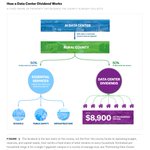
The beauty of Data Center Dividends is they can be paid entirely by the surplus tax revenue generated from data centers.
We're talking dividend payments of up to $8,900 per family per year. And that's after doubling the budget for schools, infrastructure projects, and public works in some locales.
In other words, no new taxes needed, and therefore no room for extortion.
I appreciate Adam's thoughtful critique here. But it misses just how much additional revenue data centers generate in towns that have extremely small populations to begin with.
Data centers are unlike any tax-revenue driver rural counties have ever seen. And the excess revenue is better spent by the families who live there than local government bureaucrats, who, let's be honest, are not exactly the world's best capital allocators.
We introduced the idea of Data Center Dividends last month in a research report that lays out their structure and the mechanics of how they could work to create a win-win for rural Americans and data center developers alike.
Read Adam's Substack post. It's thoughtful, and it flags a legitimate risk.
Then read our report, which explains how to mitigate that risk to pave the way for American reindustrialization👇
btcpolicy.org/articles/data-…


These data center "dividend" schemes like what President Trump is now apparently floating (i.e., forcing data center developers to cut checks to people or provide other kickbacks to local governments as a condition of receiving the blessing to build) will just become a massive political shakedown racket over time.
Those of you who are familiar with public choice economics understand the concept of a "milker bill." A milker bill is a law or some sort of proposal that policymakers float for the express purpose of just bleeding a particular industry or constituency dry of cash in exchange for political favors or kickbacks. Well, now we're going to have a variant of that except that it'll be data center milker proposals.
Pretty soon data center firms will be expected to not only be cutting a check to everybody in town, but to also fund every single school, to build every new fire station, and to name any local stadium or convention center as the price of admission to constructing a new facility in a state or local community. (And don’t forget about those campaign contribution checks that every lawmaker will be expecting to get in the mail, too!)
We've already seen some state and local officials talk about this openly. In August, Ian Ullman, deputy director of Maryland Gov. Wes Moore's Maryland Energy Administration, told county officials who had enacted data-center moratoriums to use that time to negotiate for favors. His advice was remarkably explicit: “And make your wish list. This is the time.” Ullman said that counties willing to negotiate can “extract meaningful investment.” Likewise, San José Mayor Matt Mahan wants to pump data centers for money to finance affordable housing, parks, and home solar systems. Other state and local officials have looked to get data center developers to pony up cash or provide other deliverables as a condition of approval to build. Importantly, the threat of moratoriums or outright bans looms large in every negotiation now. ‘PAY UP OR GET OUT’ is the implicit (and sometimes quite explicit) message.
When people talk about investing in a community, the very act of building a new facility and business from the ground up IS an act of investing in that community. The jobs, tax revenues, and other benefits these firms create ARE investments in a community. If those firms want to go and also cut checks to people or make other community contributions, that's their business. But now we're off and running with a totally different sort of political extortion racket that threatens to make the entire enterprise of building very unprofitable very quickly. The distortionary effects here are significant in terms of whether or not the underlying investment happens at all, and clearly only much larger firms are in a position to pay the bribe to get the facilities built to begin with.
We hear a lot of talk from people today about the need for America to start "building again" and get serious about infrastructure development by reshoring and reinvesting in local communities. But then when a certain sector starts doing exactly that and provides massive investment to communities across America, what do we do? Apparently we now say ‘no thank you’ and then tell them that if they do want to build again and invest in communities that they first need to cut checks for the privilege of getting permission to build again. That's just not the way government should operate in America.
Meanwhile, China is currently encouraging a massive build out of data center capacity, welcoming the investment it brings to their communities, and enjoying the potential broader geopolitical benefits that will be associated with it as they look to overtake the United States in the race for global technology supremacy.
As they say, progress is a choice. So is national decline.


ICYMI: POTUS has been touting "Data Center Dividends" - using surplus tax revenue from data centers to provide yearly payments to families in rural towns.
BPI laid out 3 paths for data center dividends last month: the dividend, credit, and endowment models.
Dive deeper here👇


Data Center Dividends can jiu jitsu political momentum in the data center debate to favor families & builders.
Every data center town can build a micro-sovereign wealth fund, ensuring rural prosperity for decades to come.
A must-read from @t1Maverick in @AmericanIntel_ 👇

"Capital investment driving AI buildout creates a once-in-a-generation opportunity for local communities. They should make existing industry offers standard, permanent, and more generous for the American people they represent."
@t1Maverick, On Data Center Dividends 👇
