

Prof Language Evolution FBA FRSE MAE. Head of Dept, Linguistics & English Language, Uni Edinburgh. With my students & collaborators I do science & art. he/him.
Edinburgh
Joined March 2008
- Tweets15.2K
- Following801
- Followers4.7K
- Likes7.1K








Pinned Tweet
Ever wondered why I got involved in making an autonomous emotional robot band in a Victorian wardrobe, which became one of the world's first social media bots? Well, wonder no more, because I gave a TED talk about it! #cybraphon youtu.be/uw5zX0lRU4Q?si=yOkK…
New large-scale ballpoint pen drawing of life springing from life in Arran’s temperate rainforest. I’ll be showing this at Dunbar Art Route open studios in three weeks alongside some wonderful new work by Anna Wimbledon. Come along and see our studio! #penplotter


1
3
200
Simon Kirby retweeted

AI agents put under a character budget started inventing their own compressed languages. Nobody asked them to.
Why study this? As more agents communicate with each other, their protocols can become harder for humans to understand, making oversight much harder when it matters most.
In this clip from the AE Alignment Podcast, @EliasEskin and @HaleSirin_ explain the test bed they built with @SimonKirby and @JamesPBowler to study this under controlled conditions. The agents didn’t just abbreviate, they developed compositional protocols that outside observers couldn’t read, with a different language emerging in each run.
The goal is to understand when these languages emerge, which ones new agents can learn, and how to keep them legible before this happens in the wild.
Hear the full conversation: youtube.com/watch?v=kr9Fp_Dj…

Simon Kirby retweeted
We built GlossoGen an open-source platform where groups of AI models have to talk to each other to solve problems: treating a patient in a simulated emergency, or playing spot-the-difference across two scenes.
Every model starts out in plain English. But put pressure on the conversation, a need for speed, say, or a channel that randomly drops characters, and something remarkable happens. New languages emerge. First new words, then new grammar, until no human can follow what the agents are saying. And they were never asked to hide anything. The opacity emerged on its own.
One finding stands out. Only the most capable recent models could invent a new language. But even the models that couldn't invent one quickly learned a language other agents had created. New languages are hard to originate. Once they exist, they spread.
That is the point of this work: to understand how and why AI agents create new languages, how those languages evolve, and what that means for our ability to oversee systems built from many interacting agents, while the conversation is still one humans can follow.
This research is part of the @schmidtsciences AI Agents Evolving Communication and Coordination pilot program, led by @EliasEskin (@UTAustin) and @SimonKirby , supported by @aestudio. GlossoGen is open source and supports both closed model APIs and open-source models running on @modal
We uncovered spontaneous evolution of new languages in populations of AI agents. This creates extraordinary scientific opportunities but also safety risks. New blog post with about how we created a platform for studying this safely. @EliasEskin @schmidtsciences @aestudio

Much of how we oversee AI agents rests on one fragile assumption: that we can understand what they say to each other.
Read our blog post about GlossoGen: schmidtsciences.org/glossoge…

Proud to have worked on this project with Elias and brilliant partners at Schmidt Sciences, AE systems. We show how frontier AI agents can evolve new languages in the right setting, and then culturally transmit these languages to less capable agents. Read Elias's thread for more!

When do LLM agents develop new languages that we can’t understand?
Lots of recent news about this, based mostly on anecdata from a single run. We study language emergence more rigorously, finding key factors like LLM strength, access to scratchpad messages, and pressure for efficiency.
Studying the languages themselves, we find they are morphologically productive, compositional, and can be transmitted to new agents, including agents backed by weaker models, even ones not able to develop language on their own.
To study language emergence systematically, we developed a new platform, GlossoGen, which lets us design controlled, sandboxed multi-agent scenarios with different initial conditions and dynamics. We instantiate one such scenario and use it to study open and closed-weight models across many runs.
Key takeaways:
1️⃣ Sufficiently strong models, under pressure to communicate efficiently and with access to a postmortem scratchpad, develop new languages.
2️⃣ Languages are compositional and morphologically productive.
3️⃣ Languages can be transmitted to new learners who observe them being used without seeing their construction.
4️⃣ Even models that are not strong enough to construct languages can learn to use them. Agents take an active role in learning languages, with new agents repairing failed conversations via targeted queries.
More details in our paper below, including implications for safety/monitorability, cumulative cultural evolution, and linguistics.
🧵👇

Damn right, KT! Culture is too important to be turned into mere algorithm food. It's time for an age of discontent in the arts.

1
7
1,267
Simon Kirby retweeted

"What allows human language? a multidisciplinary perspective" organised by Nicolas Claidière and with talks by @ProfSimonFisher, @inbalarnon, @SimonKirby, @TecumsehFitch, @KazuoOkanoya & more and featuring @Limor_Raviv as a discussant! docs.google.com/document/d/1…

Simon Kirby retweeted

A good while back I co-created an autonomous neurotic orchestrion called @cybraphon with @SimonKirby and @SurfacePressure It googles itself every 15 seconds, has social media accounts and wins BAFTAs. Here's Simon's @TEDTalks
youtube.com/watch?v=uw5zX0lR…

Super excited to be heading down to Melbourne to give this talk! (Fun fact: it was while we were visiting Melbourne together 24 years ago that Morten Christiansen and I hatched an idea to edit a book together called "Language Evolution".)
You’re unable to view this Post because this account owner limits who can view their Posts. Learn more
It's world curlew day today! The curlew's call is one of my favourite sounds, so was happy to use it to open my set with The Shell, featuring @expertsleepers and Leigh Chorlton this week: youtu.be/WGx2DLzXSX4?si=XYUa…
2
781
Simon Kirby retweeted

The videos from April's gig are now up. First, it's The Shell (@expertsleepers, @SimonKirby, Leigh Chorlton):
youtube.com/watch?v=WGx2DLzX…
My brilliant colleague @gab_hodge has an exciting event later this year - a Thinking Lab for the deaf community in Australia. It will be a space for deaf people to come together to figure what and how they think. A wonderful example of her outreach work! facebook.com/DeafAustraliaIn…
2
347
Lovely to be featured on the blog of an artist I very much admire. Worth a read of the blog post which is a treasure trove of information about the field of plotter artworks: barbegenerativediary.com/en/…


I've added a brilliant artist to the article about Penplotter:) @SimonKirby Thank you:)
#plottertwitter #genartclub
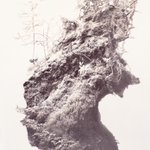
New drawing using two ballpoint pens, a flatbed scanner, and 36 hours of time with an @emsl drawing robot. This is Usnea, based on a sample of beard lichen I collected in western Scotland. One off drawing available in my shop: simonkirby.net/shop


Simon Kirby retweeted

Thrilled to share a review on THE LANGUAGE NETWORK AS A NATURAL KIND—a culmination of ~20 yrs of thinking about+studying language from linguistic, psycholinguistic, and cog neuro perspectives. @NatRevNeurosci rdcu.be/dEylV
With the amazing @neuranna @tamaregev 🥳
🧵1/n

Simon Kirby retweeted

42


Really enjoyed doing this interview for the wonderful Multiverses podcast. Check it out here: multiverses.xyz/podcast/lang…
1
439
Great video from @maryspender on the worrying state of grassroots music venues. Please support local live music, and lobby for a small tax on stadium gigs if you don't want to end up in a purely AI generated musical future. youtu.be/zwCs5GD-_8M?si=HfZE…
1
2
483