

A nonprofit investigative news outlet exposing the moneyed interests that control U.S. politics.
Ashfield MA
Joined December 2017
- Tweets9.4K
- Following362
- Followers26.8K
- Likes1.5K






NEW: Howard Lutnick promised Nvidia’s CEO “really easy access to the president,” then reportedly stalled a crackdown on Nvidia chips reaching China. readsludge.com/2026/11/20/ho…

Sludge retweeted

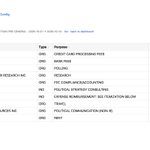
Hakeem Jeffries attempted to claim that he's only taken $10,000 per cycle from AIPAC's PAC—not acknowledging the $1.5 million that the PAC has funneled to his committees in earmarked contributions.
AIPAC explicitly took credit for the hard dollars.
readsludge.com/2025/11/25/je…

Sludge retweeted
ICYMI: A former pipeline CEO helped write provisions in BAAJA that would make it harder for states to block gas pipelines and for courts to throw out federal approvals when agencies violate environmental review law.
Alan Armstrong left pipeline giant Williams in March to join the Senate, replacing Markwayne Mullin. When he introduced his pipeline bill in June, Williams was still counting him as an employee for purposes of his stock awards in order to preserve $2.8 million in stock he otherwise would have forfeited.
Williams backs Armstrong’s bill, key provisions of which made it into BAAJA. The company has spent years trying to curb the water quality authority that New York used to block its 125-mile Constitution pipeline.
On Williams’ Nov. 3 earnings call, general counsel Lane Wilson told investors that if BAAJA had already been law when a federal appeals court reviewed the New Jersey water-quality certification for another Williams pipeline project, “we’d still have that permit.”
Wilson was Armstrong’s chief of staff when Armstrong introduced his bill. He kept his title as Williams’ general counsel the whole time.
Armstrong holds more than $50 million in Williams stock on his Senate disclosure. He also hold separate awards tied to the company’s financial performance that could be worth about $32.5 million at the share price Williams used in its filings. readsludge.com/2026/10/09/pi…

Sludge retweeted
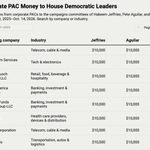
Pete Aguilar and Hakeem Jeffries rank No. 1 and No. 2 among all House Democrats in corporate PAC money this cycle, even as a record number of incoming lawmakers have sworn off all corporate PAC money. readsludge.com/2026/11/13/je…

Sludge retweeted

Little scoop in here: Lane Wilson, who was simultaneously Sen. Alan Armstrong’s COS and Williams Co.’s general counsel, said on a Nov. 3 earnings call that if BAAJA had been law when a court tossed a NJ water-quality permit for a Williams pipeline, “we’d still have that permit.”

ICYMI: A former pipeline CEO helped write provisions in BAAJA that would make it harder for states to block gas pipelines and for courts to throw out federal approvals when agencies violate environmental review law.
Alan Armstrong left pipeline giant Williams in March to join the Senate, replacing Markwayne Mullin. When he introduced his pipeline bill in June, Williams was still counting him as an employee for purposes of his stock awards in order to preserve $2.8 million in stock he otherwise would have forfeited.
Williams backs Armstrong’s bill, key provisions of which made it into BAAJA. The company has spent years trying to curb the water quality authority that New York used to block its 125-mile Constitution pipeline.
On Williams’ Nov. 3 earnings call, general counsel Lane Wilson told investors that if BAAJA had already been law when a federal appeals court reviewed the New Jersey water-quality certification for another Williams pipeline project, “we’d still have that permit.”
Wilson was Armstrong’s chief of staff when Armstrong introduced his bill. He kept his title as Williams’ general counsel the whole time.
Armstrong holds more than $50 million in Williams stock on his Senate disclosure. He also hold separate awards tied to the company’s financial performance that could be worth about $32.5 million at the share price Williams used in its filings. readsludge.com/2026/10/09/pi…
Sludge retweeted
You Could Be On The Hook For Big Oil’s Next Pipeline readsludge.com/2026/11/17/yo…

NEW: A provision buried in the Senate’s bipartisan permitting deal would let fossil fuel developers that win “disparate treatment” lawsuits collect up to 100% of their projects’ construction costs from taxpayers, including pipelines and LNG terminals. readsludge.com/2026/11/17/yo…