

Building Nigeria’s historical record online. Today: newspapers, magazines, oral histories. Tomorrow: an archive that outlasts us all.
Non-Profit
Joined July 2020
- Tweets8.6K
- Following0
- Followers33.7K
- Likes543




Pinned Tweet
Starting from ₦7,500 a month, you can support our mission to keep Nigerian history alive and at everyone’s fingertips.
Scan the code or tap the link to become a member today.
archivi.ng/membership

archivi.ng retweeted

They advertised houses up for rent in newspapers 😳

In 1987, Kaduna State military governor Abubakar Umar criticised NTA for showing what he considered boring and irrelevant programmes, including a flood of James Bond copycat films.
After 27 years of independence, he argued, Nigeria should be doing better at producing its own stories instead of copying foreign films.
“Colonel Umar said people were more interested in watching local films initiated by us and not emulation of foreign films which have no moral values,” New Nigerian reported.

archivi.ng retweeted

Lmao, my dad told me about this. He was so excited when the reruns started airing on M-Net around 2005 (I think) that I’m convinced this was the entire raison d’être for getting DStv in the first place.
In 1982, NTA wanted to bring Dallas, the popular American TV series, to Nigerian viewers and paid a London company $805,546 to supply it. But the company turned out to be fake, and its owner, Peter Stetton Knowles, disappeared with the cash.
Two years later, New Nigerian reported that NTA had paid the advance fee without consulting its legal adviser, signing a formal agreement or securing a bank guarantee.

archivi.ng retweeted

Nigeria has been cooked, no be today.
In 1982, NTA wanted to bring Dallas, the popular American TV series, to Nigerian viewers and paid a London company $805,546 to supply it. But the company turned out to be fake, and its owner, Peter Stetton Knowles, disappeared with the cash.
Two years later, New Nigerian reported that NTA had paid the advance fee without consulting its legal adviser, signing a formal agreement or securing a bank guarantee.
archivi.ng retweeted

this is just... kai...
In 1982, NTA wanted to bring Dallas, the popular American TV series, to Nigerian viewers and paid a London company $805,546 to supply it. But the company turned out to be fake, and its owner, Peter Stetton Knowles, disappeared with the cash.
Two years later, New Nigerian reported that NTA had paid the advance fee without consulting its legal adviser, signing a formal agreement or securing a bank guarantee.
Every day for the rest of October, we’re revisiting the issues Nigerians discussed in newspapers and magazines this month, around 60 years ago.
Today, we travel back to October 1966, when Igun complained about Nigerian prisons.

In 1982, NTA wanted to bring Dallas, the popular American TV series, to Nigerian viewers and paid a London company $805,546 to supply it. But the company turned out to be fake, and its owner, Peter Stetton Knowles, disappeared with the cash.
Two years later, New Nigerian reported that NTA had paid the advance fee without consulting its legal adviser, signing a formal agreement or securing a bank guarantee.
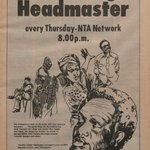
In 1985, The Village Headmaster, created by Olusegun Olusola in the late 1960s, remained one of NTA’s most popular TV shows after nearly 20 years on air.
Source: New Nigerian


In 1987, Kaduna State military governor Abubakar Umar criticised NTA for showing what he considered boring and irrelevant programmes, including a flood of James Bond copycat films.
After 27 years of independence, he argued, Nigeria should be doing better at producing its own stories instead of copying foreign films.
“Colonel Umar said people were more interested in watching local films initiated by us and not emulation of foreign films which have no moral values,” New Nigerian reported.

archivi.ng retweeted
W Celestina Mgbemena 👏🏾👏🏾👏🏾she was ahead of her time. Especially at that time period o when no much enlightenment on independent women . Take your flowers ma'am 💐💐💐
In 1971, at just 22, Celestina Mgbemena was running her own electronics firm in Enugu, then part of East Central State.
She had spent three years training in Onitsha to become an electronics technician before co-founding the business with £45 in capital, making her one of the few women in the field at the time.
She told TRUST, “I love independence. Women have to get over the feeling of inferiority to men with which they have been brainwashed. Many of the things women believe they cannot do are in fact things they can do very well.”


In 1980, Muhammadu Marwa, known as Maitatsine, was a controversial preacher with a large religious following in Kano. But by December, that following had become the centre of an eight-day uprising that left thousands dead.
This week on Previously in Nigeria…
Every day for the rest of October, we’re revisiting the issues Nigerians discussed in newspapers and magazines this month, around 60 years ago.
Today, we travel back to October 1975, when James complained about bad roads in Lagos.

archivi.ng retweeted
In 1971, at just 22, Celestina Mgbemena was running her own electronics firm in Enugu, then part of East Central State.
She had spent three years training in Onitsha to become an electronics technician before co-founding the business with £45 in capital, making her one of the few women in the field at the time.
She told TRUST, “I love independence. Women have to get over the feeling of inferiority to men with which they have been brainwashed. Many of the things women believe they cannot do are in fact things they can do very well.”
archivi.ng retweeted
More than 153,000 pages of historical newspapers and magazines are now accessible on Archivi.ng. They hold the records of how Nigerians lived, what they fought for, what they feared and what they hoped for.
Visit archivi.ng to explore Nigeria's past.


In 2007, 23-year-old Uzoma Chuka was arrested in Osogbo, Osun State, for disguising himself as a woman to deceive men into giving him money.
According to TimeNews, a mobile police officer, Dele, approached him, believing he was a woman, and invited him out for a meal before taking him to his house.
When they arrived, Chuka panicked and asked to use the ladies’ restroom within the compound, hoping to escape. When he noticed there was no way out, he confessed. Neighbours and passers-by reportedly beat him before he was taken to a police station, where he made further statements.
Chuka said he had used the disguise for some time and made an average of ₦500 from each victim. He explained that he used a condom to create a rounded bust that made him look attractive. He usually escaped by telling victims he needed to visit the ladies’ room after they gave him money.
He blamed his actions on idleness and hunger. He said he had been out of school and unemployed since 2001, after attending Army Secondary School and St Paul’s Primary School in Port Harcourt, Rivers State. He had moved to Osun to find a means of survival after his father died in 1989, leaving his mother to support the family.

More than 153,000 pages of historical newspapers and magazines are now accessible on Archivi.ng. They hold the records of how Nigerians lived, what they fought for, what they feared and what they hoped for.
Visit archivi.ng to explore Nigeria's past.
In 1971, at just 22, Celestina Mgbemena was running her own electronics firm in Enugu, then part of East Central State.
She had spent three years training in Onitsha to become an electronics technician before co-founding the business with £45 in capital, making her one of the few women in the field at the time.
She told TRUST, “I love independence. Women have to get over the feeling of inferiority to men with which they have been brainwashed. Many of the things women believe they cannot do are in fact things they can do very well.”
In 2005, a debate over rotational presidency erupted into shouting and table-slamming at Nigeria’s National Conference on Political Reforms, forcing security officers to intervene.
At the power-sharing committee, Northern delegates argued that the presidency should rotate between the North and South. Delegates from the South-East and South-South wanted rotation among the six geopolitical zones, without fixed guidelines on which zone would take the slot next.
The disagreement escalated until security personnel at NICON Hilton hotel intervened to prevent further disorder. A committee member warned that the dispute threatened the committee’s work.

Every day for the rest of October, we’re revisiting the issues Nigerians discussed in newspapers and magazines this month, around 60 years ago.
Today, we travel back to October 1972, when Asikadi supported the death penalty for armed robbers.

