

Premier strategic advisory firm to the world’s leading companies seeking to excel across Asia | @TAG_Foundation supporter | Host of @TeaLeavesPod
Joined December 2012
- Tweets3.6K
- Following363
- Followers4.9K
- Likes466




Planning for 2027? Don't count on a quick tariff reset.
In the latest episode of What Comes Next, Host and TAG Senior Advisor @MiraRappHooper asks @ZackCooper, senior fellow at the American Enterprise Institute, what businesses should expect on tariffs under the new Congress.
Zack's take: Congress has few levers to cut tariffs, and any rollback would likely face a veto. But the direction may be shifting. A growing Republican view holds that tariffs on allies are a bad idea, while tariffs on adversaries like China remain acceptable, alongside de-risking and selective decoupling.
What it means for business: companies sourcing from allied markets could see relief first, while China-linked supply chains should plan for sustained or rising costs.
Watch or listen to the full podcast!
Apple Podcasts: podcasts.apple.com/us/podcas…
YouTube: youtu.be/syfhJ5vQXB8?si=MfrO…
Spotify: open.spotify.com/episode/1gy…
APEC won’t reshape global policy this year, says TAG Managing Partner @tongkurt from Shenzhen. However, it could deliver progress on AI governance.
Watch for signals from the Trump-Xi bilateral and the Trump-Xi-Putin trilateral in Shenzhen.
What should businesses take away from China’s APEC summit?
Beijing wants participants to leave believing that engagement with China remains essential to their prosperity. But for companies, the real question is practical: what commitments will make that engagement easier to sustain?
Han Lin, TAG China Managing Director, explains why APEC matters to Beijing both externally, as a chance to shape the conversation on trade, supply chains, and AI, and domestically, as part of a deliberate effort to project stability ahead of next year’s Party Congress.
What should business expect from the Trump–Xi meeting in Shenzhen? Not much, says TAG Managing Partner @tongkurt.
The negotiation spans the trade truce, tariff relief on USD 30 billion in goods, and commercial deals for U.S. firms, and it’s still in progress. The key signal for markets comes a month later in Florida, where Tong expects the truce, now running to January 10, to be extended into 2027.
119
Whoever controls Congress, the Gulf isn’t waiting.
TAG Managing Director for GCC Ahmed Helal explains why the region’s push to cut reliance on oil, U.S. security and Hormuz won’t change after the midterms, and where the new risks and openings lie.
135
The U.S. midterm elections results suggest a significant shift in Washington.
As businesses weigh the international impacts of the new dynamics, TAG's experts on the ground in Hong Kong, Shanghai, and New Delhi share their views on how changes in U.S. foreign policy could affect corporate decision-making.
TAG Partner and Chair of India Practice @MalikAshok tells Bloomberg that India’s outlook depends on how far a Democratic-controlled Congress can curtail President Trump: “Trump’s actions in the near term and the rest of his presidency will be an important metric,” he says, particularly on the unilateralism in trade, tariffs, and foreign policy that he says has “destabilized the global system.”
Read more: bloomberg.com/news/articles/…

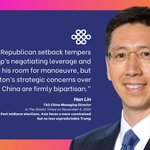
TAG Managing Director of China Han Lin tells The Straits Times that Trump’s setback tempers his negotiating leverage, but Washington’s strategic concerns over China are firmly bipartisan. His take: “Policy recalibrations: yes. Fundamental change: no.” Tariffs may become more negotiable, while technology restrictions, especially on semiconductors and AI, are unlikely to ease significantly.
Read more: straitstimes.com/world/unite…

1
2
104
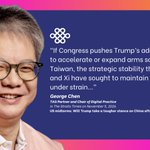
TAG Partner and Chair of Digital Practice @george_chen tells The Straits Times that Democrats could push for faster or expanded arms sales to Taiwan and a tougher line on export controls for AI and advanced technology. Either could strain the strategic stability Trump and Xi have sought to maintain.
Read more: straitstimes.com/asia/east-a…
For businesses, with the ASEAN, APEC, and G20 summits in the coming weeks, the next few weeks will show how the relationship with Asia shapes up.

Thailand welcomes data center investment, with a sharper focus on infrastructure readiness and real local value.
In this Snapshot from Bangkok, TAG Vice President Dussadee (Icey) Klinpho explains the changing terms.
1
211
In China, personnel is policy. The Fifth Plenum signals discipline over stimulus as Beijing prepares for its 2027 leadership transition.
For multinationals: expect tighter enforcement, slower decisions, and make government asks early. TAG China Managing Director Han Lin explains.
Australia wants a data center boom, but on its terms.
In this Snapshot from Sydney, TAG Associate Vice President Melanie Kilby explores the emerging rules on energy, water, and local benefits, and why investors need to engage now.
150
"If you are looking for business opportunities in the Middle East, there's going to be a lot of spending on pipelines [...] It's a strategic priority."
Raad Alkadiri (@raadie66), a Middle East and energy expert at CSIS and managing partner at 3TEN32 Associates, tells Host and TAG Senior Advisor @MiraRappHooper that the answer to the Hormuz disruption is midstream: new pipelines, storage, and redundancy, with nuclear and solar next.
Watch or listen to the episode: theasiagroup.com/what-comes-…
150
"The bond market doesn't have to win an election. It votes every day with money."
With Japanese government bond yields at some of their highest levels in decades, TAG Managing Director for Japan @DavidBoling1 explains why markets, not opposition parties, may be the biggest check on Prime Minister Sanae Takaichi's spending plans.
Energy cooperation, trade momentum, lingering mistrust. What does Secretary Rubio’s India visit mean for business?
In this Snapshot, TAG Managing Principal Basant Sanghera breaks down four takeaways — and what to watch next in U.S.-India ties.
187
Is reopening the Strait of Hormuz the key to ending the crisis?
Raad Alkadiri (@raadie66), a Middle East and energy expert at CSIS and managing partner at 3TEN32 Associates, tells Host and TAG Senior Advisor @MiraRappHooper that debates about reopening the Strait of Hormuz miss the bigger picture: the region is going through a generational transformation.
Watch or listen the full podcast episode here:
▪️ YouTube youtu.be/sP1Lt0g4pis
▪️ Apple Podcasts podcasts.apple.com/us/podcas…
▪️ Spotify open.spotify.com/episode/6ow…
162
China is threatening retaliation over the U.S. ban on DeepSeek in federal systems. TAG Partner and Chair of Digital Practice @george_chen tells @AP the warnings reflect "the depth of strategic distrust between Beijing and Washington," even as Trump and Xi work to keep their personal relationship "warm and constructive."
Read more: apnews.com/article/us-china-…

Indonesia’s stock market just suffered its worst selloff since 1998. Could an MSCI downgrade trigger further foreign outflows and wider political pressure?
TAG Vice President @MehuS explains what investors should watch next.
124
AI risks are moving from theory to national security, from rogue agents and cyber threats to vulnerabilities in critical infrastructure.
TAG Senior Associate Abhiram Reddy explains why the November U.S.–China AI dialogue will be a major test for cooperation and crisis prevention.
Japan wants a stronger defense. But who will pay for it?
TAG Managing Director for Japan @DavidBoling1 breaks down the country’s shift from postwar restraint toward higher spending and the political challenge facing Prime Minister Takaichi.
164
“It is not possible to think about China in the context of containment.”
That’s TAG Chairman and Co-Founder Kurt Campbell in a wide-ranging interview with the South China Morning Post’s Open Questions series, where he discusses what comes next after the Trump-Xi summit.
Read the full article: scmp.com/news/china/diplomac…

