

Fun Japanese you can actually read. Graded readers, Yumi's native audio, the Makoto+ app. Clay & Yumi, teaching Japanese since 2002. https://teapawt.net/t.co/pFiCdt9Q8d
Florida
Joined March 2009
- Tweets7.7K
- Following21
- Followers5.9K
- Likes335






Pinned Tweet
七転び八起き: fall down seven times, get up eight. 🎵 A sing-along for every Japanese learner who has been knocked flat by kanji (and は vs が). Every line on screen with furigana.
このおじいさんとおばあさんが住(す)んでいる家(いえ)の裏(うら)には、山(やま)があって、とても悪(わる)いたぬきが住(す)んでいました。
The second line of かちかち山(やま). Can you read where the villain lives?

1
2
59
Answer: あって. 川(かわ)があって、魚(さかな)がいます。
Rivers use ある, fish use いる, because fish are alive. The て-form joins them either way.
Want more? Sign up for the free daily newsletter: alittlejapanese.beehiiv.com/…

6
てあげる、てくれる、てもらう: three ways to do someone a favor in Japanese, and the verb tells you which way it went.
One question sorts them: which way is the favor moving, and whose side are you on?

1
1
55
てもらう also comes in, but you are the subject:
友達(ともだち)に本(ほん)を貸(か)してもらいました。
"I got my friend to lend me a book."
Trap: the same に means "to" with あげる and "from" with もらう. Read the verb first.
1
20
The full lesson, free, with audio on every example:
thejapanesepage.com/te-ageru…

17
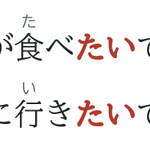
寿司(すし)が食(た)べたいです。
日本(にほん)に行(い)きたいです。
"I want to eat sushi. I want to go to Japan."
How do you turn any verb into a wish?

1
87
Answer: 飲(の)みたい. コーヒーが飲(の)みたいです。
飲みます, cut the ます, add たい.
Want more? Sign up for the free daily newsletter: alittlejapanese.beehiiv.com/…
10
髪(かみ)がさらさらだ。
小川(おがわ)がさらさら流(なが)れている。
"My hair is silky smooth. The stream is murmuring along."
What do silky hair and a mountain stream have in common in Japanese?

1
50
Answer: さらさら. さらさらの雪(ゆき), powder snow.
Dry, light, and it runs through your fingers. べたべた would be wet snow that packs into snowballs, and ぐるぐる is going round and round.
Want more? Sign up for the free daily newsletter: alittlejapanese.beehiiv.com/…
17