





What does Alto Adige actually taste like? Start with the wine, then look beyond the glass.
- Taste it: Beyond Pinot Grigio, Alto Adige’s lineup includes everything from aromatic whites and fresh mountain varieties to Schiava, Lagrein, Pinot Noir and traditional-method sparkling wine.
- See it: Vineyards climb steep slopes and occupy valleys shaped by elevation, exposure and different soils. At these elevations, a map of the region starts to look a lot more like a map of wine styles.
- Meet the people: Visit wineries in the vineyards and cellars, taste where the wines are made, and talk to the people working with this terrain every day.
- Experience the seasons: Harvest brings a close-up look at vineyard life, while winter changes the landscape completely, with snow-covered mountains and continued wine experiences.
- Get around: Walking and cycling through the vineyards puts the geography behind the wine right in front of you.
The result? Alto Adige stops being a name on a bottle and becomes a place you can actually picture.
So: what is Alto Adige, actually?
Learn more at altoadige.guides.winefolly.c…
#altoadige #italianwine #wineregion


How can one grape taste like 20 different flavors?
Pinot Noir can be fruity, earthy, spicy, floral, oaky, and so much more. Pinot Noir 101 explains why.
- Complete Pinot Noir 101 (free for 1 year thanks to our friends @jacksonfamilywines)
- Earn a certificate
- Get entered to win a Pinot Noir Education Sweepstakes (Five winners will each receive $100 to spend at YourWineStore.com, plus a Wine Folly Master Guide and Wine Folly Maps Book. Available in the USA only. Restrictions apply. Sweepstakes ends Dec 19, 2026.)
Ready to understand what’s actually in your glass?
- shop.winefolly.com/products/…


Late harvest wines start with a simple idea: leave the grapes on the vine longer than usual.
More time on the vine allows grapes to ripen further and, in many cases, lose water. That concentrates sugars and flavors, creating wines that can range from lightly sweet and bright to intensely rich.
But “late harvest” can take a few different routes:
LATE HARVEST
Grapes stay on the vine longer, building sugar and flavor before harvest.
Riesling is one of the classic choices. Its naturally high acidity helps keep sweet wines fresh and lively. In Germany, Spätlese literally means “late harvest” and refers to a Prädikatswein ripeness category. These wines can be dry, off-dry, or sweet.
NOBLE ROT
Sometimes late-season conditions encourage *Botrytis cinerea*, a fungus known as noble rot.
In places such as Sauternes, morning fog helps Botrytis develop. The fungus dehydrates the grapes, concentrating sugars, acids, and flavor compounds.
The grapes can look pretty gnarly. The resulting wine can be gloriously rich.
ICEWINE
Some grapes stay on the vine until they naturally freeze. When harvested and pressed while frozen, much of the water remains behind as ice, leaving a smaller amount of concentrated juice.
Cold-climate grapes such as Vidal Blanc are particularly well suited to this style. Canada is one of the best-known places to find true icewine.
DRIED GRAPES
Another route to concentration: dry the grapes before fermentation.
Traditional Vin Santo, for example, is made by drying grapes before fermentation. The concentrated juice ferments slowly, then the wine ages for years in small barrels.
Which late-harvest style is in your regular rotation?
Learn more at winefolly.com/.../late-harve…
#sweetwine #lateharvestwine #dessertwine


Italian wine has a lot of options. So start with one simple question: What do you like to drink?
Fresh & crisp? Rich & textured? Bold & structured?
Pick your style, then swipe to see the Italian grapes that fit your palate.
For a chance to taste them all, visit Vinitaly.USA at Pier 36 in NYC
Register app.vinitalyusa.com/.../77d8…...
Paid partnership with @vinitalyusa.official and @italiancrafted
#italianwine #italiangrapes #italianredwine #italianwhitewine


Barolo vs Brunello: Two of Italy’s most famous reds. Two different grapes. Two different personalities.
Barolo
🇮🇹 Piedmont
100% Nebbiolo
High tannin + high acidity
Floral, red-fruited, spicy
Think rose petal, cherry, raspberry, cinnamon, and white pepper
Built for bottle age
Brunello di Montalcino
🇮🇹 Tuscany
100% Sangiovese
High tannin + bright acidity
Savory, spicy, and fruit-driven
Look for sour cherry, oregano, balsamic, leather, and tobacco
Also built to age, with the potential to develop for decades depending on the vintage and storage.
The best part of a wine comparison is that there’s no studying required. Pour two glasses, taste, argue about which one you prefer, and call it research.
🎯 Learn more at winefolly.com/deep-dive/baro…
#italianwine #barolo #nebbiolo #brunello #sangiovese


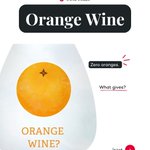
Orange wine sounds like it belongs on the brunch menu next to mimosas. Except there are no oranges involved.
Orange wine is white wine made with extended skin contact, a technique more commonly associated with red wine. Instead of separating the juice from the skins right away, winemakers leave them together during fermentation. The longer contact can extract color, tannin, and texture from the grapes, producing wines that range from pale gold to deep amber.
So what should you expect in the glass?
- Color: golden, amber, copper or orange
- Texture: fuller and more grippy than many white wines
- Tannin: often noticeable, similar to the drying sensation of tea
- Flavors: dried citrus, bruised apple, nuts, herbs, spice and savory notes
- Style: usually dry, but orange wine can vary dramatically depending on the grape, skin-contact time and winemaking approach
One important distinction: orange wine is a winemaking style, not a grape variety. Chardonnay, Pinot Grigio, Ribolla Gialla, Rkatsiteli and many other white grapes can be made this way.
Learn more at winefolly.com/deep-dive/oran…
#orangewine #winemaking #winestyle


Guess the wine before the reveal: 🥂
First clue: bubbles. Lots of them. A lively, frothy stream
of tiny bubbles gives this wine away as sparkling.
On the nose, the fruit comes first: honeydew melon,
apricot, citrus blossom, and a little salt-water
freshness.
Take a sip and the clues get clearer: just-dry,
light-bodied, frothy, lower in alcohol, and loaded with
bright stone-fruit flavor.
Another clue? Picture scenic cycling, simple pasta,
and a bright, bubbly pour.
3…
2…
1…
This is Zardetto Prosecco Brut DOC.
If you guessed Prosecco from that fruit-forward profile,
you know your wine! Prosecco’s signature
combination of fresh fruit and lively bubbles comes
from Glera, the grape behind the style.
Founded in 1969, Zardetto has been a leader in
sparkling wine for more than 50 years. Zardetto Brut
DOC is an elegant, refreshing dry style prosecco ideal
for holiday toasts.
In partnership with @zardettoproseccousa
🇪🇺 Campaign financed according to EU Reg. N. 2021/
2115
🇮🇹 Ministero dell’Agricoltura della Sovranità
Alimentare e delle Foreste
#Prosecco #ProseccoDOC #WineTasting
#SparklingWine
Glassware: @riedel_official
Italian wine blends don't follow a formula.
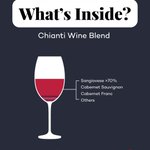
Take Tuscany, for example. You can find Sangiovese blended with international varieties such as Cabernet Sauvignon, Cabernet Franc, and Merlot, creating wines commonly described as Super Tuscans. The category itself is broad, so there isn't one set recipe.
Across Italy, blending traditions can look completely different depending on the region, the grapes, and the style of wine.
So when you see a blend on a label, don't stop at the grape list. Ask:
- What does each grape contribute?
- Which grape provides the structure?
- Which one brings fruit, acidity, tannin, color, or aromatics?
- And what does the combination do that one grape couldn't do alone?
Learn more at winefolly.com/.../wine-blend…
#wineblend #grapevariety #italianwine #chianti


Red wine can be a lot to wrap your head around. Hundreds of grapes. Thousands of regions. Tasting notes that somehow involve fruit, flowers, spices, leather, tobacco… and occasionally a wet forest.
So where do you start?
Try six wines that each teach you something different:
Garnacha → acidity
That mouth-watering zing? Get familiar with it.
Zinfandel → alcohol
Feel the warmth, notice the weight, and see how alcohol changes the wine.
Shiraz → body
Big fruit, plenty of texture, and a lesson in what “full-bodied” actually feels like.
Monastrell → savory flavors
Dark fruit meets black pepper, roasted meat, earthy and smoky notes.
Petite Sirah → tannin
Drying, grippy, mouth-coating tannin. You’ll know it when you feel it.
Carménère → “green” flavors
Cherry and plum alongside bell pepper and herbal notes.
Learn more at winefolly.com/lifestyle/best…
#redwine #grapevariety #wine101 #wineeducation


Guess the wine before the reveal: 🍷🕵️
In the glass? A deep garnet color with a frothy pour.
A swirl reveals something unusual — almost no tears clinging to the glass.
On the nose: juicy black cherry and black currant.
On the palate: dry, with black tea-like tannins and a smooth, juicy finish.
Expert clue: This red comes from Italy's Abruzzo region, but there's a twist. It delivers all those classic red wine aromas and structure — with 0.0% alcohol.
Spoiler ahead in 3,2,1…
. . .
It's Cantina Zaccagnini Tralcetto 0.0! The tralcetto (the small vine cutting attached to every bottle) is a signature of the winery and a tribute to the vineyards where the wine begins.
Did you guess it before the reveal?
In partnership with @cantina_zaccagnini and Wines Unlimited
#NonAlcoholicWine #DealcoholizedWine #italianwine
Glassware: @riedel_official
How much do you really know about non-alcoholic wine?
Can it still contain alcohol? Does removing alcohol change the way wine tastes? And how is it actually made?
Swipe through to test your NA wine knowledge and then tell us:
Have you tried a non-alcoholic wine you’d happily pour again?
Learn more at winefolly.com/tips/non-alcoh…
#NAwine #lowABVwine #wineeducation


Port is one of wine's biggest shape-shifters. One bottle is bursting with ripe berries and dark chocolate. Another is layered with toasted walnuts, caramel, dried fruit, and decades of patience. Both are Port.
A 20-Year Tawny develops its signature amber color and nutty complexity through extended aging in oak. Ruby Port takes a different path, preserving vibrant fruit with flavors of blackberry, plum, dark chocolate, and cherry.
That's exactly what you'll find in @sandemanporto Founder's Reserve — a premium Ruby Reserve Port aged for an average of five years to build depth, balance, and richness while keeping its youthful fruit front and center.
Serve it slightly chilled for a fresh, modern twist. Pair it with dark chocolate, berry desserts, or a favorite cheese board.
Or pour it over ice with an orange slice for an easy aperitif.
Once opened, it stays delicious for up to four weeks, making it easy to enjoy one glass at a time.
This Port Wine Day, discover why Ruby Reserve is one of the most versatile and approachable styles of Port.
Raise a glass, pour it chilled, and tell us how you're celebrating Port Wine Day!
#paidpartnership #Port #PortWine #PortWineDay #celebratelife
Glassware: @riedel_official
Most wine labels look confusing, until you realize they're all using one of three naming systems.
🍇 Grape: Some wines tell you exactly what's inside. Cabernet Sauvignon. Pinot Grigio. If you know the grape, you already have a good idea of what to expect in the glass.
📍 Region: Others are named for where they're made. Think Chianti, Amarone, or Chablis. In these cases, the place tells you about the style, because the wine follows regional traditions and production rules.
✨ Name: Then there are wines with a unique name all their own. These are often proprietary blends that don't fit neatly into a single grape or regional category, giving the winemaker more freedom to create something distinctive.
That brings us to DiNotte from @mezzacoronawine. Rather than leading with a grape or a region, it's named DiNotte, meaning "at night." The wine blends two native Dolomite grapes (Teroldego and Marzemino) with a touch of Merlot, creating a style that's both rooted in northern Italy and uniquely its own.
The next time you're standing in front of a shelf of bottles, ask one simple question: Is this a grape, a region, or a name?
Once you know which category you're looking at, choosing wine becomes a whole lot easier.
Paid partnership with @mezzacoronawine. Thanks for supporting approachable wine education. 🍷
Glassware: @riedel_official
Wine aroma doesn’t come from one place. It’s built in stages; from the grape, through fermentation, and into aging.
Primary aromas are associated with grape variety and growing conditions. You might find: Citrus, floral notes, herbaceous character, berry and other fruit aromas, or green/vegetal notes.
Once yeast and other microorganisms get involved, the secondary aroma profile changes dramatically.
Then comes time. During maturation and bottle aging, wine undergoes chemical reactions that transform its tertiary aroma profile.
Hundreds of volatile compounds can contribute to wine aroma — and only some are present at concentrations high enough for us to perceive them. Even compounds present in tiny amounts can have a major sensory impact if our noses are highly sensitive to them.
In other words: the aroma in your glass is less like a single ingredient and more like a chemical history of the wine.
Learn more at winefolly.com/.../how-to-tas…
#WineEducation #WineAromas #WineTasting #WineScience


Happy #ChiantiDay! 🍷 Here are a few things to know before your next bottle:
🍷 Chianti is a collection of wine-growing areas across Tuscany. At its heart is Chianti Classico DOCG, the historic region first defined in 1716 and still considered the benchmark for the style.
🍒 Sangiovese is the star; it’s Italy's most-planted red grape and delivers a profile that's more savory than fruity: Tart cherry, dried herbs, tomato leaf, leather, and earthy spice
🍕 Its high acidity slices through rich, salty dishes like pepperoni pizza, tomato-based pasta, grilled meats, and aged cheeses.
⛰️ Elevation changes everything. Warmer vineyards on the valley floor tend to produce softer, rounder wines. Higher-elevation sites preserve acidity and aromatic lift, creating wines with greater finesse and the ability to evolve beautifully over time.
Thanks to @lamoledilamoleus for supporting wine education. Enjoy Lamole di Lamole, uniqueness in Chianti Classico.
One final blind-tasting tip: that transparent, brick-red rim you see is a classic clue many sommeliers associate with mature Sangiovese.
#lamoledilamole #chianticlassico #sangiovese #italianwine
Drink Responsibly. Must be 21 or Over. Red Wine. Imported by HERITA USA, Miami Beach, FL
Cabernet Sauvignon is the most-planted wine grape in the world. But its story is more surprising than many people realize.
🍇 Born in 17th-century France from a natural crossing of Cabernet Franc and Sauvignon Blanc, Cabernet Sauvignon brought together the structure and intensity of one parent with the aromatic character of the other.
🍃 And that unexpected family tree goes even deeper: one of its ancestors is Hondarribi Beltza, a rare grape from the Basque Country that helped shape one of the world’s most recognizable wines.
Today’s Cabernet comes from @JLohrWines, who has been growing this iconic grape in Paso Robles for nearly 40 vintages.
#CabernetSauvignon #PasoRobles #WineEducation #WineFacts
Glassware: @riedel_official