

He/Him・Old・Chairman of the official Yakuza/Like a Dragon Wiki・Niche Reporter・RGG Art/News/Translations TUE-THU・QRT🆗・日本語🆗
- Tweets6.3K
- Following302
- Followers1.8K
- Likes22.8K







ALT Makoto Daito putting up a poster of a show in Stranger Than Heaven, accompanied by an excerpt from interviews with director Mikinobu Abe published on TechRadar on 2026-10-24 and IGN on 2026-10-21: “At some point we did have a small rhythm game, but it didn't exactly match the feeling that you're promoting a show. [For IGN: We'd read hundreds of books figuring out what promoters used to do. We found out that basically he does everything, from promotion to casting to booking the venue.] He brings in not just the money, but also the inspiration and the whole vision of the show. We thought that's an interesting aspect that we can put into this game.”


ALT Makoto Daito putting up a poster of a show in Stranger Than Heaven, accompanied by an excerpt from interviews with director Mikinobu Abe published on TechRadar on 2026-10-24 and IGN on 2026-10-21: “At some point we did have a small rhythm game, but it didn't exactly match the feeling that you're promoting a show. [For IGN: We'd read hundreds of books figuring out what promoters used to do. We found out that basically he does everything, from promotion to casting to booking the venue.] He brings in not just the money, but also the inspiration and the whole vision of the show. We thought that's an interesting aspect that we can put into this game.”

ALT Photos of Masayoshi Yokoyama, Hiroshi Tsuchida, and Tsuchida’s character Kazuki in the original Yakuza, accompanied by a translated statement from Yokoyama published on Twitter on 2026-10-20: “I’ve been indebted to Tsuchida-san since the in-house prototype of the original *Yakuza*. “We couldn’t hold auditions and cast from a big pool of voice samples instead, but at the time we’d decided on [Kuroda-san, Ugaki-san, Miyake-san, and Tsuchida-san]. “[…] And so I had the pleasure of working with Tsuchida-san on occasion for a long time after. He never forgot the characters or the works, and each time we met, with no practice or rehearsal, it was like Kazuki himself stood behind the microphone. “He’ll always be among the actors I admire. “I still remember the day we first recorded together vividly. Thank you for everything. ”
ALT Photos of Masayoshi Yokoyama, Hiroshi Tsuchida, and Tsuchida’s character Kazuki in the original Yakuza, accompanied by a translated statement from Yokoyama published on Twitter on 2026-10-20: “I’ve been indebted to Tsuchida-san since the in-house prototype of the original *Yakuza*. “We couldn’t hold auditions and cast from a big pool of voice samples instead, but at the time we’d decided on [Kuroda-san, Ugaki-san, Miyake-san, and Tsuchida-san]. “[…] And so I had the pleasure of working with Tsuchida-san on occasion for a long time after. He never forgot the characters or the works, and each time we met, with no practice or rehearsal, it was like Kazuki himself stood behind the microphone. “He’ll always be among the actors I admire. “I still remember the day we first recorded together vividly. Thank you for everything. ”


ALT A photo of Hiroshi Tsuchida at a panel and a picture of his character Kazuki in Like a Dragon: Infinite Wealth, accompanied by a translated statement from RGG Studio and an obituary from his agency 81 Produce, both published on 2026-10-20: RGG Studio’s statement reads: “Hiroshi Tsuchida, who played Kazuki in the Like a Dragon series, has passed away. All of us at RGG Studio offer our humble condolences and heartfelt prayers for his happiness in the next world.” 81 Produce’s obituary reads: “On October 11, 2026, at the age of 54, Hiroshi Tsuchida passed away due to heart failure. In accordance with his bereaved family’s wishes, a funeral was held among only his relatives. We share this news with respect and with deep gratitude for the kindness he was shown in life.”

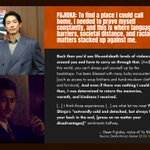
ALT A photo of Dean Fujioka, accompanied by screenshot of his character Yu Shinjo in Stranger Than Heaven miserable and hiding under a bridge from the rain, and a translated excerpt from an interview with Fujioka published by Denfa Minico Gamer on 2026-10-06: “To find a place I could call home, I needed to prove myself constantly, and this is where language barriers, societal distance, and racial matters stacked up against me. Back then you’d see life-and-death levels of violence around you and have to carry on through that. [And] in this world, you can’t always pull yourself up by the bootstraps. I’ve been blessed with many lucky encounters [such as access to soup kitchens and hand-me-down clothes and furniture]. And even if there was nothing I could do then, I was determined to return the memories, warmth, and kindness I received. […] I think those experiences […] are what let me meet Yu Shinjo’s ‘outwardly cold and detached, but always has your back in the end, [press on no matter you


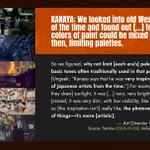
ALT A collage of Stranger Than Heaven’s five eras, each with their own palette, accompanied by a combined excerpt from interviews with art director Daishi Kanaya published by Famitsu on 2026-09-20 and Ungeek on 2026-09-22: "We looked into old Western art of the time and found out […] fewer colors of paint could be mixed back then, limiting palettes. So we figured, why not limit [each era’s] palette to the basic tones often traditionally used in that period? [Ungeek: ‘Kanaya says that he was very inspired by a lot of Japanese artists at the time.’] For example, [when they drew] sunlight, it was […] very, very bright. But when it [rained, it was very dim, with low visibility, like in mist]. And so [the inspiration isn’t] really like, the photorealistic side of things—it’s more [artistic].”


ALT Full body renders of the cast of Stranger Than Heaven, in order: - Makoto Daito - Yu Shinjo - Orpheus - Heigo Yashima - Tae Matsumoto - Suzy Day - Kiyoshi Otsuru - Takashi - The Veiled Stranger - Keiko Shirai - Genzo Iwaki - Tadashi Hataoka - Suekichi - Tetsuya Hama - Amaru - Kimura
ALT Full body renders of the cast of Stranger Than Heaven, in order: - Makoto Daito - Yu Shinjo - Orpheus - Heigo Yashima - Tae Matsumoto - Suzy Day - Kiyoshi Otsuru - Takashi - The Veiled Stranger - Keiko Shirai - Genzo Iwaki - Tadashi Hataoka - Suekichi - Tetsuya Hama - Amaru - Kimura
ALT Full body renders of the cast of Stranger Than Heaven, in order: - Makoto Daito - Yu Shinjo - Orpheus - Heigo Yashima - Tae Matsumoto - Suzy Day - Kiyoshi Otsuru - Takashi - The Veiled Stranger - Keiko Shirai - Genzo Iwaki - Tadashi Hataoka - Suekichi - Tetsuya Hama - Amaru - Kimura