A simple AEO visibility loop
Most teams approach AEO like SEO:
Create content → optimize it → wait for visibility.
I think that's too passive bc SEO is just 30% of AEO.
AI visibility is changing too quickly, and the sources that get cited today may not be the sources getting cited next month.
A better approach is to run AEO as a continuous visibility loop:
Find the gap → Owned or Earned → Act → Measure → Repeat
Here's how I think about each stage 👇
1. Find the gap
Don't start with:
“What content should we publish?”
Start with:
“Where is AI citing my competitors, but not us?”
Take your important buyer prompts and look across:
→ ChatGPT
→ Gemini
→ Perplexity
→ Claude
→ Google AI Overviews
→ Google AI Mode
Then document:
• Which competitors are recommended?
• Which sources are being cited?
• Which pages are being cited?
• Which Reddit threads or forums appear?
• Which reviews or listicles appear?
• Which prompts trigger those citations?
• Where does your brand appear, if at all?
This matters because AI search is not one channel.
Your competitor's visibility on one engine doesn't guarantee visibility on another.
2. Owned or earned?
Once you've found the gap, classify the source.
Owned
Your website, blog, comparison page, product page, research, documentation, case study.
Earned
PR, editorial coverage, reviews, Reddit, forums, communities, creator content, third party listicles.
EARNED >>>> OWNED
EARNED content will always be greater than 50% of citation for any brand from OWNED content.
This distinction changes the action completely.
3. Act
If the gap is owned:
→ Create the missing comparison
→ Build the category page
→ Publish original research
→ Improve existing content
→ Add direct answers and supporting evidence
If the gap is earned:
→ Pitch the publication
→ Build relationships with relevant authors
→ Earn reviews
→ Contribute useful community knowledge
→ Create content worth referencing
Don't just create more content.
Create the type of evidence AI is already using.
4. Measure
Publishing isn't the finish line.
It's the beginning of the experiment.
Track:
→ Did your citation rate increase?
→ Did your recommendation rate change?
→ Did the source start mentioning your brand?
→ Did your position improve against competitors?
→ Did the same prompt produce different results?
And give the experiment enough time to produce a signal.
5. Repeat
This is the part most teams skip.
You might have:
100 prompts × 5 competitors × 6 engines
That's potentially 3,000+ competitive visibility gaps before you even start looking at individual sources.
And the landscape keeps moving.
Recent research shows AI engines often cite very different sources for the same question. One eight engine study found 76.4% of cited URLs appeared on only one engine.
So AEO isn't:
“Optimize once and rank.”
It's:
Discover → Act → Learn → Adapt → Repeat.
You can do this manually:
Open each AI engine.
Run your priority prompts.
Document competitors and citations in a spreadsheet.
Classify every source as owned or earned.
Then decide what action to take.
Or use AI visibility platforms that automate parts of this process by tracking competitor citations, source types and visibility gaps.
The mindset shift is simple:
Stop asking, “What should we publish?”
Start asking:
“Where is AI already finding evidence for our competitors that it isn't finding for us?”
That question gives you a much better roadmap for AEO.
Find the gap.
Classify it.
Act.
Measure.
Repeat.
That's the AEO visibility loop.
What would you add to this loop?

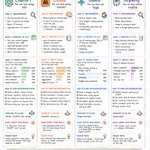
ALT “A Simple AEO Visibility Loop” explaining a five step process for improving AI search visibility: 1. Find the Gap, 2. Owned or Earned, 3. Act, 4. Measure, and 5. Repeat. The graphic recommends checking ChatGPT, Gemini, Perplexity, Claude, Google AI Overviews, and Google AI Mode to identify where competitors are being cited but the brand is not. It explains how to classify citation opportunities as owned content or earned media, take targeted action, measure citation and recommendation changes, and repeat the process. The infographic emphasizes that AI visibility is not one time, it's a loop and includes the message: “Find the gap. Classify it. Act. Measure. Repeat.” Footer: “Follow Vaibhav Singh for more insights on AI Search, AEO, SEO & Growth.”